 Preview
 Send
Send Share
Share
 Details

 Download
 Similars
 X-Ray
X-Ray Diaporama
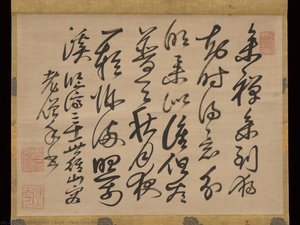
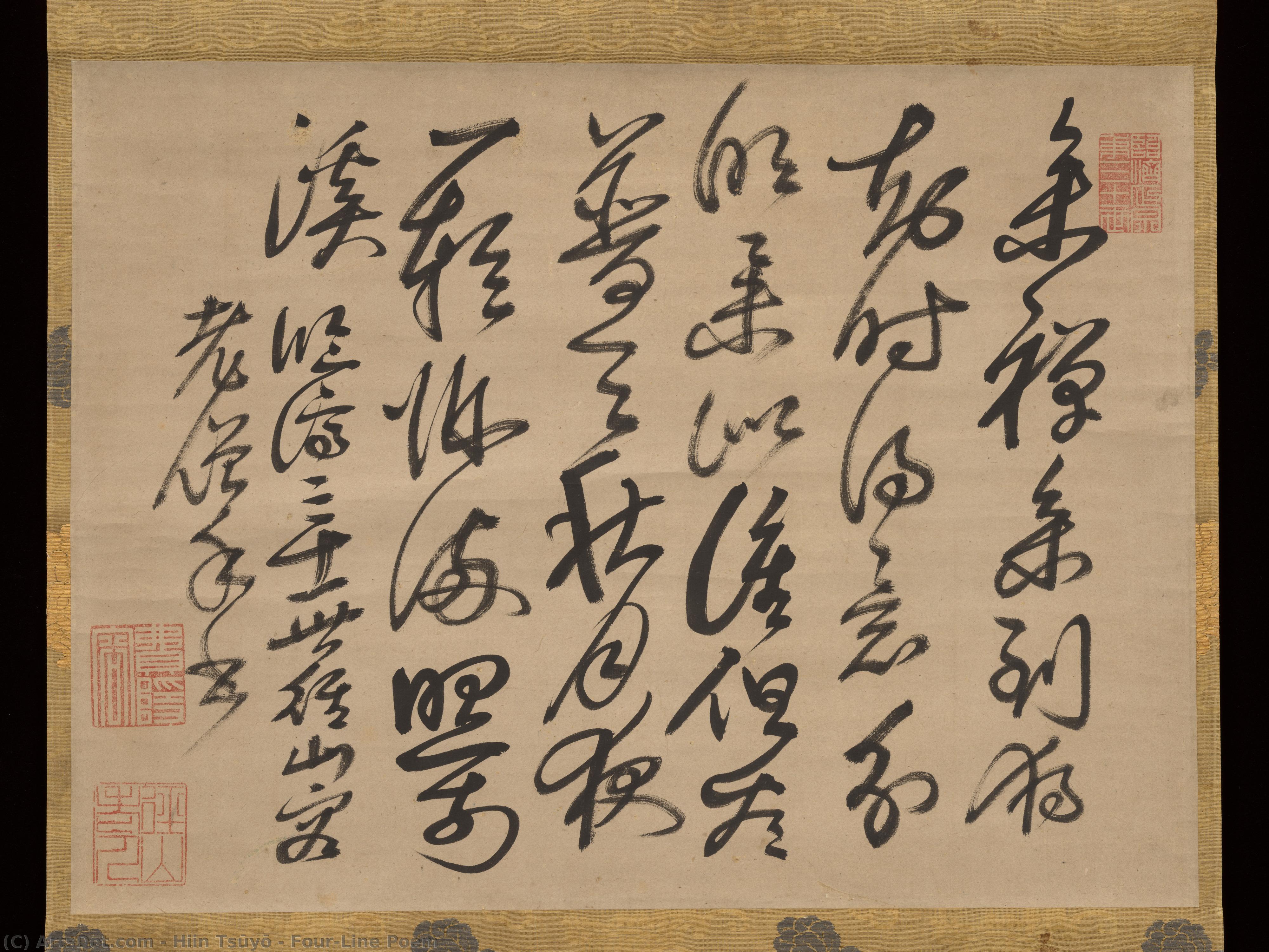
Four-Line Poem
 601
601 43.0cm x 57.0cm
 Read More
Hand Made Oil Reproduction
Hand-painted oil on canvas in your size and frame, made to order by our artists. ( Buy Print Buy Image)




































Pick from our preset sizes that match the artwork's original proportions.

You may enter your own dimensions to fit a specific frame or space. If your selected size does not match the original image's proportions, we will either crop the artwork or extend the painting with additional hand-painted elements. A digital mockup will be sent for your approval before production begins.
Please note that the on-screen preview does not reflect the actual cropping or extension. Only the mockup will accurately show the final composition.
While custom sizes are available, we recommend selecting a dimension from the predefined list to preserve the original proportions.
After order, ArtsDot.com team will email client for instructions and provide a mockup preview
Worldwide Delivery () in 3/4 weeks instead of standard 5 weeks. (17 August). No compromise on quality.

Free Worldwide Express Shipping

High-Quality Linen Canvas

Full Shipping Insurance

Customs Tax Refund Guarantee

True Color Matching Guarantee

60-Day Return Policy (Defects Only)

100% Money-Back Guarantee

Bulk Discount Offer
 Glass option is only available in size under 110 CM

Four-Line Poem
Reproduction Medium
Reproduction Size
-


Total Price
$ 263
Artwork Description
Introduction to Hiin Tsūyō and the Zen Art Movement
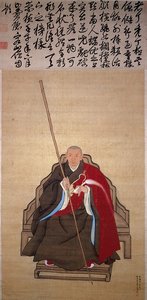
Hiin Tsūyō, also known as Feiyin Tongrong (1593-1671), was a Chinese Buddhist monk who studied under several renowned Chan (Japanese: Zen) masters. He served as abbot at several Chan monasteries and inspired disciples to bring a new form of Chan Buddhism to Japan, where it became known as the Ōbaku sect. Hiin Tsūyō was also an accomplished calligrapher, and his works are highly regarded for their dynamic brushwork and expressive style.The Four-Line Poem: A Unique Calligraphic Masterpiece
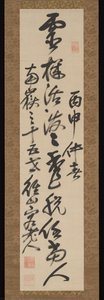
The Four-Line Poem by Hiin Tsūyō is a remarkable example of Zen calligraphy. This vibrantly inscribed work features dynamic, rapidly and fluidly brushed Chinese characters in cursive script, comprising a four-line poem inscribed on paper and mounted as a hanging scroll. The poem's content reflects the artist's deep understanding of Zen teachings, emphasizing the importance of mindfulness, concentration, and insight.Historical Context: The Zen Art Movement
The Zen art movement is characterized by its emphasis on meditation, intuition, and simplicity, with an aim to express the true nature of reality. This unique school of art emerged during the Tang dynasty in China and had a profound influence on various forms of art, including calligraphy. Zen artists sought to convey profound meanings through minimalist compositions, often using empty spaces, monochromatic colors, and simple lines.The Four-Line Poem: A Testament to Hiin Tsūyō's Artistic Mastery
Hiin Tsūyō's Four-Line Poem exemplifies the Zen emphasis on simplicity and expressiveness. The artwork features a minimalist composition, with four lines of text arranged in a dynamic and visually striking manner. The use of cursive script adds to the work's expressiveness, conveying a sense of fluidity and movement that is characteristic of Hiin Tsūyō's style.Conclusion: The Enduring Legacy of Hiin Tsūyō and Zen Calligraphy
Hiin Tsūyō's Four-Line Poem is a testament to the artist's mastery of Zen calligraphy and his deep understanding of Zen teachings. Today, this unique work continues to inspire artists and collectors worldwide, showcasing the enduring appeal and relevance of the Zen art movement. Painting by 'Hiin Tsūyō' | Hiin Tsūyō:Four-Line Poem (42.7cm x 57.0cm,Paper,)Learn more about this painting and other masterpieces of Zen calligraphy at ArtsDot.com.
Additional Resources: Exploring the Zen Art Movement and Hiin Tsūyō's Works
For more information on the Zen art movement, its influences, and notable artworks, please visit our comprehensive guide at The Zen Art Movement. To explore other works by Hiin Tsūyō, including his calligraphic masterpieces and paintings, please visit our dedicated artist page at Hiin Tsūyō (Feiyin Tongrong). More details..For more information on Zen and its influence on art, visit our in-depth article at Zen: The Art of Enlightenment.
Related Artworks
Artist Biography
Giuseppe Arcimboldo: The Master of Impossibility
Born in Milan in 1527, Giuseppe Arcimboldo wasn’t simply a painter; he was a visual architect of the imagination. His life and career unfolded during a period of immense artistic transition – the waning years of the Renaissance and the burgeoning arrival of Baroque style – and his unique approach to portraiture defied convention, establishing him as one of the most singular figures in Italian art history. Arcimboldo’s legacy rests not on grand historical narratives or religious commissions, but on an astonishing ability to transform everyday objects—fruits, vegetables, flowers, books, even musical instruments—into remarkably lifelike and captivating human faces. These weren't mere still lifes; they were elaborate, theatrical representations of individuals, often dignitaries and nobility, demanding a level of visual ingenuity rarely seen before or since.
His early training began under his father, Biagio Gentileschi, a painter for the Milanese Duomo. This foundation in stained glass design proved crucial, as it instilled within him an understanding of composition, color theory, and the meticulous detail required to create intricate visual narratives. Arcimboldo’s career initially focused on decorative arts – he designed elaborate window panels for churches and palaces – but his ambition quickly outgrew these commissions. He sought opportunities that allowed him to fully explore his inventive spirit, leading him to serve various patrons throughout Italy, including the powerful Duke Federico II of Mantua and later, Charles I of England.
The Art of Assemblage: Technique and Symbolism
Arcimboldo’s technique was deceptively simple in its execution, yet profoundly complex in its realization. He began with a traditional portrait sketch, meticulously planning the arrangement of his chosen objects. Then, using oil paints on wood panels, he built up layers of color and texture to mimic the appearance of natural materials – the smooth skin of fruit, the rough bark of branches, the delicate petals of flowers. Crucially, he didn’t merely *place* these elements; he integrated them seamlessly, creating a unified whole that resembled a living face. The depth of field was carefully considered, with objects placed closer to the viewer appearing larger and more prominent, while those further back receded into the background.
Beyond the technical mastery, Arcimboldo’s work is laden with symbolism. Each assemblage carried multiple layers of meaning, often reflecting the personality or role of the subject. For example, a portrait composed entirely of books might signify erudition and intellectual pursuits, while an arrangement of musical instruments could represent a musician's dedication to his craft. The use of seasonal elements—fruits in winter, flowers in spring—also held symbolic weight, referencing cycles of life, death, and rebirth. His portraits were not simply likenesses; they were carefully constructed statements about the individual’s character and status.
Notable Works and Influences
Arcimboldo's most famous works include his elaborate courtly portraits for Charles I, such as “Vertumnus” (1600) and “Diana,” which showcase his mastery of creating believable faces from seemingly disparate objects. The "Winter Trionfo" (1563), a monumental altarpiece commissioned by the Duke of Mantua, is another prime example of his inventive spirit, depicting allegorical figures representing the seasons arranged within a single, unified composition. His later works, particularly those created during his time in England, demonstrate a shift towards greater abstraction and a more playful use of materials – he even incorporated severed heads into some portraits, a shocking display for the period.
Arcimboldo’s work was influenced by several sources. The Renaissance tradition of *tronie* paintings—genre scenes depicting solitary figures in various poses—provided a foundation for his portraiture. He also drew inspiration from still life painting, particularly the works of Pieter Claesz and Ambrosius Bosschaert, who skillfully rendered the textures and colors of fruits and flowers. However, Arcimboldo’s genius lay in his ability to synthesize these influences into something entirely new – a unique visual language that challenged conventional notions of portraiture and captivated audiences with its imaginative power.
Legacy and Historical Significance
Giuseppe Arcimboldo died in 1593, leaving behind a body of work that continues to fascinate and inspire. His innovative approach to portraiture paved the way for later artists who explored themes of illusion and transformation, including René Magritte and Salvador Dalí. Arcimboldo’s portraits are not merely decorative; they are profound meditations on identity, perception, and the relationship between art and reality. He demonstrated that a single object could hold an entire world of meaning, transforming the humble into the extraordinary and solidifying his place as one of the most inventive and enduring figures in the history of Western art.
feiyin tongrong
1593 - 1661 , China
Quick Facts
- Artistic Movement Or Style: Baroque
- Artists Or Movements Influenced By This Artist: ['Italian Renaissance']
- Artists Who Influenced This Artist: ['Caravaggio']
- Date Of Birth: 1527-04-05
- Date Of Death: 1593-07-11
- Full Name: Giuseppe Arcimboldo
- Nationality: Italian
- Notable Artworks:
- Susanna and Elders
- Winter Garden
- Monarchs
- Place Of Birth: Milan, Italy