 Preview
 Send
Send Share
Share
 Details

 Download
 Similars
 X-Ray
X-Ray Diaporama
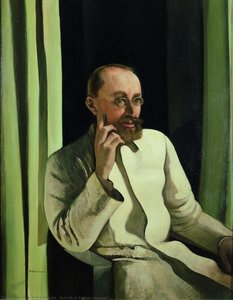
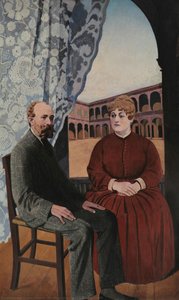
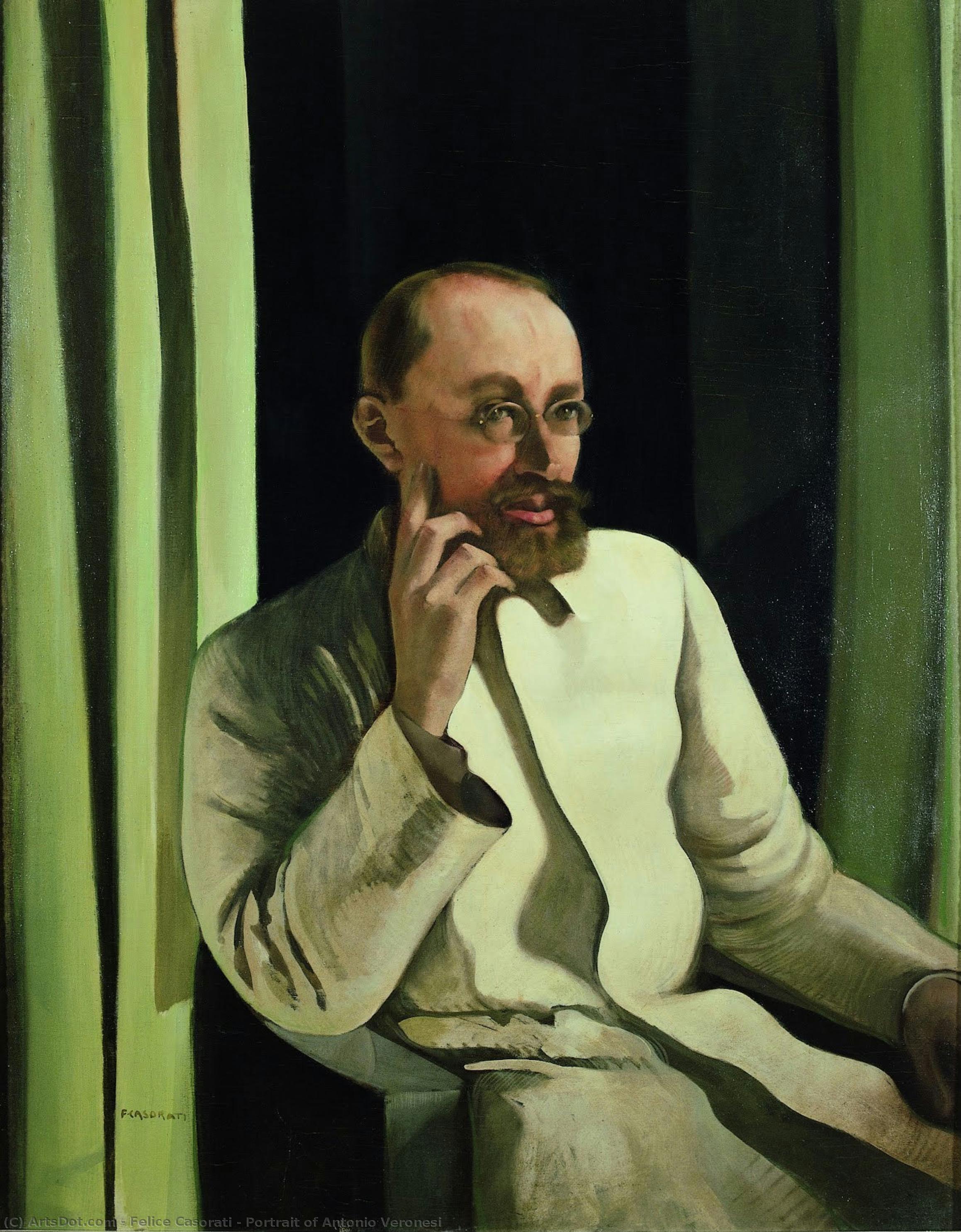
Portrait of Antonio Veronesi


 Read More
Giclée / Art Print
Museum-quality giclée or canvas print with fast production and flexible finish options. ( Buy Hand Made Painting Buy Image)




P118B $10

P118H $10

P118W $10

P438Z $10

P508JH $12

P508YH $12

P805H $10

P805Z $10

P919BZ $10

P919G $10

P919XJ $10

P959ZH $10

P968JZ $12

W106C $8

W218G $10

W218JH $8

W218Y $10

W307PJ $10

W316G $10

W316PJ $8

W316Y $10

W398PJ $8

W4111J $10

W500HY $15

W500JH $15

W692G $12

W849H $8

W940BG $15

W953PJ $8




Pick from our preset sizes that match the artwork's original proportions.

You may enter your own dimensions to fit a specific frame or space. If your selected size does not match the original image's proportions, we will either crop the artwork or extend the image with a mirrored or solid-fill edge. A digital mockup will be sent for your approval before production begins.
Please note that the on-screen preview does not reflect the actual cropping or extension. Only the mockup will accurately show the final composition.
While custom sizes are available, we recommend selecting a dimension from the predefined list to preserve the original proportions.
Worldwide Delivery () in 2 weeks instead of standard 4/5 weeks. (29 August)

Free Worldwide Express Shipping

High-Quality Linen Canvas

Full Shipping Insurance

Customs Tax Refund Guarantee

True Color Matching Guarantee

60-Day Return Policy (Defects Only)

100% Money-Back Guarantee

Bulk Discount Offer
 Glass option is only available in size under 110 CM

Portrait of Antonio Veronesi
Giclée / Art Print
Reproduction Size
-


Total Price
$ 63
An Encounter with Intellectual Elegance
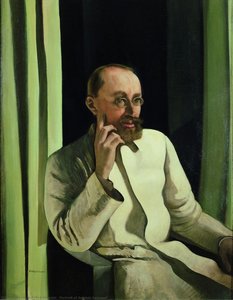
In the quiet, contemplative depths of Felice Casorati’s 1922 masterpiece, Portrait of Antonio Veronesi, we are invited into a moment of profound stillness. The painting presents a man captured in a state of deep introspection, his gaze shielded behind glasses that suggest a life dedicated to the rigors of thought and observation. Dressed in a crisp white suit and tie, Veronesi exudes an air of sophisticated modernity, yet there is something timeless about his posture. He sits with a gravity that commands the viewer's attention, his mustache and serious expression anchoring the composition in a sense of dignified realism. The background, draped in heavy green curtains, does more than merely frame the subject; it creates a theatrical depth, enveloping the sitter in a private, scholarly sanctuary that feels removed from the frantic pace of the outside world.
The artistry of Casorati shines through in the meticulous way he handles light and texture. During this period of his career, Casorati was navigating the delicate transition from naturalistic observation to a more structured, symbolic language. In this portrait, one can observe the masterful use of chiaroscuro to define the contours of the face and the sharp, clean lines of the white attire. The interplay between the luminous fabric of the suit and the velvety shadows of the verdant backdrop creates a tactile experience for the eye, making the subject feel palpably present. This technical precision serves to elevate the portrait from a simple likeness to a psychological study, where every brushstroke contributes to the atmosphere of intellectualism and quiet strength.
For the discerning collector or interior designer, this work offers much more than mere decoration; it provides a focal point of character and substance. The color palette—a sophisticated harmony of stark whites, deep greens, and natural skin tones—is remarkably versatile, capable of anchoring a room with a sense of classical prestige. Whether placed in a contemporary study, a library, or a formal living space, the Portrait of Antonio Veramente acts as a window into the early 20th-century Italian spirit. It evokes a sense of nostalgia for an era of profound cultural awakening, making it an ideal acquisition for those who seek to surround themselves with art that speaks of wisdom, stability, and the enduring beauty of the human intellect.
Related Artworks


Artist Biography
Early Life and Artistic Awakening
Felice Casorati, born in Novara, Italy, in 1883, embarked on a path initially dictated by familial expectation rather than fervent artistic desire. His early years were steeped in the pursuit of legal studies at the University of Padua, a decision made to appease his mother’s wishes. However, fate – and perhaps an inherent calling – intervened. A serious illness forced a reassessment of priorities, and with it came a burgeoning passion for art that would ultimately eclipse all other ambitions. The pivotal moment arrived in 1907 when one of his paintings was accepted into the prestigious Venice Biennale, a validation that irrevocably steered him toward a life dedicated to creative expression. This wasn’t merely a change of course; it was an awakening, a recognition of a deeply held talent yearning for release. Initially, his work reflected a naturalistic style, grounded in observation and meticulous detail, but this foundation would soon be transformed by the currents of artistic innovation swirling around him.The Influence of Symbolism and the Path to a Unique Vision
The early 20th century was a period of profound artistic upheaval, and Casorati found himself drawn into the orbit of the Symbolist movement. The ethereal quality, psychological depth, and emphasis on subjective experience resonated deeply with his evolving sensibilities. Crucially, it was the work of Gustav Klimt that exerted a particularly strong influence, inspiring him to move beyond mere representation toward a more visionary approach. This wasn’t simply imitation; Casorati absorbed Klimt's decorative richness and symbolic language, filtering them through his own unique lens. He began experimenting with unusual perspective effects, creating compositions that felt both familiar and unsettlingly dreamlike. This period marked a crucial shift in his artistic trajectory – a move away from the literal toward an exploration of inner states and emotional resonance. His military service during World War I, though disruptive, also contributed to this evolution, providing a stark contrast to the pre-war world and fueling a desire for order and clarity in his art.Turin and the “Return to Order”
The year 1918 witnessed Casorati’s relocation to Turin, a city he found captivatingly "decadent" with its "sinister views." This move proved pivotal, coinciding with a broader artistic trend known as the “Return to Order.” Following the chaos and abstraction of the war years, artists across Europe sought a renewed emphasis on form, structure, and classical principles. Casorati became a leading figure in this movement, his work embodying its core tenets. He embraced geometry, formal clarity, and meticulous technique, creating paintings that were often characterized by a sense of stillness and emotional restraint. He worked primarily in tempera, a medium that allowed for precise control and luminous color, drawing inspiration from Renaissance masters – particularly Piero della Francesca. This wasn’t a rejection of modernity but rather a deliberate attempt to synthesize classical ideals with contemporary sensibilities.Major Achievements and Defining Characteristics
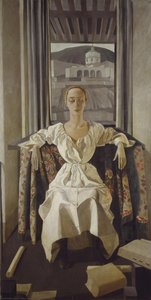
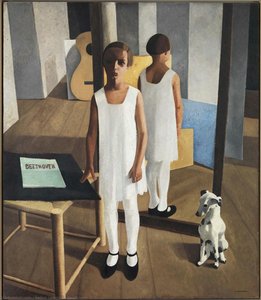
Casorati's oeuvre encompasses figure compositions, portraits, and still lifes, each imbued with his distinctive style. His sculptures in varnished terracotta, first exhibited at the Rome Secession III in 1915, demonstrated a similar preoccupation with form and volume. However, it is perhaps his paintings that remain most iconic. Silvana Cenni, painted in 1922, stands as a prime example of his mature style – a symmetrical composition featuring a seated woman in a white dress. The careful rendering of volumes creates an almost unsettling sense of unreality, paradoxically highlighting the painting’s inherent artificiality. His compositions often feature figures placed within architectural settings, creating a sense of isolation and psychological tension. He frequently employed unusual perspectives, distorting spatial relationships to heighten emotional impact. The deliberate use of muted colors and precise brushwork further contributes to the overall atmosphere of stillness and contemplation.Historical Significance and Lasting Legacy
Raffaello Giolli’s summary in 1925 aptly captured the disconcerting aspects of Casorati's art, acknowledging its "cold," "cerebral," and seemingly "academic" qualities. Yet, these very characteristics are what set him apart. He achieved international recognition as a leading figure in the “Return to Order” movement, influencing generations of artists with his emphasis on form, structure, and psychological depth. Casorati’s work bridged the gap between realism and abstraction, offering a unique vision that continues to resonate today. He wasn't interested in simply depicting reality; he sought to create paintings that were both intellectually stimulating and emotionally evocative. His legacy lies not only in his technical mastery but also in his ability to imbue seemingly simple compositions with profound meaning and enduring mystery.- Key Influences: Gustav Klimt, Piero della Francesca, Renaissance painting.
- Major Themes: Isolation, psychological tension, the relationship between form and space.
- Signature Style: Precise technique, muted colors, unusual perspective effects, symmetrical compositions.
felice casorati
1883 - 1963
Quick Facts
- Artistic Movement Or Style: Symbolism, Return to Order
- Artists Or Movements Influenced By This Artist: ['Return to Order']
- Artists Who Influenced This Artist:
- Gustav Klimt
- Piero della Francesca
- Date Of Birth: 1883
- Date Of Death: 1963
- Full Name: Felice Casorati
- Nationality: Italian
- Notable Artworks: ['Silvana Cenni']
- Place Of Birth: Novara, Italy
Related Articles

White on Canvas: 10 Masterpieces & Timeless Elegance for Your Home Decor
Explore 10 iconic white paintings by Monet, Whistler & Rothko! Discover the stories behind these serene masterpieces and their impact on art history. Find museum-quality reproductions for your home decor at .
Verdant Visions: Exploring the Symbolism & Aesthetic Impact of Green in Art History
Explore the rich history & symbolism of green in art! Discover iconic paintings, techniques, and how to bring verdant harmony into your home with ArtsDot's expert guide.
Chrome Green Masterpieces: 10 Famous Paintings & Their Alluring Hues |
Explore 10 famous paintings where 'Chrome Green' reigns supreme! Discover Monet, Manet & Van Gogh’s masterpieces. Learn the stories behind these iconic artworks and find museum-quality art reproductions for your home at .

Emerald Visions: Top 10 Paintings Dominated by Cadmium Green |
Explore 10 iconic paintings where cadmium green reigns supreme! From Monet to Van Gogh, discover the stories behind these masterpieces & the power of color. Find museum-quality art reproductions and elevate your home decor on .
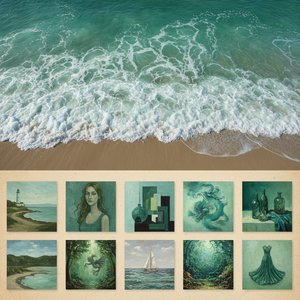
Seafoam & Masterpieces: 10 Paintings Dominated by Medium Sea Green | ArtsDot
Dive into serenity with 10 famous paintings bathed in calming medium sea green. Explore Impressionist masterpieces by Monet, Degas & Renoir. Find museum-quality art reproductions and elevate your home decor at ArtsDot.com.