 Preview
 Send
Send Share
Share
 Details

 Download
 Similars
 X-Ray
X-Ray Diaporama
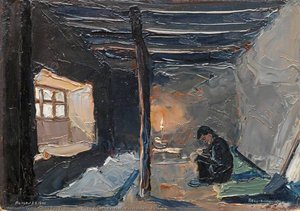
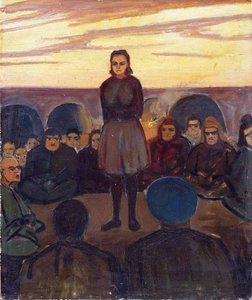
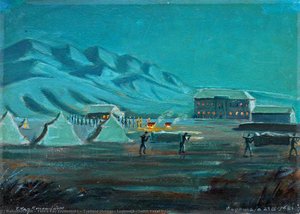
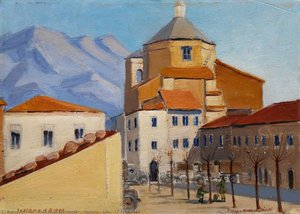
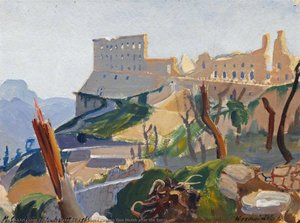
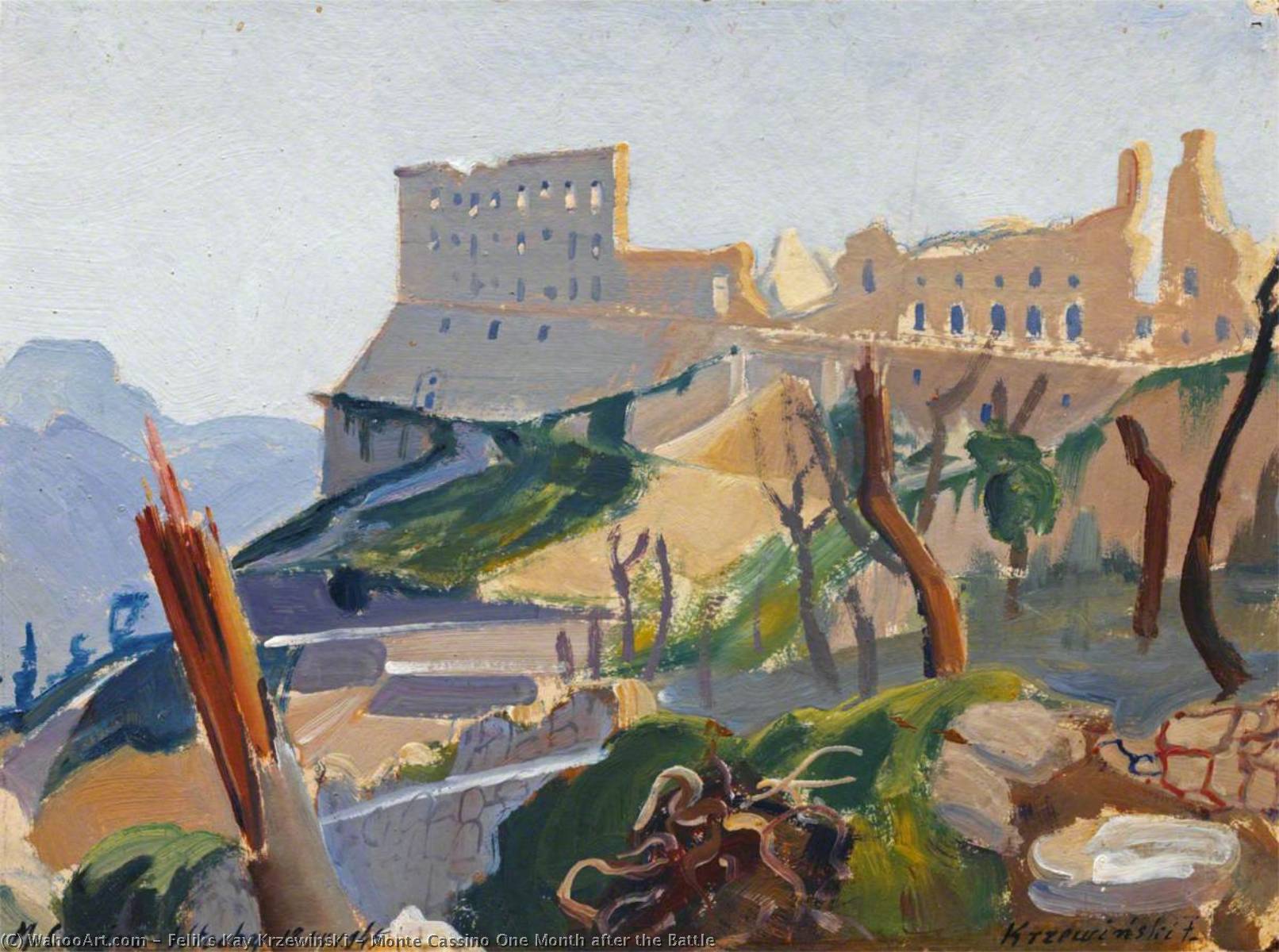
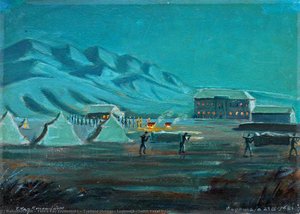
Monte Cassino One Month after the Battle
 1945
1945 30.0 x 41.0 cm
 Read More
Giclée / Art Print
Museum-quality giclée or canvas print with fast production and flexible finish options. ( Buy Hand Made Painting Buy Image)




































Pick from our preset sizes that match the artwork's original proportions.

You may enter your own dimensions to fit a specific frame or space. If your selected size does not match the original image's proportions, we will either crop the artwork or extend the image with a mirrored or solid-fill edge. A digital mockup will be sent for your approval before production begins.
Please note that the on-screen preview does not reflect the actual cropping or extension. Only the mockup will accurately show the final composition.
While custom sizes are available, we recommend selecting a dimension from the predefined list to preserve the original proportions.
Worldwide Delivery () in 2 weeks instead of standard 4/5 weeks. (23 August)

Free Worldwide Express Shipping

High-Quality Linen Canvas

Full Shipping Insurance

Customs Tax Refund Guarantee

True Color Matching Guarantee

60-Day Return Policy (Defects Only)

100% Money-Back Guarantee

Bulk Discount Offer
 Glass option is only available in size under 110 CM

Monte Cassino One Month after the Battle
Giclée / Art Print
Reproduction Size
-


Total Price
$ 63
Related Artworks









Artist Biography
Feliks Kay Krzewinski: A Visionary of Conflict and Culture
Feliks Kay Krzewinski (1900-1981) remains a compelling, if somewhat enigmatic, figure in 20th-century art. Born in Poland amidst the burgeoning artistic movements of the early 20th century, his life was inextricably linked to periods of immense upheaval – the First World War, the Russian Revolution, and ultimately, the Second World War. Krzewinski’s oeuvre is characterized by a distinctive expressionistic style, often imbued with a haunting sense of melancholy and a profound engagement with historical events, particularly those unfolding in Eastern Europe. His work transcends mere documentation; it's a visceral exploration of human experience under extraordinary circumstances.
Krzewinski’s early artistic training is somewhat obscured by the turbulent times he navigated. He initially studied at the Academy of Fine Arts in Warsaw, but his career was significantly impacted by the Russian invasion of Poland in 1920. Forced to flee, he sought refuge in France, where he honed his skills and developed a unique visual language. This period exposed him to the influences of European modernism, particularly the works of artists like Edvard Munch and Otto Dix, whose exploration of psychological states and social critique resonated deeply with Krzewinski’s own sensibilities.
The Shadow of War: Paintings from Eastern Europe
Krzewinski's most significant artistic output emerged during and immediately following World War II. He returned to Poland in 1940, a nation ravaged by conflict and occupation. It was during this period that he produced some of his most powerful and enduring works – paintings that bear witness to the horrors of war and the resilience of the human spirit. His subjects were often drawn from the front lines, depicting scenes of suffering, displacement, and the stark realities of military life.
Notable among these are “Typhoid Victims, Lugowaja,” a deeply unsettling depiction of the aftermath of a typhoid outbreak in a Siberian hospital camp, and "The Artist, Karakol," a claustrophobic portrayal of an artist struggling to capture the bleakness of a Soviet-controlled town. These works aren’t simply representations; they are imbued with a palpable sense of dread and despair, reflecting Krzewinski's own experiences during this period. The use of dark colors, fragmented forms, and impasto techniques creates a visually arresting and emotionally charged effect. His work in this era is often described as “dark expressionism,” characterized by its unflinching honesty and psychological depth.
Technique and Style: A Unique Approach
Krzewinski’s artistic style is immediately recognizable, distinguished by his deliberate use of texture and color. He favored a thick, layered application of paint – an impasto technique – that gives his canvases a tactile quality, almost as if they are sculpted surfaces. This approach not only adds visual interest but also serves to convey the intensity of emotion he sought to express. His palette is often dominated by somber hues—grays, browns, and blacks— punctuated by flashes of vibrant color used sparingly to highlight key elements or create a sense of dramatic contrast.
Furthermore, Krzewinski’s compositions frequently feature distorted perspectives and fragmented forms, reflecting the psychological disorientation experienced during wartime. He was particularly adept at capturing fleeting moments of intense emotion, freezing them in time with remarkable precision. His work demonstrates a mastery of light and shadow, creating a sense of atmosphere that is both haunting and evocative.
Legacy and Recognition
Despite his significant contributions to 20th-century art, Krzewinski’s work remained largely unknown for decades after his death in 1981. It wasn't until the late 20th century that scholars began to recognize the depth and complexity of his oeuvre. Today, Feliks Kay Krzewinski is increasingly appreciated as a key figure in Polish Expressionism and a powerful chronicler of a turbulent era. His paintings offer invaluable insights into the human condition under duress, reminding us of the enduring power of art to bear witness to history’s darkest moments.
His works are now housed in collections around the world, including the Imperial War Museums in London and the Moat Park Heritage Centre in Scotland. Further research continues to shed light on his life and work, solidifying Krzewinski's place as a significant artist of the 20th century.
feliks kay krzewinski
1900 - 1981
Quick Facts
- Artistic Movement Or Style: Expressionism
- Artists Or Movements Influenced By This Artist: ['']
- Artists Who Influenced This Artist: ['']
- Date Of Birth: 1900
- Date Of Death: 1981
- Full Name: Feliks Kay Krzewinski
- Nationality: Polish
- Notable Artworks:
- Typhoid Victims, Lugowaja
- The Artist, Karakol
- Place Of Birth: WahooArt, Poland