 Preview
 Send
Send Share
Share
 Details

 Download
 Similars
 X-Ray
X-Ray Diaporama
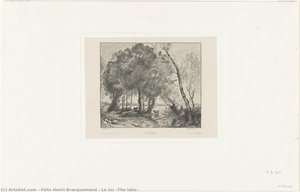
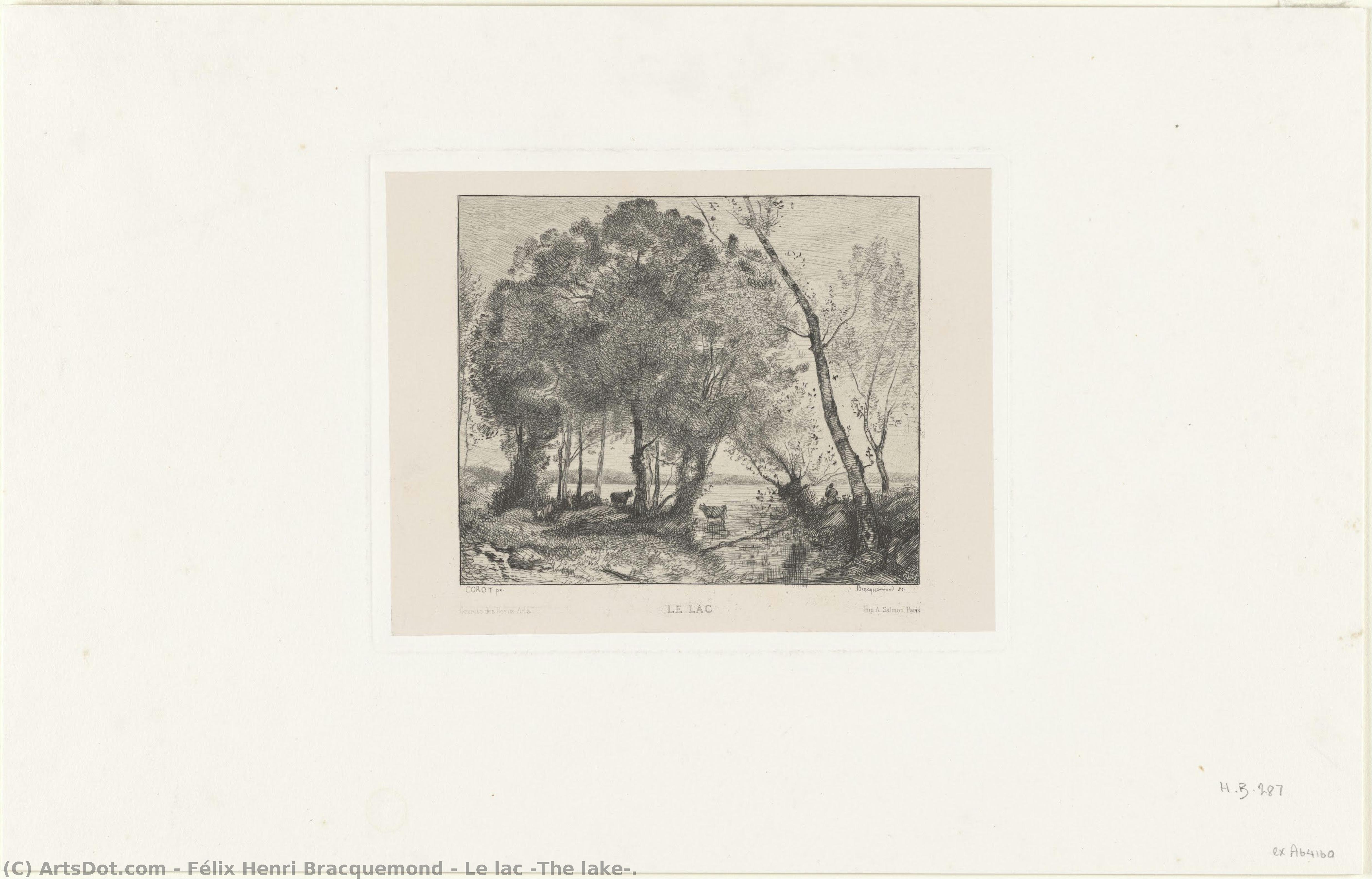
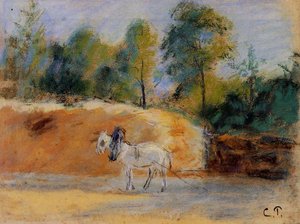
Le lac (The lake).


 Read More
Hand Made Oil Reproduction
Hand-painted oil on canvas in your size and frame, made to order by our artists. ( Buy Print Buy Image)




































Pick from our preset sizes that match the artwork's original proportions.

You may enter your own dimensions to fit a specific frame or space. If your selected size does not match the original image's proportions, we will either crop the artwork or extend the painting with additional hand-painted elements. A digital mockup will be sent for your approval before production begins.
Please note that the on-screen preview does not reflect the actual cropping or extension. Only the mockup will accurately show the final composition.
While custom sizes are available, we recommend selecting a dimension from the predefined list to preserve the original proportions.
After order, ArtsDot.com team will email client for instructions and provide a mockup preview
Worldwide Delivery () in 3/4 weeks instead of standard 5 weeks. (20 August). No compromise on quality.

Free Worldwide Express Shipping

High-Quality Linen Canvas

Full Shipping Insurance

Customs Tax Refund Guarantee

True Color Matching Guarantee

60-Day Return Policy (Defects Only)

100% Money-Back Guarantee

Bulk Discount Offer
 Glass option is only available in size under 110 CM

Le lac (The lake).
Reproduction Medium
Reproduction Size
-


Total Price
$ 263
Artwork Description
Related Artworks
Artist Biography
Early Life and Artistic Training
Félix Henri Bracquemond (May 22, 1833 – October 29, 1914) was born in Paris, France, amidst a burgeoning artistic landscape. His formative years were marked by exposure to the intellectual ferment of his time—the Enlightenment ideals colliding with Romantic sensibilities—influencing his worldview and shaping his artistic inclinations. Trained initially as a commercial lithographer, Bracquemond honed his technical skills before encountering Joseph Guichard, a pupil of Ingres, who steered him towards painting. This mentorship proved pivotal, fostering an appreciation for line and form that would characterize his distinctive style. Notably, he captured the essence of his grandmother’s portrait at nineteen, securing recognition from Théophile Gautier—a testament to his early talent and artistic vision.The Revival of Engraving and Japonisme
Bracquemond's passion for engraving swiftly eclipsed other pursuits. Inspired by the pioneering efforts of J.A.D. Ingres and fueled by a fascination with Japanese art—specifically Hokusai’s Kachô-ga Manga—he embarked on a transformative journey into intaglio printmaking. His discovery of this genre revolutionized French artistic practice, encouraging luminaries like Édouard Manet, Edgar Degas, and Camille Pissarro to embrace the medium's expressive potential. Bracquemond championed innovative techniques, meticulously crafting tonal variations and capturing subtle nuances—a departure from prevailing academic conventions. He became a fervent advocate for printmaking’s role in artistic discourse, establishing *L'Estampe originale* alongside Daniel Vierge and Tony Beltrand to disseminate knowledge about the art form and its evolving trends.Collaboration with Impressionists and Decorative Design
Bracquemond’s friendship extended beyond artistic circles; he cultivated relationships with writers like Auguste Poulet-Malassis, Jules Barbey d'Aurevilly, Gustave Geffroy, Félix Nadar, and Henri Rivière—all figures integral to the Parisian intellectual milieu. He actively mentored artists such as Jean-Baptiste Corot, Édouard Manet, Edgar Degas, and Camille Pissarro, guiding them toward mastering engraving techniques. His influence resonated deeply within the Impressionist movement, shaping their aesthetic sensibilities and bolstering their commitment to capturing fleeting moments of perception. Furthermore, Bracquemond’s inventive spirit found expression in ceramic design—commissioned by Eugène Rousseau—where he pioneered a distinctive Japonisme style that signaled the arrival of this Eastern artistic tradition in France. His designs incorporated motifs inspired by Japanese prints, reflecting his profound appreciation for visual harmony and textural richness.Notable Achievements and Legacy
Bracquemond’s prolific output spanned over eight hundred etchings—a remarkable feat considering the era—demonstrating unparalleled dedication to his craft. His oeuvre encompassed portraits, landscapes, scenes of urban life, and reinterpretations of paintings by masters like Turner, Ingres, Manet, and Corot. He achieved critical acclaim for his tonal mastery and meticulous attention to detail, establishing himself as a cornerstone of French printmaking history. Beyond his artistic accomplishments, Bracquemond’s advocacy for engraving served as an impetus for the broader Impressionist movement—solidifying his position as a pivotal figure in shaping 19th-century art and culture. His legacy continues to inspire artists today, reminding us of the transformative power of experimentation and the enduring beauty of visual storytelling.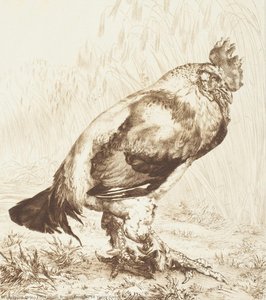
félix henri bracquemond
1833 - 1914 , France
Quick Facts
- Artistic Movement Or Style: Impressionism, Japonisme
- Artists Or Movements Influenced By This Artist: ['Édouard Manet']
- Artists Who Influenced This Artist:
- Joseph Guichard
- Jean-Baptiste Corot
- Date Of Birth: May 22, 1833
- Date Of Death: October 29, 1914
- Full Name: Félix Henri Bracquemond
- Nationality: French
- Notable Artworks:
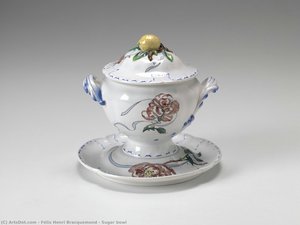
- Sugar bowl
- Le lac (The lake)
- Le Vieux Coq (The Old Rooster)
- Place Of Birth: Paris, France