

 Preview
 Send
Send Share
Share
 Details

 Download
 Similars
 X-Ray
X-Ray Diaporama
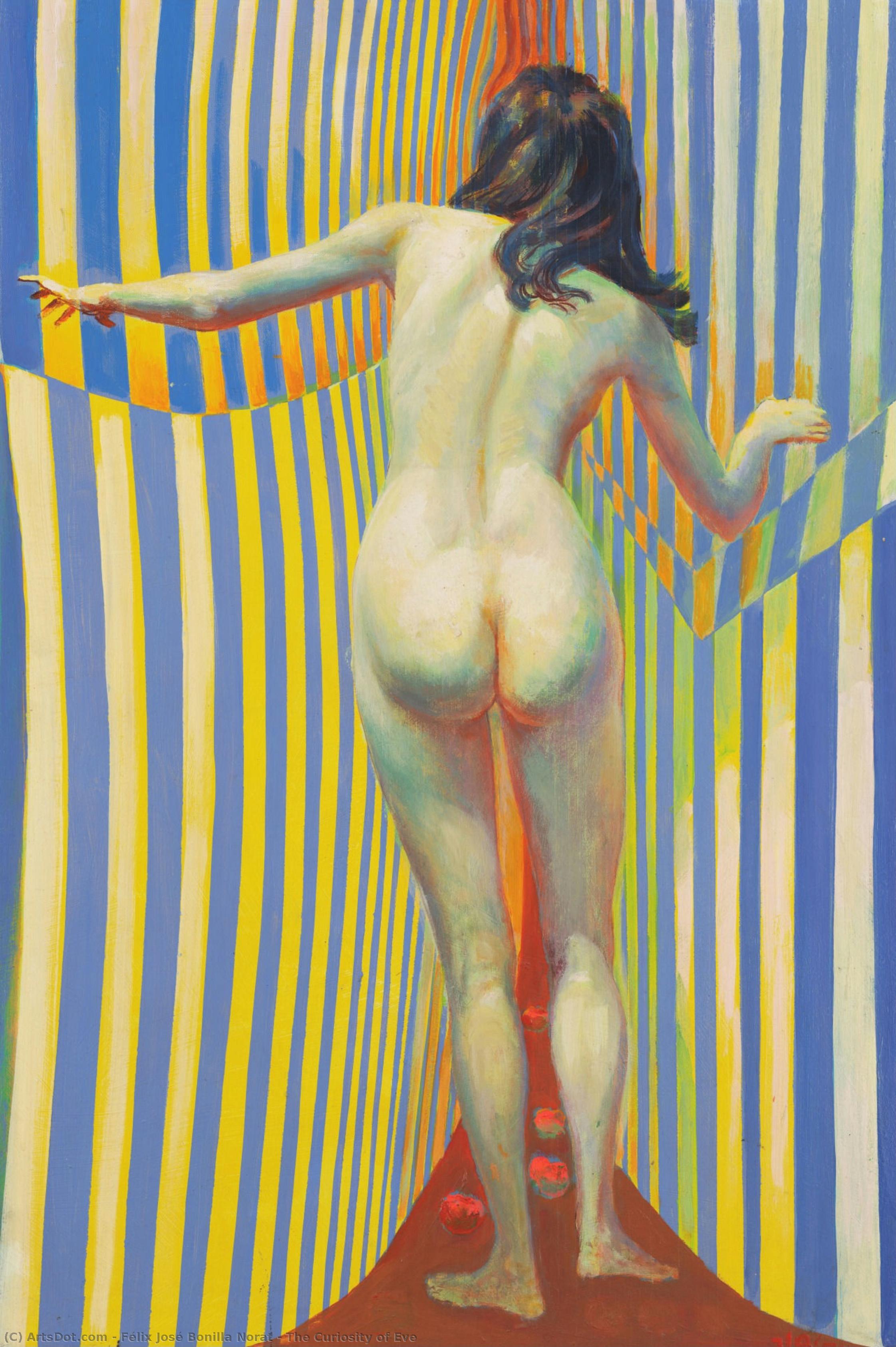
The Curiosity of Eve


 Read More
Purchase a high-resolution, enhanced digital image, far superior to the online preview.
Each file is meticulously prepared by our in-house specialists using advanced tools and expert manual retouching. We ensure every image has exceptional clarity, precise color accuracy, and fine detail.
The final file is delivered via email within 72 hours, optimized for immediate use in professional, editorial, and print environments. This is the same quality trusted by top-tier design studios, publishers, and galleries.
Digital Image
Download a high-resolution file for personal display, printing, and creative projects. ( Buy Print Buy Hand Made Painting)
Included in Every Digital Image Order
Expert Digital Delivery, Guaranteed
When you choose ArtsDot.com, you're not just getting an image - you're receiving a professionally enhanced digital artwork, crafted with precision and backed by a satisfaction guarantee. Here's everything that comes with your order, automatically:

Fast Email Delivery
Your high-resolution digital image file will be emailed to you within 72 hours of ordering - ready for immediate use.

AI-Enhanced Digital File
Your artwork is professionally optimized using advanced AI tools and manual editing, ensuring maximum detail, clarity, and color accuracy.

Free Lifetime Re-Delivery
Accidentally deleted or lost your file? No worries - we'll resend it to you anytime, free of charge.

No Import Fees - Ever
Enjoy your artwork instantly with zero customs, duties, or delivery fees - digital downloads are always tax-free.

Color Accuracy Guarantee
We ensure your digital image reflects the original colors as closely as possible using professional tools and color management.

60-Day Satisfaction Guarantee
If you're not satisfied with your digital image, we'll revise it or refund 100% within 60 days - no questions asked.

100% Money-Back Guarantee
Not satisfied? Get a full refund within 60 days of receiving your digital file - no questions asked.

Bulk Order Discounts
Buy 3 images, save 10% - Buy 5, save 15% - Buy 10+, save 20%. Great for creative projects, galleries, and agencies.
Related Artworks
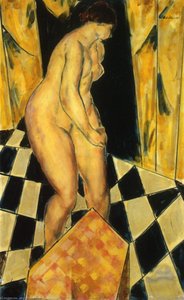
![Nude Figure [reverse] — Ernst Ludwig Kirchner](/media/artworks/images-thumb/14/f6/14f6754b298bf6a1d2e277238ff268dc.jpg)

Artist Biography
Jackson Pollock: A Revolutionary of American Abstraction
Born in Cody, Wyoming, in 1912, Paul Jackson Pollock—the name he initially carried before adopting his father’s surname—emerged from a transient childhood marked by frequent moves across the American West and Southwest. His early life, steeped in the rugged landscapes of Iowa and the burgeoning artistic communities of California and Arizona, instilled within him a restless spirit and an acute sensitivity to the world around him. This itinerant upbringing, coupled with his family’s Scotch-Irish heritage—a lineage rooted in both practicality and a deep connection to the land—would profoundly shape his artistic vision, informing a style that defied conventional boundaries and redefined the possibilities of painting.
Pollock's formal art training was limited. He briefly attended Manual Arts High School in Los Angeles, where he encountered Frederick John de St. Vrain Schwankovsky, an illustrator and member of the Theosophical Society. This encounter introduced him to esoteric ideas about consciousness and the interconnectedness of all things—concepts that would later find expression through his unconventional approach to painting. However, it was a chance meeting with Peggy Guggenheim in 1947 that proved pivotal, providing him with exposure to the burgeoning world of modern art and ultimately leading to his representation by her gallery.
Pollock’s artistic journey began with more traditional forms, but he quickly developed a revolutionary technique—a process he termed “drip painting.” Rejecting the conventional brushstroke and easel, he began to pour, drip, and splash paint directly onto vast canvases laid flat on the floor. This method, initially met with skepticism, allowed him to create works of immense scale and dynamic energy, capturing the essence of movement and spontaneity. His early experiments, such as “No. 5, 1948,” demonstrated a willingness to dismantle established artistic conventions and embrace an entirely new mode of expression.
The Rise of Action Painting and Abstract Expressionism
Pollock’s work quickly gained recognition within the context of Abstract Expressionism, a movement that emerged in New York City during the late 1940s. Unlike the more emotionally charged landscapes of artists like Mark Rothko, Pollock's paintings were characterized by their energetic physicality and seemingly random application of paint. Critics initially struggled to understand his process, dismissing it as chaotic or accidental. However, as he continued to refine his technique and explore new possibilities, his work began to resonate with a growing audience.
Influenced by the writings of Henri Matisse, particularly his emphasis on color and its expressive power, Pollock sought to create paintings that were not merely representations of objects but rather embodiments of feeling. He drew inspiration from various sources—music, literature, and even the rhythms of everyday life—translating these experiences into a visual language characterized by layered colors, gestural marks, and an overall sense of dynamism. His work became synonymous with “action painting,” reflecting the physical engagement involved in his creative process.
Key Works and Techniques
Several works stand out as particularly significant examples of Pollock’s artistic development. "Blue Poles" (1952), a monumental canvas dominated by swirling shades of blue, is considered one of his most iconic paintings. Its vibrant color palette and dynamic composition captured the energy of the ocean—a recurring motif in his work. “Mural” (1948) represents another pivotal moment, showcasing his mastery of scale and his willingness to experiment with new techniques. These works, along with others such as "Convergence" (1952), demonstrate his ability to create paintings that are both visually arresting and emotionally resonant.
Pollock’s technique involved a deliberate rejection of traditional tools. He used sticks, knives, and even his own hands to manipulate the paint on the canvas, creating a network of intersecting lines and drips. This process was not about control but rather about surrendering to the flow of creativity—allowing the paint to guide him toward an unexpected outcome. His studio became a laboratory for experimentation, where he tirelessly explored new ways of applying color and texture.
Legacy and Historical Significance
Jackson Pollock’s impact on 20th-century art is undeniable. He challenged conventional notions of what painting could be, paving the way for subsequent generations of artists to explore new forms of expression. His work helped to establish New York City as a global center for modern art, rivaling Paris and other European capitals. Despite his struggles with alcoholism and a tragically short life—he died in 1956 at the age of 44—Pollock left behind a body of work that continues to fascinate and inspire.
His legacy extends beyond the realm of painting, influencing artists across various disciplines—including sculpture, photography, and performance art. Pollock’s willingness to embrace spontaneity, experimentation, and personal expression has made him one of the most important figures in American art history, a true revolutionary who forever altered the course of artistic practice.
félix josé bonilla norat
1912 - 1992 , Puerto Rico
Quick Facts
- Artistic Movement Or Style: Abstract Expressionism, Action painting
- Artists Or Movements Influenced By This Artist:
- Lee Krasner
- Abstract Expressionism
- Artists Who Influenced This Artist:
- Edward Gordon Craig
- Vasilly Kandinsky
- Date Of Birth: January 28, 1912
- Date Of Death: August 11, 1956
- Full Name: Paul Jackson Pollock
- Nationality: American
- Notable Artworks:
- Blue Poles
- Mural
- Convergence
- Place Of Birth: Cody, Wyoming, USA

