 Preview
 Send
Send Share
Share
 Details

 Download
 Similars
 X-Ray
X-Ray Diaporama
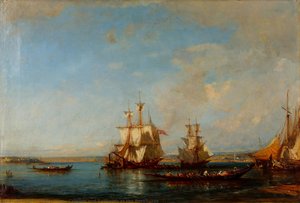
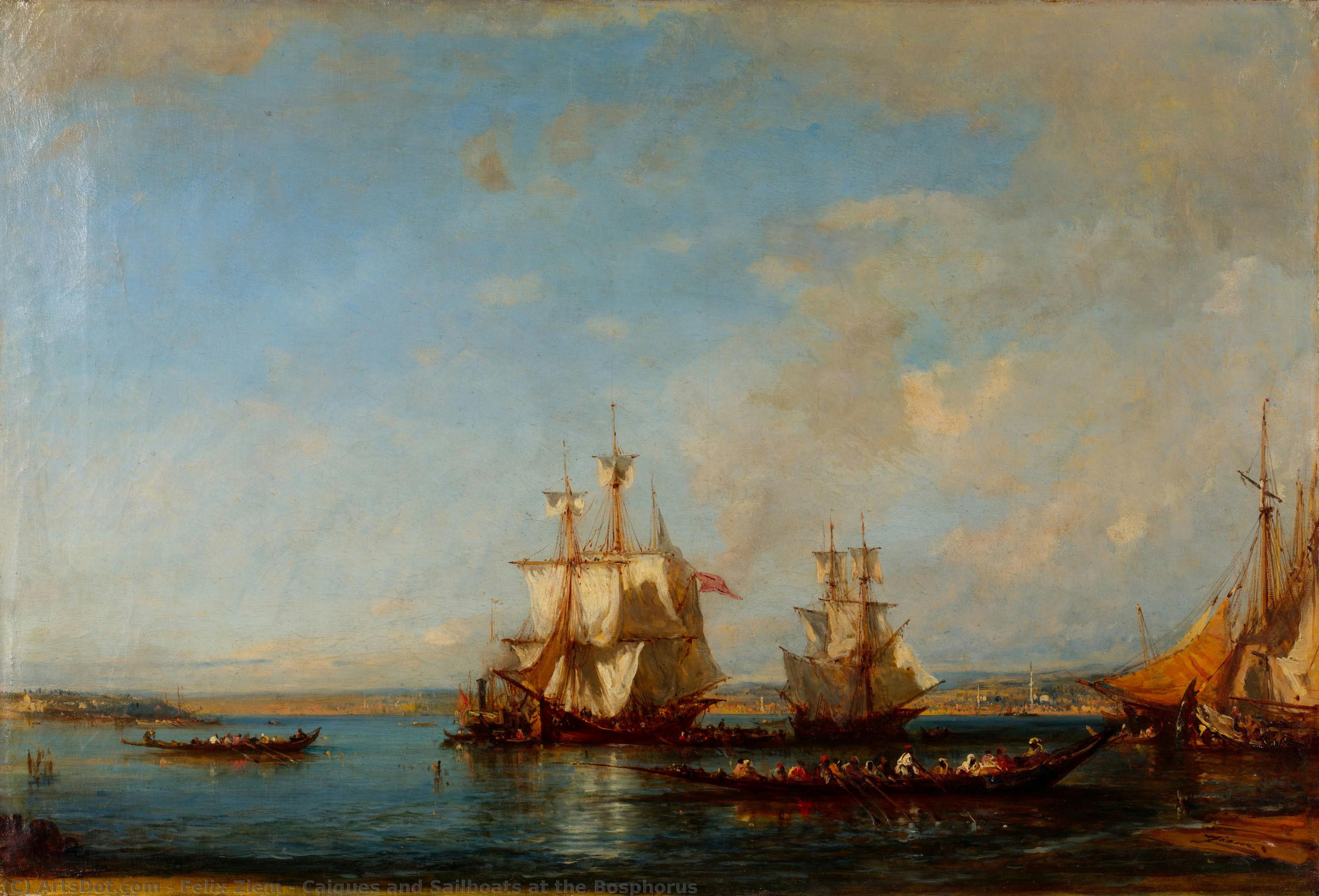
Caiques and Sailboats at the Bosphorus
 Oil On Canvas
- WallArt
- Barbizon School
 19th Century
 810.0 x 550.0 cm
 Pera Museum
 Read More
Hand Made Oil Reproduction
Hand-painted oil on canvas in your size and frame, made to order by our artists. ( Buy Print Buy Image)




P118B $10

P118H $10

P118W $10

P438Z $10

P508JH $12

P508YH $12

P805H $10

P805Z $10

P919BZ $10

P919G $10

P919XJ $10

P959ZH $10

P968JZ $12

W106C $8

W218G $10

W218JH $8

W218Y $10

W307PJ $10

W316G $10

W316PJ $8

W316Y $10

W398PJ $8

W4111J $10

W500HY $15

W500JH $15

W692G $12

W849H $8

W940BG $15

W953PJ $8




Pick from our preset sizes that match the artwork's original proportions.

You may enter your own dimensions to fit a specific frame or space. If your selected size does not match the original image's proportions, we will either crop the artwork or extend the painting with additional hand-painted elements. A digital mockup will be sent for your approval before production begins.
Please note that the on-screen preview does not reflect the actual cropping or extension. Only the mockup will accurately show the final composition.
While custom sizes are available, we recommend selecting a dimension from the predefined list to preserve the original proportions.
After order, ArtsDot.com team will email client for instructions and provide a mockup preview
Worldwide Delivery () in 3/4 weeks instead of standard 5 weeks. (21 August). No compromise on quality.

Free Worldwide Express Shipping

High-Quality Linen Canvas

Full Shipping Insurance

Customs Tax Refund Guarantee

True Color Matching Guarantee

60-Day Return Policy (Defects Only)

100% Money-Back Guarantee

Bulk Discount Offer
 Glass option is only available in size under 110 CM

Caiques and Sailboats at the Bosphorus
Reproduction Medium
Reproduction Size
-


Total Price
$ 263
Artwork Description
A Symphony of Azure: The Luminous Bosphorus
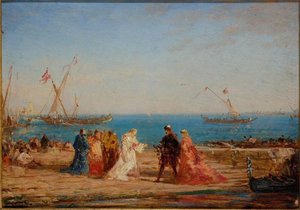
In the breathtaking masterpiece Caiques and Sailboats at the Bosphorus, Félix Ziem invites the viewer to step into a world where water and sky dissolve into one another through a mesmerizing dance of light. This evocative scene captures the vibrant, rhythmic life of the Bosphorus strait, rendered with a painterly touch that transcends mere documentation. The composition is anchored by several vessels—large, majestic sailboats that command the mid-ground, alongside smaller, delicate caiques that drift like scattered petals across the shimmering surface. Through Ziem’s expert use of perspective, the boats vary in scale, creating an immense sense of depth that draws the eye from the immediate ripples of the foreground toward the hazy, ethereal silhouettes of Istanbul's mosques resting on the distant horizon.
The emotional resonance of this work lies in its ability to evoke a sense of timeless tranquility. There is a profound stillness found within the movement; while the boats suggest a bustling maritime commerce, the atmosphere remains dreamlike and serene. For the collector or interior designer, this painting offers more than just a view; it provides an atmospheric window into a romanticized Orient, making it an ideal centerpiece for spaces designed to inspire contemplation, peace, and a connection to the natural world.
The Alchemy of Color and Technique
Technically, this work stands as a testament to Ziem’s mastery of color, a skill so profound that even Vincent van Gogh famously expressed a desire to replicate his unique blues. As a prominent figure of the Barbizon school with strong Orientalist inclinations, Ziem moved away from rigid academic lines in favor of a more fluid, atmospheric approach. He often utilized natural pigments, and in this particular piece, the use of lapis lazuli is palpable. This precious mineral lends a deep, soulful intensity to the dominant blues that define the sea and sky, creating a luminosity that seems to glow from within the canvas itself.
Ziem’s technique involves a sophisticated layering of color stains, where human figures and architectural details are reduced to mere impressions of light and shadow. This approach allows the viewer's imagination to complete the scene, turning every brushstroke into a sensory experience. The way the light hits the sails and reflects off the undulating waves demonstrates a brilliant understanding of luminosity. For those seeking a high-quality reproduction, capturing these subtle gradations of blue and the textured application of paint is essential to preserving the soul of Ziem’s vision.
A Bridge Between Worlds
Historically, Caiques and Sailboats at the Bosphorus serves as a beautiful bridge between the French Barbizon tradition and the allure of Orientalism. Having traveled to Constantinople, Ziem utilized sketches made during his journeys to reconstruct these scenes with a sense of nostalgic authenticity. The painting does not merely depict a location; it captures a memory of a lost era of maritime splendor. By blending the landscape-focused philosophy of the Barbizon school—which emphasized the raw beauty of nature—with the exotic, romanticized subjects of the East, Ziem created a genre of art that is both grounded in reality and elevated by fantasy.
To possess a reproduction of this work is to bring a piece of 19th-century wanderlust into the modern home. It serves as a sophisticated element for any curated collection, offering a rich tapestry of historical context and aesthetic brilliance. Whether placed in a sunlit gallery or a quiet study, the painting’s enduring ability to evoke the salt air and the shimmering light of the Bosphorus ensures it remains a timeless treasure for art lovers across generations.
Related Artworks



Artist Biography
The Luminous Legacy of Félix Ziem
Félix Ziem stands as a captivating figure in the tapestry of 19th-century French art, an artist whose brush possessed the unique ability to bridge the soulful, grounded traditions of the Barbizon School with the exotic, sun-drenched allure of Orientalism. Born Félix François Georges Philibert Ziem in 1821 in the historic town of Beaune, Burgundy, his early life was marked by a tension between structure and spirit. While he initially pursued the disciplined path of architecture, the call of the canvas proved irresistible. This transition was profoundly shaped by his mentorship under Adolphe Monticelli in Marseille, a connection that would forever infuse Ziem’s work with a vibrant, almost Impressionistic approach to light and texture.
The essence of Ziem's artistry is perhaps best understood through his profound relationship with light. His journey was not merely one of geographic movement, but an emotional odyssey through different atmospheres. A defining moment in his development occurred during his 1841 visit to Venice, a city that would become his eternal muse. In the shimmering canals and the decaying grandeur of Venetian palaces, Ziem found a way to translate atmosphere into pigment. He did not seek to document the architecture with academic rigidity; instead, he utilized loose brushstrokes and a luminous palette to capture the ephemeral quality of reflections on water and the soft, hazy glow of the Adriatic dusk.
A Journey Through Light and Landscape
As his career flourished in the artistic hubs of Marseille and Paris, Ziem’s vision expanded far beyond the borders of France. He became a traveler of both the world and the senses, documenting diverse landscapes with a remarkable sensitivity to color. His explorations took him to the heart of the Ottoman Empire, where works such as Caiques and Sailboats at the Bosphorus showcase his ability to render the vibrant blues of the Turkish waters and the silhouetted majesty of mosques. This fascination with the East allowed him to master the Orientalist style, blending the exoticism of Constantinople and Egypt with a French painterly sensibility.
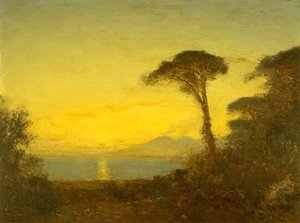
Ziem’s versatility allowed him to move seamlessly between different environments, from the serene, pine-filled landscapes of Martigues in works like Midi, étude de pins to the tranquil river scenes of Northern Europe, such as his depiction of the Amstel River. His technique often relied on a delicate balance of detail and abstraction, where the subject matter—be it a coastal vista or a bustling harbor—served as a vessel for exploring the interplay of shadow and brilliance. This ability to evoke a sense of place through light alone is what elevates his work from mere landscape painting to a profound sensory experience.
Artistic Significance and Enduring Influence
The historical significance of Félix Ziem lies in his role as a transitional master. He stood at the crossroads of several movements, absorbing the naturalism of the Barbizon painters while anticipating the light-centric revolutions of Impressionism. His work serves as a vital link between the romanticized landscapes of the early 19th century and the more experimental, atmospheric explorations that followed. By prioritizing emotional resonance and the "feeling" of light over precise topographical accuracy, he paved the way for a more subjective approach to landscape painting.
Today, Ziem’s legacy continues to captivate collectors and art historians alike. His ability to transport the viewer to a different time and place—whether it be a misty morning on a Dutch river or a sun-soaked afternoon in the Mediterranean—remains undiminished. His life's work stands as a testament to the power of observation and the enduring magic of the natural world, captured through a lens of pure, unadulterated light.
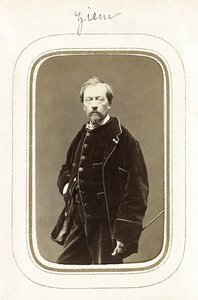
Felix Ziem
1825 - 1911 , France
Quick Facts
- Artistic Movement Or Style: Barbizon School & Orientalist art
- Artists Or Movements Influenced By This Artist: ['Impressionism']
- Artists Who Influenced This Artist: ['Adolphe Monticelli']
- Date Of Birth: Beaune, France (1825)
- Date Of Death: 1911
- Full Name: Félix François Georges Philibert Ziem
- Nationality: French
- Notable Artworks:
- Le Bosphore
- Grand Canal in Venice
- Marseille, étude de deapeaux
- Place Of Birth: Beaune, Burgundy
Related Articles
Slate Blue Masterpieces: 10 Iconic Paintings & Timeless Home Decor Ideas
Immerse yourself in the captivating world of slate blue! Explore 10 iconic paintings by Monet, Van Gogh & Renoir. Discover their stories, techniques & find museum-quality art reproductions for your home at .
The Allure of Azure: Exploring the Symbolic & Aesthetic Depths of Blue in Art History
Explore the rich history of blue in art! Discover its symbolism, from ancient pigments to modern masterpieces by Kandinsky & Seurat. Uncover the psychological impact and cultural meanings behind this captivating hue.
The Allure of the Horizon: A Comprehensive Exploration of Seascape Art Through History & Emotion
Explore the captivating world of seascape art! Discover its history, key artists & movements – from Dutch Masters to Impressionism. Expert insights for collectors and enthusiasts at ArtsDot.
Azure Visions: Exploring Representations of the Blue Dress in Western Art History
Explore the rich history of the blue dress in Western art! Discover its symbolism, from Renaissance masterpieces to modern interpretations by artists like Martin & Schiele. Uncover cultural meanings and artistic techniques.
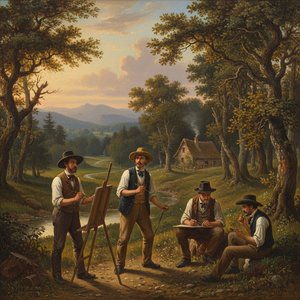
The Barbizon School: Pioneering Realism & the Pastoral Vision in 19th-Century French Painting
Explore the Barbizon School's pivotal role in 19th-century French painting. Discover how these artists revolutionized landscape art with their commitment to Realism and a profound connection to nature. Learn about key figures like Rousseau, Millet & Corot.