 Preview
 Send
Send Share
Share
 Details

 Download
 Similars
 X-Ray
X-Ray Diaporama
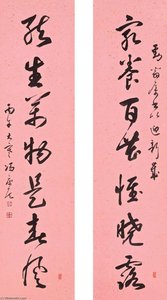
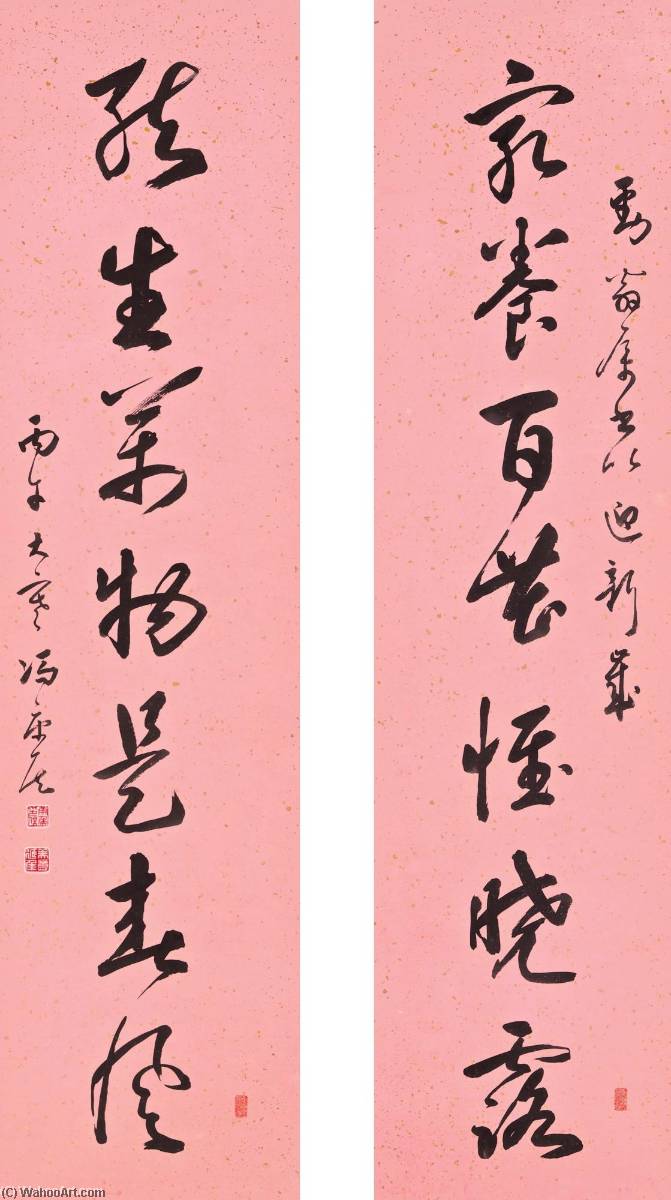
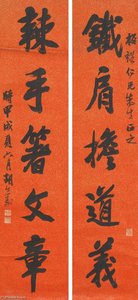
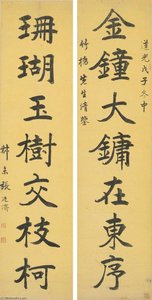
Calligraphy Couplet in Xingshu
 133.0 x 33.0 cm
 Read More
Giclée / Art Print
Museum-quality giclée or canvas print with fast production and flexible finish options. ( Buy Hand Made Painting Buy Image)




































Pick from our preset sizes that match the artwork's original proportions.

You may enter your own dimensions to fit a specific frame or space. If your selected size does not match the original image's proportions, we will either crop the artwork or extend the image with a mirrored or solid-fill edge. A digital mockup will be sent for your approval before production begins.
Please note that the on-screen preview does not reflect the actual cropping or extension. Only the mockup will accurately show the final composition.
While custom sizes are available, we recommend selecting a dimension from the predefined list to preserve the original proportions.
Worldwide Delivery () in 2 weeks instead of standard 4/5 weeks. (22 August)

Free Worldwide Express Shipping

High-Quality Linen Canvas

Full Shipping Insurance

Customs Tax Refund Guarantee

True Color Matching Guarantee

60-Day Return Policy (Defects Only)

100% Money-Back Guarantee

Bulk Discount Offer
 Glass option is only available in size under 110 CM

Calligraphy Couplet in Xingshu
Giclée / Art Print
Reproduction Size
-


Total Price
$ 63
Related Artworks



Artist Biography
Feng Kanghou (1901 – 1983): Echoes of Tradition in Seal Script
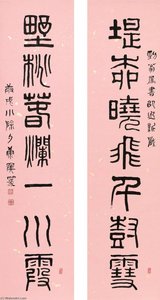
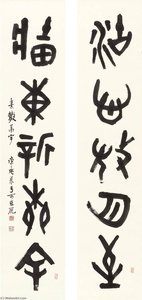
Feng Kanghou, born in Shandong Province, China, was a pivotal figure in the revival and modernization of Chinese calligraphy during the mid-20th century. His artistic journey began amidst the turbulent backdrop of Japanese occupation and subsequent Nationalist rule, shaping his perspective on preserving cultural heritage while embracing new aesthetic sensibilities. While biographical details remain somewhat sparse—records indicate he primarily practiced independently—his impact on contemporary calligraphy is undeniable, cementing his legacy as a champion of Xingshu (行書), Zhuanshu (篆書) and Jinwen (金文) styles. Kanghou’s formative years instilled in him a deep appreciation for the classical traditions of Chinese art, particularly Confucian ethics and Daoist philosophy. These influences permeated his artistic practice, informing his meticulous attention to detail and his unwavering commitment to mastering the intricacies of brushwork and inkstone technique. He studied under renowned calligraphers of his time, diligently honing his skills and absorbing their wisdom—a testament to the importance of mentorship in preserving artistic heritage. Kanghou’s stylistic evolution mirrored broader trends within Chinese calligraphy during this period. Initially drawn to Zhuanshu, characterized by its monumental character forms and deliberate spacing—reflecting the grandeur of imperial inscriptions—he gradually transitioned towards Xingshu, which prioritized fluidity and naturalness while retaining a formal elegance. This stylistic shift signaled a move away from purely decorative considerations toward conveying profound philosophical ideas with grace and precision. Kanghou’s exploration of Jinwen (金文), ancient bronze script revived for ceremonial purposes, further demonstrated his dedication to honoring China's rich artistic past. His oeuvre comprises numerous poems and inscriptions executed in these distinct styles—particularly notable are “Natural Series 2012-1” and “Natural Series 2012-2,” which showcase his masterful command of brushstrokes and inkstone manipulation. These works exemplify Kanghou’s ability to distill complex concepts into concise, aesthetically compelling visual representations. The meticulous rendering of blossoms—a recurring motif in his art—symbolizes renewal and resilience—themes deeply rooted in Chinese cultural symbolism. Furthermore, “Calligraphy Couplet In Lishu” and “Calligraphy Couplet In Jinwen” demonstrate Kanghou’s versatility across different script types, highlighting his profound understanding of their respective expressive qualities. Kanghou's contribution to the revival of calligraphy extends beyond individual artworks; he actively promoted traditional techniques and fostered a renewed interest in Chinese art among younger generations. His unwavering dedication to preserving cultural heritage served as an inspiration for aspiring calligraphers and solidified his position as one of China’s most respected artists of the 20th century. He died peacefully in Beijing in 1983, leaving behind a body of work that continues to resonate with scholars and enthusiasts alike—a lasting testament to the enduring power of calligraphy as a medium for artistic expression and philosophical contemplation.
feng kanghou
1901 - 1983
Quick Facts
- Artistic Movement Or Style: Xingshu calligraphy style
- Date Of Death: 1983
- Full Name: Feng Kanghou
- Nationality: Chinese
- Notable Artworks:
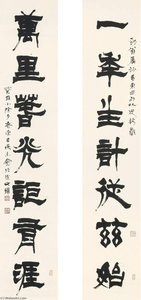
- Calligraphy Couplet in Lishu
- Calligraphy Couplet in Jinwen
- Place Of Birth: China