

 Preview
 Send
Send Share
Share
 Details

 Download
 Similars
 X-Ray
X-Ray Diaporama
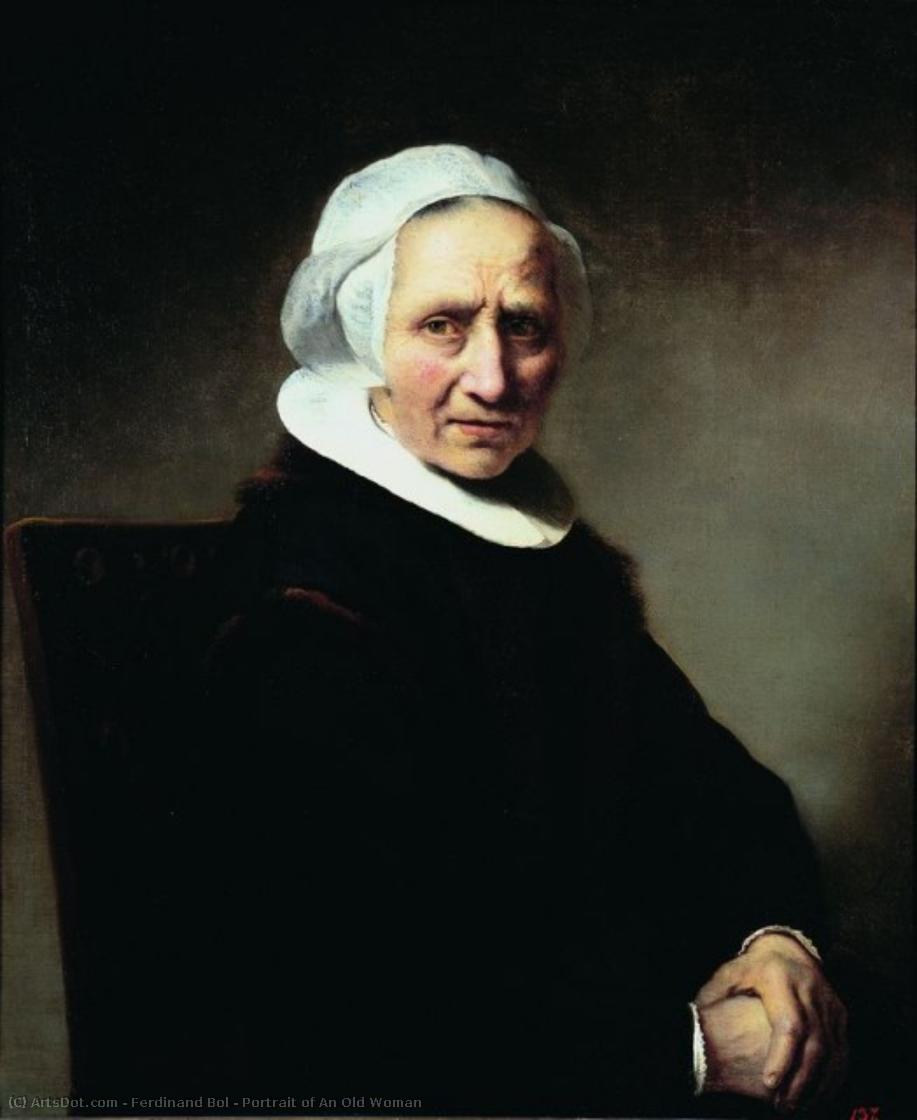
Portrait of An Old Woman
 Oil On Canvas
- WallArt
- Dutch Golden Age Painting
 1640
1640 68.0 x 81.0 cm
 National Museum in Warsaw
 Read More
Purchase a high-resolution, enhanced digital image, far superior to the online preview.
Each file is meticulously prepared by our in-house specialists using advanced tools and expert manual retouching. We ensure every image has exceptional clarity, precise color accuracy, and fine detail.
The final file is delivered via email within 72 hours, optimized for immediate use in professional, editorial, and print environments. This is the same quality trusted by top-tier design studios, publishers, and galleries.
Digital Image
Download a high-resolution file for personal display, printing, and creative projects. ( Buy Print Buy Hand Made Painting)
Included in Every Digital Image Order
Expert Digital Delivery, Guaranteed
When you choose ArtsDot.com, you're not just getting an image - you're receiving a professionally enhanced digital artwork, crafted with precision and backed by a satisfaction guarantee. Here's everything that comes with your order, automatically:

Fast Email Delivery
Your high-resolution digital image file will be emailed to you within 72 hours of ordering - ready for immediate use.

AI-Enhanced Digital File
Your artwork is professionally optimized using advanced AI tools and manual editing, ensuring maximum detail, clarity, and color accuracy.

Free Lifetime Re-Delivery
Accidentally deleted or lost your file? No worries - we'll resend it to you anytime, free of charge.

No Import Fees - Ever
Enjoy your artwork instantly with zero customs, duties, or delivery fees - digital downloads are always tax-free.

Color Accuracy Guarantee
We ensure your digital image reflects the original colors as closely as possible using professional tools and color management.

60-Day Satisfaction Guarantee
If you're not satisfied with your digital image, we'll revise it or refund 100% within 60 days - no questions asked.

100% Money-Back Guarantee
Not satisfied? Get a full refund within 60 days of receiving your digital file - no questions asked.

Bulk Order Discounts
Buy 3 images, save 10% - Buy 5, save 15% - Buy 10+, save 20%. Great for creative projects, galleries, and agencies.
Collectible Description
A Silent Dignity: Ferdinand Bol’s Portrait of an Elderly Woman
Ferdinand Bol's "Portrait of an Elderly Woman," painted circa 1640, is not merely a depiction of a subject; it’s a profound meditation on age, wisdom, and the quiet strength found within a life well-lived. Often overshadowed by the flamboyant brilliance of Rembrandt van Rijn, Bol emerges as a master of nuanced realism and psychological depth, particularly evident in this remarkably intimate portrait. The painting immediately draws the viewer into a world of muted tones and subtle gestures, inviting contemplation rather than immediate admiration.
The subject herself is an enigma, her identity shrouded in the historical mists of 17th-century Holland. While speculation persists that she might be Elisabeth Bas, the wife of a prominent naval officer, the painting’s enduring power lies not in its specific sitter but in its universal representation of female experience. Bol skillfully captures the essence of an older woman – her wrinkles etched with time and experience, her hands folded in a gesture of quiet contemplation, her gaze direct yet not confrontational. It's a gaze that speaks volumes about resilience and inner peace.
The Language of Light and Shadow
Bol’s technical mastery is immediately apparent in the masterful use of chiaroscuro – the dramatic interplay of light and shadow – which dominates the composition. The strong, directional lighting focuses intently on the woman's face and hands, highlighting their texture and emphasizing the delicate tracery of wrinkles. This technique not only creates a sense of depth but also imbues the portrait with an almost theatrical quality, reminiscent of Caravaggio’s dramatic style. The dark background serves to isolate the subject, drawing all attention to her dignified presence.
The artist's brushwork is remarkably smooth and blended, indicative of Bol’s meticulous approach. Layer upon layer of oil paint build up a rich surface texture, capturing the subtle variations in tone and creating an illusion of three-dimensionality. Note particularly how the folds of her clothing are rendered with delicate precision, revealing the underlying fabric beneath. The careful attention to detail extends to the rendering of her hands – each vein, each crease, meticulously depicted.
A Window into a Dutch Golden Age World
“Portrait of an Elderly Woman” is firmly rooted in the artistic conventions of the Dutch Golden Age, a period characterized by its emphasis on realism, meticulous observation, and a fascination with portraiture. The painting reflects the social values of the time – a deep respect for age and experience, particularly within the upper echelons of society. The woman’s attire—a simple yet elegant white cap and dark gown—suggests her status as a respectable member of the community.
Interestingly, the attribution to Rembrandt initially clouded the painting's identity, highlighting the close stylistic ties between these two masters. However, Bol’s unique approach – his subtle use of color, his psychological insight, and his masterful handling of light – ultimately establish him as a distinct artistic voice. The painting stands as a testament to his skill and a valuable addition to the canon of Dutch portraiture.
Symbolism and Emotional Resonance
Beyond its technical brilliance, “Portrait of an Elderly Woman” resonates with profound emotional depth. The woman’s expression is not one of sadness or regret but rather of quiet dignity and acceptance. Her folded hands suggest a life of service and perhaps a touch of melancholy, yet her gaze holds a spark of intelligence and resilience. The painting invites us to contemplate the passage of time, the accumulation of wisdom, and the enduring beauty of an aging soul.
This portrait is more than just a likeness; it’s a timeless meditation on human experience—a poignant reminder that true beauty lies not in youth but in the quiet strength and dignity found within a life fully lived. It's a piece that speaks to us across centuries, offering a glimpse into the heart of a bygone era and inviting us to reflect on our own journey through time.
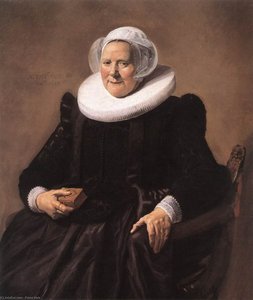
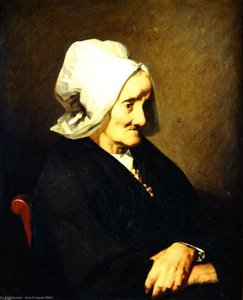
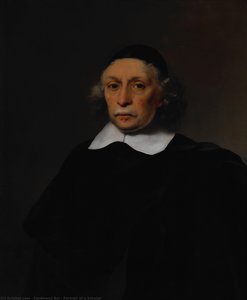
Related Artworks

Artist Biography
A Forgotten Master of the Dutch Golden Age
Ferdinand Bol, a name perhaps less familiar than those of his illustrious contemporaries Rembrandt van Rijn and Johannes Vermeer, nevertheless occupies a significant, if often overlooked, position within the pantheon of 17th-century Dutch Masters. Born in Dordrecht in 1616, Bol’s artistic journey was deeply intertwined with that of Rembrandt, serving as a pupil in the master's Amsterdam studio during a formative period. This apprenticeship profoundly shaped his style, initially leading to works so convincingly reminiscent of Rembrandt that attribution could prove challenging even for seasoned experts. However, to simply categorize Bol as a mere imitator would be a disservice to his own unique artistic voice and considerable talent. His early life laid the groundwork for a career marked by both technical brilliance and an evolving stylistic independence. While details regarding his initial training remain somewhat scarce – possibilities include tutelage under Jacob Cuyp in Dordrecht or Abraham Bloemaert in Utrecht – it was undoubtedly his time with Rembrandt that proved pivotal, immersing him in the dramatic lighting, psychological depth, and masterful brushwork characteristic of the Baroque period.From Rembrandt’s Shadow to Independent Vision
Bol's artistic development can be traced through a fascinating trajectory—one beginning with faithful emulation and gradually blossoming into a distinctive personal style. In his early works, the influence of Rembrandt is undeniable; compositions often echo those of his teacher, employing similar chiaroscuro effects and a penchant for portraying figures in moments of intense emotional or psychological drama. However, as Bol matured, he began to refine his technique, moving towards a greater emphasis on clarity, elegance, and refined detail. His palette lightened, and his figures acquired a more polished, aristocratic bearing. This shift is particularly evident in his portraits, which became increasingly sought after by Amsterdam’s wealthy elite. He quickly rose through the ranks of Amsterdam's artistic community, becoming a burgher in 1652 and marrying into a family with connections to both the Admiralty and the wine merchants’ guild – affiliations that undoubtedly contributed to securing prestigious commissions. Notably, he received orders for chimney pieces for the new Amsterdam Town Hall, designed by Jacob van Campen, a testament to his growing reputation and artistic standing. He even took on pupils of his own, most notably Godfrey Kneller, who would later achieve fame as an English portrait painter.Historical Narratives and Portraiture: A Diverse Oeuvre
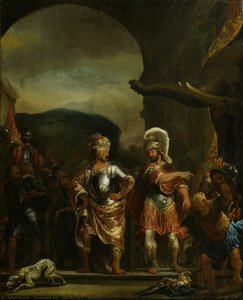
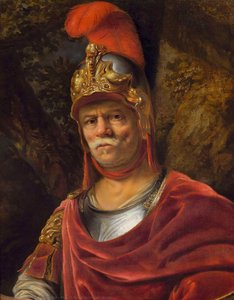
Bol’s oeuvre is remarkably diverse, encompassing historical subjects, portraits, *tronies* (character studies), and even some landscape elements. He demonstrated a particular aptitude for large-scale historical paintings, imbuing them with a sense of grandeur and dramatic tension. The Peace Negotiations between Claudius Civilis and Quintus Petillius Cerealis on the Demolished Bridge, now housed in a museum collection, stands as a prime example of his skill in depicting complex narratives with compelling visual impact. The painting showcases not only his mastery of composition and perspective but also his ability to convey the weight of historical events through expressive gestures and carefully rendered details. However, it was perhaps in the realm of portraiture that Bol truly excelled. He possessed an uncanny ability to capture the likenesses of his sitters while simultaneously revealing their inner character and social status. His portraits are characterized by a refined elegance and psychological insight, offering glimpses into the lives and personalities of Amsterdam’s prominent citizens. Works like Man in Golden Helmet (Mars), now residing in Warsaw's National Museum, exemplify this talent, presenting a figure imbued with both authority and vulnerability.Legacy and Rediscovery
Despite his success during his lifetime, Ferdinand Bol’s reputation waned considerably after his death in 1680. His works were often misattributed to Rembrandt, obscuring his individual contributions to Dutch Golden Age painting. It wasn't until the 20th century that concerted efforts began to re-evaluate his oeuvre and establish him as a significant artist in his own right. Today, scholars and collectors are increasingly recognizing the unique qualities of Bol’s work—his masterful technique, his evolving stylistic independence, and his ability to capture both the outward appearance and inner lives of his subjects. While his output remains relatively small compared to some of his contemporaries, the surviving paintings offer a captivating window into the artistic and cultural landscape of 17th-century Amsterdam. His legacy continues to inspire admiration and intrigue, ensuring that this once-forgotten master will continue to be rediscovered and appreciated by generations to come. The Museum Van Loon in Amsterdam and the Rembrandt House Museum both provide opportunities to encounter his work within the context of the era that shaped him.
Ferdinand Bol
1616 - 1680 , Netherlands
Quick Facts
- Artistic Movement Or Style: Baroque painting
- Artists Or Movements Influenced By This Artist: ['Cornelis Bisschop']
- Artists Who Influenced This Artist: ['Rembrandt']
- Date Of Birth: June 24, 1616
- Date Of Death: August 24, 1680
- Full Name: Ferdinand Bol
- Nationality: Dutch
- Notable Artworks:
- Peace Negotiations...
- Pyrrhus shows...
- Man in golden helmet
- Governors of the...
- Place Of Birth: Dordrecht, Netherlands

