 Preview
 Send
Send Share
Share
 Details

 Download
 Similars
 X-Ray
X-Ray Diaporama
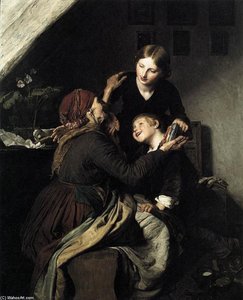
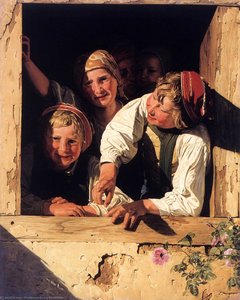
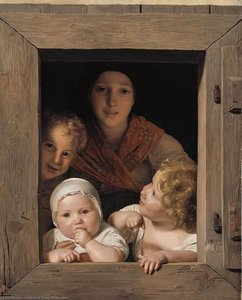
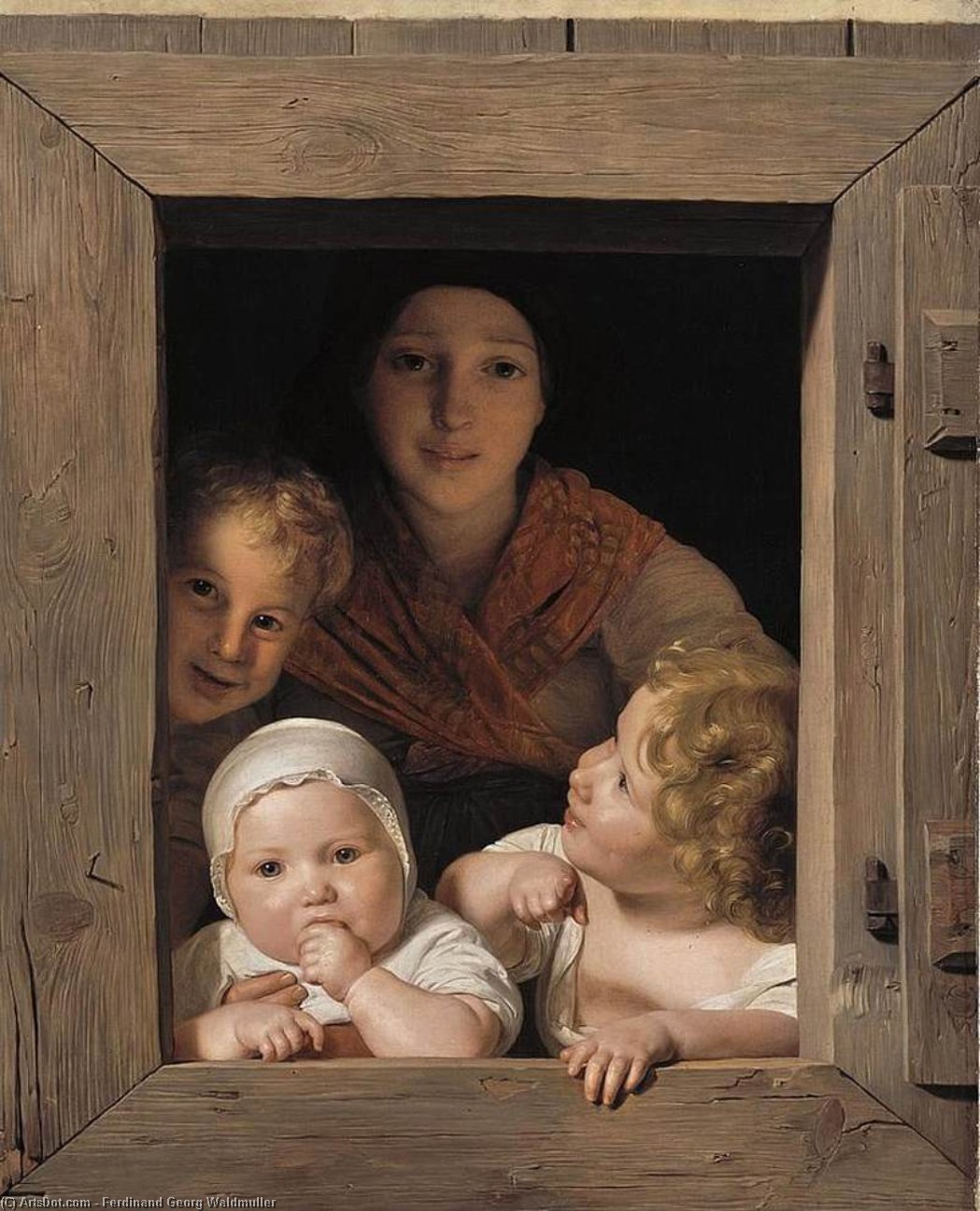
Young Peasant Woman with Three Children at the Window
 Oil On Canvas
- WallArt
- Biedermeier
 1840
1840- 19th Century
 85.0 x 68.0 cm
 Neue Pinakothek
 Read More
Hand Made Oil Reproduction
Hand-painted oil on canvas in your size and frame, made to order by our artists. ( Buy Print Buy Image)




P118B $10

P118H $10

P118W $10

P438Z $10

P508JH $12

P508YH $12

P805H $10

P805Z $10

P919BZ $10

P919G $10

P919XJ $10

P959ZH $10

P968JZ $12

W106C $8

W218G $10

W218JH $8

W218Y $10

W307PJ $10

W316G $10

W316PJ $8

W316Y $10

W398PJ $8

W4111J $10

W500HY $15

W500JH $15

W692G $12

W849H $8

W940BG $15

W953PJ $8




Pick from our preset sizes that match the artwork's original proportions.

You may enter your own dimensions to fit a specific frame or space. If your selected size does not match the original image's proportions, we will either crop the artwork or extend the painting with additional hand-painted elements. A digital mockup will be sent for your approval before production begins.
Please note that the on-screen preview does not reflect the actual cropping or extension. Only the mockup will accurately show the final composition.
While custom sizes are available, we recommend selecting a dimension from the predefined list to preserve the original proportions.
After order, ArtsDot.com team will email client for instructions and provide a mockup preview
Worldwide Delivery () in 3/4 weeks instead of standard 5 weeks. (28 August). No compromise on quality.

Free Worldwide Express Shipping

High-Quality Linen Canvas

Full Shipping Insurance

Customs Tax Refund Guarantee

True Color Matching Guarantee

60-Day Return Policy (Defects Only)

100% Money-Back Guarantee

Bulk Discount Offer
 Glass option is only available in size under 110 CM

Young Peasant Woman with Three Children at the Window
Reproduction Medium
Reproduction Size
-


Total Price
$ 263
A Glimpse into Domestic Warmth: Young Peasant Woman with Three Children at the Window
To gaze upon this scene is to be gently ushered into a moment suspended in time—a tableau vivant of familial devotion and quiet resilience. Ferdinand Georg Waldmüller, master chronicler of Austrian life, has gifted us a vision brimming with the tender complexities of domesticity. The composition centers around a young peasant woman, her posture suggesting both watchful guardianship and serene contemplation as she looks out through the windowpane. She is enveloped in a scarf, an element that speaks volumes not just of the season, but of comfort sought against the world's chill. Gathered close to her are three children, their presence radiating an undeniable energy that anchors the entire piece in the sphere of pure, unadulterated life.
The Artistry of Everyday Life: Technique and Style
Waldmüller’s genius lay in his ability to elevate the mundane into the monumental. This painting exemplifies his mastery of genre scenes, where the ordinary becomes imbued with profound artistic weight. Observe the delicate handling of light filtering through the window; it catches the folds of clothing and illuminates the hopeful expressions on the children's faces. His technique allows for an almost photographic realism while retaining a painterly softness that prevents the scene from feeling merely documentary. The background elements—the visible chair, the figures standing further back—are rendered with just enough detail to suggest a lived-in space, grounding the emotional core of the portrait within the tangible reality of a family home.
Historical Echoes and Emotional Resonance
Painted around 1840, this work captures the spirit of early to mid-nineteenth-century Austrian life. While it celebrates the simple virtues of peasant existence, there is an underlying narrative depth that speaks to universal themes: continuity, protection, and the enduring bond between generations. The inclusion of multiple figures—the woman, her children, and the others observing or standing nearby—creates a rich tapestry of human connection. It evokes a powerful sense of togetherness, suggesting that within these walls, life continues its gentle, rhythmic unfolding.
Bringing the Scene Home: Decorating with Memory
For the collector or designer, this reproduction offers more than just an image; it offers an atmosphere. Imagine this piece gracing a sunlit parlor or above a mantelpiece. Its warm palette and narrative focus make it a perfect centerpiece for rooms designed to feel inviting and soulful. It whispers tales of hearth and home, transforming any space into one imbued with the gentle warmth Waldmüller so expertly captured on canvas. Owning this work is to curate not just art, but a feeling—a beautiful, enduring sense of belonging.
Related Artworks

Artist Biography
Early Life and Artistic Beginnings
Ferdinand Georg Waldmüller entered the world in Vienna, Austria, on January 15, 1793, a period of significant societal shifts and artistic ferment. His early life was unfortunately marked by hardship; the untimely death of his father cast a shadow over the family’s fortunes, instilling in young Ferdinand an early awareness of life's precariousness—a theme that would later resonate deeply within his art. Despite these challenges, Waldmüller demonstrated a clear aptitude for drawing and painting, leading him to enroll at the Academy of Fine Arts Vienna in 1807. However, his attendance proved somewhat erratic, reflecting perhaps a restless spirit or a dissatisfaction with the rigid academic constraints of the time. Initially, he gravitated towards portraiture, a reliable path for an aspiring artist seeking patronage, but it was the allure of landscapes and genre scenes—depictions of everyday life—that truly captured his imagination and would ultimately define his artistic legacy. These early explorations laid the groundwork for a style characterized by meticulous observation and a profound connection to the natural world.A Career Forged in Realism and Controversy
Waldmüller’s career unfolded as a dynamic interplay between artistic innovation and institutional resistance. He supplemented his income during his formative years by working as a set designer and continuing to paint portraits, often while touring with his wife, the singer Katharina Weidner. This itinerant lifestyle exposed him to diverse environments and broadened his artistic horizons. By the 1820s, Waldmüller had begun to develop a distinctive style—a commitment to realistic depictions of everyday life, particularly in rural settings. He wasn’t interested in idealizing or romanticizing; instead, he sought to capture the world as it truly was, with all its beauty and imperfections. This dedication to realism brought him both acclaim and criticism. In 1819, he secured a professorship at the Academy of Fine Arts Vienna, but his tenure was fraught with conflict. Waldmüller passionately advocated for direct observation from nature—plein air painting—and openly criticized the academy’s emphasis on formulaic instruction and adherence to established conventions. His outspokenness led to repeated clashes with the artistic establishment and ultimately contributed to his forced retirement in 1857. Frequent journeys to Italy, beginning in 1825, and the idyllic Salzkammergut region profoundly influenced his landscape painting, refining his ability to capture light, texture, and atmosphere with remarkable precision.Themes of Rural Life and Social Commentary
Waldmüller’s artistic output is remarkably diverse, encompassing portraits, landscapes, and genre scenes, but a common thread unites these varied subjects: a deep engagement with the realities of 19th-century Austrian life. Works like Venetian Fruit Seller (1826), an early example of his genre painting style, demonstrate his skill in capturing fleeting moments of everyday existence. His self-portrait from 1828 reveals a keen understanding of human psychology and the nuances of character. Louise Mayer (1836) stands as a testament to his mastery of portraiture, while View of Ischl (1838) showcases his evolving landscape abilities. However, it was paintings like On All Souls' Day (1839), The Love Letter (1849), and Bathing Women (c. 1848–1849) that truly distinguished him. These works weren’t merely picturesque depictions of rural life; they were imbued with a socially critical perspective, subtly exposing the hardships faced by ordinary people—the impact of poverty, misfortune, and the complexities of family dynamics. He didn't shy away from portraying the less glamorous aspects of existence, offering a more honest and nuanced representation of society than was typically seen in academic art.Legacy and Historical Significance
Ferdinand Georg Waldmüller is rightfully regarded as one of the most important Austrian painters of the Biedermeier period. His unwavering commitment to natural observation and plein air painting anticipated many of the artistic innovations that would characterize Impressionism decades later. He challenged conventional depictions of rural life, injecting a dose of realism and social commentary into a genre often dominated by idealized imagery. Despite facing criticism and setbacks throughout his career—including forced retirement from the Academy—Waldmüller’s work eventually gained international recognition, culminating in exhibitions at the World Exhibition in Paris (1855) and Buckingham Palace (1856), where he received accolades from Emperor Napoleon III and Queen Victoria respectively. He was knighted shortly before his death on August 23, 1865, in Hinterbrühl, a belated acknowledgment of his artistic contributions. Waldmüller’s legacy extends beyond his individual paintings; he influenced generations of artists with his detailed realism, his focus on everyday subjects, and his courageous willingness to challenge the status quo. He remains a pivotal figure in Austrian art history—a true pioneer who paved the way for new approaches to landscape and genre painting.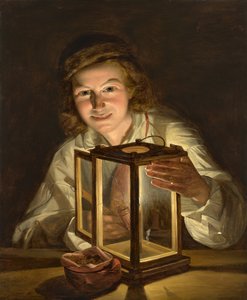
Ferdinand Georg Waldmüller
1793 - 1865 , Austria
Quick Facts
- Artistic Movement Or Style: Biedermeier, Realism
- Artists Or Movements Influenced By This Artist: Impressionism
- Date Of Birth: January 15, 1793
- Date Of Death: August 23, 1865
- Full Name: Ferdinand Georg Waldmüller
- Nationality: Austrian
- Notable Artworks:
- Venetian Fruit Seller
- Self-Portrait
- Louise Mayer
- View of Ischl
- On All Souls' Day
- The Love Letter
- Bathing Women
- Place Of Birth: Vienna, Austria
Related Articles

Romantic Landscapes: 10 Masterpieces for Your Home | ArtsDot
Journey through 10 Romantic landscape masterpieces by Friedrich, Turner & Cole. Explore emotional art, sublime nature scenes & iconic 19th-century paintings. Find museum-quality reproductions for your home at ArtsDot.com – discover the full collection online!

Evocations of Place: A Historical Journey Through Landscape Art
Explore the rich history of landscape art with ArtsDot. Discover renowned artists, movements like Impressionism & Romanticism, and expert guidance for collecting timeless pieces. Find your perfect serene escape today!

John Constable's Masterpieces: Explore 25 Iconic Landscapes for Your Home
Journey through John Constable's 25 most celebrated landscapes. Explore Romanticism, Dedham Vale & his masterful use of light in iconic paintings like 'Hay Wain'. Find museum-quality art reproductions and elevate your home decor on ArtsDot.com.
Evocations of Place: A Historical Journey Through Landscape Art
Explore the rich history of landscape art with ArtsDot. Discover renowned artists, movements like Impressionism & tonalism, and expert guidance for collecting timeless pieces. Find your perfect serene escape today!
Evoking Nature's Sublime: A Comprehensive Exploration of 19th-Century Landscape Painting
Explore the captivating world of 19th-century landscape painting! Discover renowned artists like Friedrich & Monet, key movements, and find the perfect artwork to bring nature's serenity into your home. Expert insights at ArtsDot.