 Preview
 Send
Send Share
Share
 Details

 Download
 Similars
 X-Ray
X-Ray Diaporama
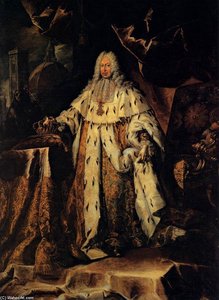
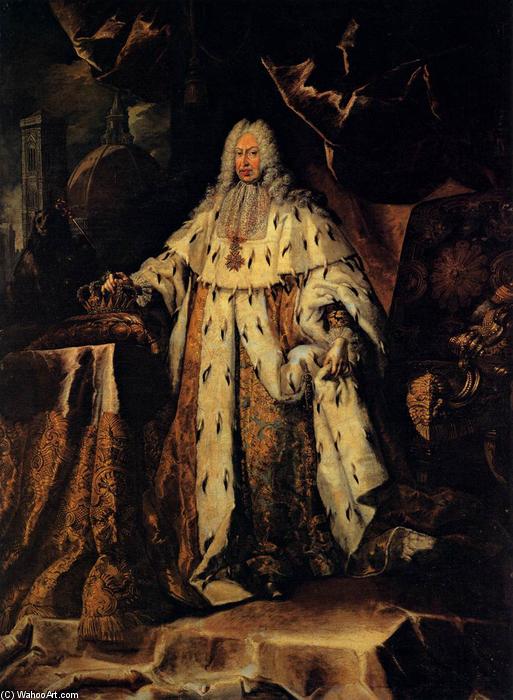
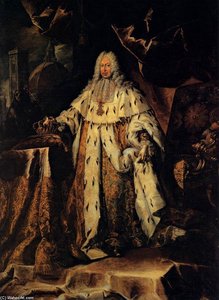
Portrait of Gian Gastone de' Medici, Grand Duke of Tuscany
 1737
1737 320.0 x 240.0 cm
 Read More
Giclée / Art Print
Museum-quality giclée or canvas print with fast production and flexible finish options. ( Buy Hand Made Painting Buy Image)




































Pick from our preset sizes that match the artwork's original proportions.

You may enter your own dimensions to fit a specific frame or space. If your selected size does not match the original image's proportions, we will either crop the artwork or extend the image with a mirrored or solid-fill edge. A digital mockup will be sent for your approval before production begins.
Please note that the on-screen preview does not reflect the actual cropping or extension. Only the mockup will accurately show the final composition.
While custom sizes are available, we recommend selecting a dimension from the predefined list to preserve the original proportions.
Worldwide Delivery () in 2 weeks instead of standard 4/5 weeks. (6 September)

Free Worldwide Express Shipping

High-Quality Linen Canvas

Full Shipping Insurance

Customs Tax Refund Guarantee

True Color Matching Guarantee

100-Day Return Policy (Defects Only)

100% Money-Back Guarantee

Bulk Discount Offer
 Glass option is only available in size under 110 CM

Portrait of Gian Gastone de' Medici, Grand Duke of Tuscany
Giclée / Art Print
Reproduction Size
-


Total Price
$ 63
Related Artworks





Artist Biography
The Luminous Legacy of Franz Ferdinand Richter
In the grand, sweeping tapestry of the German Baroque, few threads shimmer with as much enigmatic brilliance as the life and work of Franz Ferdinand Richter. Born around 1693, likely in Ebersdorf or Würzburg, Richter emerged from the heart of Germany to leave an indelible mark on the artistic landscapes of both Salzburg and Italy. While the archival shadows of his early years remain thick, obscuring much of his formative journey, the light captured within his canvases speaks volumes of a man deeply attuned to the dramatic pulse of his era. His artistry was not merely a matter of recording faces, but a profound exploration of presence, achieved through a masterful command of chiaroscuro that bridged the gap between traditional German precision and the emotive intensity of the Italian masters.
Richter’s artistic soul was forged in the intellectual crucible of Salzburg, where he underwent rigorous training under the esteemed Johann Baptist Zimmermann. This period of apprenticeship instilled in him a foundational respect for classical composition and the structural integrity of form. However, it was his migration toward the sun-drenched landscapes of Italy that truly catalyzed his evolution. Arriving in Rome by at least 1727, Richter found himself immersed in a world where the legacies of Caravaggio and Rembrandt were still vibrantly alive. He did not merely mimic these giants; rather, he absorbed their use of dramatic light to sculpt flesh and fabric, adapting their techniques to create portraits that possessed an uncanny psychological depth. His work began to transcend the static, formal conventions of his time, moving toward a style where every shadow whispered a secret and every highlight illuminated a soul.
A Master of Light and Character
The true genius of Richter lies in his ability to manipulate light as if it were a physical medium, capable of carving volume out of darkness. This technique is most breathtakingly realized in his celebrated portrait of Gian Gastone de' Medici, the Grand Duke of Tuscany. In this monumental work, Richter employs a sophisticated interplay of radiance and shadow to bestow upon the subject an aura of both immense dignity and quiet contemplation. The painting serves as a testament to his ability to blend the grandeur of the Baroque with the emerging elegance of the Rococo, capturing the weight of sovereign responsibility alongside the delicate nuances of human emotion. It is through such works that Richter moved beyond simple likeness, achieving a level of portraiture that felt both monumental and intimately personal.
Beyond his royal commissions, Richter’s repertoire showcased a remarkable versatility that touched various strata of European society and artistic disciplines:
- The Intimacy of Self-Portraiture: His self-portrait, currently preserved in the prestigious Uffizi Gallery, offers a rare, vulnerable glimpse into the artist's own perception of his identity and craft.
- Musicality in Paint: He captured the essence of the era's cultural icons, such as his portrait of the renowned violinist and composer Francesco Maria Veracini, which later inspired evocative engravings by English artists.
- Ecclesiastical Grandeur: His early career was marked by significant religious contributions, including an altarpiece for the Church of the Assumption in Aschbach, demonstrating his ability to handle large-scale, sacred narratives with reverence and technical prowess.
Historical Significance and Enduring Influence
Though Richter’s life was relatively short, ending in Florence after 1737, his impact reverberates through the history of European portraiture. He stands as a vital link in the chain of artistic development, representing the moment when German training met Italian innovation to produce something entirely unique. By infusing the structured traditions of his homeland with the dramatic, emotive spirit of the Mediterranean, he helped pave the way for a more psychologically complex approach to painting. His ability to navigate the transition from the heavy drama of the Baroque to the lighter, more decorative flourishes of the Rococo marks him as an artist of profound adaptability and foresight.
Today, Richter is remembered not just as a chronicler of the elite, but as a painter who understood the transformative power of light. His canvases remain windows into the 18th century, offering much more than historical documentation; they offer an emotional resonance that continues to captivate art historians and enthusiasts alike. Through his brush, the shadows of the past are brought into sharp, luminous focus, ensuring that the name Franz Ferdinand Richter remains etched in the golden annals of art history.
ferdinand richter
1693 - 1737 , Germany
Quick Facts
- Artistic Movement Or Style: Baroque Painter
- Artists Or Movements Influenced By This Artist: ['Gerhard Richter']
- Artists Who Influenced This Artist: ['Rembrandt']
- Date Of Birth: 1693
- Full Name: Franz Ferdinand Richter
- Nationality: German
- Notable Artworks: ["Portrait of Gian Gastone de' Medici"]
- Place Of Birth: Würzburg, Germany