

 Preview
 Send
Send Share
Share
 Details

 Download
 Similars
 X-Ray
X-Ray Diaporama
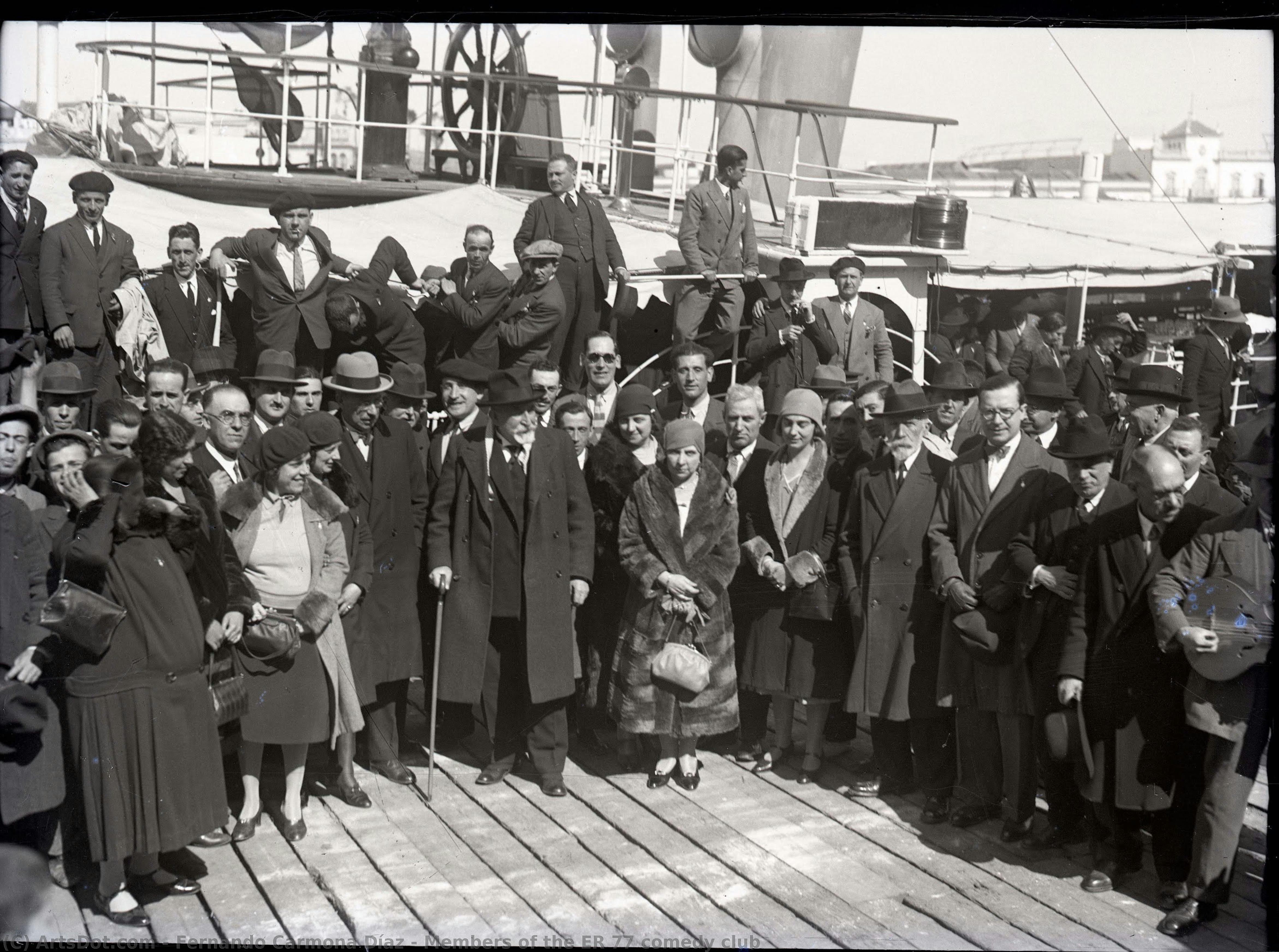
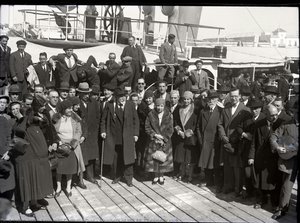
Members of the ER 77 comedy club
 1930
1930 12.0 x 9.0 cm
 Andalusian Archives
 Read More
Giclée / Art Print
Museum-quality giclée or canvas print with fast production and flexible finish options. ( Buy Hand Made Painting Buy Image)




































Pick from our preset sizes that match the artwork's original proportions.

You may enter your own dimensions to fit a specific frame or space. If your selected size does not match the original image's proportions, we will either crop the artwork or extend the image with a mirrored or solid-fill edge. A digital mockup will be sent for your approval before production begins.
Please note that the on-screen preview does not reflect the actual cropping or extension. Only the mockup will accurately show the final composition.
While custom sizes are available, we recommend selecting a dimension from the predefined list to preserve the original proportions.
Worldwide Delivery () in 2 weeks instead of standard 4/5 weeks. (30 August)

Free Worldwide Express Shipping

High-Quality Linen Canvas

Full Shipping Insurance

Customs Tax Refund Guarantee

True Color Matching Guarantee

60-Day Return Policy (Defects Only)

100% Money-Back Guarantee

Bulk Discount Offer
 Glass option is only available in size under 110 CM

Members of the ER 77 comedy club
Giclée / Art Print
Reproduction Size
-


Total Price
$ 63
Related Artworks






Artist Biography
The Soul of Andalusia: The Life and Vision of Fernando Carmona Díaz
In the golden era of the interwar years, a period defined by profound social shifts and artistic experimentation, Fernando Carmona Díaz emerged as a vital observer of the Spanish spirit. Born in Seville in 1900, his life was deeply intertwined with the vibrant, rhythmic pulse of Andalusia. As a pioneer of photography and printmaking, he did not merely document reality; he sought to capture the ephemeral essence of a culture in motion. His early years in the cultural heart of Spain allowed him to cultivate a unique perspective, one that blended the raw, candid energy of street life with a sophisticated, academic precision. Through his lens, the streets of Seville and Cadiz became stages for a grand, human drama, where every shadow and light beam told a story of community and tradition.
The development of Carmona Díaz’s artistry was marked by an extraordinary ability to bridge the gap between documentary realism and fine art. His work was deeply influenced by the avant-garde movements sweeping through Europe, leading him into the inner circles of some of the most significant creators of the twentieth century. By collaborating with luminaries such as Joan Miró and Rafael Barradas, he integrated a modern sensibility into his photographic compositions. This connection to the surrealist and ultraist currents allowed him to look beyond the surface of his subjects, finding poetic depth in the mundane. His mastery of black and white printing techniques became his signature, utilizing tonal nuance and stark contrasts to evoke an emotional resonance that color could rarely achieve. In his hands, the monochrome palette served to strip away distractions, leaving only the pure, structural beauty of the moment.
A Legacy Captured in Light and Shadow
The historical significance of Carmona Díaz lies in his role as a visual chronicler of a vanishing era. His photographs serve as precious archives of Spanish social life, particularly the intimate gatherings centered around flamenco and local festivities. One of his most enduring achievements is the ability to distill complex human dynamics into singular, breathtaking frames. For instance, his 1930 work, “Members of the ER 77 Comedy Club,” stands as a masterclass in composition, presenting a vivid snapshot of performers and spectators that feels both immediate and timeless. This piece, preserved within the archives of the ABC newspaper in Seville, demonstrates his meticulous attention to detail and his capacity to use light to create an immersive, almost tactile experience for the viewer.
Beyond the social documentation of clubs and plazas, his work also touched upon the architectural and civic identity of Spain. His ability to capture the grandeur of spaces, such as his evocative “View of Plaza de la Constitución in Cádiz,” showcases a different facet of his talent—one rooted in spatial clarity and historical reverence. The breadth of his contribution can be summarized through several key pillars of his career:
- Cultural Preservation: His sensitive documentation of Andalusian traditions, particularly flamenco culture, provided a lasting visual record of regional identity.
- Artistic Innovation: By merging the documentary nature of photography with the experimental spirit of contemporary printmaking and avant-garde influences.
- Technical Mastery: The sophisticated use of black and white tonality to achieve a sense of permanence and emotional depth in his subjects.
- Institutional Connection: His association with prestigious bodies like the Museo de la Real Academia de Bellas Artes de San Fernando, which cemented his status within the Spanish artistic canon.
Ultimately, the work of Fernando Carmona Díaz remains a profound testament to the power of the photographic medium to act as both a mirror and a window. He looked into the heart of his homeland and reflected back a version of Spain that was at once deeply local and universally human. His legacy continues to inspire those who seek to find the extraordinary within the ordinary, reminding us that the most fleeting moments of human connection are often the ones most worthy of being immortalized in light.
fernando carmona díaz
1900 - 1970 , Spain
Quick Facts
- Artistic Movement Or Style: Photography
- Date Of Death: 1970
- Full Name: Fernando Carmona Díaz
- Nationality: Spanish
- Notable Artworks:
- Members of the ER 77 comedy club
- View of the Plaza de la Constitución in Cádiz
- Place Of Birth: Seville, Spain

