

 Preview
 Send
Send Share
Share
 Details

 Download
 Similars
 X-Ray
X-Ray Diaporama
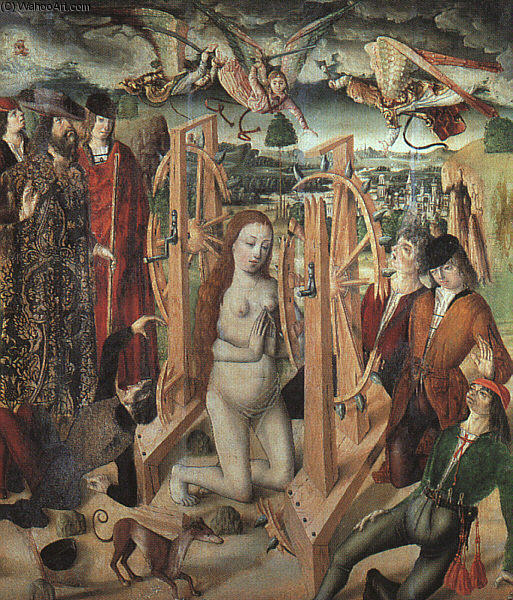
The Martyrdom of Saint Catherine
 Tempera On Panel
- Hispano-Flemish Style
 Late Medieval
 125.0 x 109.0 cm
 Museo del Prado
 Read More
Purchase a high-resolution, enhanced digital image, far superior to the online preview.
Each file is meticulously prepared by our in-house specialists using advanced tools and expert manual retouching. We ensure every image has exceptional clarity, precise color accuracy, and fine detail.
The final file is delivered via email within 72 hours, optimized for immediate use in professional, editorial, and print environments. This is the same quality trusted by top-tier design studios, publishers, and galleries.
Digital Image
Download a high-resolution file for personal display, printing, and creative projects. ( Buy Print Buy Hand Made Painting)
Included in Every Digital Image Order
Expert Digital Delivery, Guaranteed
When you choose ArtsDot.com, you're not just getting an image - you're receiving a professionally enhanced digital artwork, crafted with precision and backed by a satisfaction guarantee. Here's everything that comes with your order, automatically:

Fast Email Delivery
Your high-resolution digital image file will be emailed to you within 72 hours of ordering - ready for immediate use.

AI-Enhanced Digital File
Your artwork is professionally optimized using advanced AI tools and manual editing, ensuring maximum detail, clarity, and color accuracy.

Free Lifetime Re-Delivery
Accidentally deleted or lost your file? No worries - we'll resend it to you anytime, free of charge.

No Import Fees - Ever
Enjoy your artwork instantly with zero customs, duties, or delivery fees - digital downloads are always tax-free.

Color Accuracy Guarantee
We ensure your digital image reflects the original colors as closely as possible using professional tools and color management.

60-Day Satisfaction Guarantee
If you're not satisfied with your digital image, we'll revise it or refund 100% within 60 days - no questions asked.

100% Money-Back Guarantee
Not satisfied? Get a full refund within 60 days of receiving your digital file - no questions asked.

Bulk Order Discounts
Buy 3 images, save 10% - Buy 5, save 15% - Buy 10+, save 20%. Great for creative projects, galleries, and agencies.
Collectible Description
Fernando Gallego: A Master of the Hispano-Flemish Style
Fernando Gallego stands as a pivotal figure in Spanish Renaissance art, embodying the harmonious fusion of Northern European realism with burgeoning Italian humanist ideals. Born around 1440 in Salamanca and tragically passing away sometime before 1507, his artistic journey coincided with an era of profound cultural transformation—a period where artists sought to elevate religious imagery through meticulous observation and expressive detail. Gallego’s legacy isn't defined by grand, solitary masterpieces but rather by a prolific output of altarpieces and retablos that offer invaluable insights into the visual culture of his time, showcasing a remarkable command of technique and conveying powerful emotional narratives. While definitive biographical details remain elusive, tracing his work through attributions and historical records paints a compelling picture of an artist deeply influenced by Flemish painting, particularly Rogier van der Weyden’s masterful use of chiaroscuro—the dramatic interplay of light and shadow—yet firmly rooted in the Spanish artistic tradition.The Artwork: “The Martyrdom of Saint Catherine”
“The Martyrdom of Saint Catherine,” executed around 1490 by Fernando Gallego, is a tempera painting on wood panels measuring 125 x 109 cm and currently housed at the Museo del Prado in Madrid. This monumental composition depicts a scene from Christian legend—the gruesome execution of Saint Catherine of Alexandria, venerated as a martyr for her unwavering faith and steadfast refusal to renounce her beliefs during Roman persecution. Gallego’s artistic prowess shines through in his meticulous rendering of human anatomy and drapery, reflecting the influence of Flemish painting's anatomical precision. The artist skillfully employs illusionistic techniques—specifically sfumato—to create atmospheric depth and imbue the scene with a palpable sense of drama and sorrow.Technique and Style: Hispano-Flemish Influence
Gallego’s style is unmistakably characterized by the Hispano-Flemish tradition, which flourished in Spain during the late fifteenth century. This stylistic convergence drew inspiration from Flemish masters like Rogier van der Weyden and Hans Memling, who championed naturalism alongside spiritual contemplation. Gallego's meticulous attention to detail—evident in the textures of fabrics, the musculature of figures, and the subtle gradations of color—demonstrates a commitment to portraying reality with uncompromising accuracy. The artist’s use of tempera paint on wood panels contributes to the painting’s luminosity and durability, ensuring its preservation for centuries to come. Furthermore, Gallego's masterful manipulation of light and shadow—a hallmark of Flemish art—creates a dramatic visual experience that underscores the solemnity of the depicted event.Historical Context: Renaissance Spirituality
“The Martyrdom of Saint Catherine” emerged during a period of intense religious fervor within Europe, coinciding with the High Renaissance. The painting reflects the humanist preoccupation with portraying human emotion and psychological complexity—a departure from medieval artistic conventions that prioritized symbolic representation over realistic depiction. However, Gallego’s work retains a distinctly Christian ethos, conveying reverence for Saint Catherine's sanctity and commemorating her unwavering devotion to God. The scene underscores the importance of moral fortitude in confronting adversity and reaffirms the belief in divine justice—themes central to Renaissance theological discourse.Symbolism and Emotional Impact
The painting’s symbolism is rich with references to Christian iconography, conveying profound spiritual meaning beyond its visual surface. The wheel upon which Saint Catherine is bound represents torment and suffering—a metaphor for the tribulations endured by all Christians in defense of their faith. The expressions on the faces of the figures convey a spectrum of emotions—fear, anguish, compassion—capturing the psychological impact of martyrdom. Gallego’s masterful composition directs the viewer's gaze toward Saint Catherine’s central figure, emphasizing her vulnerability and highlighting the transformative power of faith. Ultimately, “The Martyrdom of Saint Catherine” serves as a poignant reminder of Christian virtue and resilience—a timeless masterpiece that continues to inspire awe and contemplation.Related Artworks
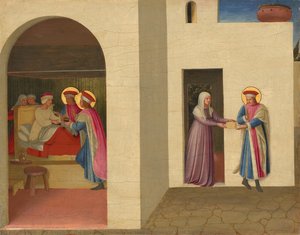
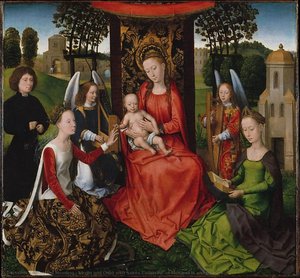
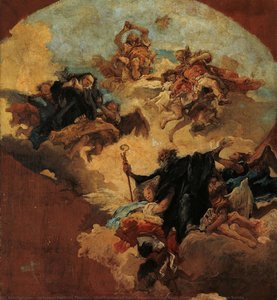
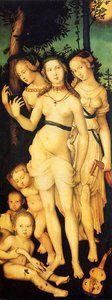
Artist Biography
Fernando Gallego: A Master of the Hispano-Flemish Style
Fernando Gallego, a name often shrouded in mystery yet deeply resonant within Spanish art history, was a Castilian painter who flourished during the late 15th and early 16th centuries. Born around 1440 in Salamanca and tragically dying sometime before 1507, his life spanned a pivotal era of artistic transition – the convergence of Northern European realism with burgeoning Italian Renaissance ideals. Gallego’s legacy isn't defined by grand, solitary masterpieces but rather by a prolific output of meticulously crafted religious panels, particularly altarpieces and retablos, that offer invaluable insights into the visual culture of his time. While definitive biographical details remain scarce, tracing his work through attributions and historical records paints a compelling picture of an artist deeply influenced by Flemish painting, especially the works of Rogier van der Weyden, yet firmly rooted in the Spanish artistic tradition.Early Life and Artistic Training – A Shadow of Uncertainty
The precise origins of Fernando Gallego’s artistic training remain elusive, a characteristic that has long intrigued art historians. Despite speculation linking him to workshops in Salamanca and beyond, concrete evidence is remarkably limited. He likely began his career in the vibrant artistic environment of Castile and Extremadura, regions renowned for their rich religious patronage during this period. The prevailing theory suggests a strong connection to Flemish painting, particularly the naturalistic handling of form and technical mastery evident in Rogier van der Weyden’s work – a style characterized by its meticulous detail, deep emotional resonance, and sophisticated use of light and shadow. Early Netherlandish painting, with its vivid illusionism and complex iconography, exerted a profound influence on Gallego's approach to composition and figure depiction. It is believed he may have spent time studying in Flanders, though this remains unconfirmed. Interestingly, the work attributed to him often shares stylistic similarities with Francisco Gallego, his likely workshop assistant – a relationship that adds another layer of complexity to understanding Gallego’s artistic development.A Flourishing Career: Altarpieces and Retablos
Gallego's career was largely dedicated to the creation of small panels intended for incorporation into larger altarpieces, or retablos. These devotional works were central to religious life in 15th-century Spain, serving as focal points for worship and visual narratives within churches and chapels. Gallego’s skill lay not just in his technical proficiency – evidenced by the smooth application of paint, precise rendering of drapery, and realistic portrayal of human figures – but also in his ability to imbue these scenes with a palpable sense of drama and emotional intensity. He frequently depicted biblical stories, saints' lives, and episodes from Christian history, often employing a carefully orchestrated balance between realism and symbolic representation. A particularly noteworthy example is the Retablo of Ciudad Rodrigo, a monumental work undertaken in collaboration with Master Bartolomé, showcasing Gallego’s meticulous attention to detail and his ability to integrate multiple narratives within a single panel. The scale of this project – a testament to the importance of religious art at the time – highlights Gallego's standing as a leading artist in Castile.Notable Works and Artistic Techniques
Among Gallego’s surviving works, several stand out for their artistic merit and historical significance. The “Madonna of the Catholic Kings,” housed at the Getty Museum, exemplifies his masterful use of color, light, and composition to create a deeply moving depiction of the Virgin Mary and Christ Child. The “Ara” (Sky of Salamanca), a vast ceiling mural adorning the University of Salamanca, represents an exceptional achievement – a monumental undertaking that demonstrates Gallego’s ambition and technical skill. This fresco, depicting astronomical scenes and constellations, showcases his ability to translate complex scientific concepts into visually engaging imagery. Gallego primarily worked with oil on panel, though he also utilized tempera in his early works. His meticulous attention to detail, combined with his understanding of perspective and spatial relationships, resulted in a remarkably realistic and lifelike quality in his paintings. He was known for painstakingly individualizing the figures within his scenes, enhancing their dramatic appeal while simultaneously demonstrating his technical prowess.Legacy and Historical Significance
Fernando Gallego’s impact on Spanish art is significant despite the limited documentation surrounding his life. He represents a crucial link between the early Flemish influences that shaped 15th-century Spain and the burgeoning Renaissance style that would soon dominate the artistic landscape. His work provides valuable insights into the religious beliefs, social customs, and artistic practices of his time. While often overshadowed by more celebrated contemporaries, Gallego’s contribution to the development of Spanish painting is undeniable. The continued study of his retablos and panels offers a window into the devotional world of 15th-century Spain, revealing a wealth of information about religious iconography, artistic techniques, and the lives of those who commissioned and viewed these powerful works of art. His legacy endures through the beauty and emotional resonance of his paintings, reminding us of the enduring power of visual storytelling to connect with audiences across centuries.
Fernando Gallego
1440 - 1507 , Spain
Quick Facts
- Artistic Movement Or Style: Hispano-Flemish
- Artists Who Influenced This Artist: ['Rogier van der Weyden']
- Date Of Birth: c. 1440, Salamanca
- Date Of Death: 1507, Salamanca
- Full Name: Fernando Gallego
- Nationality: Castilian
- Notable Artworks:
- Sky of Salamanca
- Retablo of Ciudad Rodrigo
- Pietà (Getty Museum)
- Place Of Birth: Salamanca, Spain

