 Preview
 Send
Send Share
Share
 Details

 Download
 Similars
 X-Ray
X-Ray Diaporama
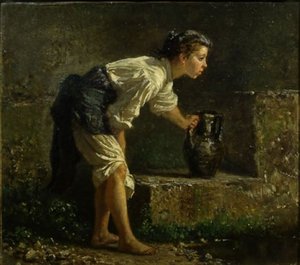
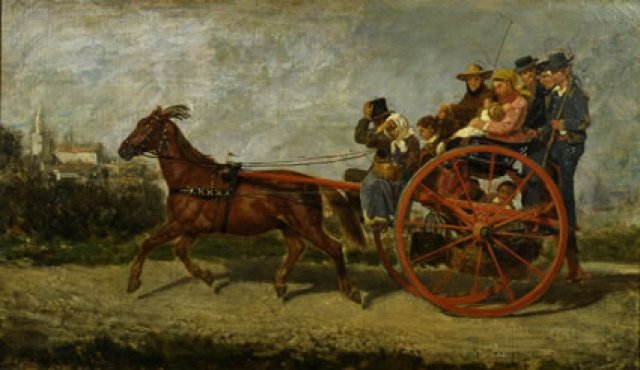
Antico Corridoio Napoletano
 Read More
Hand Made Oil Reproduction
Hand-painted oil on canvas in your size and frame, made to order by our artists. ( Buy Print Buy Image)




































Pick from our preset sizes that match the artwork's original proportions.

You may enter your own dimensions to fit a specific frame or space. If your selected size does not match the original image's proportions, we will either crop the artwork or extend the painting with additional hand-painted elements. A digital mockup will be sent for your approval before production begins.
Please note that the on-screen preview does not reflect the actual cropping or extension. Only the mockup will accurately show the final composition.
While custom sizes are available, we recommend selecting a dimension from the predefined list to preserve the original proportions.
After order, ArtsDot.com team will email client for instructions and provide a mockup preview
Worldwide Delivery () in 3/4 weeks instead of standard 5 weeks. (17 August). No compromise on quality.

Free Worldwide Express Shipping

High-Quality Linen Canvas

Full Shipping Insurance

Customs Tax Refund Guarantee

True Color Matching Guarantee

60-Day Return Policy (Defects Only)

100% Money-Back Guarantee

Bulk Discount Offer
 Glass option is only available in size under 110 CM

Antico Corridoio Napoletano
Reproduction Medium
Reproduction Size
-


Total Price
$ 263
Related Artworks

Artist Biography
Filippo Palizzi: Bridging Romantic Landscape and Genre Detail
Filippo Palizzi (1818-1899) stands as a significant figure in Italian painting during the latter half of the 19th century, particularly recognized for his captivating depictions of rural landscapes interwoven with intimate scenes featuring children and animals—a stylistic blend that firmly establishes him within the Barbizon School tradition while retaining an individual artistic voice. Born in Vasto, Chieti, Palizzi’s early life was marked by familial connections to the arts, fostering a creative environment that would profoundly shape his artistic trajectory. He relocated to Naples in 1837 and enrolled at the Royal Institute of Fine Arts, though he swiftly withdrew due to disagreements with instructors, opting instead for private instruction under Giuseppe Bonolis, which exposed him to the stylistic precepts of the Barbizon School.
This formative period witnessed Palizzi’s immersion into the artistic currents circulating amongst French landscape painters—artists who championed plein air painting and sought to capture the immediacy of nature without studio intervention. The influence of Jean-François Millet and Théodore Rousseau is palpable in his compositions, evident in their textured surfaces and careful observation of rural life. However, Palizzi wasn’t merely a follower; he skillfully adapted these principles to his own artistic vision, resulting in works that transcend simple imitation. He undertook extensive journeys to France and the Netherlands, absorbing diverse visual stimuli and honing his technique—a testament to his dedication as an artist.
A Mastery of Naturalism and Animal Subjects
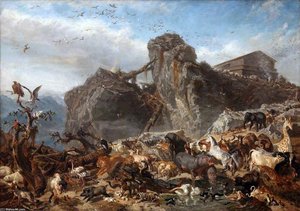
Palizzi's return to Paris in 1863 marked a pivotal moment in his career, concentrating on detailed studies of natural subjects executed outdoors. His participation in the Universal Exposition of 1867 yielded considerable acclaim, culminating in a gold medal awarded for “The Animals Leaving The Ark,” a monumental oil painting that exemplifies Palizzi’s fervent naturalism. While many of his contemporaries focused on more traditional or idealized pastoral scenes, Palizzi embraced a more Realist approach. He often turned his gaze toward the humble and the overlooked, finding profound beauty in the textures of goat hair, the dampness of earth, and the quiet dignity of farm animals.
His work is characterized by an extraordinary ability to render the physical presence of his subjects, creating a sense of tactile reality that invites the viewer into the scene. This dedication to verismo—the pursuit of truth in art—allowed him to bridge the gap between the sweeping romanticism of the early century and the gritty, observational precision of the late 19th century. Through his lens, the Italian countryside was not merely a backdrop but a living, breathing protagonist.
Legacy and Artistic Significance
The historical significance of Filippo Palizzi lies in his role as a conduit between Italian tradition and European modernism. By integrating the atmospheric sensibilities of the French Barbizon School with the local landscapes of Abruzzo and Naples, he helped redefine the boundaries of Italian genre painting. His influence extended beyond his own canvases, as he remained a vital part of an artistic lineage that included his talented brothers, Giuseppe, Nicola, and Francesco Paolo.
Today, Palizzi is remembered not just as a painter of animals, but as a master of light and atmosphere who captured the very soul of the natural world. His contributions to the development of landscape painting continue to resonate, offering a window into a period where art sought to find the extraordinary within the ordinary.
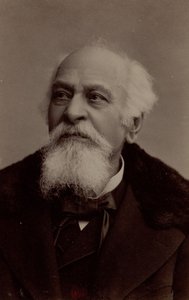
Filippo Palizzi
1818 - 1899 , Italy
Quick Facts
- Artistic Movement Or Style: Barbizon School
- Artists Or Movements Influenced By This Artist: ['Romanticism']
- Artists Who Influenced This Artist: ['Gabriele Smargiassi']
- Date Of Birth: 1818-06-16
- Date Of Death: 1899-09-11
- Full Name: Filippo Palizzi
- Nationality: Italian
- Notable Artworks:
- The Animals Leaving The Ark
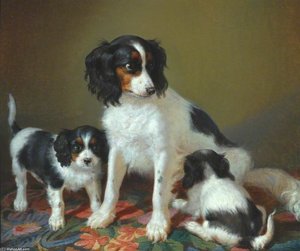
- A Spaniel With Two Puppies
- Urchins
- Place Of Birth: Vasto, Italy