 Preview
 Send
Send Share
Share
 Details

 Download
 Similars
 X-Ray
X-Ray Diaporama
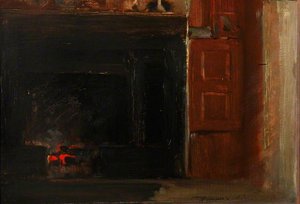
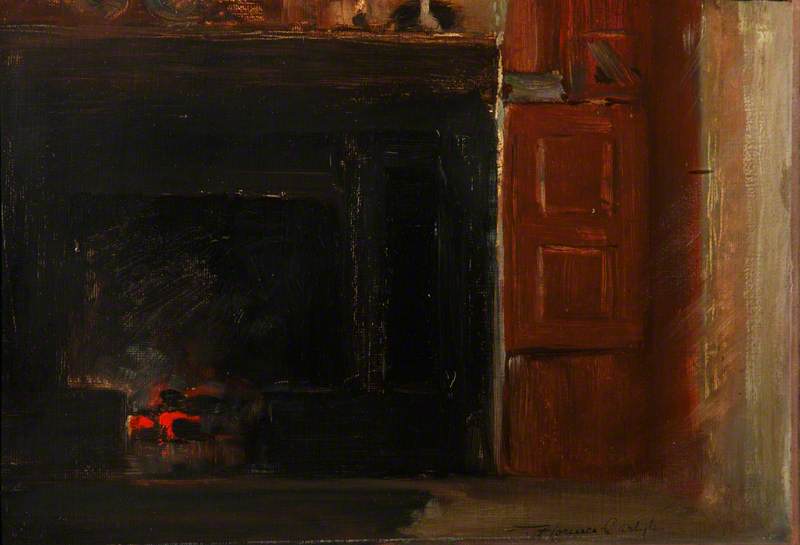
The Kitchen of the Arched House at Ecclefechan (Carlyle's Birthplace)
 41.0 x 49.0 cm
 National Trust
 Read More
Giclée / Art Print
Museum-quality giclée or canvas print with fast production and flexible finish options. ( Buy Hand Made Painting Buy Image)




































Pick from our preset sizes that match the artwork's original proportions.

You may enter your own dimensions to fit a specific frame or space. If your selected size does not match the original image's proportions, we will either crop the artwork or extend the image with a mirrored or solid-fill edge. A digital mockup will be sent for your approval before production begins.
Please note that the on-screen preview does not reflect the actual cropping or extension. Only the mockup will accurately show the final composition.
While custom sizes are available, we recommend selecting a dimension from the predefined list to preserve the original proportions.
Worldwide Delivery () in 2 weeks instead of standard 4/5 weeks. (23 August)

Free Worldwide Express Shipping

High-Quality Linen Canvas

Full Shipping Insurance

Customs Tax Refund Guarantee

True Color Matching Guarantee

60-Day Return Policy (Defects Only)

100% Money-Back Guarantee

Bulk Discount Offer
 Glass option is only available in size under 110 CM

The Kitchen of the Arched House at Ecclefechan (Carlyle's Birthplace)
Giclée / Art Print
Reproduction Size
-


Total Price
$ 63
Related Artworks






Artist Biography
A Legacy of Light: The Life and Art of Florence Carlyle
Florence Emily Carlyle stands as a luminous figure in the annals of Canadian art history, a pioneer who navigated the complexities of her era to emerge as a master of Impressionist sensibilities. Born in 1864 in Galt, Ontario, her early years were steeped in an environment of intellectual depth; she was the great-niece of the renowned Scottish philosopher Thomas Carlyle, a connection that perhaps whispered to her the profound importance of capturing the essence of the human condition. Known affectionately by her loved ones as "Bird," Florence possessed a spirit that refused to be tethered by the provincial boundaries of her youth. Her journey from the quiet landscapes of Ontario to the vibrant, avant-garde studios of Paris represents more than just a geographical shift; it was a courageous pursuit of an artistic identity that would eventually bridge the gap between Canadian tradition and European modernism.
The foundations of her talent were laid in Woodstock, Ontario, under the dedicated mentorship of William Lees Judson. It was here, amidst the nurturing atmosphere provided by her mother, Emily, that Florence began to refine her command over line and color. Her early recognition was nothing short of meteoric; by 1883, her works were being exhibited at the Toronto Industrial Exhibition, where a painting of white lilies on china caught the eye of Princess Louise and the Marquis of Lorne. Such prestigious patronage served as an early validation of her skill, yet Florence harbored ambitions that reached far beyond the borders of Canada. Driven by an insatiable thirst for formal excellence, she ventured to Paris in 1890, a move that would fundamentally transform her aesthetic language.
The Parisian Transformation and Impressionist Mastery
Paris in the late nineteenth century was a crucible of artistic revolution, and Florence Carlyle immersed herself in its electric atmosphere with remarkable independence. While many female artists of her time were relegated to segregated classes or restricted by the conventions of the academy, Carlyle forged her own path, navigating the challenges of the Académie Julian and absorbing the radical innovations of the Impressionist masters. The influence of Claude Monet and his contemporaries is woven into the very fabric of her technique. She learned to move beyond mere representation, seeking instead to capture the ephemeral—the way light dances across a surface, the subtle shift of shadows at dusk, and the tactile quality of fabric.
Her work became a sophisticated dialogue between structure and sensation. In her celebrated portraits and figure studies, one observes an extraordinary ability to manipulate light and texture. She did not merely paint a subject; she painted the atmosphere surrounding it. This is perhaps most evident in her handling of drapery and skin tones, where a masterful use of tonal gradations creates a sense of breathing life within the canvas. Her palette, while often grounded in earthy, classical tones, was frequently punctuated by luminous highlights that evoked the fleeting brilliance of a sunlit moment. Through this approach, she helped introduce a more subjective, sensory experience to the Canadian art scene, moving away from rigid academic realism toward a more emotive and atmospheric modernism.
Historical Significance and Artistic Endurance
The significance of Florence Carlyle lies not only in her technical prowess but in her role as a trailblazer for women in the fine arts. By establishing herself in the competitive Parisian art world and earning recognition within the Royal Canadian Academy, she challenged the societal expectations that sought to limit female creativity to the domestic sphere. Her ability to blend the intellectual weight of her heritage with the fluid, light-filled techniques of Impressionism allowed her to create a body of work that feels both timeless and revolutionary.
Today, her legacy is preserved in some of Canada's most esteemed institutions, including the National Gallery of Canada. When we look upon her canvases, we see more than just beautiful images; we witness the triumph of a dedicated spirit. Her contributions can be summarized through several key pillars of her career:
- Pioneering Impressionism: She was instrumental in bringing the light-centric, atmospheric techniques of French Impressionism to the Canadian landscape.
- Technical Mastery: Her unparalleled skill in depicting the interplay of light on various textures, particularly fabric and skin, remains a hallmark of her oeuvre.
- Breaking Barriers: As a woman artist operating in an era of significant gender constraints, she paved the way for future generations of Canadian modernists.
- Cultural Synthesis: Her work represents a unique fusion of North American subject matter with European stylistic innovation.
Florence Carlyle’s life was a testament to the power of vision and the courage to pursue it across continents. Though her life was cut short in 1923, the brilliance of her "light" continues to illuminate the history of Canadian art, reminding us that true artistry is found in the delicate balance between what is seen and what is felt.
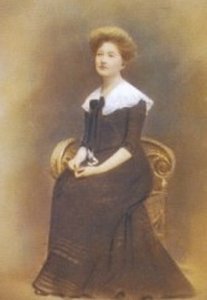
Florence Carlyle
1864 - 1923 , Canada
Quick Facts
- Artistic Movement Or Style: Modernist Painter
- Artists Or Movements Influenced By This Artist: ['Impressionism']
- Artists Who Influenced This Artist: ['William Lees Judson']
- Date Of Birth: September 24, 1864
- Date Of Death: May 2, 1923
- Full Name: Florence Emily Carlyle
- Nationality: Canadian
- Notable Artworks:
- The Kitchen of the Arched House at Ecclefechan
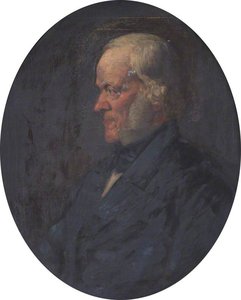
- John Aitken Carlyle
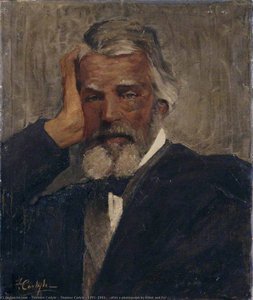
- Thomas Carlyle
- Place Of Birth: Galt, Ontario