 Preview
 Send
Send Share
Share
 Details

 Download
 Similars
 X-Ray
X-Ray Diaporama
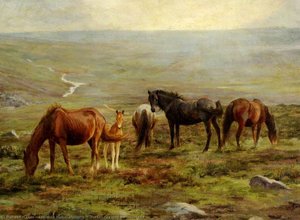
Horses Grazing on Moorland
 37.0 x 50.0 cm
 National Trust
 Read More
Giclée / Art Print
Museum-quality giclée or canvas print with fast production and flexible finish options. ( Buy Hand Made Painting Buy Image)




































Pick from our preset sizes that match the artwork's original proportions.

You may enter your own dimensions to fit a specific frame or space. If your selected size does not match the original image's proportions, we will either crop the artwork or extend the image with a mirrored or solid-fill edge. A digital mockup will be sent for your approval before production begins.
Please note that the on-screen preview does not reflect the actual cropping or extension. Only the mockup will accurately show the final composition.
While custom sizes are available, we recommend selecting a dimension from the predefined list to preserve the original proportions.
Worldwide Delivery () in 2 weeks instead of standard 4/5 weeks. (27 August)

Free Worldwide Express Shipping

High-Quality Linen Canvas

Full Shipping Insurance

Customs Tax Refund Guarantee

True Color Matching Guarantee

60-Day Return Policy (Defects Only)

100% Money-Back Guarantee

Bulk Discount Offer
 Glass option is only available in size under 110 CM

Horses Grazing on Moorland
Giclée / Art Print
Reproduction Size
-


Total Price
$ 63
Related Artworks



Artist Biography
A Brushstroke of Aristocracy: The World of Florence Mabel Hollams
Florence Mabel Hollams, a name quietly resonant within the circles of British equestrian art and animal portraiture, represents a fascinating intersection of Victorian tradition and early 20th-century sensibilities. While biographical details surrounding her life remain somewhat elusive – a characteristic often found with artists whose work was more readily appreciated than their personal narratives – her paintings speak volumes about a world steeped in aristocratic leisure, the profound bond between humans and animals, and a dedication to capturing fleeting moments of grace on wood panel. Hollams’s art isn't merely representation; it is an evocation of a lifestyle, a testament to the enduring appeal of the horse as both a symbol of status and a companion. Her work, primarily focused on horses and dogs often in the company of their owners, offers a unique window into the British upper classes and their pastoral pursuits.Early Life and Artistic Development
The precise details of Hollams’s early training are currently unknown, but her style suggests a strong grounding in academic realism, likely acquired through private lessons or study at one of the smaller art schools prevalent during the late 19th century. The influence of artists like Sir Edwin Landseer – renowned for his majestic animal paintings and portraits of royal pets – is palpable in Hollams’s early works. However, she quickly developed a distinctive voice, moving away from Landseer's dramatic compositions towards a more intimate and nuanced portrayal of her subjects. Her choice of wood panel as a primary support is particularly noteworthy. While canvas was the dominant medium for oil painting at the time, wood panels offered a unique texture and luminosity that Hollams skillfully exploited, lending a warmth and depth to her paintings not often found in works on canvas. This preference suggests an intentional artistic decision, perhaps driven by a desire to create a more tactile and personal connection with her audience.Themes and Techniques: Capturing the Equestrian Spirit
Hollams’s oeuvre is overwhelmingly dedicated to horses – magnificent hunters poised for a gallop, elegant carriage horses amidst idyllic landscapes, and beloved family pets enjoying quiet moments of companionship. Her paintings are not simply portraits; they are narratives. She masterfully captures the energy and musculature of the horse, but also conveys its personality and temperament. The inclusion of human figures, often members of the British aristocracy, is equally significant. These aren’t grand, formal portraits emphasizing wealth or power, but rather scenes of relaxed intimacy – a rider gently adjusting his mount's bridle, a family enjoying a leisurely ride through the countryside. Her technique is characterized by meticulous attention to detail, particularly in the rendering of coats and tack. She employs a rich, warm palette, favoring earth tones and subtle gradations of color to create a sense of realism and atmosphere. The use of light is also crucial, often highlighting specific features – the gleam in a horse’s eye, the texture of its mane, or the folds of a rider's jacket – drawing the viewer’s attention to key elements within the composition.Historical Significance and Legacy
Florence Mabel Hollams occupies a unique position in art history. She wasn’t a revolutionary artist challenging established conventions; rather, she was a skilled practitioner who excelled within a specific niche – the portrayal of British equestrian life. Her paintings offer valuable insights into the social customs and aesthetic preferences of the late Victorian and Edwardian eras. They document a world that was rapidly changing, a world where aristocratic leisure was giving way to modern industrial society. Her work serves as a visual record of a bygone era, preserving the elegance and grace of a lifestyle that has largely disappeared. While she may not be a household name, Hollams’s paintings are increasingly sought after by collectors and art enthusiasts who appreciate her technical skill, her sensitivity to her subjects, and her ability to capture the enduring beauty of the horse. Her legacy lies in her quiet dedication to portraying a world with authenticity and affection, leaving behind a collection of works that continue to resonate with viewers today.Notable Characteristics
- Medium Preference: Primarily oil on wood panel.
- Subject Matter: Horses and dogs, often in the company of their owners; equestrian scenes.
- Style: Academic realism with a focus on detail and atmosphere.
- Palette: Rich, warm earth tones.
- Historical Context: Late Victorian and Edwardian British equestrian life; aristocratic leisure.
Quick Facts
- Artistic Movement Or Style: Academic Impressionism
- Artists Or Movements Influenced By This Artist: ['Impressionism']
- Artists Who Influenced This Artist: ['William Holman Hunt']
- Full Name: Florence Mabel Hollams
- Nationality: British
- Notable Artworks:
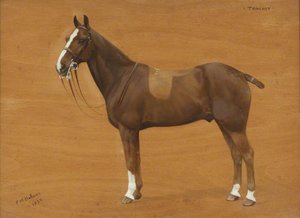
- Tommy, a Bay Pony
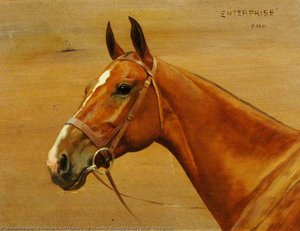
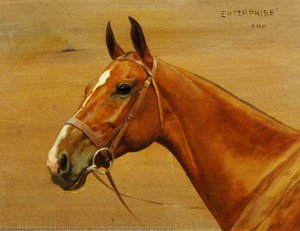
- A Chestnut Thoroughbred Called 'Enterprise'
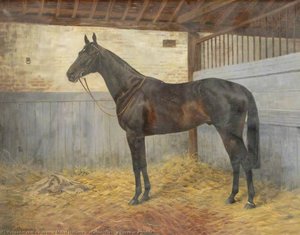
- 'Columcille', a Horse in a Stable
- Place Of Birth: Newtownards, Northern Ireland