 Preview
 Send
Send Share
Share
 Details

 Download
 Similars
 X-Ray
X-Ray Diaporama
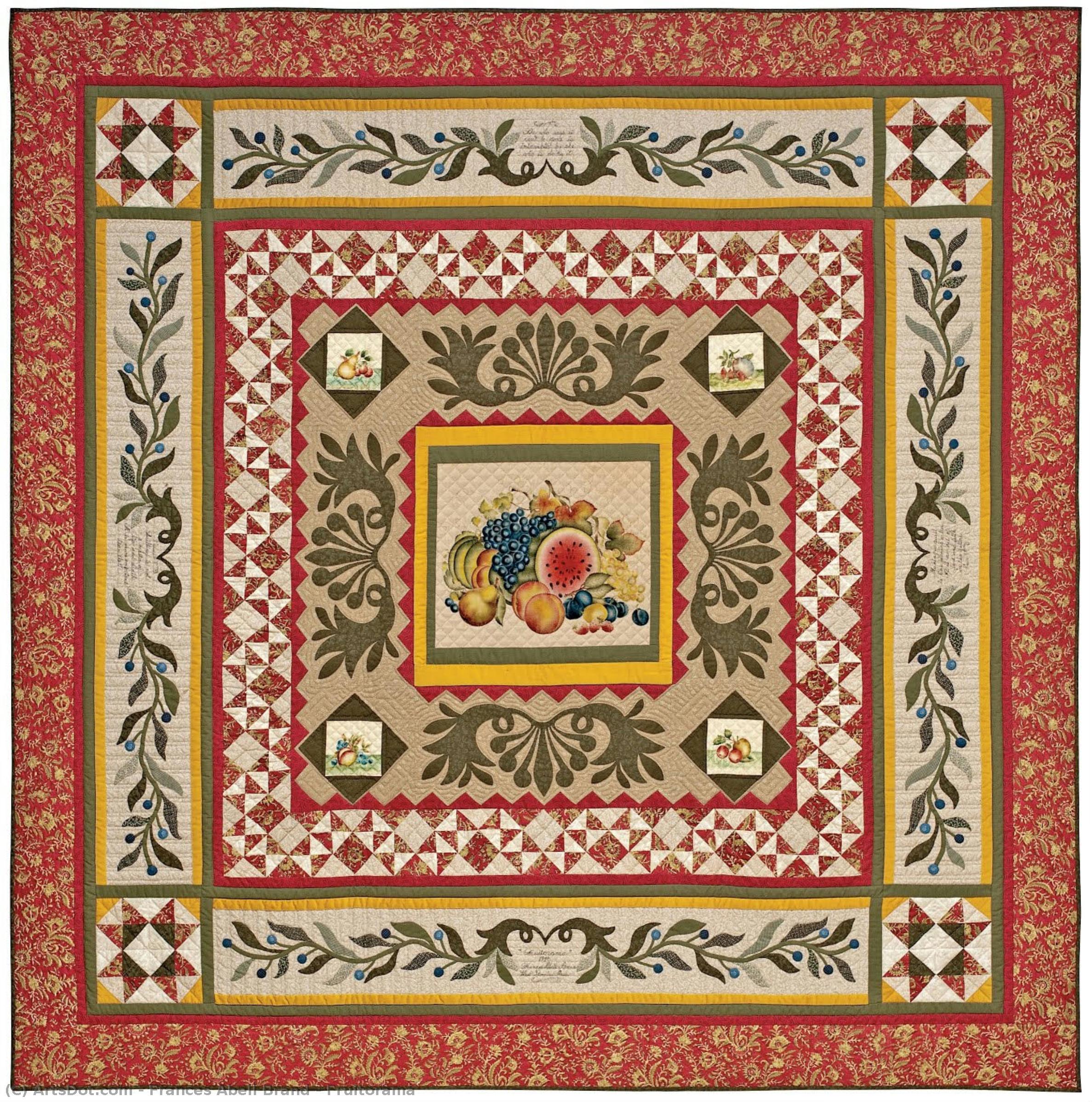
Fruitorama


 Read More
Hand Made Oil Reproduction
Hand-painted oil on canvas in your size and frame, made to order by our artists. ( Buy Print Buy Image)




P118B $10

P118H $10

P118W $10

P438Z $10

P508JH $12

P508YH $12

P805H $10

P805Z $10

P919BZ $10

P919G $10

P919XJ $10

P959ZH $10

P968JZ $12

W106C $8

W218G $10

W218JH $8

W218Y $10

W307PJ $10

W316G $10

W316PJ $8

W316Y $10

W398PJ $8

W4111J $10

W500HY $15

W500JH $15

W692G $12

W849H $8

W940BG $15

W953PJ $8




Pick from our preset sizes that match the artwork's original proportions.

You may enter your own dimensions to fit a specific frame or space. If your selected size does not match the original image's proportions, we will either crop the artwork or extend the painting with additional hand-painted elements. A digital mockup will be sent for your approval before production begins.
Please note that the on-screen preview does not reflect the actual cropping or extension. Only the mockup will accurately show the final composition.
While custom sizes are available, we recommend selecting a dimension from the predefined list to preserve the original proportions.
After order, ArtsDot.com team will email client for instructions and provide a mockup preview
Worldwide Delivery () in 3/4 weeks instead of standard 5 weeks. (16 August). No compromise on quality.

Free Worldwide Express Shipping

High-Quality Linen Canvas

Full Shipping Insurance

Customs Tax Refund Guarantee

True Color Matching Guarantee

60-Day Return Policy (Defects Only)

100% Money-Back Guarantee

Bulk Discount Offer
 Glass option is only available in size under 110 CM

Fruitorama
Reproduction Medium
Reproduction Size
-


Total Price
$ 263
Artwork Description
Related Artworks
Artist Biography
Henri Matisse: A Life Painted in Color
Born Henri Émile Benoît Matisse on December 31, 1869, in Cateau-Cambrésis, Northern France, Matisse’s journey to becoming one of the most influential artists of the 20th century was marked by a relentless pursuit of color and form. His early life, shaped by a relatively distant relationship with his parents and a childhood spent on a farm outside Lille, instilled in him a deep appreciation for the natural world – a theme that would repeatedly surface throughout his career. Unlike many artists of his time who sought to emulate academic traditions, Matisse’s artistic development was driven by an intensely personal vision, one rooted in observation and a desire to capture the essence of experience through vibrant hues.
Matisse's formal training began at the École des Beaux-Arts in Paris in 1884. Initially drawn to the darker, more realistic styles prevalent at the time, he quickly became disillusioned with academic constraints and sought alternative approaches. Crucially, his exposure to the works of Paul Gauguin during this period proved transformative. Gauguin’s bold use of color and simplified forms ignited a passion within Matisse for expressive painting, leading him to experiment with brighter palettes and looser brushstrokes. This early encounter laid the foundation for his later development as a key figure in Fauvism – a movement characterized by its unrestrained use of color and rejection of traditional representational techniques.
The 1900s witnessed Matisse’s emergence as a leading voice within the Fauvist circle. Works like *Woman with a Hat* (1905) and *The Joy of Life* (1906) exemplify this period, showcasing his masterful manipulation of color to convey emotion and atmosphere. These paintings were initially met with considerable controversy due to their unconventional use of color, but they quickly gained recognition for their innovative approach and emotional intensity. Matisse’s exploration of color wasn't merely decorative; it was a fundamental element of his artistic language, used to create a sense of joy, vitality, and subjective experience.
The Evolution of Style: From Fauvism to Bold Abstraction
Following the initial fervor of Fauvism, Matisse embarked on a period of stylistic refinement. He moved away from the purely arbitrary use of color, developing a more disciplined approach that emphasized harmony, balance, and decorative patterns. This shift is particularly evident in works like *Blue Nude* (1908) and *Dance* (1909-10), which demonstrate his increasing interest in simplified forms and rhythmic compositions. These paintings reveal a growing concern with the underlying structure of the image, moving beyond mere color to explore spatial relationships and visual dynamics.
The years between 1917 and 1926 represent a pivotal phase in Matisse’s artistic development. He relocated to Nice, France, seeking respite from the pressures of Parisian art circles and embracing a more relaxed, contemplative approach to painting. During this period, he created his iconic “cut-out” collages – vibrant compositions crafted from colored paper, often incorporating elements of folk art and decorative motifs. These works demonstrate his continued fascination with pattern, color, and the interplay between surface and depth.
Despite his earlier association with Fauvism, Matisse never fully abandoned its principles. His later paintings, such as *The Red Studio* (1913) and *La Danse* (1912), retain a sense of boldness and chromatic intensity while simultaneously exploring new formal possibilities. These works represent a culmination of his artistic journey – a synthesis of color, form, and decorative elements that defined his unique visual language.
Influence and Legacy
Matisse’s impact on 20th-century art is undeniable. He profoundly influenced generations of artists with his innovative use of color, his emphasis on formal structure, and his exploration of subjective experience. His work paved the way for movements such as Abstract Expressionism and Pop Art, demonstrating the enduring power of color to evoke emotion and communicate ideas.
Beyond his direct influence on painting, Matisse’s approach to art – characterized by a focus on pleasure, beauty, and the transformative potential of creative expression – continues to resonate with artists and audiences today. His legacy extends far beyond the realm of fine art, inspiring designers, architects, and other creatives to embrace color and form as essential elements of their work.
A Life Dedicated to Art
Henri Matisse died on November 3, 1954, in Nice, leaving behind a vast and influential body of work. Throughout his long and productive career, he remained committed to his artistic vision, constantly experimenting with new techniques and approaches. He taught at the Académie Julian and the Académie Colarossi in Paris, sharing his knowledge and inspiring countless students. His later years were marked by increasing physical limitations, but he continued to paint until shortly before his death, producing a series of vibrant “black” paintings that explored the expressive possibilities of monochrome.
Matisse’s art is celebrated for its joyous spirit, its masterful use of color, and its profound exploration of human experience. His work remains a testament to the power of creativity to transform the world around us – one brushstroke at a time.
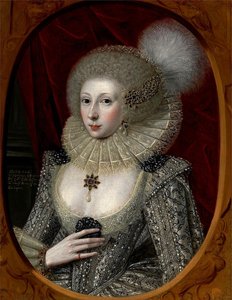
frances abell brand
1913 - , United States of America
Quick Facts
- Artistic Movement Or Style: Fauvism, Modernism, Post-Impressionism
- Artists Or Movements Influenced By This Artist:
- André Derain
- Maurice de Vlaminck
- Cubism
- Artists Who Influenced This Artist:
- Paul Cézanne
- Vincent van Gogh
- Edgar Degas
- Date Of Birth: December 31, 1869
- Date Of Death: November 3, 1954
- Full Name: Henri Matisse
- Nationality: French
- Notable Artworks:
- Woman with a Hat
- The Joy of Life
- Blue Nude (Souvenir de Biskra)
- Dance
- Red Studio
- Place Of Birth: Cateau-Béart, France
Related Articles
Grant Wood & American Regionalism: Identity, Myth & the Rural Landscape
Explore the world of Grant Wood & American Regionalism with ArtsDot. Discover the symbolism behind 'American Gothic', recurring themes, and the movement's lasting impact on art history. High-quality reproductions available.
American Realism's Defining Works: 10 Masterpieces for Your Home
Explore 10 defining American Realism masterpieces – Hopper, Homer & more. Discover the stories behind these iconic paintings and bring timeless art to your home with ArtsDot's museum-quality reproductions. Explore the full collection online.
American Regionalism: A Crucible of Identity – Exploring Themes of Place, Labor & Social Commentary
Explore American Regionalism's powerful depiction of the American heartland during the Great Depression. Discover Grant Wood, Thomas Hart Benton & more. Expert analysis & high-quality art reproductions at ArtsDot.
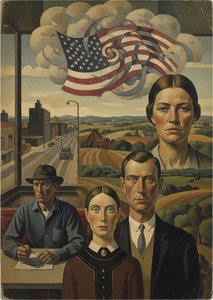
Echoes of Place: Regionalism & American Identity in Interwar Art
Explore the rise of American Regionalism in interwar art! Discover Grant Wood, Thomas Hart Benton & the movement's impact on American identity. Expert analysis & historical context.
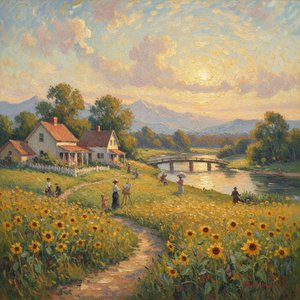
Capturing a Nation's Light: Exploring the American Impressionist Movement
Explore the captivating world of American Impressionism! Discover key artists, techniques & its lasting impact on art history. Find museum-quality reproductions and expert guidance at ArtsDot.