 Preview
 Send
Send Share
Share
 Details

 Download
 Similars
 X-Ray
X-Ray Diaporama
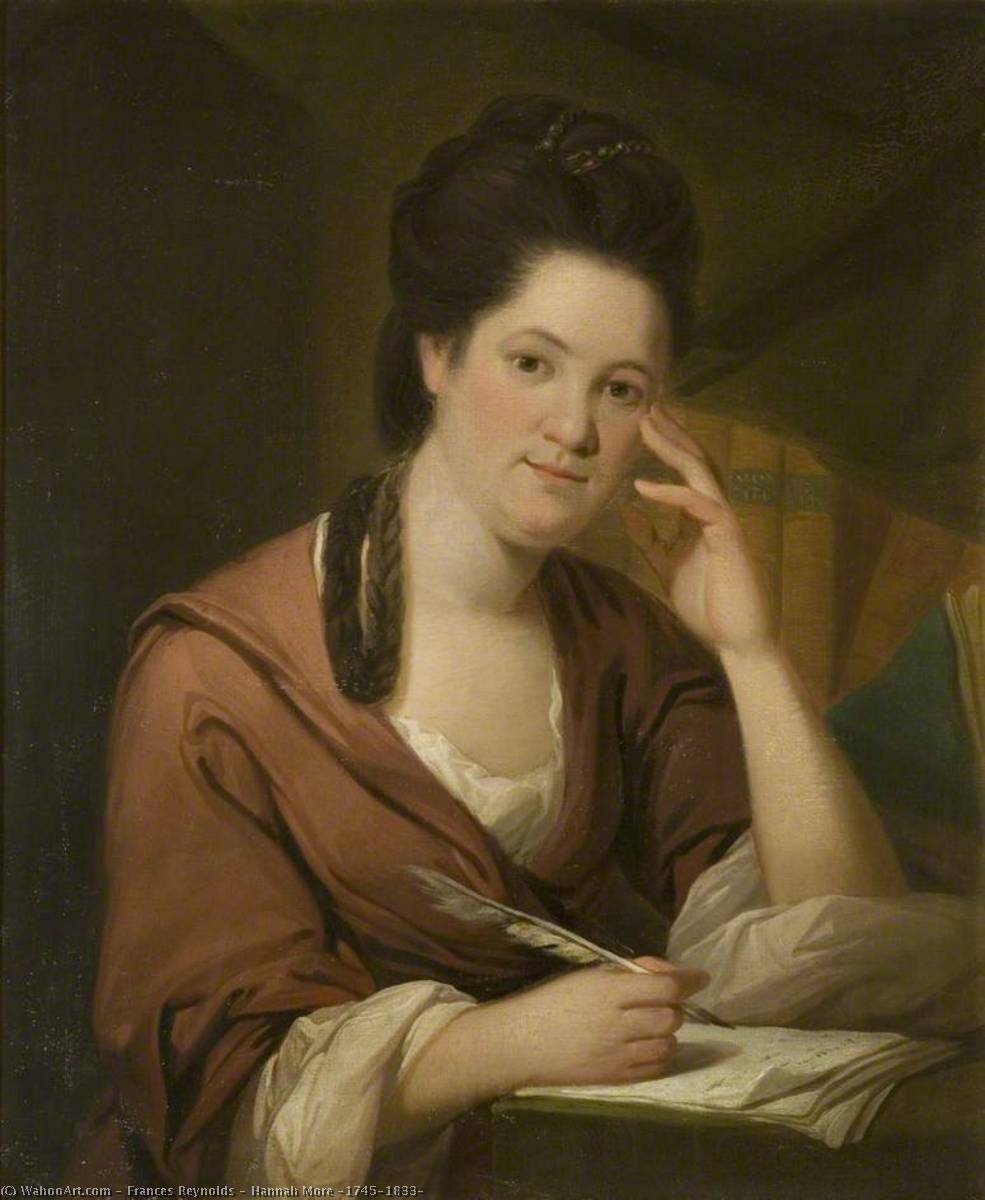
Hannah More (1745–1833)
 1780
1780 74.0 x 61.0 cm
 Bristol Museum - Art Gallery
 Read More
Hand Made Oil Reproduction
Hand-painted oil on canvas in your size and frame, made to order by our artists. ( Buy Print Buy Image)




































Pick from our preset sizes that match the artwork's original proportions.

You may enter your own dimensions to fit a specific frame or space. If your selected size does not match the original image's proportions, we will either crop the artwork or extend the painting with additional hand-painted elements. A digital mockup will be sent for your approval before production begins.
Please note that the on-screen preview does not reflect the actual cropping or extension. Only the mockup will accurately show the final composition.
While custom sizes are available, we recommend selecting a dimension from the predefined list to preserve the original proportions.
After order, ArtsDot.com team will email client for instructions and provide a mockup preview
Worldwide Delivery () in 3/4 weeks instead of standard 5 weeks. (19 August). No compromise on quality.

Free Worldwide Express Shipping

High-Quality Linen Canvas

Full Shipping Insurance

Customs Tax Refund Guarantee

True Color Matching Guarantee

60-Day Return Policy (Defects Only)

100% Money-Back Guarantee

Bulk Discount Offer
 Glass option is only available in size under 110 CM

Hannah More (1745–1833)
Reproduction Medium
Reproduction Size
-


Total Price
$ 263
Related Artworks
Artist Biography
Frances Reynolds (1729–1807): Sister of Genius, Keeper of Memory
Frances Reynolds was a remarkable English artist whose life intersected profoundly with the artistic landscape of her era, primarily through her association with Sir Joshua Reynolds. Born in 1729, she emerged from a family steeped in intellectual pursuits and familial connections to prominent figures like Samuel Johnson and Sir Joshua Reynolds himself—a lineage that undeniably shaped her artistic sensibilities and personal trajectory. Unlike many artists of her time who pursued fame and fortune, Reynolds prioritized preserving the legacy of her brother’s achievements, dedicating herself tirelessly to maintaining his house after his relocation to London and safeguarding his cherished possessions. This devotion wasn't merely filial piety; it represented a deep appreciation for tradition and an unwavering commitment to honoring familial bonds. Reynolds’ artistic journey began with miniature painting—a favored medium during the Georgian period—where she honed her skills under the tutelage of renowned artists like Edward Lye, absorbing techniques and stylistic considerations that would inform her later endeavors. Her early works showcased a meticulous attention to detail and an understated elegance characteristic of the genre, reflecting the prevailing aesthetic sensibilities of the time. However, Reynolds’ artistic ambitions extended beyond mere replication; she sought to capture not just likeness but also essence—to convey mood and emotion through subtle nuances of color and composition. This pursuit of expressive artistry distinguishes her from many of her contemporaries who prioritized technical accuracy above all else. A pivotal moment in Reynolds' life arrived with her relocation to Paris in 1768, where she resided alongside Miss Flint, fostering connections within the artistic circles of Enlightenment France. Exposure to Parisian culture and intellectual discourse undoubtedly broadened her horizons and stimulated her creative imagination. During this period, she encountered Samuel Johnson, whose friendship proved invaluable—Johnson recognized Reynolds’ talent and championed her work, offering encouragement and admiration for her artistic endeavors. Their correspondence reveals a shared passion for literature and art, underscoring the importance of social connections in shaping an artist's intellectual development. Reynolds’ most celebrated achievement was undoubtedly her portrait of Sir Joshua Reynolds himself—a piece that exemplifies her mastery of technique and her ability to convey psychological depth. However, Johnson famously critiqued the painting, deeming it “grimly ghost,” highlighting Reynolds’ reluctance to fully embrace stylistic innovation. Despite this criticism, Reynolds remained steadfast in her commitment to traditional artistic conventions, prioritizing accuracy and subtlety over flamboyant experimentation—a decision that reflects a broader trend within English art during the late 18th century. Reynolds passed away peacefully in Westminster on November 1st, 1807, leaving behind an enduring legacy as a devoted sister, a meticulous artist, and a woman who championed the preservation of familial heritage. Her work continues to fascinate scholars and collectors alike—a testament to her artistic vision and her unwavering dedication to honoring the memory of her brother’s accomplishments. She is remembered not merely for her technical prowess but also for her profound understanding of human emotion and her ability to translate complex psychological states into visual form.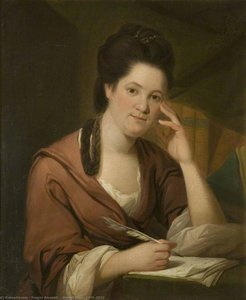
frances reynolds
1729 - 1807
Quick Facts
- Artistic Movement Or Style: Miniature painting
- Artists Or Movements Influenced By This Artist: Portraiture
- Artists Who Influenced This Artist: Sir Joshua Reynolds
- Date Of Birth: 1729
- Date Of Death: 1807
- Full Name: Frances Reynolds
- Nationality: British
- Notable Artworks: ['The Duchess of Dorset']
- Place Of Birth: England