 Preview
 Send
Send Share
Share
 Details

 Download
 Similars
 X-Ray
X-Ray Diaporama
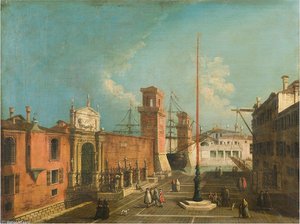
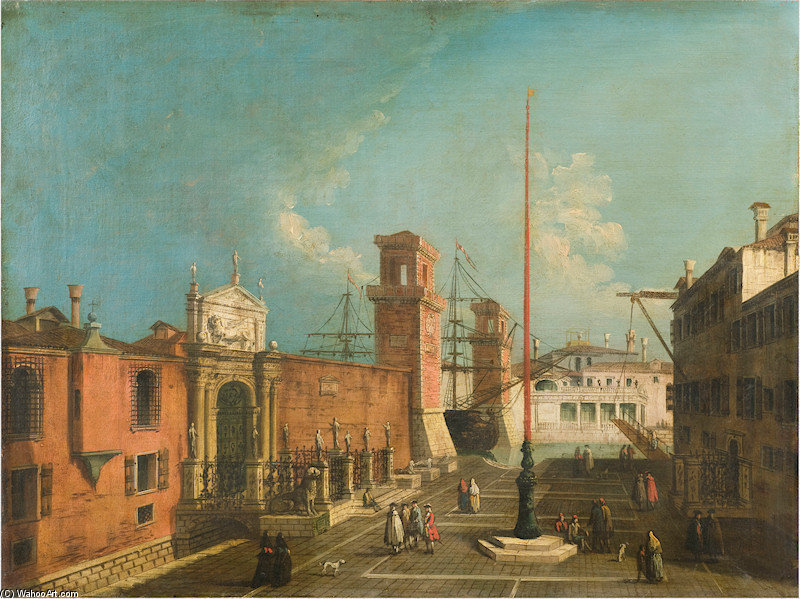
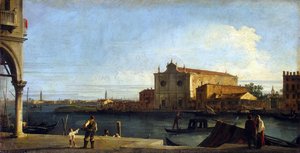
Veduta Del Campo E Delle Porte Dell'arsenale
 Read More
Giclée / Art Print
Museum-quality giclée or canvas print with fast production and flexible finish options. ( Buy Hand Made Painting Buy Image)




































Pick from our preset sizes that match the artwork's original proportions.

You may enter your own dimensions to fit a specific frame or space. If your selected size does not match the original image's proportions, we will either crop the artwork or extend the image with a mirrored or solid-fill edge. A digital mockup will be sent for your approval before production begins.
Please note that the on-screen preview does not reflect the actual cropping or extension. Only the mockup will accurately show the final composition.
While custom sizes are available, we recommend selecting a dimension from the predefined list to preserve the original proportions.
Worldwide Delivery () in 2 weeks instead of standard 4/5 weeks. (26 August)

Free Worldwide Express Shipping

High-Quality Linen Canvas

Full Shipping Insurance

Customs Tax Refund Guarantee

True Color Matching Guarantee

60-Day Return Policy (Defects Only)

100% Money-Back Guarantee

Bulk Discount Offer
 Glass option is only available in size under 110 CM

Veduta Del Campo E Delle Porte Dell'arsenale
Giclée / Art Print
Reproduction Size
-


Total Price
$ 63
Related Artworks








Artist Biography
A Venetian Echo: The Life and Art of Francesco Albotto
Francesco Albotto, a name perhaps less celebrated than his mentor but inextricably linked to the shimmering world of 18th-century Venice, occupies a fascinating niche in the history of *vedute* painting. Born in Venice in 1721, Albotto’s life was tragically short, ending in 1757, yet within those thirty-six years he managed to capture the essence of his city with a delicate hand and an observant eye. His story is one of artistic inheritance, skillful imitation, and the enduring challenge of distinguishing individual style amidst a powerful legacy. Albotto wasn’t merely a painter; he was a continuation – a vital echo in the vibrant chorus of Venetian artistry.Apprenticeship and the Shadow of Marieschi
Albotto's formative years were spent under the tutelage of Michele Marieschi, a prominent *vedutista* known for his lively depictions of Venetian life and architecture. This apprenticeship proved pivotal, shaping Albotto’s technique and subject matter profoundly. Marieschi instilled in him not only the mechanics of painting – the precise rendering of stone, water, and light – but also a keen understanding of composition and perspective, essential elements in capturing the grandeur and complexity of Venice. However, fate intervened with Marieschi's untimely death, leading to an unusual turn in Albotto’s life. He married Marieschi’s widow and assumed control of his workshop. This act, while practical, created a lasting ambiguity in attributing works definitively to either artist. For years, paintings emerged from the shop bearing the stylistic hallmarks of Marieschi, making it difficult to discern where one master's hand ended and the other began.The Art of Vedute: Capturing Venice on Canvas
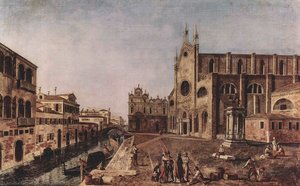
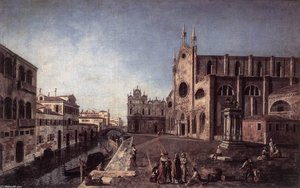
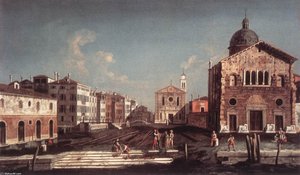
Albotto dedicated himself primarily to *vedute* – detailed views of cities, particularly Venice. These weren’t simply topographical records; they were celebrations of urban life, infused with a sense of atmosphere and human activity. His canvases depict bustling canals teeming with gondolas, elegant palazzi rising from the water, and lively squares filled with figures engaged in everyday pursuits. Albotto's technique, closely mirroring Marieschi’s, involved a meticulous approach to detail combined with a distinctive splodging of paint that created a sense of texture and decay – a subtle acknowledgement of Venice’s age and vulnerability. He employed fine brown paint and stencils to delineate architectural focal points, achieving remarkable precision in his renderings. Paintings like ‘Campo Santi Giovanni E Paolo’ exemplify this skill; the scene is rendered with Baroque realism, inviting the viewer into the heart of Venetian life. His works are not grandiose statements but intimate glimpses, capturing a specific moment in time and space.Distinguishing Albotto: A Subtle Hand
Despite the close stylistic similarities to Marieschi, scholars have identified characteristics that distinguish Albotto’s work. While both artists shared a love for detail and atmospheric perspective, Albotto's paintings often exhibit a smoother *peinture*, a more refined application of paint compared to Marieschi’s somewhat looser brushwork. The discovery of a signed painting in 1972, bearing an address, provided crucial evidence separating his hand from that of his predecessor. Recent research suggests Albotto focused on achieving a greater degree of accuracy and precision in his reproductions, perhaps catering to a clientele seeking faithful depictions of the city. This subtle shift in emphasis – towards a more polished and refined aesthetic – allows us to appreciate Albotto not as a mere imitator but as an artist with his own distinct sensibility.Legacy and Historical Significance
Francesco Albotto’s legacy lies in his ability to continue the Venetian *vedute* tradition, preserving the beauty of his city for posterity. While overshadowed by more famous contemporaries like Canaletto and Guardi, he played a vital role in documenting Venice during a period of significant cultural and economic change. His paintings offer invaluable insights into 18th-century urban life, architecture, and social customs. Today, Albotto’s works are found in private and public collections worldwide, including the Gemäldegalerie in Berlin and museums in Naples. He remains an important figure for art historians and collectors alike – a testament to the enduring power of *vedute* painting and the captivating allure of Venice itself.
francesco albotto
1721 - 1757 , Italy
Quick Facts
- Artistic Movement Or Style: Vedute paintings
- Artists Who Influenced This Artist: ['Michele Marieschi']
- Date Of Birth: 1721
- Date Of Death: 1757
- Full Name: Francesco Albotto
- Nationality: Italian
- Notable Artworks:
- Campo Santi Giovanni E Paolo
- View Of Campo Santi Giovanni E Paolo
- Place Of Birth: Venice, Italy