

 Preview
 Send
Send Share
Share
 Details

 Download
 Similars
 X-Ray
X-Ray Diaporama
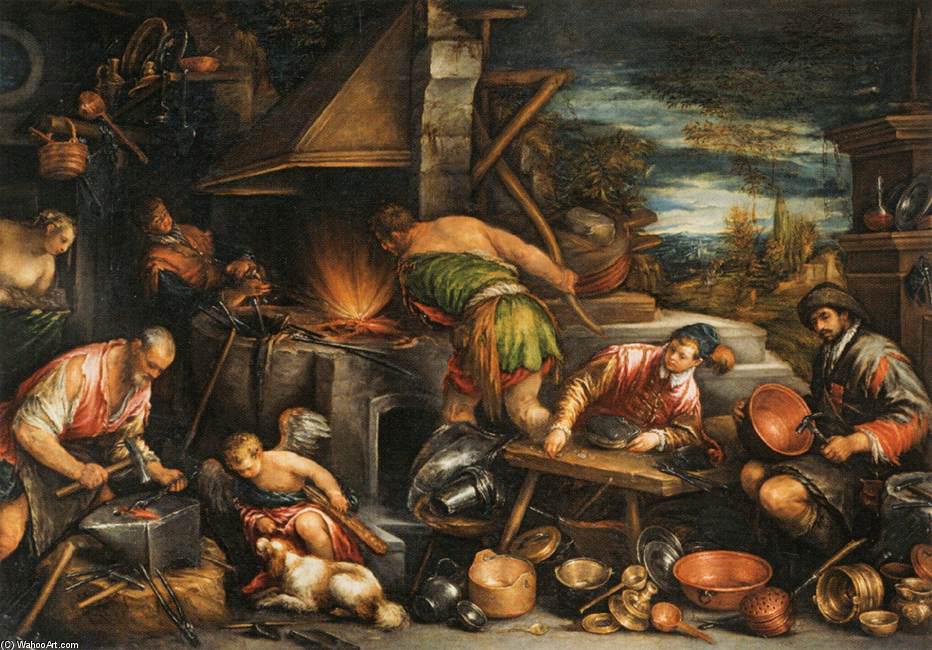
The Forge of Vulcan
 Acrylic On Canvas
- WallArt
- Baroque Renaissance Painting
 1577
1577 137.0 x 191.0 cm
 The Louvre
 Read More
Purchase a high-resolution, enhanced digital image, far superior to the online preview.
Each file is meticulously prepared by our in-house specialists using advanced tools and expert manual retouching. We ensure every image has exceptional clarity, precise color accuracy, and fine detail.
The final file is delivered via email within 72 hours, optimized for immediate use in professional, editorial, and print environments. This is the same quality trusted by top-tier design studios, publishers, and galleries.
Digital Image
Download a high-resolution file for personal display, printing, and creative projects. ( Buy Print Buy Hand Made Painting)
Included in Every Digital Image Order
Expert Digital Delivery, Guaranteed
When you choose ArtsDot.com, you're not just getting an image - you're receiving a professionally enhanced digital artwork, crafted with precision and backed by a satisfaction guarantee. Here's everything that comes with your order, automatically:

Fast Email Delivery
Your high-resolution digital image file will be emailed to you within 72 hours of ordering - ready for immediate use.

AI-Enhanced Digital File
Your artwork is professionally optimized using advanced AI tools and manual editing, ensuring maximum detail, clarity, and color accuracy.

Free Lifetime Re-Delivery
Accidentally deleted or lost your file? No worries - we'll resend it to you anytime, free of charge.

No Import Fees - Ever
Enjoy your artwork instantly with zero customs, duties, or delivery fees - digital downloads are always tax-free.

Color Accuracy Guarantee
We ensure your digital image reflects the original colors as closely as possible using professional tools and color management.

60-Day Satisfaction Guarantee
If you're not satisfied with your digital image, we'll revise it or refund 100% within 60 days - no questions asked.

100% Money-Back Guarantee
Not satisfied? Get a full refund within 60 days of receiving your digital file - no questions asked.

Bulk Order Discounts
Buy 3 images, save 10% - Buy 5, save 15% - Buy 10+, save 20%. Great for creative projects, galleries, and agencies.
Collectible Description
The Forge of Vulcan: A Venetian Renaissance Masterpiece
Francesco Bassano’s “The Forge of Vulcan” stands as an emblem of Venetian artistic prowess during the late 16th century, embodying the spirit of humanist inquiry and masterful craftsmanship that characterized the era. Executed in 1577 for the Museo Nacional del Prado in Madrid, Spain, this oil on canvas painting transcends mere depiction; it’s a carefully constructed narrative infused with symbolism and illuminated by Bassano's unparalleled understanding of light and color—a legacy directly traceable to his father, Jacopo da Ponte.Composition & Technique: Capturing Movement and Atmosphere
The artwork immediately draws the eye into a dynamic scene unfolding within a forge interior. Bassano skillfully employs chiaroscuro – dramatic contrasts between light and shadow – to sculpt the figures and illuminate the textures of metal surfaces, clothing, and the rugged landscape visible beyond the arched doorway. The artist’s meticulous attention to detail is evident in every brushstroke, from the glistening sheen of molten metal to the folds of fabric clinging to the workmen's bodies. Bassano’s technique—characterized by layering thin glazes over a preparatory underpainting—allowed him to achieve remarkable luminosity and depth, mirroring the artistic innovations championed by Titian and Veronese during their time.Historical Context: Renaissance Venice & The Patronage System
“The Forge of Vulcan” reflects the broader cultural currents circulating in Renaissance Venice, where artists thrived under the patronage of wealthy families like Gonzaga and Este. These patrons commissioned artworks that celebrated humanist ideals—reason, observation, and human dignity—often incorporating mythological references to imbue their creations with moral significance. The forge itself serves as a potent symbol – representing both industry and divine power – referencing Vulcan, the Roman god of fire and metalworking, who is credited with forging Zeus’s thunderbolts and shaping Mars’s armor. This allusion underscores the painting's ambition to elevate its subject matter beyond mere representation into a contemplation of cosmic order.Symbolism & Emotional Impact: Light, Labor, and Divine Inspiration
Beyond its technical brilliance and historical context, “The Forge of Vulcan” resonates emotionally with viewers through its portrayal of arduous labor juxtaposed against an expansive landscape bathed in diffused light. The central figure hammering metal embodies perseverance and dedication—qualities admired throughout Venetian society. Simultaneously, the sky’s overcast hues evoke a sense of solemn contemplation, hinting at the divine influence guiding human endeavor. Bassano's masterful use of color contributes to this emotional resonance, creating a harmonious blend of earthy tones and luminous blues that captivates the senses and invites reflection on themes of creation, transformation, and spiritual aspiration.A Legacy Enduring Through Reproduction
Today, “The Forge of Vulcan” continues to inspire admiration for its artistic merit and serves as a testament to Bassano’s enduring contribution to Venetian art history. High-quality reproductions—available at https://ArtsDot.com – allow collectors and enthusiasts alike to experience the painting's grandeur and beauty firsthand, preserving its legacy for generations to come. To delve deeper into Francesco Bassano’s artistic vision, visit The Forge of Vulcan page: [https://ArtsDot.com/en/artworks/francesco-bassano-the-younger-the-forge-of-vulcan](https://ArtsDot.com/en/artworks/francesco-bassano-the-younger-the-forge-of-vulcan)- Artist: Francesco Bassano the Younger
- Year: 1577
- Location: Museo Nacional del Prado, Madrid
- Medium: Oil on Canvas
Related Artworks


Artist Biography
A Venetian Legacy Illuminated
The story of Francesco Bassano the Younger is one of lineage, light, and the enduring spirit of the Venetian Renaissance. Born as Jacopo dal Ponte in the picturesque landscape of Bassano del Grappa, his very identity was woven into the fabric of a profound artistic dynasty. As a descendant of the celebrated Francesco da Ponte the Elder, Francesco did not merely inherit a name; he inherited a visual language defined by the mastery of nature and the dramatic interplay of shadow and light. His early years were spent within the hallowed walls of the Bassano family workshop, a creative crucible where he trained alongside his brothers Giambattista, Girolamo, and Leandro. This collaborative environment, guided by the meticulous instruction of his father, Jacopo Bassano, allowed him to absorb the nuances of Venetian Mannerism and the burgeoning influences of the Baroque style.
The artistic DNA of Francesco was deeply influenced by the masters who preceded him, most notably the atmospheric brilliance of Titian and the powerful compositions of Pordenone. From these giants, he learned to manipulate color to evoke emotion and to use light not just as a tool for visibility, but as a narrative force capable of breathing life into the canvas. His training focused heavily on the ability to capture the fleeting essence of the natural world—the way sunlight filters through a canopy or the heavy atmosphere of a nocturnal scene. This technical prowess allowed him to transition seamlessly from the pastoral traditions of his father to more complex, emotionally resonant compositions that would define his mature period.
The Venetian Ascent and Artistic Evolution
In 1576, Francesco made a pivotal move to Venice, a decision that would alter the trajectory of his career and solidify his standing in the European art world. Within the bustling, cosmopolitan atmosphere of the Venetian Republic, he ascended rapidly through the ranks of the city's elite artistic circles. He was not merely a painter but a vital administrator of the family’s legacy, taking on significant responsibilities for the Bassano branch in Venice. This role required him to oversee large-scale productions and manage complex commissions, ensuring that the distinctive Bassano style remained a dominant force in the Venetian market. His work during this era began to exhibit a sophisticated fusion of styles, blending the structured elegance of Mannerism with a new, more dynamic energy that hinted at the coming Baroque era.
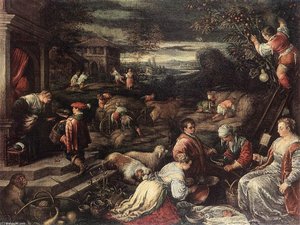
His repertoire was remarkably diverse, ranging from intimate landscapes to grand mythological and religious narratives. In works such as 'Summer', one can witness his ability to capture the vibrant pulse of rural life through rich, saturated colors and a sense of rhythmic movement among figures. Conversely, in more mythologically charged pieces like 'The Forge of Vulcan', he demonstrated a masterful command over light and shadow, using the glow of the forge to create a dramatic, theatrical atmosphere that captivated viewers. This ability to oscillate between the serene beauty of the natural world and the intense drama of classical myth is what truly distinguishes his hand from that of his contemporaries.
Artistic Mastery and Historical Significance
The enduring significance of Francesco Bassano the Younger lies in his role as a bridge between eras. He carried the weight of a prestigious family tradition while simultaneously embracing the innovations of a changing artistic landscape. His paintings serve as windows into the 16th-century Venetian soul, offering a glimpse into a world where the boundaries between the human, the divine, and the natural were blurred by the brushstroke. Through his meticulous attention to detail and his evocative use of color, he ensured that the Bassano name would remain synonymous with excellence for generations.
To reflect on his body of work is to explore several key pillars of his artistry:
- The Mastery of Light: His ability to utilize chiaroscuro to create depth and emotional weight.
- Naturalism and Detail: A profound connection to the textures of the earth, from livestock to seasonal landscapes.
- Narrative Complexity: The seamless integration of religious and mythological themes into cohesive, moving compositions.
- Legacy of the Workshop: His role in maintaining the commercial and artistic prestige of the Bassano family brand during a period of intense competition.
Today, Francesco’s works remain vital touchstones for anyone studying the evolution of Italian painting. He remains a testament to the power of tradition when met with individual innovation, leaving behind a luminous legacy that continues to inspire awe in the hearts of art lovers worldwide.

Francesco Bassano the Younger
1549 - 1592 , Italy
Quick Facts
- Artistic Movement Or Style: Venetian Renaissance
- Artists Or Movements Influenced By This Artist:
- Titian
- Pordenone
- Artists Who Influenced This Artist:
- Jacopo Bassano
- Antonio Canova
- Date Of Birth: January 26, 1549
- Date Of Death: July 4, 1592
- Full Name: Francesco Bassano the Younger
- Nationality: Italian
- Notable Artworks:
- Winter
- The Forge of Vulcan
- Market Scene
- Place Of Birth: Bassano del Grappa, Italy

