 Preview
 Send
Send Share
Share
 Details

 Download
 Similars
 X-Ray
X-Ray Diaporama
Publie Dans Francesco D'antonio De Ancona
 Read More
Hand Made Oil Reproduction
Hand-painted oil on canvas in your size and frame, made to order by our artists. ( Buy Print Buy Image)




































Pick from our preset sizes that match the artwork's original proportions.

You may enter your own dimensions to fit a specific frame or space. If your selected size does not match the original image's proportions, we will either crop the artwork or extend the painting with additional hand-painted elements. A digital mockup will be sent for your approval before production begins.
Please note that the on-screen preview does not reflect the actual cropping or extension. Only the mockup will accurately show the final composition.
While custom sizes are available, we recommend selecting a dimension from the predefined list to preserve the original proportions.
After order, ArtsDot.com team will email client for instructions and provide a mockup preview
Worldwide Delivery () in 3/4 weeks instead of standard 5 weeks. (20 August). No compromise on quality.

Free Worldwide Express Shipping

High-Quality Linen Canvas

Full Shipping Insurance

Customs Tax Refund Guarantee

True Color Matching Guarantee

60-Day Return Policy (Defects Only)

100% Money-Back Guarantee

Bulk Discount Offer
 Glass option is only available in size under 110 CM

Publie Dans Francesco D'antonio De Ancona
Reproduction Medium
Reproduction Size
-


Total Price
$ 263
Related Artworks
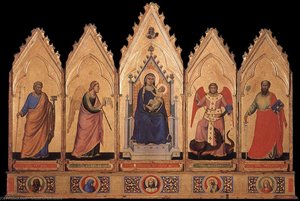
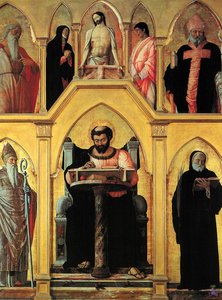
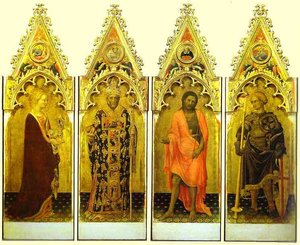
Artist Biography
A Late Gothic Echo in Renaissance Color
In the shifting artistic tides of fifteenth-century Italy, few figures capture the delicate transition from the medieval to the modern as poignantly as Francesco d’Antonio da Viterbo. Known to his contemporaries by the evocative moniker il Balletta, this master of the late-Gothic and early-Renaissance styles breathed life into the churches of Viterbo with a hand that balanced solemn tradition against a burgeoning sense of movement. While the biographical shadows surrounding him remain deep—a common tragedy for artists of this era—his brushwork speaks with a clarity that allows us to reconstruct a world of profound devotion and emerging naturalism.
Born around 1407, Zacchi’s formative years were likely shaped by the prestigious artistic currents flowing from Siena. It is widely believed by scholars that he absorbed the stylistic nuances of masters such as Bartolo di Fredi and Taddeo di Bartolo. This Sienese influence provided him with a foundation of graceful, elongated forms and a rich, symbolic use of color, yet Zacchi possessed an expressive dynamism that pushed beyond mere imitation. His work serves as a bridge, where the rigid, iconographic sanctity of the Gothic period begins to soften into the more humanized, emotive depth characteristic of the early Renaissance.
The Sacred Landscapes of Viterbo
The true legacy of Francesco d’Antonio lies in his monumental contributions to the visual landscape of the Lazio region. His presence in Viterbo is most powerfully felt through his frescoes, which transformed local sacred spaces into immersive spiritual experiences. One of his most significant undertakings was the Crucifixion fresco located near Piazza Santa Maria Nuova. Executed between 1430 and 1467, this ambitious work showcases a masterful command of composition, bringing together a cast of holy figures including the Madonna and Saints John the Baptist and Ambrosius in a scene of profound emotional weight.
Beyond the walls of churches, Zacchi’s versatility was evident in his ability to handle complex multi-paneled works known as polyptychs. These large-scale altarpieces were not merely paintings but architectural elements of worship. His notable achievements include:
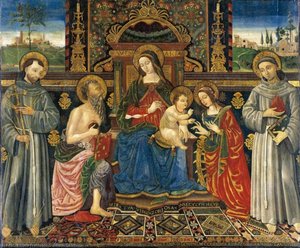
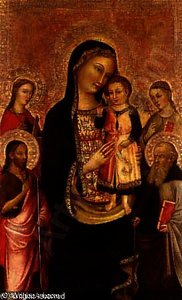
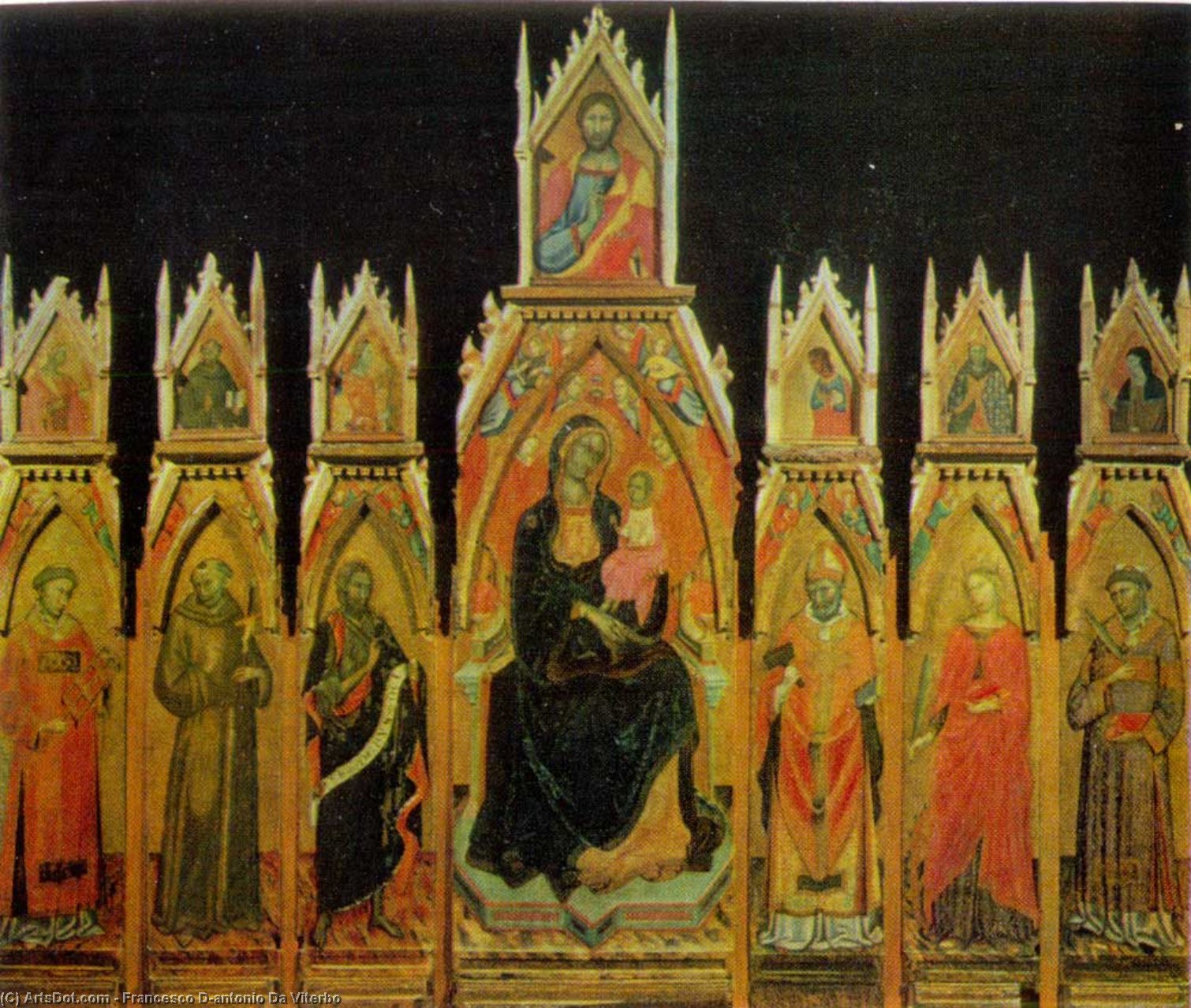
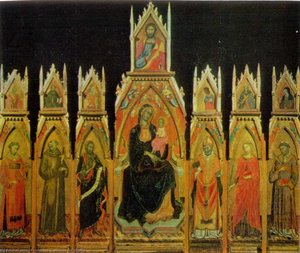
- The Polyptych for San Giovanni in Zoccoli: A 1441 masterpiece depicting the Enthroned Madonna and Child surrounded by Saints, demonstrating his ability to organize complex hierarchies of figures within a single frame.
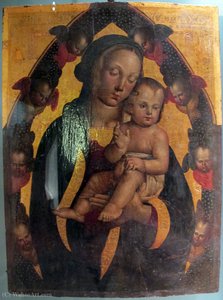
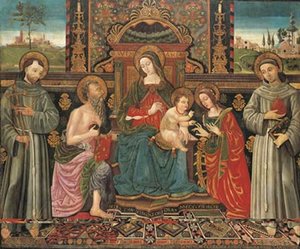
- The Sanctuary of Santa Rosa Commission: An exquisite polyptych featuring the Virgin and Child enthroned alongside Saints Rose and Catherine of Alexandria, where his use of the mandorla—a radiant almond-shaped aura—reminds the viewer of his deep roots in Gothic iconography.
- Papal Patronage: In 1464, his skill was recognized even at the highest levels of power when he was commissioned to gild and paint the coat of arms of Pope Calixtus III for the Castle of Viterbo.
A Lasting Artistic Impression
The significance of Francesco d’Antonio da Viterbo extends far beyond the local borders of Viterbo. He represents a pivotal moment in art history when the spiritual intensity of the Middle Ages began to embrace the light and anatomical curiosity of the Renaissance. His depictions of the Madonna and Child, often found in collections such as The Walters Art Museum, reveal an artist capable of infusing divine subjects with a palpable, tender humanity. Through his use of vibrant pigments and a rhythmic approach to composition, he ensured that the transition from one era to another was not merely a change in technique, but a profound evolution of the human spirit on canvas.
Francesco d'Antonio da Viterbo
1407 - 1476 , Italy
Quick Facts
- Artistic Movement Or Style: Late Gothic & Early Renaissance
- Artists Or Movements Influenced By This Artist: ['Masaccio']
- Artists Who Influenced This Artist:
- Bartolo di Fredi
- Taddeo di Bartolo
- Date Of Birth: c. 1407
- Date Of Death: before 1476
- Full Name: Francesco d’Antonio Zacchi
- Nationality: Italian
- Notable Artworks:
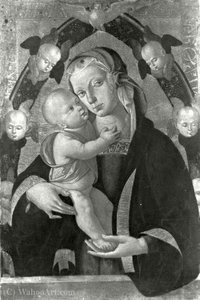
- Madonna & Child in a mandorla of seraphim.
- Publie Dans Francesco D'antonio De Ancona
- Place Of Birth: Viterbo, Italy