 Preview
 Send
Send Share
Share
 Details

 Download
 Similars
 X-Ray
X-Ray Diaporama
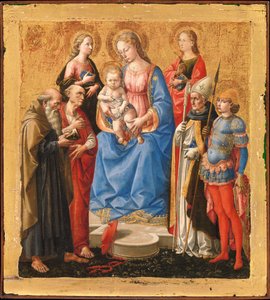
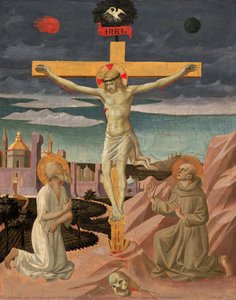
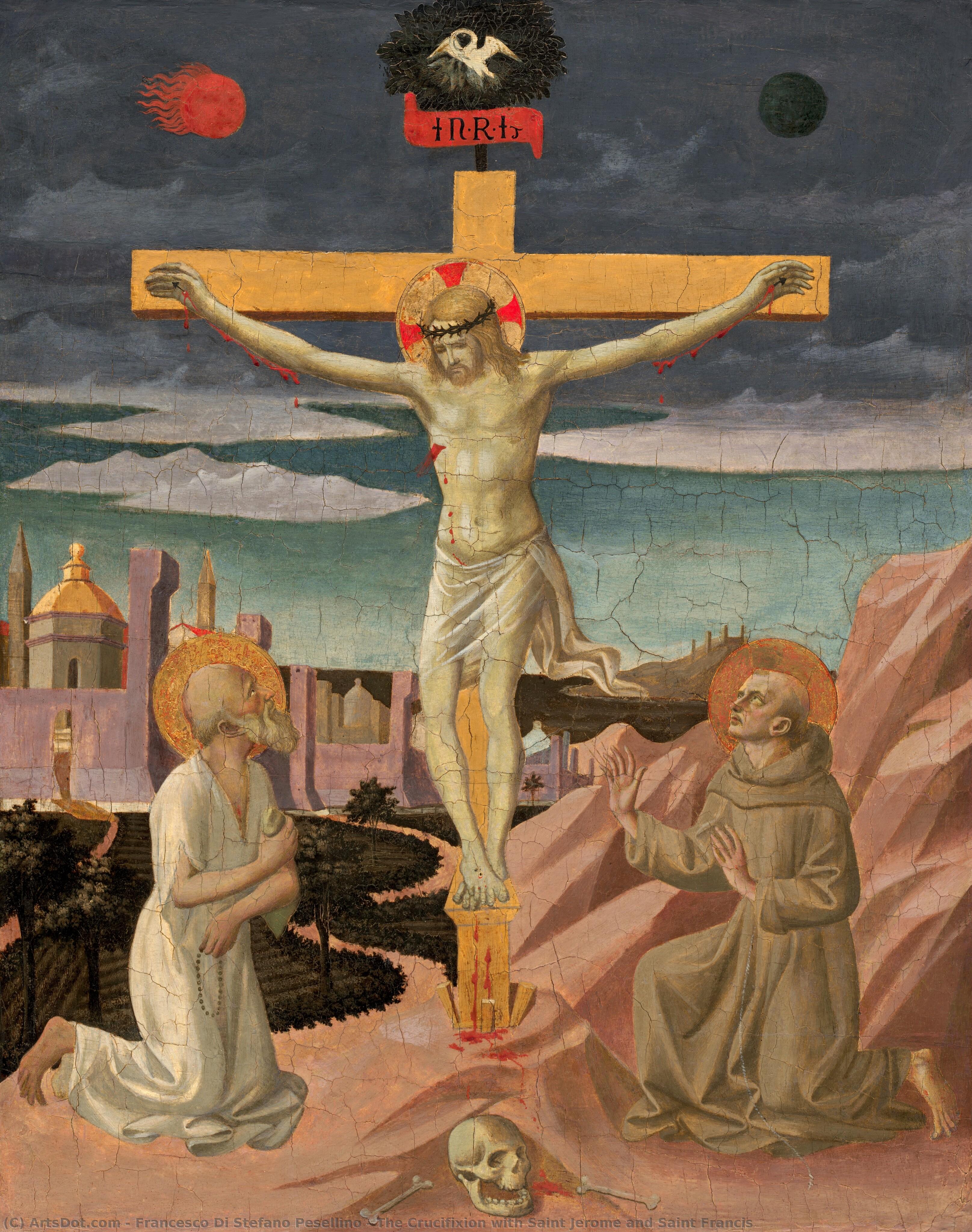
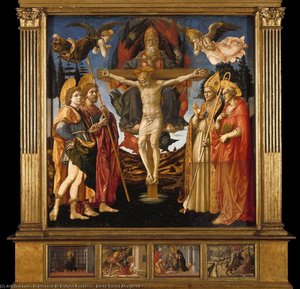
The Crucifixion with Saint Jerome and Saint Francis
 1450
1450 97.0 x 76.0 cm
 Read More
Hand Made Oil Reproduction
Hand-painted oil on canvas in your size and frame, made to order by our artists. ( Buy Print Buy Image)




































Pick from our preset sizes that match the artwork's original proportions.

You may enter your own dimensions to fit a specific frame or space. If your selected size does not match the original image's proportions, we will either crop the artwork or extend the painting with additional hand-painted elements. A digital mockup will be sent for your approval before production begins.
Please note that the on-screen preview does not reflect the actual cropping or extension. Only the mockup will accurately show the final composition.
While custom sizes are available, we recommend selecting a dimension from the predefined list to preserve the original proportions.
After order, ArtsDot.com team will email client for instructions and provide a mockup preview
Worldwide Delivery () in 3/4 weeks instead of standard 5 weeks. (16 August). No compromise on quality.

Free Worldwide Express Shipping

High-Quality Linen Canvas

Full Shipping Insurance

Customs Tax Refund Guarantee

True Color Matching Guarantee

60-Day Return Policy (Defects Only)

100% Money-Back Guarantee

Bulk Discount Offer
 Glass option is only available in size under 110 CM

The Crucifixion with Saint Jerome and Saint Francis
Reproduction Medium
Reproduction Size
-


Total Price
$ 263
Artwork Description
Related Artworks

Artist Biography
Francesco di Stefano Pesellino: A Florentine Master of Subtle Detail
Francesco di Stefano Pesellino, a name often whispered in the halls of Renaissance art history, remains a figure of captivating mystery and profound influence. Born in Florence around 1422, he emerged from a lineage steeped in artistic talent – his father, Stefano di Francesco, and his maternal grandfather, Giuliano Pesello, both renowned painters. The diminutive nickname “pesellino,” derived from his grandfather’s name, became inextricably linked to his identity, reflecting not just his familial connection but also the distinctive style he would ultimately forge. His tragically short life, ending in Florence in 1457 at the young age of thirty-five, cut short a career brimming with promise and left behind a legacy characterized by exquisite detail and an uncanny ability to capture the essence of human emotion.
Pesellino’s early artistic development was profoundly shaped by his apprenticeship under Filippo Lippi, one of Florence's most celebrated painters. This association proved pivotal, exposing him to Lippi’s innovative techniques and humanist sensibilities. However, it was his time spent in Giuliano Pesello’s studio that truly molded his unique approach. Pesello, a master of miniature painting and portraiture, instilled in Pesellino a meticulousness and an appreciation for the subtle nuances of form and color – qualities that would become hallmarks of his work. The influence of this apprenticeship is evident in Pesellino's preference for small-scale panels and his remarkable ability to render textures with astonishing realism.
A Style Defined by Precision and Intimacy
Pesellino’s artistic style is immediately recognizable, distinguished by its exceptional refinement and a deliberate avoidance of grand gestures. Unlike the more flamboyant styles prevalent during the early Renaissance, Pesellino favored a restrained elegance, focusing on precise detailing and a profound sense of intimacy. His panels rarely depict large-scale narratives; instead, he excelled at capturing small devotional scenes – predellas for altarpieces, intimate depictions of the Madonna and Child, or portraits of saints – each imbued with a quiet dignity and emotional depth. He was particularly adept at rendering fabrics, jewels, and other decorative elements with breathtaking accuracy, imbuing his works with a tactile quality that invites close examination.
Vasari, in his *Lives of the Most Excellent Painters*, Painter, Sculptors, and Architects*, famously noted Pesellino’s contribution to Lippi's altarpiece for Santa Croce. These predella scenes, now dispersed among the Uffizi Gallery in Florence, the Louvre in Paris, and the Bergamo Civic Museum, offer a compelling glimpse into Pesellino’s artistic vision. They demonstrate his mastery of composition, color harmony, and psychological realism – qualities that set him apart from his contemporaries.
The Trinity Altarpiece: A Monumental Undertaking
Perhaps Pesellino's most significant surviving work is the magnificent altarpiece with predella of the Trinity, commissioned by the confraternity of priests at Pistoia in 1455. This ambitious project, though only partially completed at his death, reveals the full extent of Pesellino’s artistic capabilities. The main panel depicts the Holy Trinity in the iconic throne of mercy motif, flanked by four standing saints and a host of angels. The sheer scale of the work – nearly square at over 1.8 meters per side – is remarkable for an artist working in the mid-fifteenth century. The meticulous detail evident in every brushstroke, from the folds of the drapery to the expressions on the faces of the saints, speaks volumes about Pesellino’s dedication and skill.
The commission itself provides a fascinating insight into the artistic patronage system of Renaissance Florence. Records unearthed by art historians document a protracted legal dispute between Pesellino's widow and his business partner over the outstanding payment for the unfinished work – a testament to the complexities of commercial transactions in that era. These records, meticulously preserved, offer a rare glimpse into the practical realities of an artist’s life and career.
Legacy and Influence
Despite his tragically short life, Francesco Pesellino left an indelible mark on the Florentine art world. His style, characterized by its meticulous detail, subtle color harmonies, and intimate emotionality, anticipated the developments of later Florentine painters such as Verrocchio and the Pollaiuoli family. He demonstrated a remarkable ability to synthesize influences from his predecessors – Lippi’s humanist sensibility, Pesello’s miniature techniques, and the emerging trends in naturalistic representation – creating a distinctly original artistic voice.
His work continues to captivate viewers today, not only for its technical brilliance but also for its profound sense of human dignity and spiritual contemplation. The surviving panels and altarpieces offer a poignant reminder of an artist whose potential was tragically cut short, yet whose legacy endures as one of the most intriguing and accomplished figures of the early Renaissance.
francesco di stefano pesellino
1422 - 1457
Quick Facts
- Artistic Movement Or Style: Early Renaissance, Florentine
- Artists Or Movements Influenced By This Artist:
- Verrocchio
- Pollaiuolo
- Artists Who Influenced This Artist:
- Stefano di Francesco
- Giuliano Pesello
- Filippo Lippi
- Date Of Birth: 1422
- Date Of Death: 1457
- Full Name: Francesco di Stefano Pesellino
- Nationality: Italian (Florentine)
- Notable Artworks:
- Santa Trinità Altarpiece
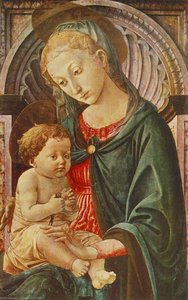
- Madonna and Child
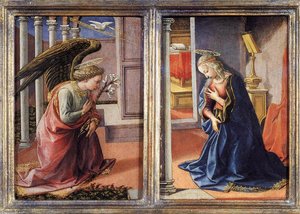
- The Annunciation
- Place Of Birth: Florence, Italy