 Preview
 Send
Send Share
Share
 Details

 Download
 Similars
 X-Ray
X-Ray Diaporama
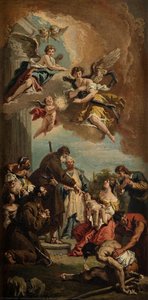
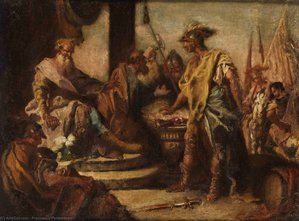
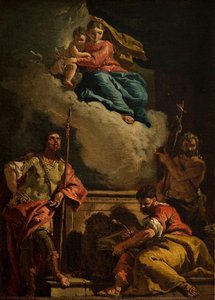
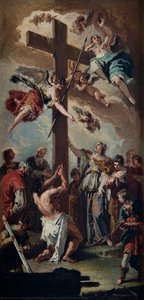
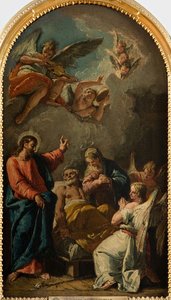
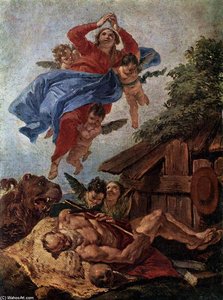
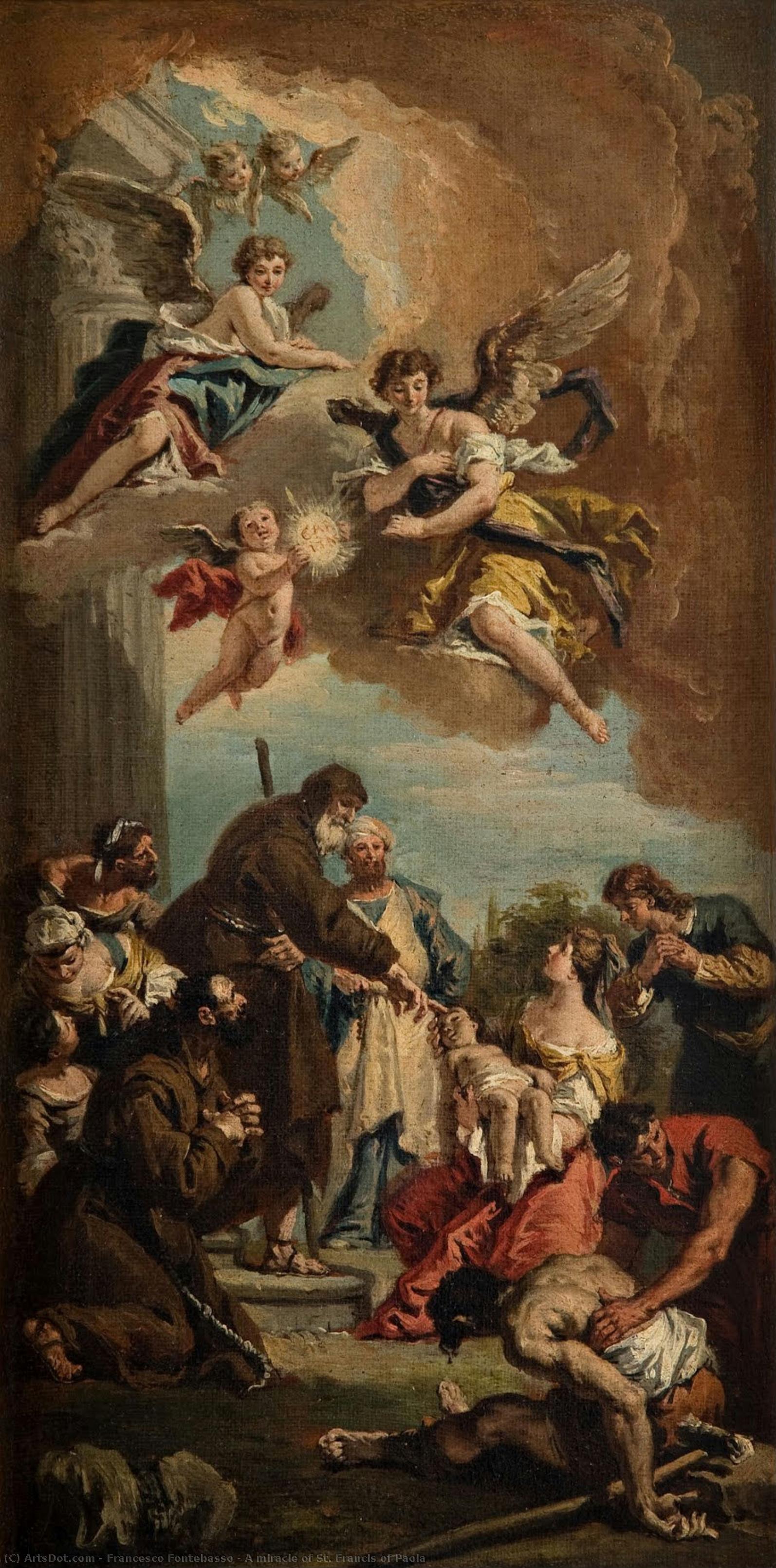
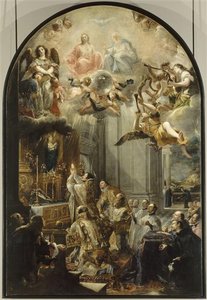
A miracle of St. Francis of Paola


 Read More
Hand Made Oil Reproduction
Hand-painted oil on canvas in your size and frame, made to order by our artists. ( Buy Print Buy Image)




P118B $10

P118H $10

P118W $10

P438Z $10

P508JH $12

P508YH $12

P805H $10

P805Z $10

P919BZ $10

P919G $10

P919XJ $10

P959ZH $10

P968JZ $12

W106C $8

W218G $10

W218JH $8

W218Y $10

W307PJ $10

W316G $10

W316PJ $8

W316Y $10

W398PJ $8

W4111J $10

W500HY $15

W500JH $15

W692G $12

W849H $8

W940BG $15

W953PJ $8




Pick from our preset sizes that match the artwork's original proportions.

You may enter your own dimensions to fit a specific frame or space. If your selected size does not match the original image's proportions, we will either crop the artwork or extend the painting with additional hand-painted elements. A digital mockup will be sent for your approval before production begins.
Please note that the on-screen preview does not reflect the actual cropping or extension. Only the mockup will accurately show the final composition.
While custom sizes are available, we recommend selecting a dimension from the predefined list to preserve the original proportions.
After order, ArtsDot.com team will email client for instructions and provide a mockup preview
Worldwide Delivery () in 3/4 weeks instead of standard 5 weeks. (30 August). No compromise on quality.

Free Worldwide Express Shipping

High-Quality Linen Canvas

Full Shipping Insurance

Customs Tax Refund Guarantee

True Color Matching Guarantee

60-Day Return Policy (Defects Only)

100% Money-Back Guarantee

Bulk Discount Offer
 Glass option is only available in size under 110 CM

A miracle of St. Francis of Paola
Reproduction Medium
Reproduction Size
-


Total Price
$ 263
A Divine Encounter: The Radiance of Francesco Fontebasso
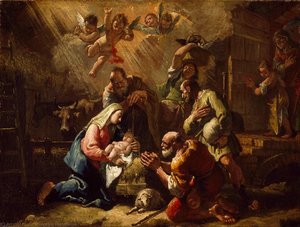
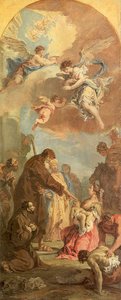
In the heart of the Venetian eighteenth century, a period defined by the shimmering light of the Rococo and the lingering drama of the Baroque, Francesco Fontebлоsso captured a moment of profound spiritual transcendence. A miracle of St. Francis of Paola is not merely a depiction of a religious event; it is a window into a world where the earthly and the divine collide in a breathtaking display of grace. As one gazes upon this masterpiece, the viewer is immediately swept into a celestial choreography, where every brushstroke serves to elevate the soul from the mundane to the miraculous.
The composition is a masterclass in dynamic movement and emotional depth. At the epicenter of this sacred drama stands St. Francis of Paola, his presence radiating a quiet yet indomitable power. He is surrounded by a tapestry of humanity and divinity; figures kneel in fervent prayer, their postures reflecting a profound sense of awe and vulnerability, while ethereal angels descend from the heavens to witness the unfolding miracle. The inclusion of humble elements—the watchful dogs and a solitary bird perched near the upper periphery—grounds this celestial event in the natural world, suggesting that the miraculous is not distant or detached, but intimately woven into the very fabric of life.
The Venetian Legacy: Light, Shadow, and Emotion
To understand the technical brilliance of this work, one must look to Fontebasso’s lineage. Having been shaped by the influence of Sebastiano Ricci and the monumental shadow of Tiepolo, the artist employs a sophisticated use of chiaroscuro to direct the eye and stir the heart. The light in this painting does not simply illuminate; it sanctifies. It dances across the folds of heavy drapery, catches the glint of an angelic wing, and illuminates the faces of the faithful with a warmth that feels almost tactile.
The technique is characterized by a fluid, painterly elegance that allows for a seamless transition between shadow and brilliance. This mastery of light creates a sense of atmospheric depth, making the space feel as though it extends far beyond the confines of the canvas. For the discerning collector or interior designer, this piece offers more than just visual beauty; it provides an anchor of historical significance and emotional resonance. It is a work that commands attention in any setting, offering a sophisticated dialogue between classical tradition and the emotive, light-filled spirit of the Venetian Rococo.
A Timeless Addition to the Curated Space
Integrating a reproduction of such profound narrative depth into a modern or classical interior allows for a unique layer of storytelling. A miracle of St. Francis of Paola serves as a focal point that invites contemplation and conversation. Whether placed in a grand salon to evoke a sense of historical grandeur or in a more intimate study to provide a moment of quiet reflection, the painting’s ability to evoke wonder remains undiminished by time.
For those seeking to curate an environment filled with art that possesses both intellectual weight and aesthetic splendor, this work stands as a testament to the enduring power of religious iconography. It is an invitation to experience the sublime, captured through the eyes of a Venetian master who understood that the greatest miracles are those that touch the human spirit most deeply.
Related Artworks
![Legend Of St Francis - [23] - St Francis Mourned By St Clare — Giotto Di Bondone, Gothic](/media/artworks/images-thumb/17/1c/171c284c41dc3ef8bca83e51c1e1e531.jpg)
![Legend Of St Francis - [08] - Vision Of The Flaming Chariot — Giotto Di Bondone, Gothic And Proto-renaissance](/media/artworks/images-thumb/65/6e/656e345ff55e49ce2e4377a050b85aa1.jpg)
![Legend Of St Francis - [24] - Canonization Of St Francis — Giotto Di Bondone, Gothic](/media/artworks/images-thumb/81/9b/819b5f0656848eb5cb3fcd40fd5756aa.jpg)
![Life Of Saint Francis - [04] - Death And Ascension Of St Francis — Giotto Di Bondone, Italian Renaissance](/media/artworks/images-thumb/08/8b/088b102b13c1a379233690905590f156.jpg)
Artist Biography
Francesco Fontebasso: A Venetian Master of Light and Emotion
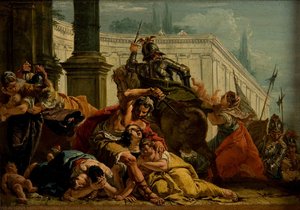
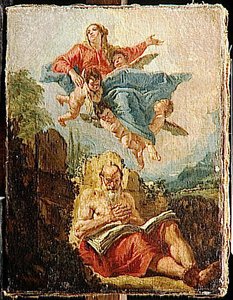
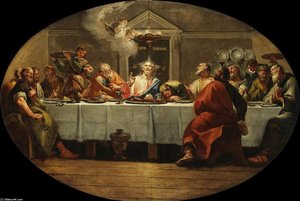
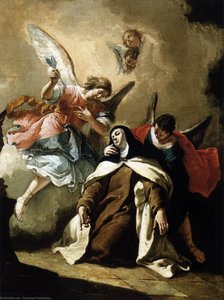
Francesco Fontebasso, a name perhaps less familiar than those of Tiepolo or Bellini, nevertheless represents a crucial bridge between the late Baroque and the burgeoning Rococo styles that defined Venice in the 18th century. Born in Venice in 1707, Fontebasso’s artistic journey was shaped by apprenticeship under the esteemed Sebastiano Ricci, yet profoundly influenced by the dramatic grandeur of Giovanni Battista Tiepolo – a connection that would permeate his own work for decades to come. His life, though relatively brief, spanning just six decades, witnessed him contribute significantly to the visual landscape of Venice and beyond, leaving behind a legacy of captivating paintings characterized by dynamic composition, masterful use of light, and an undeniable emotional intensity. Fontebasso’s early training instilled in him a solid grounding in traditional Venetian painting techniques. However, it was his encounter with Tiepolo's frescoes – particularly at the Cathedral of Udine – that proved transformative. Tiepolo’s exuberant color palette, theatrical lighting, and ability to infuse narrative scenes with palpable emotion became a defining influence on Fontebasso’s artistic sensibilities. This admiration extended beyond mere stylistic imitation; Fontebasso sought to capture the same sense of drama and movement as his mentor, translating it into his own distinctive visual language. His time in Saint Petersburg in 1761 proved pivotal, offering him an unprecedented opportunity to apply these principles on a grand scale within the opulent Winter Palace. The commission to decorate vast ceilings with intricate allegorical scenes demanded a mastery of perspective and color that showcased Fontebasso’s burgeoning talent and solidified his reputation as a skilled decorator. Fontebasso's artistic output can be broadly categorized into several key areas. He was a prolific fresco painter, undertaking significant commissions for prominent Venetian families such as the Barbarigo, Bernardi, and Duodo. These projects demonstrate his ability to seamlessly integrate decorative elements with narrative content, creating immersive environments that engaged the viewer’s imagination. His work in the Palazzo Duodo, particularly the series of scenes depicting episodes from the life of St. Francis, stands out for its dramatic lighting and expressive figures – a testament to Fontebasso's growing independence as an artist. Beyond his decorative commissions, Fontebasso also produced standalone paintings that explored classical themes and biblical narratives. “Mucius Scaevola puts his hand into the fire in front of the Etruscan prince Porsenna,” for example, vividly illustrates his command of Baroque dramaticism, employing intense color contrasts and dynamic composition to convey the hero’s unwavering courage. The painting “San Francisco de Paul con un fratello Saint Paul et saint François (ancien titre)” showcases Fontebasso's ability to capture a sense of movement and spiritual intensity within a turbulent landscape, highlighting the monks' devotion amidst a dramatic setting. Fontebasso’s artistic development wasn’t confined solely to Venice. His invitation to St. Petersburg in 1761 marked a significant turning point, exposing him to a different cultural context and providing an opportunity to refine his skills on a monumental scale. The ceiling paintings he created for the Winter Palace demonstrated his ability to adapt his Venetian style to the tastes of European royalty, showcasing his technical proficiency and understanding of perspective. His return to Venice in 1768 allowed him to continue his work within his native city, culminating in the decoration of the Chapel of St. Peter of Alcantara in San Francesco della Vigna – a project that further cemented his reputation as a leading Venetian painter. The chapel’s frescoes, depicting scenes from the life of St. Francis, are particularly noteworthy for their vibrant colors and expressive figures. Despite his relatively short career, Francesco Fontebasso left an enduring mark on Venetian art history. His work exemplifies the dynamism and emotional intensity that characterized the late Baroque and Rococo periods, while simultaneously demonstrating a deep respect for tradition. His influence can be seen in the works of subsequent generations of Venetian painters, and his paintings continue to captivate viewers today with their dramatic lighting, expressive figures, and masterful use of color. His legacy is preserved in collections such as that of Kadriorg Palace in Tallinn, Estonia, ensuring that this often-overlooked master continues to inspire and delight art lovers around the world.Key Works & Notable Commissions
- Palazzo Duodo (Venice): Ceiling frescoes depicting scenes from the life of St. Francis.
- Palazzo Barbarigo (Venice): Decorative panels and ceiling paintings.
- Palazzo Bernardi (Venice): Ceiling fresco.
- Winter Palace, Saint Petersburg: Extensive ceiling decorations and murals.
- San Francesco della Vigna Chapel (Venice): Frescoes depicting scenes from the life of St. Francis.
Influences & Artistic Style
Francesco Fontebasso’s artistic style was deeply rooted in the traditions of Venetian painting, yet significantly shaped by the influence of Giovanni Battista Tiepolo. He embraced Tiepolo's dynamic composition, theatrical lighting, and expressive use of color, while also incorporating elements of Baroque drama and classical subject matter. His work is characterized by a sense of movement, emotional intensity, and meticulous attention to detail.Historical Significance
Fontebasso’s career coincided with a period of significant artistic innovation in Venice, as the city transitioned from the late Baroque to the Rococo style. He played a crucial role in bridging this transition, demonstrating the enduring vitality of Venetian painting traditions while simultaneously embracing new stylistic influences. His work reflects the cultural and political landscape of 18th-century Venice, showcasing the city’s wealth, power, and artistic patronage.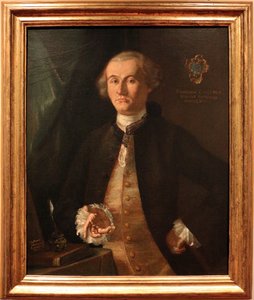
Francesco Fontebasso
1707 - 1769 , Italy
Quick Facts
- Artistic Movement Or Style: Late-Baroque/Rococo
- Artists Or Movements Influenced By This Artist: ["Tiepolo's influence"]
- Artists Who Influenced This Artist:
- Sebastiano Ricci
- Giovanni Battista Tiepolo
- Date Of Birth: 1707 Venice, Italy
- Date Of Death: 1769 Venice, Italy
- Full Name: Francesco Fontebasso
- Nationality: Italian
- Notable Artworks:
- Saint François de Paul
- Mucius Scaevola
- The Last Supper
- Place Of Birth: Venice, Italy
Related Articles
Francis Bacon's Masterpieces: Exploring 25 Iconic Paintings | ArtsDot
Delve into the haunting world of Francis Bacon with ArtsDot. Explore 25 iconic paintings, from his visceral portraits to powerful triptychs. Discover the stories behind these masterpieces & find museum-quality art reproductions for your home. Explore the full collection online!

Jacopo Tintoretto's Masterpieces: 25 Paintings That Define Venetian Drama | ArtsDot
Explore 25 breathtaking masterpieces by Jacopo Tintoretto, the Venetian master of drama and light. Discover the stories behind iconic Renaissance paintings & find museum-quality art reproductions to elevate your home decor on ArtsDot.com.

El Greco's Masterpieces: Explore 25 Iconic Paintings & Spiritual Visions | ArtsDot
Journey through El Greco's 25 most iconic paintings! Explore the spiritual depth & dramatic beauty of this Spanish Renaissance master. Discover art history, techniques & find museum-quality reproductions for your home at ArtsDot.com.

Baroque Drama: Bringing Opulence & Emotion into Contemporary Interiors
Explore the opulent world of Baroque interior design! Discover key elements, modern applications & how to bring dramatic elegance into your home with 's authentic reproductions.
Sebastiano Ricci: Venetian Master of Baroque Illusionism & Rococo Grace
Explore the captivating world of Sebastiano Ricci, a leading Venetian Baroque painter renowned for his luminous frescoes & illusionistic masterpieces. Discover his life, techniques, and lasting influence on art history.