 Preview
 Send
Send Share
Share
 Details

 Download
 Similars
 X-Ray
X-Ray Diaporama
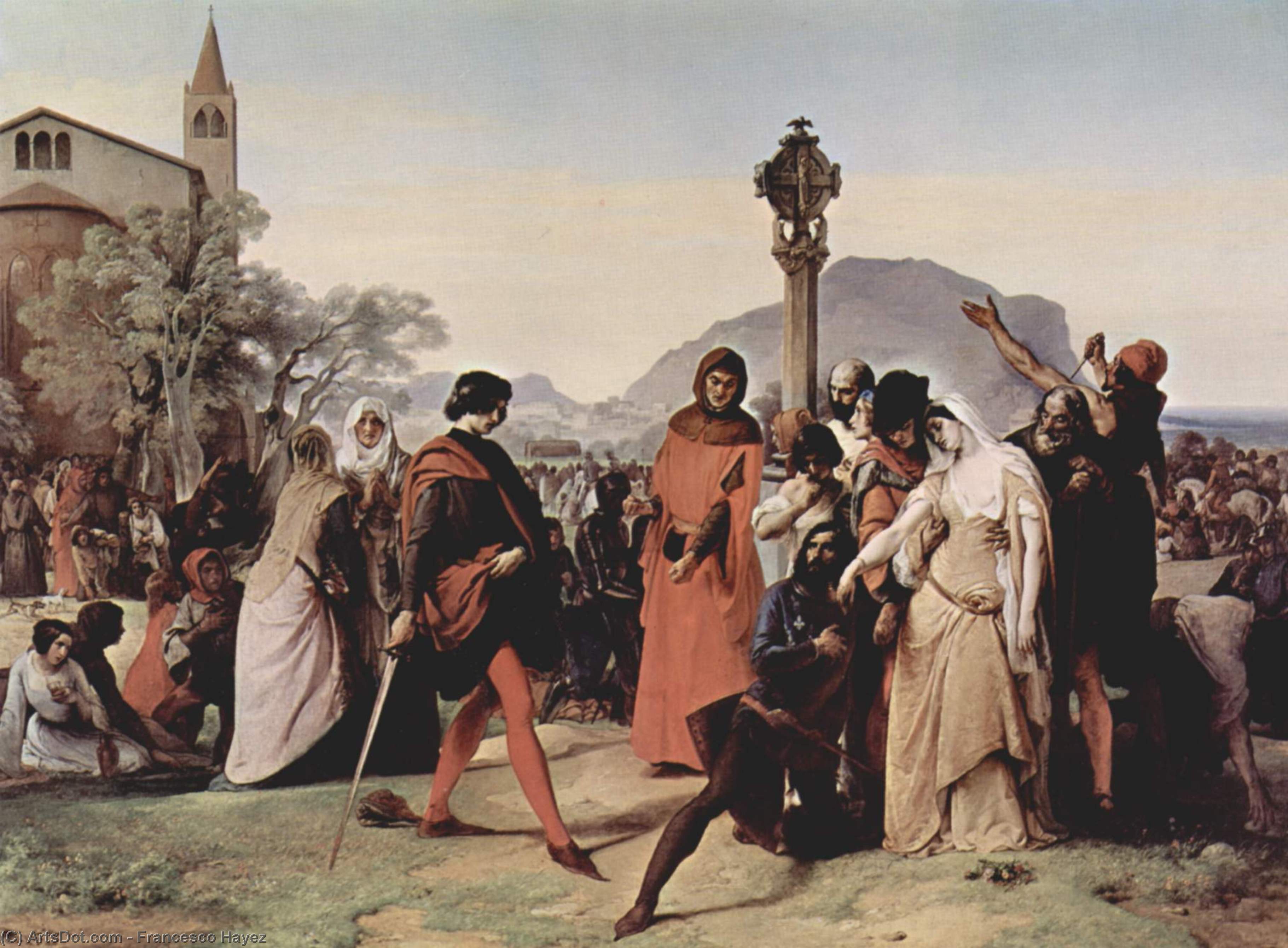
Sicilian evenings painting series, Scene 3
 Oil On Canvas
- WallArt
- Orientalism
 1846
1846- 19th Century
 225.0 x 300.0 cm
 Read More
Giclée / Art Print
Museum-quality giclée or canvas print with fast production and flexible finish options. ( Buy Hand Made Painting Buy Image)




P118B $10

P118H $10

P118W $10

P438Z $10

P508JH $12

P508YH $12

P805H $10

P805Z $10

P919BZ $10

P919G $10

P919XJ $10

P959ZH $10

P968JZ $12

W106C $8

W218G $10

W218JH $8

W218Y $10

W307PJ $10

W316G $10

W316PJ $8

W316Y $10

W398PJ $8

W4111J $10

W500HY $15

W500JH $15

W692G $12

W849H $8

W940BG $15

W953PJ $8




Pick from our preset sizes that match the artwork's original proportions.

You may enter your own dimensions to fit a specific frame or space. If your selected size does not match the original image's proportions, we will either crop the artwork or extend the image with a mirrored or solid-fill edge. A digital mockup will be sent for your approval before production begins.
Please note that the on-screen preview does not reflect the actual cropping or extension. Only the mockup will accurately show the final composition.
While custom sizes are available, we recommend selecting a dimension from the predefined list to preserve the original proportions.
Worldwide Delivery () in 2 weeks instead of standard 4/5 weeks. (26 August)

Free Worldwide Express Shipping

High-Quality Linen Canvas

Full Shipping Insurance

Customs Tax Refund Guarantee

True Color Matching Guarantee

60-Day Return Policy (Defects Only)

100% Money-Back Guarantee

Bulk Discount Offer
 Glass option is only available in size under 110 CM

Sicilian evenings painting series, Scene 3
Giclée / Art Print
Reproduction Size
-


Total Price
$ 63
Collectible Description
A Grand Spectacle of History and Emotion
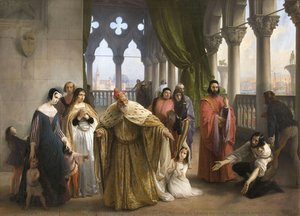
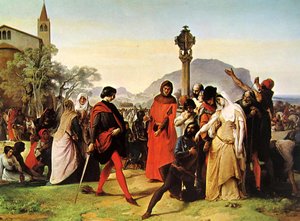
In the sweeping expanse of Francesco Hayez’s Sicilian evenings painting series, Scene 3, viewers are transported to a pivotal moment in the mid-19th century. This monumental work, executed in 1846, serves as more than just a depiction of a gathering; it is a theatrical window into the soul of an era defined by passion and political awakening. The composition centers on a commanding figure perched atop a hill, his arms raised in a gesture that oscillates between a fervent call to action and a profound oratorical moment. Below him, a diverse crowd gathers, their faces etched with the gravity of the occasion, creating a sense of shared destiny that pulls the observer into the very heart of the assembly.
The setting is masterfully orchestrated to evoke a sense of timelessness and grandeur. As the eye wanders from the immediate drama of the figures toward the horizon, it encounters a rugged mountain range and the distant, watchful silhouette of a church steeple. These elements ground the historical narrative in a tangible landscape, suggesting that the events unfolding are deeply rooted in the soil and spirit of Sicily. The interplay between the human drama and the enduring natural world creates a tension that is both epic and intimate, making it an ideal centerpiece for those looking to bring a sense of narrative depth and classical prestige to a sophisticated interior.
The Mastery of Romanticism and Orientalist Influence
As a leading figure of Italian Romanticism, Hayez utilizes the medium of oil on canvas to achieve a breathtaking level of texture and luminosity. The technique is characterized by a rich, layered application of pigment that lends a palpable weight to the traditional attire of the characters. Every fold of fabric, every glint of light on a flag, and the subtle shadows cast across the hillside contribute to a sense of three-dimensional realism. This mastery of light and shadow—often referred to as chiaroscuro—serves to heighten the emotional stakes of the scene, casting certain figures in heroic light while allowing others to recede into the mysterious atmosphere of the evening.
Furthermore, the painting breathes with the spirit of Orientalism, a movement that captivated the 19th-century European imagination. Through his depiction of exoticized landscapes and culturally rich costumes, Hayez taps into the era's fascination with the "other" and the mysterious allure of the East. This stylistic choice adds a layer of enchantment to the work, inviting collectors to appreciate not just the historical accuracy of the scene, but the romanticized, dreamlike quality that defines the period. For the discerning decorator, this piece offers a sophisticated blend of historical weight and aesthetic exoticism, making it a versatile choice for both classical and eclectic design schemes.
An Invitation to Timeless Elegance
Owning a reproduction of such a significant work is an opportunity to possess a fragment of art history. The sheer scale of the original—measuring 225 x 300 cm—is echoed in the emotional scale of its subject matter. Whether placed in a grand library, a formal dining room, or a curated gallery space, this painting acts as a conversation starter, prompting reflections on leadership, community, and the enduring power of human conviction. It is a work that does not merely decorate a wall; it commands the room, offering an atmosphere of intellectual rigor and romantic splendor.
For art lovers and interior designers alike, Sicilian evenings painting series, Scene 3 represents the pinnacle of 19th-century storytelling. It captures a world on the brink of change, frozen in a moment of profound significance. By integrating this masterpiece into a living space, one invites the dramatic flair of Hayez’s Venice and the sun-drenched intensity of Sicily into the modern home, ensuring that the legacy of Italian Romanticism continues to inspire generations to come.
Related Artworks
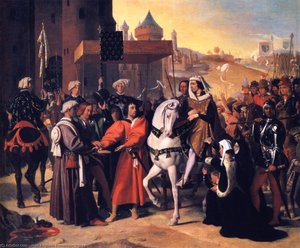
![The Arezzo Cycle - Discovery Of The True Cross (detail) [03] — Piero Della Francesca, Early Renaissance](/media/artworks/images-thumb/d5/3d/d53d4f37830a38521b7f96e2e220ed0a.jpg)



Artist Biography
early life and training
francesco hayez, a renowned italian painter, was born on february 10, 1791, in venice, italy. his father, giovanni, was of french origin, while his mother, chiara torcella, hailed from murano. the young francesco showed a predisposition for drawing and was apprenticed to an art restorer by his uncle.artistic career
hayez's artistic journey began in 1806 when he enrolled in the new academy of fine arts in milan, where he studied under teodoro matteini. in 1809, he won a competition that granted him a year's study at the accademia di san luca in rome. this exposure to various artistic influences shaped his style, which would later become a hallmark of italian romanticism.notable works and style
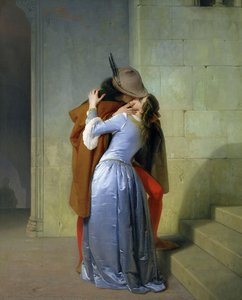
hayez's oeuvre is characterized by grand historical paintings, political allegories, and exceptionally fine portraits. some of his notable works include:- the kiss, considered one of his best works by contemporaries, which has gained esteem over time.
- pope urban ii preaching the first crusade in the square of clermont, a significant piece showcasing his historical narrative style.
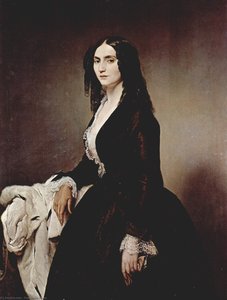
- portrait, matilde juva-branca, exemplifying his skill in capturing the essence of his subjects.
museums and collections
hayez's works are featured in various museums, including the civica galleria d'arte moderna in milan, which houses an impressive collection of modern and contemporary art.- pope urban ii preaching the first crusade in the square of clermont (235 x 157 cm, fondazione cariplo, milan)
- francesco hayez's profile on ArtsDot
- wikipedia: francesco hayez
legacy and impact
hayez's influence on italian romanticism is undeniable. his work has been a subject of study for art historians and enthusiasts alike, with his pieces continuing to inspire new generations of artists. key dates: - february 10, 1791: born in venice, italy - 1806: enrolled in the new academy of fine arts, milan - december 21, 1882: passed away, leaving behind a legacy in italian art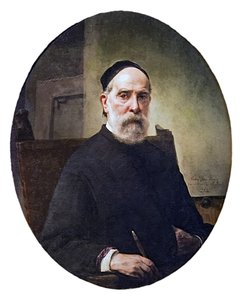
Francesco Hayez
1791 - 1882 , Italy
Quick Facts
- Artistic Movement Or Style: Romanticism
- Artists Or Movements Influenced By This Artist: ['Neoclassicism']
- Artists Who Influenced This Artist: ['Teodoro Matteini']
- Date Of Birth: February 10, 1791
- Date Of Death: February 12, 1882
- Full Name: Francesco Hayez
- Nationality: Italian
- Notable Artworks:
- The Kiss
- Pope Urban II preaching the first crusade
- Portrait, Matilde Juva-branca
- Place Of Birth: Venice, Italy
Related Articles

Romantic Landscapes: 10 Masterpieces for Your Home | ArtsDot
Journey through 10 Romantic landscape masterpieces by Friedrich, Turner & Cole. Explore emotional art, sublime nature scenes & iconic 19th-century paintings. Find museum-quality reproductions for your home at ArtsDot.com – discover the full collection online!

John Constable's Masterpieces: Explore 25 Iconic Landscapes for Your Home
Journey through John Constable's 25 most celebrated landscapes. Explore Romanticism, Dedham Vale & his masterful use of light in iconic paintings like 'Hay Wain'. Find museum-quality art reproductions and elevate your home decor on ArtsDot.com.
Thomas Hill: Luminosity, Landscape & the American Pastoral Ideal
Explore the luminous landscapes of Thomas Hill, a pivotal figure in the Hudson River School & Luminism movements. Discover his artistic journey, philosophical depth, and enduring legacy with ArtsDot.

Evocations of Place: A Historical Journey Through Landscape Art
Explore the rich history of landscape art with ArtsDot. Discover renowned artists, movements like Impressionism & Romanticism, and expert guidance for collecting timeless pieces. Find your perfect serene escape today!
Evocations of Place: A Historical Journey Through Landscape Art
Explore the rich history of landscape art with ArtsDot. Discover renowned artists, movements like Impressionism & tonalism, and expert guidance for collecting timeless pieces. Find your perfect serene escape today!