

 Send
Send Share
Share
 Details

 Download
 Similars
 Diaporama
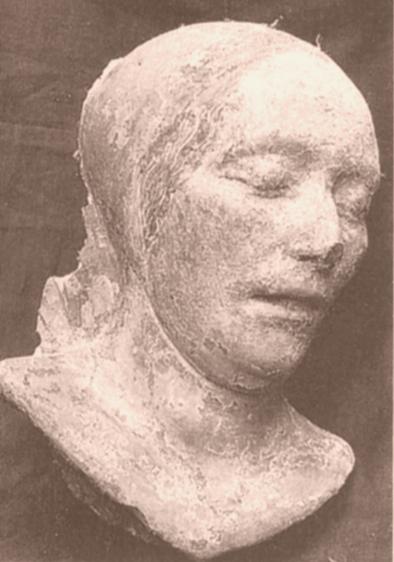
Death-mask of a Woman (Battista Sforza.)


 Read More
Purchase a high-resolution, enhanced digital image, far superior to the online preview.
Each file is meticulously prepared by our in-house specialists using advanced tools and expert manual retouching. We ensure every image has exceptional clarity, precise color accuracy, and fine detail.
The final file is delivered via email within 72 hours, optimized for immediate use in professional, editorial, and print environments. This is the same quality trusted by top-tier design studios, publishers, and galleries.
Digital Image
Download a high-resolution file for personal display, printing, and creative projects. ( Buy Print Buy Hand Made Painting)
Included in Every Digital Image Order
Expert Digital Delivery, Guaranteed
When you choose ArtsDot.com, you're not just getting an image - you're receiving a professionally enhanced digital artwork, crafted with precision and backed by a satisfaction guarantee. Here's everything that comes with your order, automatically:

Fast Email Delivery
Your high-resolution digital image file will be emailed to you within 72 hours of ordering - ready for immediate use.

AI-Enhanced Digital File
Your artwork is professionally optimized using advanced AI tools and manual editing, ensuring maximum detail, clarity, and color accuracy.

Free Lifetime Re-Delivery
Accidentally deleted or lost your file? No worries - we'll resend it to you anytime, free of charge.

No Import Fees - Ever
Enjoy your artwork instantly with zero customs, duties, or delivery fees - digital downloads are always tax-free.

Color Accuracy Guarantee
We ensure your digital image reflects the original colors as closely as possible using professional tools and color management.

60-Day Satisfaction Guarantee
If you're not satisfied with your digital image, we'll revise it or refund 100% within 60 days - no questions asked.

100% Money-Back Guarantee
Not satisfied? Get a full refund within 60 days of receiving your digital file - no questions asked.

Bulk Order Discounts
Buy 3 images, save 10% - Buy 5, save 15% - Buy 10+, save 20%. Great for creative projects, galleries, and agencies.
A Moment Suspended in Terracotta: The Death-Mask of Battista Sforza
To gaze upon this terracotta sculpture is to encounter time itself, arrested at the threshold of eternity. This remarkable death-mask, attributed to the hand of francesco laurana and dating back to 1472, transcends mere portraiture; it is a profound meditation on mortality, beauty, and the enduring spirit. The material—terracotta—lends an immediate sense of antiquity, its warm, earthen tones deepened by the sepia-toned photograph that frames it for us today. Observe the exquisite detail: the serene closure of the eyes suggests not death's finality, but rather a deep, peaceful repose, as if the subject has merely drifted into a profound slumber.
Mastery in Form and Flesh
The technical brilliance displayed here is breathtaking. Lauraana has captured the subtle topography of human existence with an almost uncanny verisimilitude. Notice the delicate rendering of the facial contours, the faint suggestion of wrinkles that map a life lived fully, and the careful articulation around the collarbone. The slight asymmetry present in the features speaks volumes; it is the hallmark of true observation, moving beyond idealized perfection to capture the nuanced reality of an individual. This was not merely sculpting; it was an act of empathetic recording, transforming fragile human likeness into enduring clay.
Historical Echoes and Symbolism
In the late Quattrocento, when this piece was conceived, the contemplation of death was a pervasive cultural undercurrent, often intertwined with religious devotion and humanist inquiry. Such masks served as potent memento mori—reminders that life is fleeting. Yet, in Battista Sforza’s case, the symbolism leans toward acceptance rather than dread. The serene expression suggests an understanding of the cycle: that rest follows activity, and beauty persists even when the breath departs. For the modern collector or designer, this piece offers a powerful focal point, injecting a sophisticated, contemplative gravitas into any space.
Bringing Antiquity Home
For those seeking to integrate such historical depth into contemporary interiors, reproductions of works like this offer an unparalleled opportunity. Imagine this quiet dignity displayed against rich velvet or polished marble. The soft shadows cast across the terracotta surface—visible even in a photograph—promise a tactile experience, inviting one to approach slowly, to whisper secrets to its silent countenance. It is an object that does not shout for attention but commands it through sheer, undeniable artistry and profound emotional resonance.
Related Artworks

Artist Biography
Hans Memling: Bridging the Divide Between Gothic and Renaissance
The name Hans Memling, a figure born in the heart of the Rhineland around 1430 and tragically lost to history in 1494, represents a fascinating crossroads within European art. Often categorized as an Early Netherlandish painter, Memling’s career defies simple categorization, embodying a synthesis of Gothic sensibilities with the burgeoning naturalism and humanist ideals of the Renaissance. His life story is intertwined with the artistic currents of his time – a period marked by intense rivalry between Italian masters and their northern counterparts, and a gradual shift in artistic priorities that would ultimately reshape European painting forever.
Memling’s early training remains somewhat shrouded in mystery, though it's widely accepted he began his apprenticeship in Mainz or Cologne, likely under the tutelage of Master Mathis Nithart. This experience exposed him to the rich traditions of German art, characterized by a meticulous attention to detail and a preference for symbolic representation. However, around 1455-1460, Memling journeyed north to Brussels, where he spent several formative years working in the workshop of Rogier van der Weyden – arguably the most influential painter of his time. Van der Weyden’s mastery of realism, particularly in his depictions of drapery and human anatomy, undoubtedly shaped Memling's artistic development. It was during this period that Memling honed his skills, learning to render complex compositions with a remarkable degree of precision and incorporating van der Weyden’s sophisticated use of light and shadow.
Upon establishing himself in Bruges by 1465, Memling quickly ascended to become one of the city's most sought-after artists. Bruges, a thriving center for trade and commerce, was a hub of artistic activity during this era, attracting wealthy patrons eager to commission elaborate religious paintings and devotional works. Memling’s workshop flourished, employing numerous assistants and producing a prolific output that reflects his versatility and technical skill. His subjects ranged from grand altarpieces – such as the monumental Last Judgment (c. 1470-1473) for the Hospital of Saint John in Bruges – to intimate devotional panels depicting the Virgin Mary with the infant Jesus, often accompanied by prominent donors. These donor portraits, a hallmark of Memling’s style, are particularly noteworthy; they not only served as expressions of piety but also as subtle displays of wealth and social status.
The Synthesis of Styles: Gothic Roots and Renaissance Influences
What distinguishes Memling's art is its remarkable ability to blend the stylistic elements of the late Gothic period with emerging Renaissance principles. While he retained a deep respect for the conventions of his predecessors – particularly the meticulous detail, rich symbolism, and elaborate ornamentation characteristic of German painting – he also embraced the Renaissance emphasis on naturalism, perspective, and human emotion. His figures possess a serene dignity and an almost palpable sense of calm, reflecting a shift away from the more stylized and emotionally charged depictions prevalent in earlier Gothic art. The drapery in his works is rendered with astonishing realism, capturing the folds and textures of fabric with remarkable accuracy. Furthermore, Memling’s use of light and shadow creates a sense of depth and volume, contributing to the illusionistic quality of his paintings.
Memling's influence can be seen in the work of subsequent generations of artists. His meticulous attention to detail and his ability to seamlessly integrate Gothic and Renaissance elements paved the way for the development of Northern European painting during the High Renaissance. His workshop, in particular, served as a training ground for many talented painters who went on to establish their own careers – a testament to Memling’s skill as a teacher and mentor.
Key Works: A Testament to Skill and Patronage
Several of Memling's paintings offer compelling insights into his artistic style and the patronage he received. The Last Judgment, commissioned by the Hospital of Saint John in Bruges, is a monumental work that showcases his mastery of composition and his ability to convey complex theological themes with clarity and grace. The painting’s dramatic scale and vibrant colors immediately captivate the viewer, while its intricate details – from the swirling robes of the damned to the serene faces of the saved – reveal Memling's meticulous attention to detail.
Other notable works include the Annunciation (c. 1437-1446), a delicate and exquisitely rendered depiction of the angel Gabriel announcing Mary’s impending pregnancy, and the Adoration of the Magi (c. 1488-1490), a lavishly adorned panel that celebrates the biblical story of the three wise men visiting the infant Jesus. The Madonna and Child with Saint James and Saint Dominic (c. 1480–1489) is another prime example of Memling’s skill in portraying religious figures with an air of serene dignity, while his Scenes from the Passion of Christ (c. 1470-1473) offers a poignant and emotionally resonant depiction of key events in Jesus's life.
Legacy and Historical Significance
Despite his considerable talent and prolific output, Hans Memling’s legacy was largely forgotten for centuries after his death in 1494. It wasn’t until the late 19th century that scholars began to recognize his importance as a pivotal figure in the development of European painting. Today, Memling is increasingly appreciated as a bridge between the Gothic and Renaissance periods – an artist who skillfully synthesized the stylistic elements of both traditions and created works of enduring beauty and technical brilliance. His paintings offer a valuable window into the artistic and cultural landscape of 15th-century Europe, revealing the complex interplay of influences that shaped the course of Western art history.
Memling’s story serves as a reminder that artistic genius often emerges from unexpected places – in this case, from the workshop of a renowned master in Brussels. His life and work continue to fascinate and inspire artists and art historians alike, solidifying his place as one of the most important figures in the history of Early Netherlandish painting.
francesco laurana
1430 - 1502 , Croatia
Quick Facts
- Artistic Movement Or Style: Early Netherlandish Painting
- Artists Or Movements Influenced By This Artist: ['Early Netherlandish Painting']
- Artists Who Influenced This Artist: ['Rogier van der Weyden']
- Date Of Birth: c. 1430
- Date Of Death: 11 August 1494
- Full Name: Hans Memling
- Nationality: Flemish
- Notable Artworks:
- The Last Judgement
- Scenes from Passion
- Adoration of Magi
- Annunciation
- Madonna & Child
- Place Of Birth: Seligenstadt, Germany

