

 Preview
 Send
Send Share
Share
 Details

 Download
 Similars
 X-Ray
X-Ray Diaporama
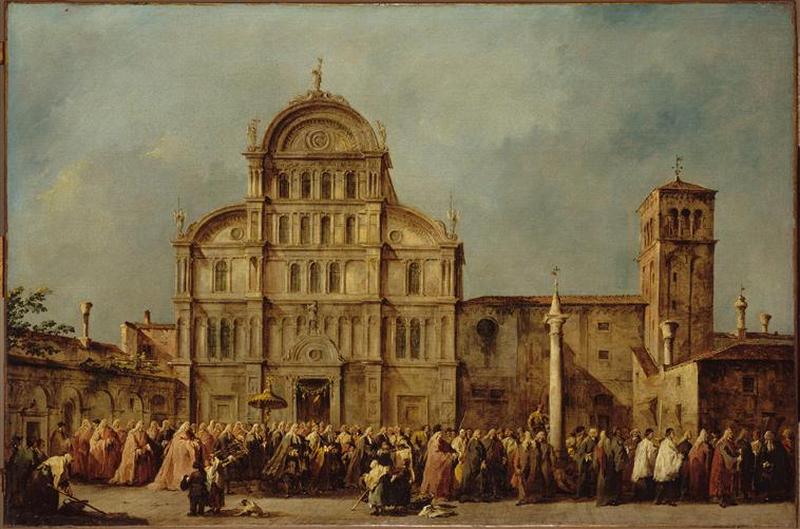
LA PROCESSION DU DOGE DE VENISE A L'EGLISE DE SAN ZACCARIA, LE JOUR DE PAQUES


 Read More
Purchase a high-resolution, enhanced digital image, far superior to the online preview.
Each file is meticulously prepared by our in-house specialists using advanced tools and expert manual retouching. We ensure every image has exceptional clarity, precise color accuracy, and fine detail.
The final file is delivered via email within 72 hours, optimized for immediate use in professional, editorial, and print environments. This is the same quality trusted by top-tier design studios, publishers, and galleries.
Digital Image
Download a high-resolution file for personal display, printing, and creative projects. ( Buy Print Buy Hand Made Painting)
Included in Every Digital Image Order
Expert Digital Delivery, Guaranteed
When you choose ArtsDot.com, you're not just getting an image - you're receiving a professionally enhanced digital artwork, crafted with precision and backed by a satisfaction guarantee. Here's everything that comes with your order, automatically:

Fast Email Delivery
Your high-resolution digital image file will be emailed to you within 72 hours of ordering - ready for immediate use.

AI-Enhanced Digital File
Your artwork is professionally optimized using advanced AI tools and manual editing, ensuring maximum detail, clarity, and color accuracy.

Free Lifetime Re-Delivery
Accidentally deleted or lost your file? No worries - we'll resend it to you anytime, free of charge.

No Import Fees - Ever
Enjoy your artwork instantly with zero customs, duties, or delivery fees - digital downloads are always tax-free.

Color Accuracy Guarantee
We ensure your digital image reflects the original colors as closely as possible using professional tools and color management.

60-Day Satisfaction Guarantee
If you're not satisfied with your digital image, we'll revise it or refund 100% within 60 days - no questions asked.

100% Money-Back Guarantee
Not satisfied? Get a full refund within 60 days of receiving your digital file - no questions asked.

Bulk Order Discounts
Buy 3 images, save 10% - Buy 5, save 15% - Buy 10+, save 20%. Great for creative projects, galleries, and agencies.
Collectible Description
A Twilight Masterpiece: Francesco Guardi’s “La Procession du Doge de Venise à l'Église de San Zaccaria, le Jour de Pâques”
Francesco Lazzaro Guardi, a name often whispered in the halls of Venetian art history, wasn’t merely a painter; he was a preserver of memory. Born into a family deeply rooted in artistic tradition on October 5th, 1712, his life unfolded against the backdrop of Venice's slow decline – a city transitioning from its opulent past to an era of quiet melancholy. While initially collaborating with his elder brother, Gian Antonio, on devotional works, Guardi ultimately forged his own distinctive path, becoming renowned for his evocative “vedute,” or cityscape paintings, capturing the atmospheric essence of his beloved city. His work, particularly this arresting depiction of the Doge’s procession, offers a poignant glimpse into a vanishing world – a testament to both artistic skill and profound observation.
A Baroque Tableau: Light, Shadow, and Venetian Grandeur
“La Procession du Doge de Venise à l'Église de San Zaccaria, le Jour de Pâques” is a quintessential example of Guardi’s mature style. Executed in the late 18th century, likely between 1770 and 1780, the painting embodies the Baroque tradition while simultaneously pushing its boundaries. The composition is dominated by a dramatic interplay of light and shadow – a hallmark of Guardi's technique. He masterfully employs chiaroscuro, creating an almost theatrical effect, highlighting key figures within the bustling crowd while leaving the background bathed in a softer, atmospheric glow. This isn’t a sharply defined, meticulously rendered scene; rather, it’s a carefully constructed illusion, designed to evoke a specific mood and atmosphere.
A Celebration of Ritual: Symbolism and Venetian Identity
The painting depicts a vibrant procession celebrating Easter Day in Venice. The Doge, the city's elected ruler, is prominently featured, leading his entourage towards the historic church of San Zaccaria. The sheer density of the crowd – a kaleidoscope of richly colored costumes and elaborate masks – speaks volumes about Venetian society at the time. These masks weren’t simply decorative; they were integral to public life, representing anonymity and social roles within the city's complex structure. The red and white attire worn by many participants are deeply symbolic, referencing Venice’s civic colors and signifying loyalty to the Doge and the Republic. The inclusion of umbrellas adds another layer of visual interest and reinforces the festive nature of the event.
Guardi’s Legacy: A Master of Atmospheric Impressionism
While often categorized as a Baroque painter, Guardi's work anticipates the rise of Impressionism. His loose brushstrokes, emphasis on atmospheric perspective, and focus on capturing fleeting moments – like the diffused light filtering through the buildings – demonstrate a remarkable sensitivity to color and light that foreshadowed later developments in modern art. His paintings aren’t about precise detail; they are about conveying *feeling*—the energy of a crowd, the beauty of a fading cityscape, the melancholy of a bygone era. Francesco Guardi's "La Procession du Doge de Venise à l'Église de San Zaccaria, le Jour de Pâques" stands as a powerful reminder of Venice’s artistic legacy and a testament to an artist who captured its soul with unparalleled grace.
Further Exploration
Related Artworks
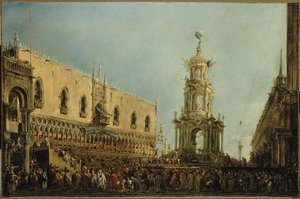
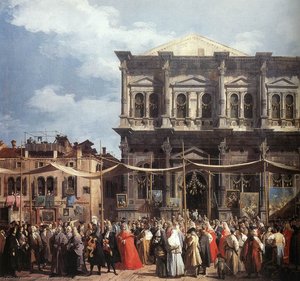
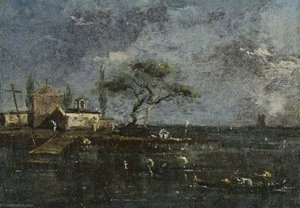
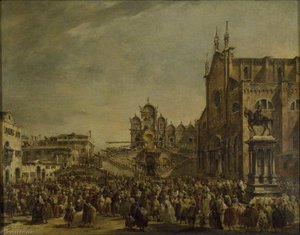
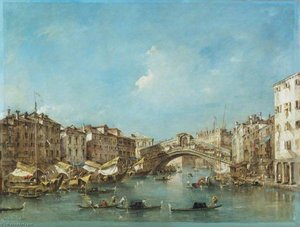
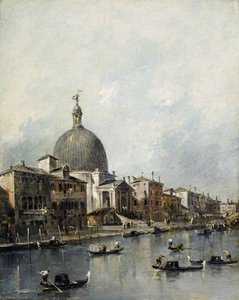
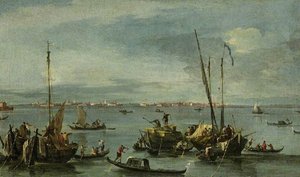
Artist Biography
A Venetian Twilight: The Life and Art of Francesco Guardi
Francesco Lazzaro Guardi, born into a family steeped in artistic tradition on October 5, 1712, stands as a poignant figure at the close of the illustrious Venetian School. His life mirrored the fading grandeur of Venice itself—a city once a vibrant hub of commerce and culture, slowly yielding to political decline and economic hardship. Guardi wasn’t merely a painter; he was a chronicler of this twilight era, capturing its atmospheric beauty and underlying melancholy with a unique sensitivity that would later resonate profoundly with the Impressionists. The Guardi family workshop, established by his father Domenico, was a bustling center of artistic production, where Francesco initially collaborated with his elder brother Gian Antonio on religious paintings. This early partnership provided a solid foundation in technique, but it was after Gian Antonio’s death in 1760 that Francesco truly found his voice, turning his attention to the *vedute*—the captivating cityscape views for which he would become celebrated.From Collaboration to Individual Vision
Initially, Guardi's work bore the clear influence of Canaletto, the undisputed master of Venetian *vedute*. Both artists depicted the city’s canals, palaces, and bustling piazzas with meticulous detail. However, while Canaletto prioritized topographical accuracy, Guardi gradually moved towards a more expressive and imaginative approach. He wasn’t concerned with photographic realism; instead, he sought to convey the *feeling* of Venice—its shimmering light, its atmospheric haze, and the sense of impermanence that permeated its beauty. This shift is evident in his looser brushwork, characterized by spirited strokes and freely imagined architectural details. His skies became particularly noteworthy, often filled with dramatic cloud formations that hinted at impending change. This departure from strict representation wasn’t a rejection of Canaletto's skill but rather an evolution towards a more personal and emotionally resonant style. The family legacy played a significant role; his sister Maria Cecilia’s marriage to Giovanni Battista Tiepolo further connected him to the leading artistic circles of the time, fostering a rich exchange of ideas and influences.The Doge's Feasts and *Pittura di Tocco*
Guardi’s most ambitious undertaking came in 1763 with his commission for *The Doge's Feasts*, a series of twelve monumental canvases celebrating the ceremonies surrounding the election of Alvise IV Mocenigo. These paintings weren’t simply documentary records; they were grand theatrical spectacles, teeming with figures and vibrant details. They showcased Guardi’s mastery of composition and his ability to capture the energy and pageantry of Venetian civic life. It was during this period that his signature style—known as *pittura di tocco* (painting of touch)—fully blossomed. This technique involved applying paint in small, broken strokes, creating a shimmering surface that seemed to vibrate with light and movement. The effect wasn’t one of precise detail but rather an impressionistic rendering of form and atmosphere. This innovative approach set him apart from his contemporaries and foreshadowed the artistic revolutions that would unfold in France decades later.A Legacy of Atmosphere and Influence
Francesco Guardi passed away at Campiello de la Madonna in Cannaregio, Venice, on January 1, 1793, leaving behind a body of work that continues to captivate audiences today. His paintings weren’t merely depictions of a city; they were evocations of a mood—a sense of nostalgia for a bygone era and an awareness of the fragility of beauty. He differed significantly from Canaletto, who often presented Venice in bright sunlight, Guardi frequently depicted the city shrouded in twilight or beneath clouded skies, emphasizing its melancholic charm. This atmospheric quality is what particularly appealed to the French Impressionists, such as Claude Monet and Edgar Degas, who recognized in his work a kindred spirit—an artist who prioritized feeling and sensation over strict representation. Guardi’s influence can be seen in their own explorations of light, color, and atmosphere.Rediscovering Guardi: A Lasting Impression
While not achieving the same level of fame as Canaletto during his lifetime, Francesco Guardi's reputation has steadily grown over the centuries. Today, he is recognized as a pivotal figure in Venetian art—a master who bridged the gap between the classical tradition and the modern sensibility. His paintings are treasured for their unique blend of realism and imagination, their evocative atmosphere, and their poignant portrayal of a city on the cusp of change. Exploring his work offers not just a glimpse into 18th-century Venice but also an appreciation for the enduring power of art to capture the essence of a place and time—and to resonate with viewers across generations.- Key Dates: October 5, 1712: Birth; January 1, 1793: Death.
- Style: *Vedute*, *Pittura di tocco* (painting of touch).
- Influences: Canaletto, Venetian School traditions.
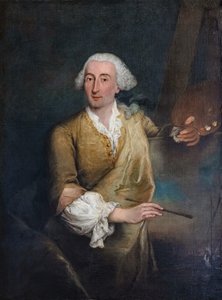
Francesco Lazzaro Guardi
1712 - 1793 , Italy
Quick Facts
- Artistic Movement Or Style: Veduta, Venetian School
- Artists Or Movements Influenced By This Artist: ['French Impressionists']
- Artists Who Influenced This Artist: ['Canaletto']
- Date Of Birth: October 5, 1712
- Date Of Death: January 1, 1793
- Full Name: Francesco Lazzaro Guardi
- Nationality: Italian
- Notable Artworks:
- Capriccio with Ruins
- San Giorgio Maggiore
- Doge's Feasts
- Place Of Birth: Venice, Italy

