 Preview
 Send
Send Share
Share
 Details

 Download
 Similars
 X-Ray
X-Ray Diaporama
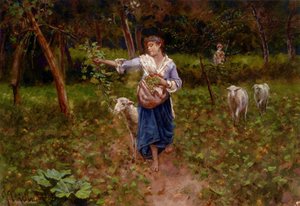
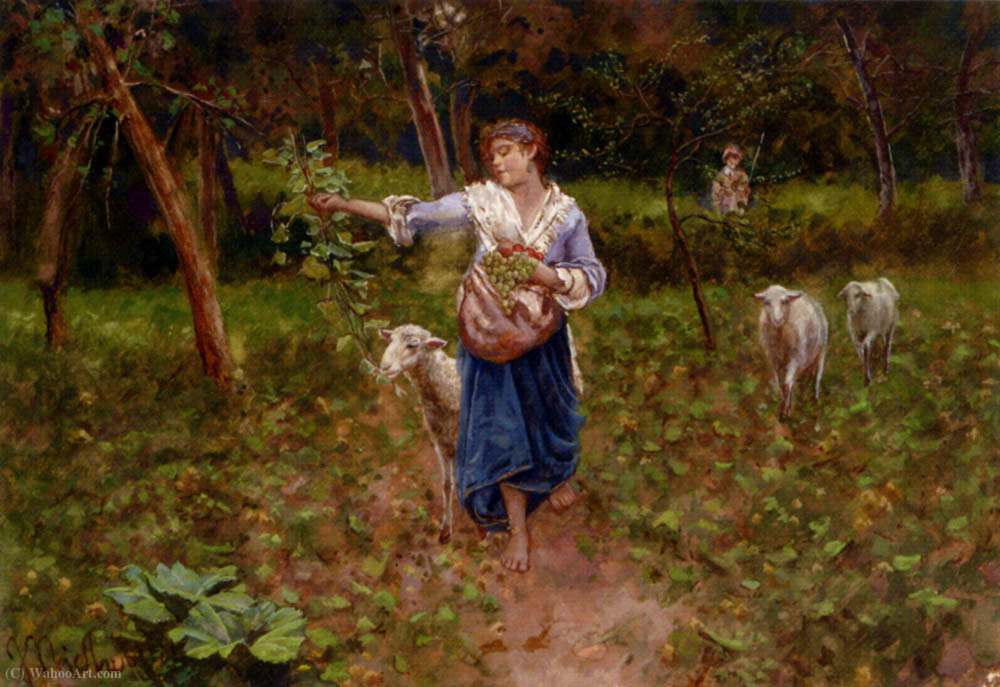
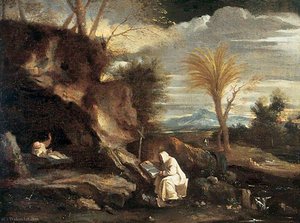
A shepherdess in a pastoral landscape
 Read More
Hand Made Oil Reproduction
Hand-painted oil on canvas in your size and frame, made to order by our artists. ( Buy Print Buy Image)




































Pick from our preset sizes that match the artwork's original proportions.

You may enter your own dimensions to fit a specific frame or space. If your selected size does not match the original image's proportions, we will either crop the artwork or extend the painting with additional hand-painted elements. A digital mockup will be sent for your approval before production begins.
Please note that the on-screen preview does not reflect the actual cropping or extension. Only the mockup will accurately show the final composition.
While custom sizes are available, we recommend selecting a dimension from the predefined list to preserve the original proportions.
After order, ArtsDot.com team will email client for instructions and provide a mockup preview
Worldwide Delivery () in 3/4 weeks instead of standard 5 weeks. (22 August). No compromise on quality.

Free Worldwide Express Shipping

High-Quality Linen Canvas

Full Shipping Insurance

Customs Tax Refund Guarantee

True Color Matching Guarantee

60-Day Return Policy (Defects Only)

100% Money-Back Guarantee

Bulk Discount Offer
 Glass option is only available in size under 110 CM

A shepherdess in a pastoral landscape
Reproduction Medium
Reproduction Size
-


Total Price
$ 263
Related Artworks


Artist Biography
Francesco Paolo Michetti: A Painter of Italian Life
Francesco Paolo Michetti (1851-1929) remains a captivating figure in the history of Italian art, particularly renowned for his vibrant and deeply evocative genre paintings. Born in Tocco da Casauria, nestled within the province of Chieti in Abruzzo, his early life was marked by hardship – the loss of his father at a young age forcing him to apprentice as an artisan. This formative experience instilled in him a keen observation of human nature and a sensitivity to the rhythms of rural existence, themes that would become central to his artistic vision. Michetti’s journey toward becoming a recognized painter began with a provincial stipend awarded in 1868, granting him access to the prestigious Accademia di Belle Arti in Naples – now the Istituto Margherita Hack. This environment proved pivotal, placing him within the orbit of influential artists like Domenico Morelli and exposing him to the School of Resina, a collective known for its emphasis on realism and meticulous observation.
Early artistic development was not without its challenges. Disciplinary issues led to his return to Chieti, but this period proved formative, allowing him to develop his unique style in relative isolation. He found solace and inspiration in Francavilla a Mare, transforming it into his primary residence by 1878. This coastal town, with its vibrant fishing community and picturesque landscapes, provided the perfect backdrop for his artistic explorations. Crucially, Michetti’s career gained momentum through the support of influential patrons – Eduardo Dalbonis, who encouraged him to pursue his artistic ambitions in Paris; Beniamino Rotondo, a wealthy art collector who provided financial assistance; and Reutlinger, an art merchant who facilitated his exposure to European markets. These connections opened doors to exhibitions at the Salon in 1872, where he debuted works like “Ritorno dall’erbaggio” (Return from the Harvest) and “Il Sogno dell'Innocenza” (The Dream of Innocence), establishing an early reputation for his distinctive style.
Michetti’s Parisian years were a period of intense experimentation and artistic growth. He continued to exhibit at various salons, showcasing works such as "La Vendemmia" (The Pumpkin Harvest) in 1875 and “Primavera e Amore” (Springtime and Love) in 1876 – paintings that demonstrated his burgeoning mastery of color and composition. A significant encounter occurred in 1874 with Mariano Fortuny, the Spanish painter known for his Orientalist themes and innovative use of color. Fortuny’s influence is evident in Michetti's later works, particularly his exploration of light and shadow. The vibrant colors and dynamic compositions of Fortuny resonated deeply with Michetti, shaping his artistic language. His work during this period was characterized by a remarkable vitality—a sense of immediacy and spontaneity that captured the essence of everyday life.
Michetti’s most celebrated achievement is arguably “Corpus Christi Procession” (1877), a monumental painting depicting a religious festival with an exuberant, almost frenetic energy. This work catapulted him to prominence within the School of Resina and beyond, establishing his reputation as one of Naples' leading artists. The following year, he presented "Primavera e Amore," a scene of rural families enjoying a hilltop overlooking the sea – a testament to his ability to capture both the beauty and the hardship of Italian peasant life. His work at the 1880 Turin National Exposition, featuring “Palm Sunday,” “Pescatrici di Londine” (Fisherwomen of Londine), and “I Morticelli” (Little Ones), further solidified his standing within the art world. Contemporary critics recognized Michetti’s unique talent, praising his ability to infuse his paintings with a palpable sense of life and movement – a quality that he termed "la vitalità del movimento."
Despite initial acclaim, Michetti's later career was marked by a struggle against the constraints of artistic convention. He became increasingly dissatisfied with the overly theatrical and sometimes superficial nature of his earlier work, yearning for a more authentic expression of reality. This dissatisfaction led to a period of experimentation and stylistic shifts, often characterized by bold colors and dramatic lighting that some critics deemed excessive. However, beneath these apparent flaws lay a profound sensitivity to human emotion and a deep connection to the landscapes and people of Abruzzo. Michetti’s later works continued to explore themes of rural life, poverty, and faith, reflecting his enduring commitment to portraying the realities of Italian society.
The Palette and Technique: A Study in Color and Light
Michetti's distinctive style is immediately recognizable through his masterful use of color. He eschewed the muted tones often associated with academic painting, instead embracing a vibrant palette—rich reds, yellows, blues, and greens—that captured the intensity of sunlight and the warmth of human emotion. His technique involved layering thin washes of paint to create luminous effects, particularly in depicting light reflecting off water or illuminating faces. He was deeply influenced by the work of Mariano Fortuny, whose use of color and dramatic lighting he adopted as a key element of his own style.
Michetti’s approach to composition is equally noteworthy. He frequently employed dynamic diagonals and asymmetrical arrangements to create a sense of movement and spontaneity. His paintings are not static representations but rather vibrant snapshots of everyday life, capturing the fleeting moments of human interaction and the rhythms of nature. He was particularly adept at depicting figures in motion—fishermen casting nets, children playing, or religious processions surging through the streets. This ability to convey a sense of vitality is what earned him the term “la vitalità del movimento.”
Influences and Artistic Context
Michetti’s artistic development was shaped by a confluence of influences. The School of Resina, with its emphasis on realism and meticulous observation, provided a foundational framework for his work. Domenico Morelli, a key figure within the school, instilled in Michetti a rigorous approach to drawing and composition. However, Michetti ultimately transcended the limitations of academic tradition, forging his own unique style that blended elements of Realism (Verismo) with a distinctly personal vision.
The vibrant colors and dynamic compositions of Mariano Fortuny exerted a significant influence on Michetti’s work, particularly during his time in Paris. Fortuny's exploration of Orientalist themes and his innovative use of color inspired Michetti to experiment with bolder palettes and more dramatic lighting effects. The social and political context of 19th-century Italy also played a role in shaping Michetti’s artistic vision. His paintings often depicted the lives of rural peasants, reflecting the poverty and hardship that characterized much of Italian society at the time. Michetti's work can be seen as a subtle commentary on the social inequalities of his era.
Legacy and Significance
Despite facing periods of critical misinterpretation and stylistic experimentation, Francesco Paolo Michetti remains an important figure in Italian art history. His vibrant genre paintings offer a unique glimpse into the lives of rural communities in Abruzzo, capturing both their beauty and their hardship. Michetti’s masterful use of color and his ability to convey a sense of vitality have earned him a devoted following among collectors and art enthusiasts alike. His work continues to be exhibited and studied today, testament to its enduring appeal and artistic merit.
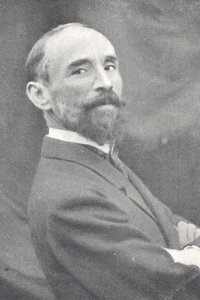
Francesco Paolo Michetti
1851 - 1929
Quick Facts
- Artistic Movement Or Style: Genre painting, Realism (Verismo)
- Artists Or Movements Influenced By This Artist:
- School of Resina
- Italian genre scenes
- Artists Who Influenced This Artist:
- Domenico Morelli
- Eduardo Dalbono
- Filippo Palizzi
- Giuseppe De Nittis
- Marco De Gregorio
- Mariano Fortuny
- Date Of Birth: 1851
- Date Of Death: 1929
- Full Name: Francesco Paolo Michetti
- Nationality: Italian
- Notable Artworks:
- Ritorno dall’erbaggio
- Dream of Innocence
- The Pumpkin Harvest
- Corpus Christi Procession
- Springtime and Love
- Palm Sunday
- Pescatrici di londine
- I morticelli
- Il Voto
- Place Of Birth: Tocco da Casauria, Italy