

 Preview
 Send
Send Share
Share
 Details

 Download
 Similars
 X-Ray
X-Ray Diaporama
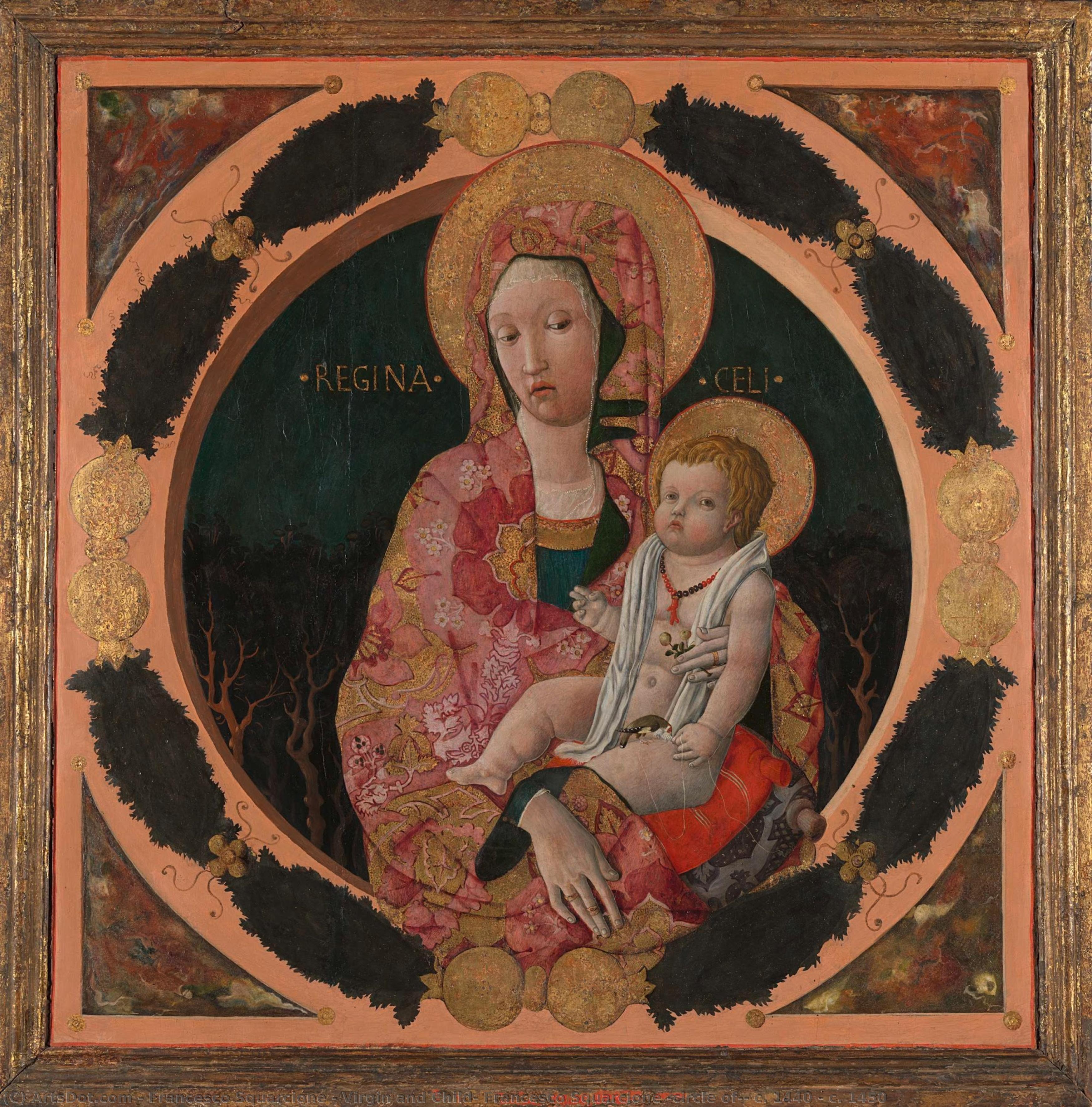
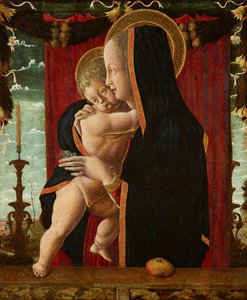
Virgin and Child, Francesco Squarcione (circle of), c. 1440 - c. 1450
 Early Renaissance
 1450
1450 115.0 x 115.0 cm
 Read More
Purchase a high-resolution, enhanced digital image, far superior to the online preview.
Each file is meticulously prepared by our in-house specialists using advanced tools and expert manual retouching. We ensure every image has exceptional clarity, precise color accuracy, and fine detail.
The final file is delivered via email within 72 hours, optimized for immediate use in professional, editorial, and print environments. This is the same quality trusted by top-tier design studios, publishers, and galleries.
Digital Image
Download a high-resolution file for personal display, printing, and creative projects. ( Buy Print Buy Hand Made Painting)
Included in Every Digital Image Order
Expert Digital Delivery, Guaranteed
When you choose ArtsDot.com, you're not just getting an image - you're receiving a professionally enhanced digital artwork, crafted with precision and backed by a satisfaction guarantee. Here's everything that comes with your order, automatically:

Fast Email Delivery
Your high-resolution digital image file will be emailed to you within 72 hours of ordering - ready for immediate use.

AI-Enhanced Digital File
Your artwork is professionally optimized using advanced AI tools and manual editing, ensuring maximum detail, clarity, and color accuracy.

Free Lifetime Re-Delivery
Accidentally deleted or lost your file? No worries - we'll resend it to you anytime, free of charge.

No Import Fees - Ever
Enjoy your artwork instantly with zero customs, duties, or delivery fees - digital downloads are always tax-free.

Color Accuracy Guarantee
We ensure your digital image reflects the original colors as closely as possible using professional tools and color management.

60-Day Satisfaction Guarantee
If you're not satisfied with your digital image, we'll revise it or refund 100% within 60 days - no questions asked.

100% Money-Back Guarantee
Not satisfied? Get a full refund within 60 days of receiving your digital file - no questions asked.

Bulk Order Discounts
Buy 3 images, save 10% - Buy 5, save 15% - Buy 10+, save 20%. Great for creative projects, galleries, and agencies.
Collectible Description
Related Artworks
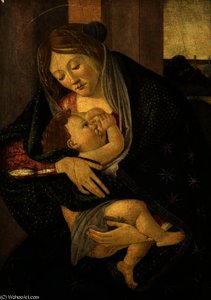
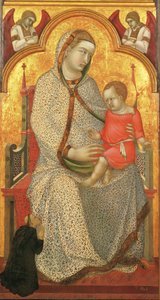
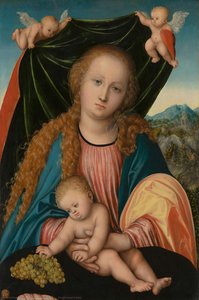
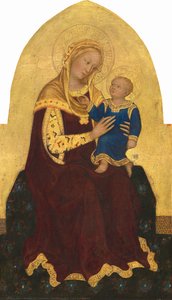
Artist Biography
The Silent Master of Padua: The Legacy of Francesco Squarcione
In the vibrant, sun-drenched landscape of the Italian Renaissance, where names like Da Vinci and Michelangelo often eclipse all others, there exists a more enigmatic figure whose influence was felt in every brushstroke of the Paduan school. Francesco Squarcione remains a phantom of art history, a man whose personal oeuvre is remarkably sparse, yet whose intellectual footprint is monumental. Born in Padua around 1397, Squarcione’s journey into the annals of greatness did not begin with a palette, but rather with the needle and thread; his original vocation as a tailor provided him with a unique, meticulous discipline that would later define his approach to visual composition. While he left behind only two signed masterpieces—the Madonna and Child and the Lazara Altarpiece—his true contribution lay in his role as a curator of antiquity and a mentor to the giants of the next generation.
Squarcione’s artistic soul was deeply rooted in the soil of classical antiquity. Driven by an insatiable passion for the remnants of Roman civilization, he traveled extensively through Italy and perhaps even into Greece, acting more as an archaeologist of beauty than a mere painter. He amassed a staggering collection of ancient sculptures, reliefs, and vases, transforming his workshop into a living museum. This was not merely a private passion; it was a pedagogical tool. By inviting students to study these physical fragments of the past, he bridged the gap between the medieval tradition and the burgeoning humanist movement. His workshop became a crucible where the rigid forms of the Middle Ages were melted down and recast in the light of classical realism.
A Crucible of Genius: The Paduan School
The true magnitude of Squarcione’s achievement is found not in his own canvases, but in the extraordinary lineage of artists who emerged from his tutelage. By 1431, he had established a thriving school in Padua that functioned as one of the first independent academies for painters. The sheer concentration of talent under his guidance was unprecedented, attracting over a hundred pupils who would go on to reshape the trajectory of Italian art. To walk through Squarcione’s studio was to witness the birth of a new aesthetic language—one characterized by a sharp, sculptural precision and an intense devotion to classical motifs.
Among his most illustrious, yet contentious, students was Andrea Mantegna. The relationship between master and pupil was famously fraught, marked by protracted legal battles over copyright and the ownership of artistic ideas. Yet, despite these disputes, the DNA of Squarcione’s collection is undeniably present in Mantegna’s groundbreaking work. Through Squarcione, Mantegna learned to treat the painted surface as a stage for archaeological accuracy, imbuing his figures with the weight and dignity of ancient stone. This lineage extended further to other masters such as Cosimo Tura and Carlo Crivelli, ensuring that the stylistic innovations born in Padua would ripple across the Italian peninsula.
The Enduring Echo of an Enigmatic Life
As the decades progressed, Squarcione’s role shifted from a rising painter to a venerable, if somewhat controversial, patriarch of the arts. His life was a testament to the power of curation and the profound impact of mentorship. While history often favors the prolific creator, Squarcione reminds us that the architect of an era can be just as vital as the builders themselves. He provided the intellectual scaffolding upon which the Renaissance was constructed, offering his students the visual vocabulary of antiquity to express the new humanistic spirit.
Though he passed away in May 1468, leaving behind a legacy shrouded in the shadows of his more famous pupils, the impact of his Paduan school remains indelible. He taught the world how to look backward at the ruins of Rome in order to move forward into the light of the Renaissance. His life serves as a poignant reminder that art is not merely the act of painting, but the profound act of seeing, collecting, and passing on the flame of inspiration to those who follow.
Francesco Squarcione
1397 - 1474 , Italy
Quick Facts
- Artistic Movement Or Style: Renaissance
- Artists Or Movements Influenced By This Artist: ['Angelo Zoppo']
- Artists Who Influenced This Artist: ['Mantegna']
- Date Of Birth: c. 1397
- Date Of Death: May 1468
- Full Name: Francesco Squarcione
- Nationality: Italian
- Notable Artworks:
- Virgin and Child
- Lazara Altarpiece
- Place Of Birth: Padua, Italy

