 Preview
 Send
Send Share
Share
 Details

 Download
 Similars
 X-Ray
X-Ray Diaporama
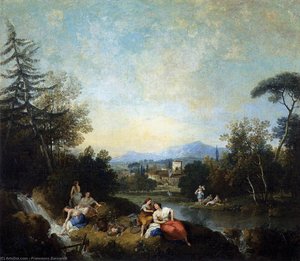
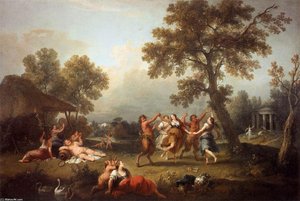
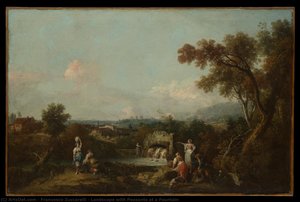
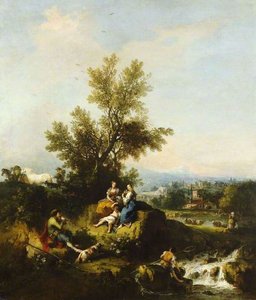
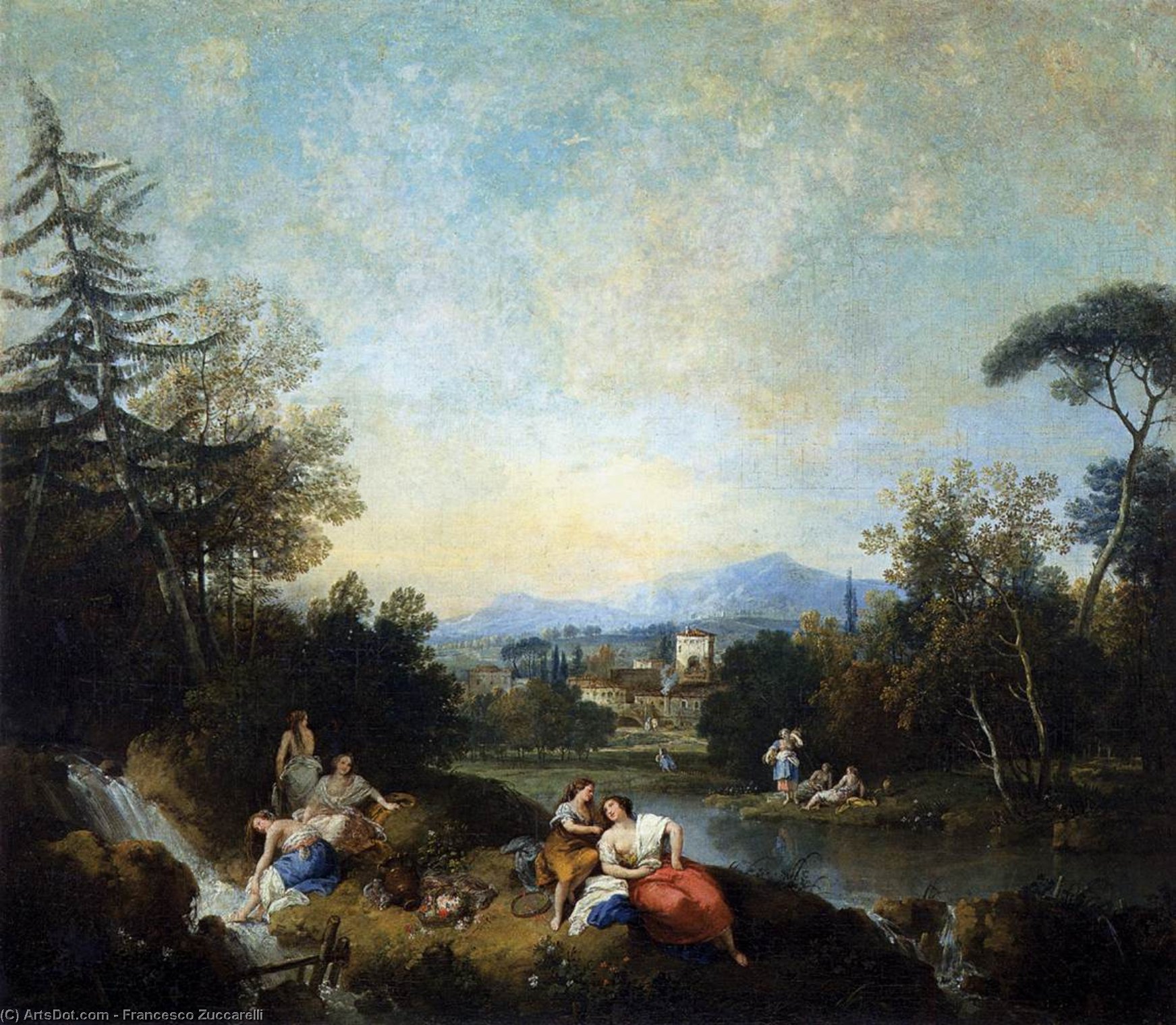
Landscape with Girls at the River
 Oil On Canvas
- WallArt
- Baroque
 1760
1760 118.0 x 137.0 cm
 Gallerie dell'Accademia
 Read More
Hand Made Oil Reproduction
Hand-painted oil on canvas in your size and frame, made to order by our artists. ( Buy Print Buy Image)




P118B $10

P118H $10

P118W $10

P438Z $10

P508JH $12

P508YH $12

P805H $10

P805Z $10

P919BZ $10

P919G $10

P919XJ $10

P959ZH $10

P968JZ $12

W106C $8

W218G $10

W218JH $8

W218Y $10

W307PJ $10

W316G $10

W316PJ $8

W316Y $10

W398PJ $8

W4111J $10

W500HY $15

W500JH $15

W692G $12

W849H $8

W940BG $15

W953PJ $8




Pick from our preset sizes that match the artwork's original proportions.

You may enter your own dimensions to fit a specific frame or space. If your selected size does not match the original image's proportions, we will either crop the artwork or extend the painting with additional hand-painted elements. A digital mockup will be sent for your approval before production begins.
Please note that the on-screen preview does not reflect the actual cropping or extension. Only the mockup will accurately show the final composition.
While custom sizes are available, we recommend selecting a dimension from the predefined list to preserve the original proportions.
After order, ArtsDot.com team will email client for instructions and provide a mockup preview
Worldwide Delivery () in 3/4 weeks instead of standard 5 weeks. (16 August). No compromise on quality.

Free Worldwide Express Shipping

High-Quality Linen Canvas

Full Shipping Insurance

Customs Tax Refund Guarantee

True Color Matching Guarantee

60-Day Return Policy (Defects Only)

100% Money-Back Guarantee

Bulk Discount Offer
 Glass option is only available in size under 110 CM

Landscape with Girls at the River
Reproduction Medium
Reproduction Size
-


Total Price
$ 388
Artwork Description
A Serene Vision of Pastoral Idyl – Francesco Zuccarelli’s “Landscape with Girls at the River”
Francesco Zuccarelli's "Landscape with Girls at the River," painted in 1760, is more than just a picturesque scene; it’s a carefully constructed meditation on beauty, leisure, and the harmonious relationship between humanity and nature. Emerging from the vibrant artistic milieu of Venice during the late Baroque and Rococo periods, Zuccarelli established himself as one of the foremost landscape painters of his time, renowned for his ability to evoke an almost dreamlike quality within his compositions. This particular work exemplifies his signature style – a blend of classical restraint and exuberant detail, creating a world both familiar and subtly enchanting.
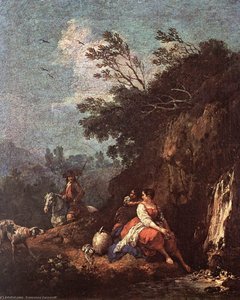
The painting depicts a group of young women enjoying themselves by a gently flowing riverbank, surrounded by rolling hills and distant mountains bathed in the soft light of an afternoon. The scene is imbued with a sense of tranquility and contentment, inviting the viewer to step into this idyllic world. Zuccarelli masterfully employs atmospheric perspective – the subtle blurring of details and colors in the distance – to create a convincing illusion of depth, drawing our eyes seamlessly from the foreground’s cascading waterfall and rugged rocks towards the hazy horizon. The artist's use of muted greens, blues, and browns establishes a harmonious palette that reinforces the painting’s overall sense of serenity, while strategically placed patches of brighter color—the vibrant hues of wildflowers and the shimmering reflections on the water—add points of visual interest.
The Artist and His Venetian Roots
Francesco Zuccarelli's artistic journey began in Rome, where he apprenticed under Giovanni Maria Morandi and Pietro Nelli. This early training instilled in him a deep appreciation for classical principles and a meticulous attention to detail. However, it was his relocation to Venice in 1732 that truly defined his career. Venice, with its rich artistic heritage and unique landscape, provided Zuccarelli with the perfect environment to develop his distinctive style. He quickly gained recognition for his ability to capture the beauty of the Venetian countryside – a region characterized by gentle hills, meandering rivers, and picturesque villages – in a way that was both realistic and idealized.
Zuccarelli’s artistic development was further influenced by Paolo Anesi, a Roman painter who specialized in landscape studies. Anesi's focus on tonal values and the use of light and shadow to create depth and atmosphere profoundly impacted Zuccarelli’s approach to painting. This influence is particularly evident in “Landscape with Girls at the River,” where the artist skillfully employs subtle gradations of color to convey a sense of volume and distance, while simultaneously capturing the play of light on water and foliage.
Symbolism and the Arcadian Ideal
The "Landscape with Girls at the River" is deeply rooted in the concept of the “Arcadian” – an idealized vision of rural life that became increasingly popular during the 18th century. The Arcadian ideal represented a retreat from the complexities and anxieties of urban society, offering a sanctuary of peace, beauty, and simplicity. Zuccarelli’s painting perfectly embodies this sentiment, presenting a scene of idyllic leisure where young women are engaged in innocent pursuits by the riverbank.
The presence of the waterfall symbolizes renewal and transformation, while the flowing river represents the passage of time and the continuity of life. The distant mountains, shrouded in mist, evoke a sense of mystery and grandeur, reminding us of the vastness and power of nature. Furthermore, the figures themselves are not merely decorative elements; they represent humanity’s connection to the natural world – a harmonious coexistence that is both aesthetically pleasing and spiritually enriching.
Technique and Materials
“Landscape with Girls at the River” was executed in oil paints on canvas, utilizing a technique characterized by meticulous brushwork and a deep understanding of color theory. Zuccarelli’s attention to detail is remarkable – from the individual blades of grass to the ripples on the water's surface—every element contributes to the painting’s overall sense of realism and immediacy. The artist’s use of layering techniques creates a rich, textured surface that invites close examination.
The canvas itself measures 118 x 137 cm, providing ample space for Zuccarelli to fully realize his vision. The painting's dimensions contribute to its impact, allowing the viewer to appreciate the scale and grandeur of the landscape. The use of a warm, diffused light source further enhances the painting’s atmosphere, creating a sense of warmth and intimacy.
A Legacy of Pastoral Beauty
Francesco Zuccarelli’s “Landscape with Girls at the River” stands as a testament to his artistic skill and his profound understanding of the human condition. It is a timeless masterpiece that continues to captivate viewers with its serene beauty, evocative symbolism, and masterful technique. Reproductions of this painting offer an opportunity to bring this idyllic vision into any space, creating a focal point that celebrates the enduring power of nature and the pleasures of simple living.
Related Artworks
Artist Biography
Francesco Zuccarelli: A Life in Landscape
- Born: Pitigliano, Italy (1702)
- Died: 1788
- Movement: Late Baroque / Rococo
Giacomo Francesco Zuccarelli, known primarily as Francesco Zuccarelli, was a pivotal Italian artist renowned for his idyllic landscapes and Arcadian scenes. Born in Pitigliano, Tuscany, in 1702, he emerged as the most significant landscape painter from Venice during the mid-18th century. His work resonated deeply across Europe, particularly in England, where he spent considerable periods under royal patronage.
Early Training and Roman Influences
- Apprenticeship: Zuccarelli began his artistic journey as an apprentice to Giovanni Maria Morandi and Pietro Nelli in Rome, focusing initially on portraiture.
- Engravings & Frescoes: From 1728-1731, he dedicated himself largely to engraving the deteriorating frescoes of Giovanni da San Giovanni and Andrea del Sarto, demonstrating a keen eye for detail and classical influences.
- Paolo Anesi's Guidance: Luigi Lanzi noted that Paolo Anesi was instrumental in guiding Zuccarelli towards landscape painting, shaping his artistic direction.
His early works reveal the influence of Roman classicism and a developing interest in capturing the beauty of the Italian countryside.
Venetian Period and Rise to Prominence
- Arrival in Venice: Around 1732, Zuccarelli relocated to Venice, capitalizing on an opening in landscape painting.
- Distinctive Style: He developed a distinctive style characterized by a mellow palette, airy compositions, and figures brought to life with luminous tonal values—a departure from the typical Venetian colors of his predecessors.
- Patronage & Collaborations: Zuccarelli quickly gained patronage from influential figures like Marshal Schulenburg, Joseph Smith (British Consul), and Francesco Algarotti. He frequently collaborated with artists such as Antonio Visentini and Bernardo Bellotto. Notable collaborations include the creation of neo-Palladian architecture series and a set of Old Testament playing cards featuring hand-colored scenes.
- Royal Academy Membership: In 1768, he became a founding member of the Royal Academy of Arts in London, solidifying his reputation on an international stage.
This period marked Zuccarelli's ascent to fame, with his landscapes captivating audiences across Europe and establishing him as a leading figure in the Rococo movement.
Later Years, Decline & Renewed Appreciation
- Critical Reception: Despite initial acclaim, Zuccarelli’s reputation waned in the early 19th century as naturalism gained prominence. Critics like Turner offered tempered praise, acknowledging his figures' beauty while questioning his overall style.
- Michael Levey's Analysis: Art historian Michael Levey later attributed Zuccarelli's widespread appeal to the decorative nature of his work, particularly among English audiences.
- Modern Reassessment: Since the 1990s, Italian scholars have spearheaded a renewed appreciation for Zuccarelli’s contributions, highlighting his significance in landscape painting and showcasing his works in numerous exhibitions.
Today, Francesco Zuccarelli is recognized as a master of the Rococo period, celebrated for his idyllic landscapes that evoke a sense of tranquility and classical beauty. His legacy continues to inspire artists and captivate audiences worldwide.
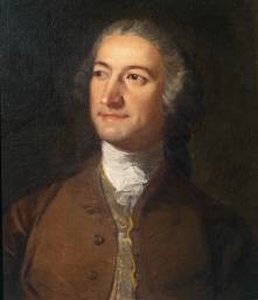
Francesco Zuccarelli
1702 - 1788 , Italy
Quick Facts
- Artistic Movement Or Style: Rococo, Baroque
- Artists Who Influenced This Artist:
- Paolo Anesi
- Claude Lorrain
- Andrea del Sarto
- Date Of Birth: August 15, 1702
- Date Of Death: December 30, 1788
- Full Name: Giacomo Francesco Zuccarelli
- Nationality: Italian
- Notable Artworks:
- Capriccio with San Giorgio Maggiore
- Classical Landscape
- Landscape with Girls at the River
- Bacchanal
- Place Of Birth (City And Country): Pitigliano, Italy
Related Articles

Beyond the Horizon: 10 Landscape Masterpieces for Your Home Decor
Journey through 10 breathtaking landscape paintings by Monet, Van Gogh & more! Explore iconic artworks, artistic techniques & find inspiration for your home decor. Museum-quality reproductions at ArtsDot.com. Discover all masterpieces on ArtsDot.com

Romantic Landscapes: 10 Masterpieces for Your Home | ArtsDot
Journey through 10 Romantic landscape masterpieces by Friedrich, Turner & Cole. Explore emotional art, sublime nature scenes & iconic 19th-century paintings. Find museum-quality reproductions for your home at ArtsDot.com – discover the full collection online!

John Constable's Masterpieces: Explore 25 Iconic Landscapes for Your Home
Journey through John Constable's 25 most celebrated landscapes. Explore Romanticism, Dedham Vale & his masterful use of light in iconic paintings like 'Hay Wain'. Find museum-quality art reproductions and elevate your home decor on ArtsDot.com.

Evocations of Place: A Historical Journey Through Landscape Art
Explore the rich history of landscape art with ArtsDot. Discover renowned artists, movements like Impressionism & Romanticism, and expert guidance for collecting timeless pieces. Find your perfect serene escape today!
Evocations of Place: A Historical Journey Through Landscape Art
Explore the rich history of landscape art with ArtsDot. Discover renowned artists, movements like Impressionism & tonalism, and expert guidance for collecting timeless pieces. Find your perfect serene escape today!