 Preview
 Send
Send Share
Share
 Details

 Download
 Similars
 X-Ray
X-Ray Diaporama
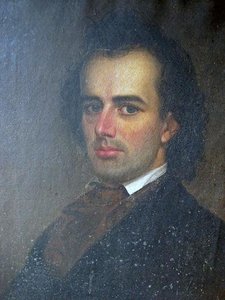
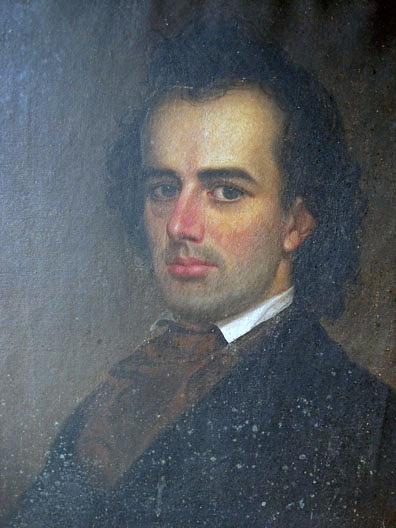
Edward Chase Clute (1821 1864), (painting)

 Read More
Hand Made Oil Reproduction
Hand-painted oil on canvas in your size and frame, made to order by our artists. ( Buy Print Buy Image)




































Pick from our preset sizes that match the artwork's original proportions.

You may enter your own dimensions to fit a specific frame or space. If your selected size does not match the original image's proportions, we will either crop the artwork or extend the painting with additional hand-painted elements. A digital mockup will be sent for your approval before production begins.
Please note that the on-screen preview does not reflect the actual cropping or extension. Only the mockup will accurately show the final composition.
While custom sizes are available, we recommend selecting a dimension from the predefined list to preserve the original proportions.
After order, ArtsDot.com team will email client for instructions and provide a mockup preview
Worldwide Delivery () in 3/4 weeks instead of standard 5 weeks. (23 August). No compromise on quality.

Free Worldwide Express Shipping

High-Quality Linen Canvas

Full Shipping Insurance

Customs Tax Refund Guarantee

True Color Matching Guarantee

60-Day Return Policy (Defects Only)

100% Money-Back Guarantee

Bulk Discount Offer
 Glass option is only available in size under 110 CM

Edward Chase Clute (1821 1864), (painting)
Reproduction Medium
Reproduction Size
-


Total Price
$ 263
Related Artworks








Artist Biography
Early Life and Artistic Foundations
Francis Bicknell Carpenter, born August 6, 1830, in the quiet upstate New York town of Homer, emerged from a farming family where an artistic inclination was initially viewed as a charming diversion rather than a viable path. His parents, Asaph Harmon and Almira Clark Carpenter, recognized his budding talent early on, but it was his father’s eventual encouragement that proved pivotal. In 1844, at the age of fourteen, young Francis began formal studies under Sanford Thayer in Syracuse—a six-month immersion that laid the groundwork for his future endeavors. This foundational training instilled in him essential skills and a discipline that would serve him well as he navigated the burgeoning art world. Even before fully establishing himself, Carpenter’s talent garnered recognition; in 1848, he received a purchase prize from the American Art-Union, an early validation of his artistic promise. These formative years, steeped in rural life yet touched by academic instruction, shaped a sensibility that would later inform his depictions of both intimate portraiture and grand historical narratives.A Rising Portraitist and Access to History
By the age of twenty-one, Carpenter had already established a studio in New York City, boldly embarking on a career as a professional artist. His initial focus was portraiture—a popular genre that allowed him to hone his skills in capturing likeness and character. He quickly gained commissions from prominent figures, including Presidents Millard Fillmore, Franklin Pierce, and John Tyler, establishing himself within the elite circles of American society. This success led to his election as an associate member of the National Academy of Design in 1852—a significant milestone that acknowledged his growing reputation among his peers. However, it was a commission unlike any other that would ultimately define his legacy. In 1864, Carpenter conceived of a painting depicting the momentous occasion of President Lincoln’s first reading of the Emancipation Proclamation to his cabinet. Remarkably, he secured unprecedented access to the White House and Lincoln himself, spending six months immersed in the heart of American history. The genesis of this ambitious project was particularly striking; Carpenter claimed the idea originated from a vivid dream—a testament to the spiritual and visionary element that underpinned his artistic process.“First Reading” and Lasting Impact
"First Reading of the Emancipation Proclamation", completed in 1864, is undeniably Carpenter’s most celebrated work. The painting—a large-scale composition depicting Lincoln and his cabinet engaged in a solemn discussion—transcends mere historical documentation; it captures the weight of the moment, the moral gravity of the decision, and the complex emotions swirling within the room. It now hangs prominently in the United States Capitol, serving as a powerful visual reminder of this pivotal turning point in American history. Beyond the painting itself, Carpenter’s experiences at the White House yielded another significant contribution: his 1866 memoir, “Six Months at the White House with Abraham Lincoln.” This firsthand account offers invaluable insights into Lincoln's personality, his leadership during the Civil War, and the political climate of the era. Carpenter’s ability to both visually represent and narratively recount this crucial period solidified his place in American cultural memory. He continued to paint portraits of influential figures—Horace Greeley, Ezra Cornell, James Russell Lowell, and John C. Frémont among them—creating a visual record of 19th-century American society. Following Lincoln’s assassination, he produced numerous posthumous portraits, further cementing the president's iconic image in the national consciousness.Style, Influences, and Artistic Legacy
Carpenter’s artistic style is generally categorized as realism, characterized by a commitment to accurate representation of people and events. He skillfully employed established traditions of American portrait painting, prioritizing likeness and conveying dignity within his subjects. "First Reading", however, demonstrates his ability to transcend conventional portraiture, weaving individual representations into a compelling historical narrative. While popular during his lifetime, Carpenter’s later works received mixed critical reception, with some observers noting a perceived decline in artistic quality—a shift that coincided with his increasing focus on religious themes. Despite this, his legacy remains firmly anchored in "First Reading of the Emancipation Proclamation", an enduring image of Abraham Lincoln and a significant work of American historical art. His memoirs provide invaluable firsthand accounts of life at the White House during one of the nation’s most tumultuous periods. Though perhaps not as widely celebrated today, Carpenter's contributions to 19th-century American portraiture and historical painting are undeniable—a testament to his skill, ambition, and unique access to a defining moment in history.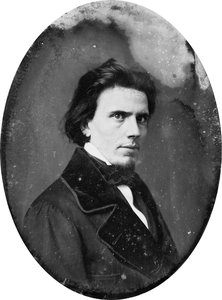
Francis Bicknell Carpenter
1830 - 1900 , United States of America
Quick Facts
- Artistic Movement Or Style: Realism
- Date Of Birth: August 6, 1830
- Date Of Death: May 23, 1900
- Full Name: Francis Bicknell Carpenter
- Nationality: American
- Notable Artworks:
- First Reading of the Emancipation Proclamation
- Jenny Lind
- Salmon P. Chase
- Place Of Birth: Homer, USA