

 Preview
 Send
Send Share
Share
 Details

 Download
 Similars
 X-Ray
X-Ray Diaporama
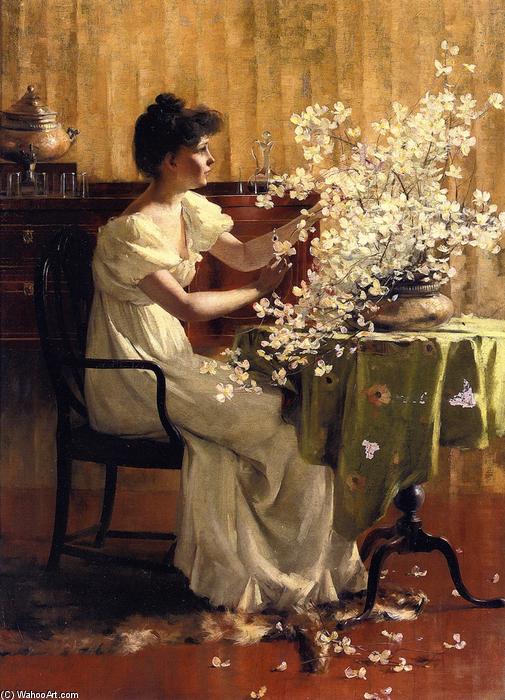
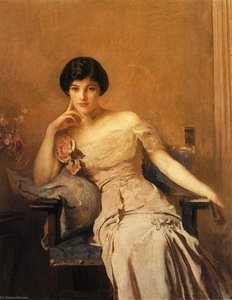
Woman Arranging Flowers

 Read More
Purchase a high-resolution, enhanced digital image, far superior to the online preview.
Each file is meticulously prepared by our in-house specialists using advanced tools and expert manual retouching. We ensure every image has exceptional clarity, precise color accuracy, and fine detail.
The final file is delivered via email within 72 hours, optimized for immediate use in professional, editorial, and print environments. This is the same quality trusted by top-tier design studios, publishers, and galleries.
Digital Image
Download a high-resolution file for personal display, printing, and creative projects. ( Buy Print Buy Hand Made Painting)
Included in Every Digital Image Order
Expert Digital Delivery, Guaranteed
When you choose ArtsDot.com, you're not just getting an image - you're receiving a professionally enhanced digital artwork, crafted with precision and backed by a satisfaction guarantee. Here's everything that comes with your order, automatically:

Fast Email Delivery
Your high-resolution digital image file will be emailed to you within 72 hours of ordering - ready for immediate use.

AI-Enhanced Digital File
Your artwork is professionally optimized using advanced AI tools and manual editing, ensuring maximum detail, clarity, and color accuracy.

Free Lifetime Re-Delivery
Accidentally deleted or lost your file? No worries - we'll resend it to you anytime, free of charge.

No Import Fees - Ever
Enjoy your artwork instantly with zero customs, duties, or delivery fees - digital downloads are always tax-free.

Color Accuracy Guarantee
We ensure your digital image reflects the original colors as closely as possible using professional tools and color management.

60-Day Satisfaction Guarantee
If you're not satisfied with your digital image, we'll revise it or refund 100% within 60 days - no questions asked.

100% Money-Back Guarantee
Not satisfied? Get a full refund within 60 days of receiving your digital file - no questions asked.

Bulk Order Discounts
Buy 3 images, save 10% - Buy 5, save 15% - Buy 10+, save 20%. Great for creative projects, galleries, and agencies.
Related Artworks

![Life Of Saint Francis - [01] - Stigmatization Of Saint Francis — Giotto Di Bondone, Early Renaissance](/media/artworks/images-thumb/fd/6a/fd6ae2a8f5e88e0ace6b86a21d020ded.jpg)
![Legend Of St Francis - [11] - St Francis Before The Sultan (trial By Fire) — Giotto Di Bondone, Proto-renaissance](/media/artworks/images-thumb/0d/32/0d328acfb6c90f7ef32707586e86044b.jpg)
![Life Of Saint Francis - [04] - Death And Ascension Of St Francis — Giotto Di Bondone, Italian Renaissance](/media/artworks/images-thumb/08/8b/088b102b13c1a379233690905590f156.jpg)
Artist Biography
Charles Warren Eaton: A Portraitist of New England’s Soul
Charles Warren Eaton (1857 – 1937) stands as a quietly significant figure in the late nineteenth and early twentieth-century American art scene, particularly within the vibrant artistic community that flourished in Lambertville, New Jersey. While he never achieved widespread fame or recognition comparable to his contemporaries, Eaton’s meticulous observation of human character and his evocative depictions of everyday life offer a compelling glimpse into the spirit of a rapidly changing nation. His work, characterized by a subtle realism and an intimate understanding of light and shadow, reveals a deep connection to the landscapes and people of New England – a connection that shaped both his artistic practice and his personal identity.
Eaton’s early life was rooted in Bloomfield, New Jersey, where he spent much of his adult years. His artistic journey began with an interest nurtured by his family, particularly his father who recognized and encouraged his nascent talent. Formal training commenced at the Lambertville School of Fine Arts, a hub for artists seeking inspiration and camaraderie. This environment proved crucial to Eaton’s development, exposing him to diverse styles and techniques while fostering a strong sense of community. His artistic education extended beyond New Jersey, with formative experiences in Europe, specifically in Paris, where he studied under the guidance of established masters. These early influences—the direct observation of nature championed by American landscape painters and the refined techniques learned in European ateliers—combined to forge Eaton’s distinctive style.
The Newlyn Influence: Capturing the Essence of Rural Life
Eaton's artistic trajectory took a decisive turn with his relocation to Newlyn, Cornwall, in 1889. This move coincided with the rise of the Newlyn School of Art, a collective of artists dedicated to portraying the lives and landscapes of rural England. The school’s ethos—a commitment to direct observation, a rejection of academic conventions, and an emphasis on capturing the authentic spirit of the working class—profoundly impacted Eaton's artistic vision. He quickly immersed himself in this vibrant community, forging close relationships with fellow artists like Stanhope Forbes and William Venn.
In Newlyn, Eaton’s subject matter shifted dramatically. He began to focus on scenes of rural life – fishermen mending their nets, farmers tending their fields, women engaged in domestic tasks—capturing the dignity and resilience of ordinary people. His paintings are imbued with a remarkable sensitivity to detail, meticulously rendered textures, and an acute awareness of light and atmosphere. Eaton’s brushwork is often understated yet remarkably expressive, conveying not just the appearance of his subjects but also their inner lives and experiences. His portraits, in particular, are notable for their psychological depth, revealing subtle nuances of character through carefully observed features and gestures.
Technique and Style: A Master of Light and Observation
Eaton’s artistic style is characterized by a quiet realism that belies the emotional intensity of his subjects. He was a master of capturing the effects of light, employing subtle gradations of tone to create a sense of depth and atmosphere. His use of color is restrained yet harmonious, reflecting the muted palette of the New England landscape. Eaton’s compositions are typically balanced and carefully arranged, drawing the viewer's eye to key elements within the scene. He favored oil paints, allowing him to build up layers of color and texture with remarkable precision.
A key element of Eaton’s technique was his dedication to direct observation. He spent countless hours sketching outdoors, studying the way light fell on objects and the subtle shifts in color throughout the day. This commitment to seeing—to truly *seeing*—is evident in every one of his paintings. His work is not simply a representation of reality; it’s an interpretation—a distillation of experience filtered through the artist's unique sensibility.
Legacy and Significance
Charles Warren Eaton may not be a household name, but his contribution to American art deserves recognition. His paintings offer a valuable window into the lives of ordinary people in late nineteenth-century New England, capturing the beauty and dignity of rural life with remarkable sensitivity and skill. His work stands as a testament to the power of direct observation and the importance of connecting with one’s subject matter on a deeply personal level. Eaton's legacy resides not only in his paintings but also in the vibrant artistic community he helped foster in Lambertville, New Jersey—a place where artists could gather, share ideas, and create art that reflected the spirit of their time.
His work can be found in collections at institutions like the Lambertville Arts Foundation and is a testament to his dedication to capturing the essence of New England life.
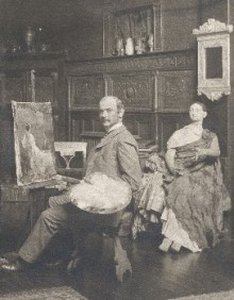
francis coates jones
1857 - 1932 , United States of America
Quick Facts
- Artistic Movement Or Style: Romanticism
- Artists Or Movements Influenced By This Artist: ['European painters']
- Artists Who Influenced This Artist: ['Alexander Sergeyevich Stroganov']
- Date Of Birth: March 30, 1776
- Date Of Death: May 16, 1857
- Full Name: Vasily Andreevich Tropinin
- Nationality: Russian
- Notable Artworks:
- The Lace Maker
- The Gold-Embroideress
- Place Of Birth: Korpovo, Novgorod Governorate

