


 Preview
 Send
Send Share
Share
 Details

 Download
 Similars
 X-Ray
X-Ray Diaporama
Help bring them back to you!\nMake yours a victory home!


 Read More
Purchase a high-resolution, enhanced digital image, far superior to the online preview.
Each file is meticulously prepared by our in-house specialists using advanced tools and expert manual retouching. We ensure every image has exceptional clarity, precise color accuracy, and fine detail.
The final file is delivered via email within 72 hours, optimized for immediate use in professional, editorial, and print environments. This is the same quality trusted by top-tier design studios, publishers, and galleries.
Digital Image
Download a high-resolution file for personal display, printing, and creative projects. ( Buy Print Buy Hand Made Painting)
Included in Every Digital Image Order
Expert Digital Delivery, Guaranteed
When you choose ArtsDot.com, you're not just getting an image - you're receiving a professionally enhanced digital artwork, crafted with precision and backed by a satisfaction guarantee. Here's everything that comes with your order, automatically:

Fast Email Delivery
Your high-resolution digital image file will be emailed to you within 72 hours of ordering - ready for immediate use.

AI-Enhanced Digital File
Your artwork is professionally optimized using advanced AI tools and manual editing, ensuring maximum detail, clarity, and color accuracy.

Free Lifetime Re-Delivery
Accidentally deleted or lost your file? No worries - we'll resend it to you anytime, free of charge.

No Import Fees - Ever
Enjoy your artwork instantly with zero customs, duties, or delivery fees - digital downloads are always tax-free.

Color Accuracy Guarantee
We ensure your digital image reflects the original colors as closely as possible using professional tools and color management.

60-Day Satisfaction Guarantee
If you're not satisfied with your digital image, we'll revise it or refund 100% within 60 days - no questions asked.

100% Money-Back Guarantee
Not satisfied? Get a full refund within 60 days of receiving your digital file - no questions asked.

Bulk Order Discounts
Buy 3 images, save 10% - Buy 5, save 15% - Buy 10+, save 20%. Great for creative projects, galleries, and agencies.
Collectible Description
A Call to Duty: The Poignant Resonance of Victory Home
In the heart of 1943, amidst the global upheaval of World War II, art served as a vital bridge between the front lines and the home front. This evocative painting by Francis Criss captures that profound moment in history when every household became a participant in the struggle for freedom. The scene presents a domestic sanctuary transformed into a site of patriotic devotion, centered around a house adorned with the stars and stripes. Through his masterful application of color and form, Criss does not merely depict a building; he illustrates a psychological state of waiting, hope, and resolute determination. The presence of the flag hanging prominently on the front door serves as a silent sentinel, signaling to all passersby that this home is dedicated to the cause of victory.
The composition is imbued with a sense of quiet mobilization. As the viewer’s eye wanders across the canvas, subtle details emerge—the figures positioned near the periphery and the delicate presence of birds in flight—which lend a lifelike, breathing quality to the scene. These elements suggest that while the war was fought with steel and gunpowder on distant battlefields, its heartbeat was felt in the everyday rhythms of civilian life. The text integrated into the visual narrative, "Help bring them back to you! Make yours a victory home!", acts as a powerful rhetorical device, transforming the artwork from a mere landscape into an urgent, emotional plea that resonates with the historical weight of the era.
Precisionism Meets Propaganda: The Artistic Technique
Francis Criss, a master of the Precisionist movement, brings a unique structural clarity to this piece of wartime propaganda. His technique is characterized by clean lines and a meticulous attention to geometric form, which lends the house and its surroundings an almost architectural permanence. This precision does not strip the work of its soul; rather, it provides a stable, grounded foundation upon which the emotional intensity of the message can rest. The interplay of light and shadow across the facade of the home creates a sense of depth and realism, making the patriotic symbols feel tangible and immediate.
The color palette is both nostalgic and striking, utilizing the iconic red, white, and blue to reinforce the nationalistic themes without descending into mere cliché. For collectors and interior designers, this piece offers a sophisticated way to introduce historical narrative into a modern space. The painting’s ability to balance the sharp, disciplined edges of Precisionism with the soft, emotive atmosphere of a community in waiting makes it a versatile masterpiece. It is an artwork that commands attention through its clarity while inviting deep contemplation through its historical gravity.
A Timeless Legacy for the Modern Collector
Owning a reproduction of this work is more than an aesthetic choice; it is an act of preserving a vital chapter of human history. The painting serves as a testament to the power of art to shape public opinion and foster communal resilience. For those looking to curate a collection that speaks to themes of heritage, strength, and the enduring human spirit, Criss’s work provides an unparalleled emotional anchor. It is a piece that transcends its 1943 origins, offering a timeless reflection on how we protect what we love and how we find unity in times of great challenge.
Whether placed in a formal study, a contemporary living area, or a curated gallery space, this artwork acts as a conversation starter. It invites the observer to look beyond the surface of the paint and into the heart of a world that was once defined by sacrifice and the collective dream of peace. To display this piece is to celebrate the intersection of fine art and historical truth, bringing a sense of profound purpose and storied elegance to any interior design scheme.
Related Artworks





Artist Biography
A Precisionist Vision of the American Metropolis
Francis Hyman Criss, born in London in 1901 and later a defining voice in American art, carved a unique niche for himself through strikingly precise depictions of urban life. His canvases aren’t merely representations of cityscapes; they are meticulously constructed studies of modernity, imbued with a sense of both awe and alienation. Immigrating to the United States with his family at the tender age of four, Criss quickly absorbed the dynamism of his new homeland, a quality that would profoundly shape his artistic trajectory. He received formal training at the Pennsylvania Academy of the Fine Arts from 1917 to 1921, benefiting from a scholarship and laying a solid foundation in traditional techniques. This was further enriched by studies at the Art Students League of New York and the Barnes Foundation, alongside private lessons with Jan Matulka, all contributing to his evolving artistic sensibility.The Embrace of Precisionism and Surrealist Echoes
Criss’s artistic development blossomed within the context of the American Precisionist movement during the 1930s. Aligned with luminaries like Charles Demuth and his close friend, Charles Sheeler, he embraced the movement's core tenets: clarity of form, geometric abstraction, and a celebration—albeit often ambivalent—of industrial subjects. He shared their fascination with streamlined aesthetics and meticulous detail, translating the imposing structures of the modern city onto canvas with an almost architectural precision. However, Criss wasn’t simply a follower; he infused his work with subtle yet potent undercurrents of Surrealism. Distorted perspectives, dreamlike juxtapositions, and a deliberate absence of human figures created a unique visual language that distinguished him from his peers. This blend allowed him to capture not just the *appearance* of the city but also its psychological impact—its vastness, its anonymity, and its underlying sense of unease.Iconic Motifs and Public Art
The 1930s and 40s represent the peak of Criss’s artistic achievement. His paintings from this period consistently feature iconic urban motifs: elevated subway tracks slicing through the cityscape, towering skyscrapers piercing the sky, bustling streets teeming with implied movement, and majestic bridges spanning vast distances. These weren't romanticized views; they were stark, unsentimental portrayals of a rapidly changing world. A particularly significant achievement during this time was his mural *Sixth Avenue L* (1937), created for the Williamsburg Housing Project in Brooklyn as part of the Federal Art Project. This monumental work exemplifies his bold geometric style and captures the raw energy of New York City, solidifying his contribution to public art and reflecting the social consciousness of the era. The absence of human figures in many of his paintings isn’t a mere stylistic choice; it emphasizes the imposing scale and impersonal nature of the modern urban environment, prompting viewers to contemplate their place within this vast, mechanized world.Navigating New Deal Programs and Later Years
Criss actively engaged with government-sponsored art programs during the Great Depression, notably the Works Progress Administration (WPA). This involvement not only provided him with opportunities to contribute to public art projects but also allowed him to dedicate himself to education. He taught at several institutions—the Albright Museum School in Buffalo, the Art Students League, the New School for Social Research, and the School of Visual Arts—sharing his knowledge and inspiring a new generation of artists. Notably, he instructed at the leftist American Artists School during the 1930s, counting Ad Reinhardt among his students. Towards the end of his career, Criss increasingly turned to commercial work, including a cover illustration for *Fortune* magazine in November 1942. While financially advantageous, this shift arguably contributed to a decline in critical recognition. Despite this, Francis Criss remains an important figure in American art history.A Lasting Legacy of Modernity
Francis Criss passed away in 1973, leaving behind a compelling artistic record of the 20th century. His Precisionist cityscapes offer invaluable insights into the social and cultural transformations of his time—the rise of industrialization, the growth of urban centers, and the evolving relationship between humanity and technology. He possessed a remarkable ability to synthesize the clarity of Precisionism with subtle Surrealist undertones, creating a visual vocabulary that captured the spirit of American modernity. His work continues to be appreciated for its technical skill, aesthetic power, and evocative portrayal of a world in constant flux—a testament to his enduring legacy as a chronicler of the modern metropolis.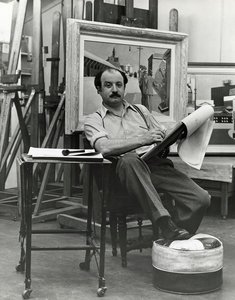
Francis Criss
1901 - 1973 , United Kingdom
Quick Facts
- Artistic Movement Or Style: Precisionism, Surrealism
- Artists Who Influenced This Artist:
- Charles Demuth
- Charles Sheeler
- Jan Matulka
- Date Of Birth: 1901
- Date Of Death: 1973
- Full Name: Francis Hyman Criss
- Nationality: American
- Notable Artworks:
- Sixth Avenue L
- Alma Sewing
- Jefferson Market Courthouse
- Place Of Birth: London, UK

