 Preview
 Send
Send Share
Share
 Details

 Download
 Similars
 X-Ray
X-Ray Diaporama
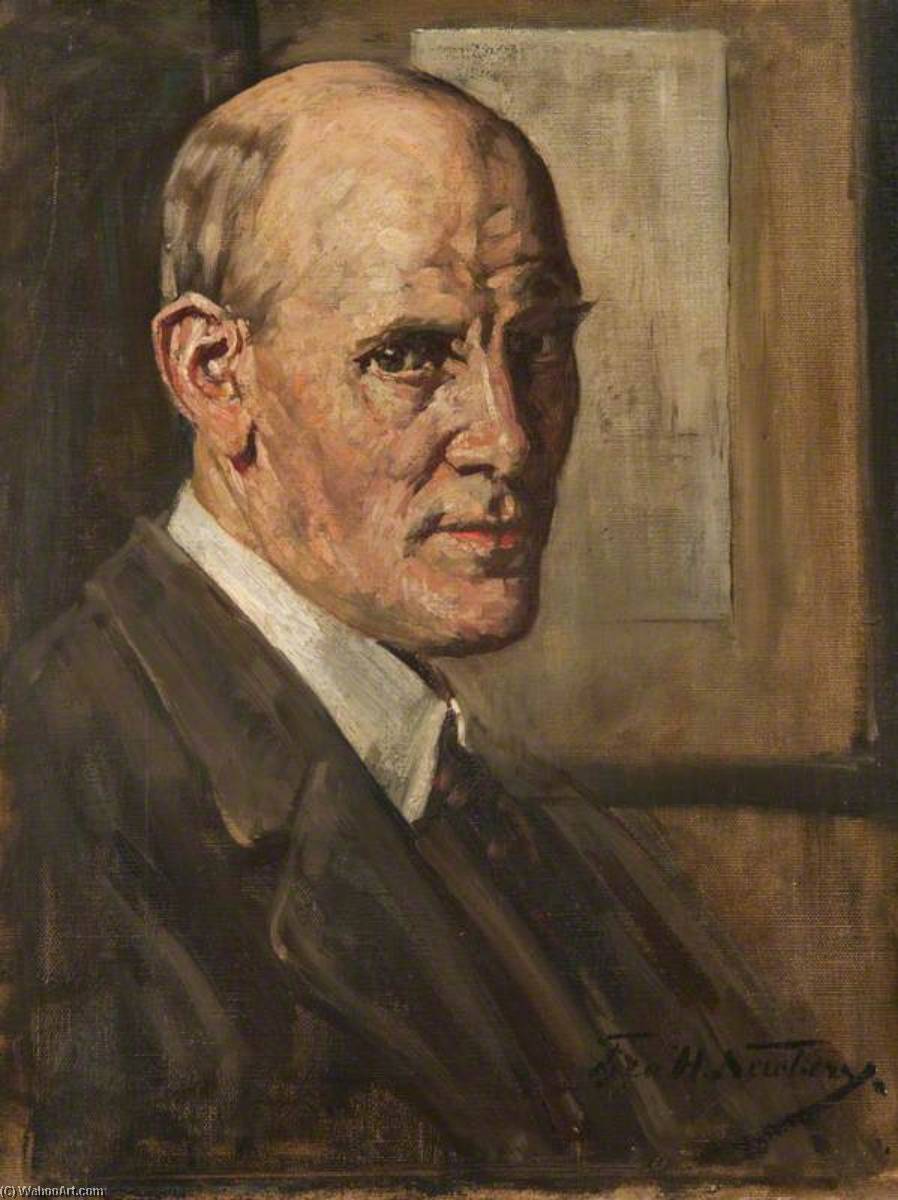
James Craig Annan (1864–1946)
 46.0 x 36.0 cm
 Read More
Giclée / Art Print
Museum-quality giclée or canvas print with fast production and flexible finish options. ( Buy Hand Made Painting Buy Image)




































Pick from our preset sizes that match the artwork's original proportions.

You may enter your own dimensions to fit a specific frame or space. If your selected size does not match the original image's proportions, we will either crop the artwork or extend the image with a mirrored or solid-fill edge. A digital mockup will be sent for your approval before production begins.
Please note that the on-screen preview does not reflect the actual cropping or extension. Only the mockup will accurately show the final composition.
While custom sizes are available, we recommend selecting a dimension from the predefined list to preserve the original proportions.
Worldwide Delivery () in 2 weeks instead of standard 4/5 weeks. (22 August)

Free Worldwide Express Shipping

High-Quality Linen Canvas

Full Shipping Insurance

Customs Tax Refund Guarantee

True Color Matching Guarantee

60-Day Return Policy (Defects Only)

100% Money-Back Guarantee

Bulk Discount Offer
 Glass option is only available in size under 110 CM

James Craig Annan (1864–1946)
Giclée / Art Print
Reproduction Size
-


Total Price
$ 63
Related Artworks









Artist Biography
The Visionary Architect of the Glasgow Style
Francis Henry Newbery stands as a monumental figure in the tapestry of British art, a man whose influence stretched far beyond the bristles of his paintbrush to reshape the very foundations of art education in Scotland. Born in 1855 in the quiet landscapes of Devon, Newbery’s early life was rooted in the honest craftsmanship of his father, a shoemaker. This early exposure to the tactile beauty of manual skill would later become a cornerstone of his artistic philosophy. After honing his pedagogical talents in Bridport, Dorset, a transformative scholarship to London’s Slade School of Art in 1881 thrust him into a vibrant world of creative exchange. It was here that he forged vital connections with luminaries such as James Guthrie and John Lavery, establishing a stylistic lineage that would eventually link the traditions of London to the burgeoning modernism of the north.
When Newbery assumed the directorship of the Glasgow School of Art in 1885, he did not merely occupy an office; he ignited a revolution. With a visionary's foresight, he dismantled the rigid, instructor-led hierarchies of the era, choosing instead to populate the faculty with practicing artists. This bold move ensured that the school became a living laboratory of contemporary technique rather than a stagnant repository of tradition. His tenure, which lasted until 1917, was characterized by an unwavering belief in the marriage of fine art and functional craft. By establishing workshops and introducing embroidery classes—often supported by the creative spirit of his wife, Jessie Newbery—he helped cultivate an environment where the decorative arts could flourish alongside classical painting.
A Legacy of Collaboration and Design
Perhaps Newbery’s most enduring contribution to the architectural and visual identity of Scotland was his profound collaboration with Charles Rennie Mackintosh. Recognizing that a school of such ambition required a physical vessel of equal greatness, Newbery played a crucial role in commissioning Mackintosh to design the iconic Glasgow School of Art building. This partnership was more than administrative; it was a shared aesthetic mission. Under Newbery’s stewardship, the Glasgow Style began to coalesce, defined by its elegant geometric forms, organic motifs, and a unique synthesis of tradition and modernity. He did not merely oversee a movement; he nurtured the very soil in which it grew, providing the institutional support necessary for Mackintosh and his circle to redefine the visual language of the early 20th century.
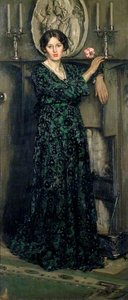
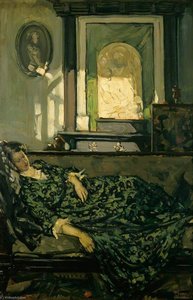
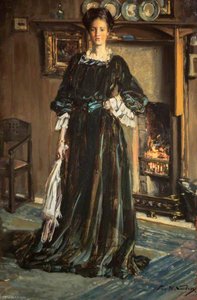
Newbery’s own artistic output reflected this deep appreciation for texture, light, and narrative. His paintings often resonated with the sensibilities of the Glasgow Boys, capturing moments of quiet introspection or dramatic historical weight. Whether through the serene, sun-drenched atmosphere of Daydreams or the evocative, textured elegance found in The Lady of the Carnation, his work demonstrates a mastery of oil painting that balances realism with a burgeoning modern decorative impulse. His ability to weave together the romanticism of the past with the structural innovations of the present allowed him to remain relevant across decades of shifting artistic tides.
Historical Significance and Enduring Influence
The historical significance of Francis Henry Newbery lies in his role as a bridge between eras. He bridged the gap between the Victorian era’s reverence for craftsmanship and the modern era’s embrace of abstraction and design. His leadership transformed Glasgow into an international hub of artistic excellence, ensuring that the city's creative output was recognized far beyond the borders of the United Kingdom. Even after his retirement to the tranquil surroundings of Corfe Castle in Dorset, where he continued to paint until 1932, his impact remained etched in the stone and spirit of Glasgow.
To study Newbery is to study the evolution of the modern art school. His achievements can be summarized through several key pillars of his career:
- Educational Reform: The implementation of a faculty composed of active, practicing artists to prioritize contemporary relevance over rote instruction.
- Architectural Vision: The pivotal role in commissioning and supporting the Mackintosh-designed Glasgow School of Art building.
- Promotion of the Glasgow Style: Creating an institutional sanctuary for the development of unique Scottish decorative motifs and geometric aesthetics.
- Integration of Crafts: Fostering a multidisciplinary approach that elevated embroidery, design, and fine art to a unified standard of excellence.
Ultimately, Francis Henry Newbery was more than a director or a painter; he was the custodian of a movement. Through his tireless advocacy for individual talent and his belief in the harmony of art and architecture, he ensured that the flame of Scottish creativity would burn with a distinctive and unforgettable brilliance.
francis henry newbery
1855 - 1946
Quick Facts
- Artistic Movement Or Style: Glasgow Style
- Artists Or Movements Influenced By This Artist: ['Mackintosh Designs']
- Artists Who Influenced This Artist:
- James Guthrie
- John Lavery
- Date Of Birth: 1855
- Date Of Death: 1946
- Full Name: Francis Henry Newbery
- Nationality: British
- Notable Artworks:
- The Lady of the Carnation
- Herbert Fitton Stockdale
- The Spirit of Bridport
- Place Of Birth: Devon, England