 Preview
 Send
Send Share
Share
 Details

 Download
 Similars
 X-Ray
X-Ray Diaporama
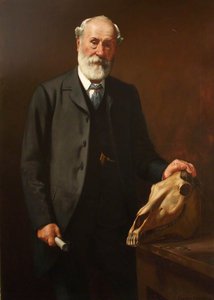
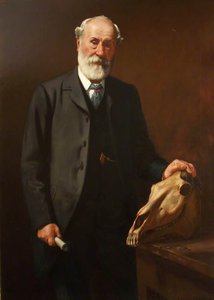
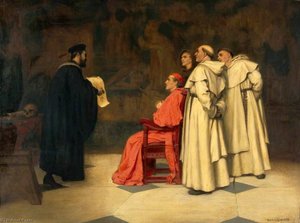
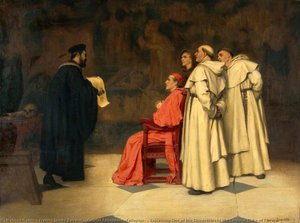
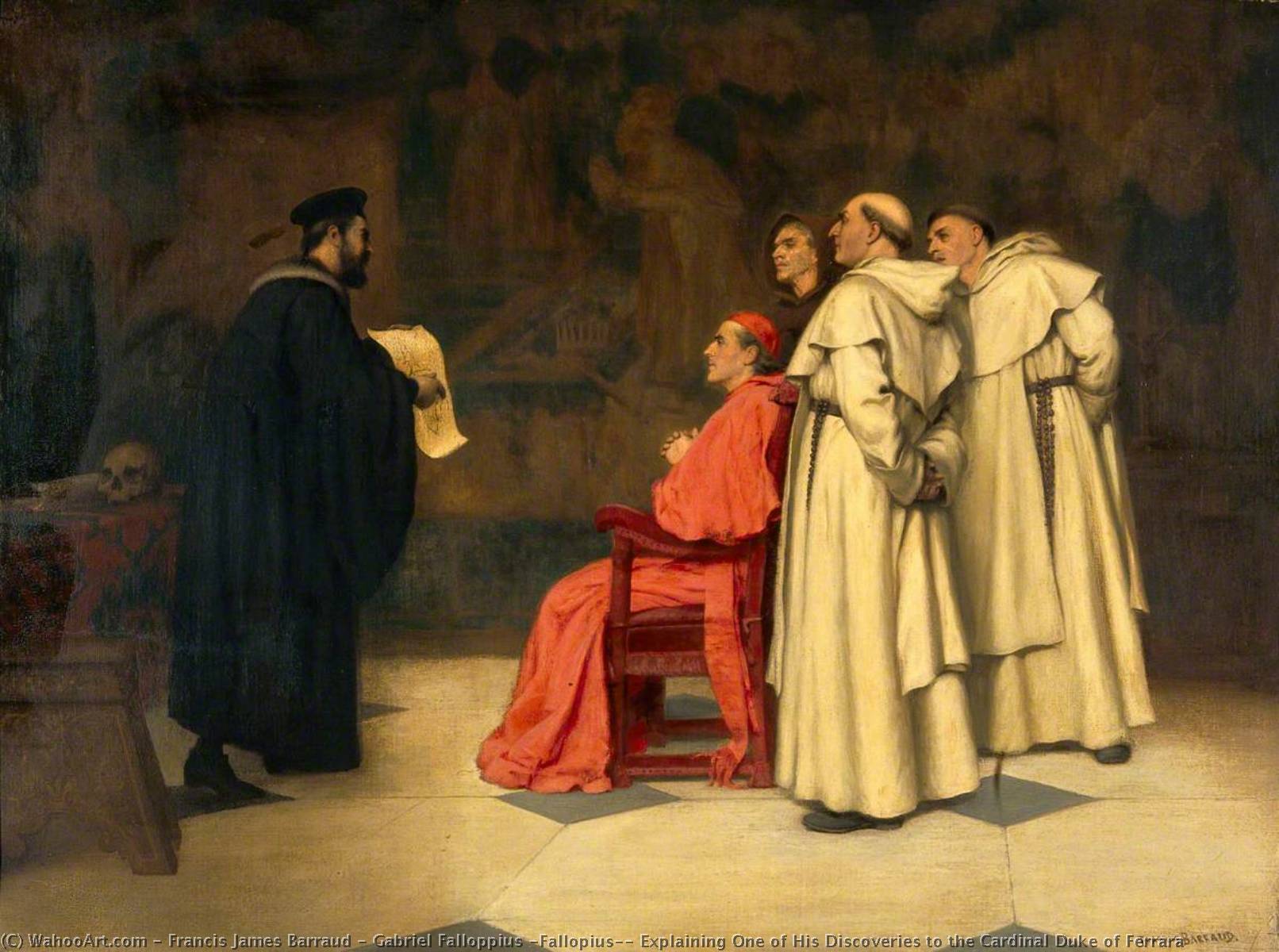
Gabriel Falloppius (Fallopius), Explaining One of His Discoveries to the Cardinal Duke of Ferrara
 76.0 x 102.0 cm
 Read More
Hand Made Oil Reproduction
Hand-painted oil on canvas in your size and frame, made to order by our artists. ( Buy Print Buy Image)




































Pick from our preset sizes that match the artwork's original proportions.

You may enter your own dimensions to fit a specific frame or space. If your selected size does not match the original image's proportions, we will either crop the artwork or extend the painting with additional hand-painted elements. A digital mockup will be sent for your approval before production begins.
Please note that the on-screen preview does not reflect the actual cropping or extension. Only the mockup will accurately show the final composition.
While custom sizes are available, we recommend selecting a dimension from the predefined list to preserve the original proportions.
After order, ArtsDot.com team will email client for instructions and provide a mockup preview
Worldwide Delivery () in 3/4 weeks instead of standard 5 weeks. (17 August). No compromise on quality.

Free Worldwide Express Shipping

High-Quality Linen Canvas

Full Shipping Insurance

Customs Tax Refund Guarantee

True Color Matching Guarantee

60-Day Return Policy (Defects Only)

100% Money-Back Guarantee

Bulk Discount Offer
 Glass option is only available in size under 110 CM

Gabriel Falloppius (Fallopius), Explaining One of His Discoveries to the Cardinal Duke of Ferrara
Reproduction Medium
Reproduction Size
-


Total Price
$ 263
Related Artworks
Artist Biography
Francis James Barraud: The Painter Behind ‘His Master’s Voice’
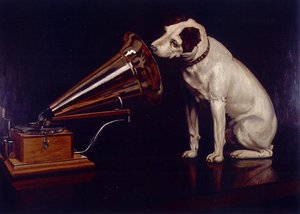
Francis James Barraud (1856-1924) stands as a singular figure in Victorian art, largely unrecognized outside of the realm of commercial branding yet profoundly influential in capturing a pivotal moment in technological advancement. Born in London to Henry Barraud, a celebrated portrait photographer, Barraud inherited an artistic sensibility deeply rooted in observation and meticulous detail – qualities that would define his distinctive style and propel him to fame through an unlikely association with one of Britain’s most iconic logos. His early life was marked by exposure to the visual arts through his father's studio, fostering a passion for capturing likenesses and conveying emotion within carefully constructed compositions. This formative influence extended beyond photography; Barraud himself pursued painting seriously, honing his skills in landscapes and animal portraits – genres that would become central to his artistic output. Notably, he studied at Slade School of Fine Art under Frederic Leighton, absorbing the Beaux Arts ideals prevalent during the period and developing a refined technique characterized by smooth brushstrokes and luminous color palettes. Barraud’s most enduring legacy resides in ‘His Master’s Voice,’ an 1899 painting depicting a Jack Russell terrier listening intently to an Edison phonograph cylinder. Initially conceived with the deceased dog – Barraud's beloved companion – at the center of the scene, the artwork underwent a significant transformation when William Barry Owen of Gramophone Company suggested replacing the phonograph with a disc machine. This decision proved serendipitous, aligning perfectly with the company’s marketing strategy and cementing ‘His Master’s Voice’ as one of the world's most recognizable trademarks. The image appeared prominently on gramophone packaging for decades, symbolizing innovation and technological progress—a testament to Barraud’s artistic vision and its unexpected impact on popular culture. Beyond this celebrated emblem, Barraud produced a substantial body of work encompassing landscapes, portraits, and animal studies. He possessed an exceptional ability to convey the subtle nuances of mood and atmosphere, evident in his depictions of Scottish Highlands and meticulously rendered canine subjects. His paintings often reflected a humanist sensibility, capturing animals with compassion and respect—a characteristic that aligns with the broader Victorian fascination for natural history and scientific observation. Influenced by artists like Frederic Leighton and Joseph Noel Paton, Barraud’s artistic style blended academic precision with expressive brushwork, resulting in images imbued with both beauty and psychological depth. Barraud's contribution to art history extends beyond his individual paintings; he played a crucial role in shaping the visual language of the era. ‘His Master’s Voice,’ more than just an advertisement, became a cultural icon—a symbol of Britain’s embrace of new technologies and its artistic engagement with the changing world. Francis James Barraud's legacy continues to resonate today, reminding us that art can transcend its immediate context to achieve enduring significance—a painter who inadvertently helped define the soundscape of the 20th century through a single unforgettable image.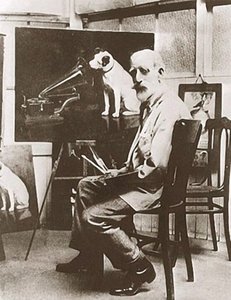
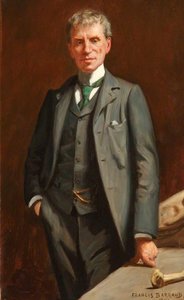
Francis James Barraud
1856 - 1924
Quick Facts
- Artistic Movement Or Style: Victorian Painting
- Artists Or Movements Influenced By This Artist: ['Gramophone Company']
- Artists Who Influenced This Artist: ['Hubert von Herkomer']
- Date Of Birth: 16 June 1856
- Date Of Death: 29 August 1924
- Full Name: Francis James Barraud
- Nationality: English
- Notable Artworks: ["His Master's Voice"]
- Place Of Birth: London, England