 Preview
 Send
Send Share
Share
 Details

 Download
 Similars
 X-Ray
X-Ray Diaporama
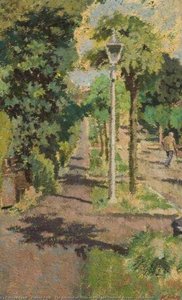
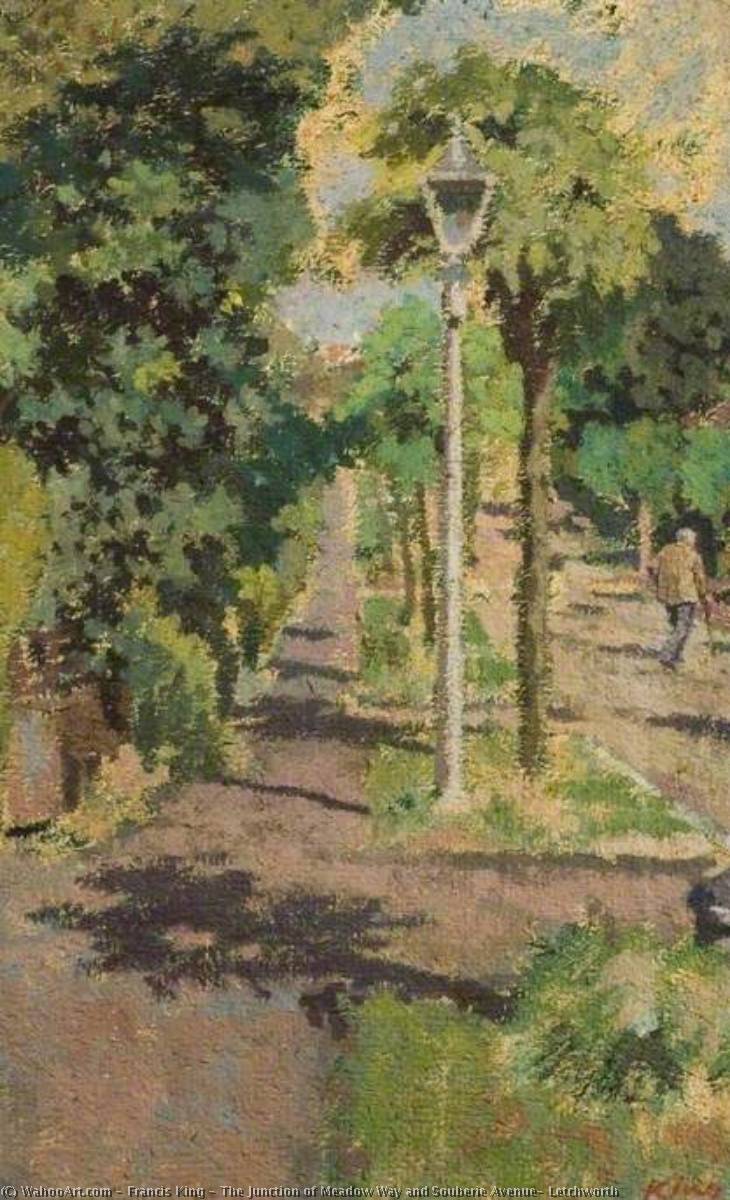
The Junction of Meadow Way and Souberie Avenue, Letchworth
 1946
1946 47.0 x 30.0 cm
 Read More
Giclée / Art Print
Museum-quality giclée or canvas print with fast production and flexible finish options. ( Buy Hand Made Painting Buy Image)




































Pick from our preset sizes that match the artwork's original proportions.

You may enter your own dimensions to fit a specific frame or space. If your selected size does not match the original image's proportions, we will either crop the artwork or extend the image with a mirrored or solid-fill edge. A digital mockup will be sent for your approval before production begins.
Please note that the on-screen preview does not reflect the actual cropping or extension. Only the mockup will accurately show the final composition.
While custom sizes are available, we recommend selecting a dimension from the predefined list to preserve the original proportions.
Worldwide Delivery () in 2 weeks instead of standard 4/5 weeks. (1 September)

Free Worldwide Express Shipping

High-Quality Linen Canvas

Full Shipping Insurance

Customs Tax Refund Guarantee

True Color Matching Guarantee

60-Day Return Policy (Defects Only)

100% Money-Back Guarantee

Bulk Discount Offer
 Glass option is only available in size under 110 CM

The Junction of Meadow Way and Souberie Avenue, Letchworth
Giclée / Art Print
Reproduction Size
-


Total Price
$ 63
Related Artworks








Artist Biography
Francis King: A Pioneer of Color Field Painting
Francis King stands as a singular figure in the realm of British abstract expressionism, an artist whose distinctive approach to color and composition has cemented his place within the canon of mid-century modern art. Born circa 1934, King’s artistic legacy speaks volumes about his dedication to exploring the expressive potential of pigment itself. While biographical details remain relatively sparse—primarily centered around his formative years spent in Pittsburgh—his journey from a student of traditional realism to a master of abstraction is a profound testament to the evolution of modern sensibility.
His early training encompassed a grounding in traditional realism, notably evident in portraits commissioned by prominent figures like Henry J. Heinz. These works captured nuanced expressions and meticulous detail, a skill honed during his studies at Carnegie Mellon University. However, King swiftly transitioned away from representational art, captivated by the burgeoning movement spearheaded by titans such as Mark Rothko and Barnett Newman. He embraced their radical simplification of form and intense focus on pure color, a pivotal shift that resulted in a prolific output of large-scale canvases dominated by vibrant hues—primarily reds, yellows, and blues—applied with broad brushstrokes that create mesmerizing, textural surfaces.
The Landscape of Light and Emotion
King’s artistic vision was profoundly shaped by the American landscape, particularly the rolling hills surrounding Letchworth Garden City, Hertfordshire. The expansive vistas served as a primary inspiration for numerous paintings depicting serene scenes bathed in luminous color, reflecting a desire to convey emotion and atmosphere rather than literal depiction. In his hands, the landscape became a vehicle for color field painting, where the boundaries between earth and sky dissolve into gradients of light.
His works often function as emotional echoes of specific places:
- The Junction of Meadow Way and Souberie Avenue: An exemplary piece that demonstrates how King utilizes subtle variations in tone to evoke feelings of tranquility and grandeur.
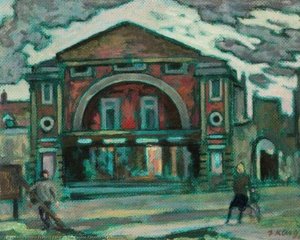
- The Palace Cinema: A work that captures the architectural beauty of Letchworth through bold splashes of pigment, emphasizing form and texture alongside color harmony.
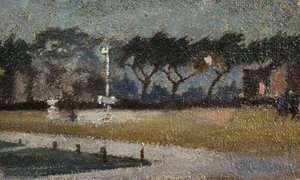
- The Arena, Letchworth: A testament to his ability to transform structural elements into rhythmic, abstract compositions.
Legacy and Historical Significance
Throughout his career, King’s work has remained a bridge between the structured traditions of the past and the liberated abstractions of the modern era. By moving away from the literalness of portraiture toward the visceral impact of color, he contributed significantly to the dialogue of post-war British art. His ability to manipulate light and pigment allows the viewer to experience a sense of peace and monumental scale, making his canvases not just objects of observation, but immersive environments.
Today, King is remembered as an artist who understood that color possesses its own language—a language capable of communicating the sublime without the need for recognizable figures. His contribution to the Color Field movement remains a vital chapter in the history of abstract expressionism, reminding us that the most profound truths are often found in the simplest shifts of hue and tone.
Quick Facts
- Artistic Movement Or Style: Abstract Expressionism
- Full Name: Francis King
- Nationality: British
- Notable Artworks:
- The Junction of Meadow Way and Souberie Avenue, Letchworth
- The Palace Cinema, Letchworth