

 Send
Send Share
Share
 Details

 Download
 Similars
 Diaporama
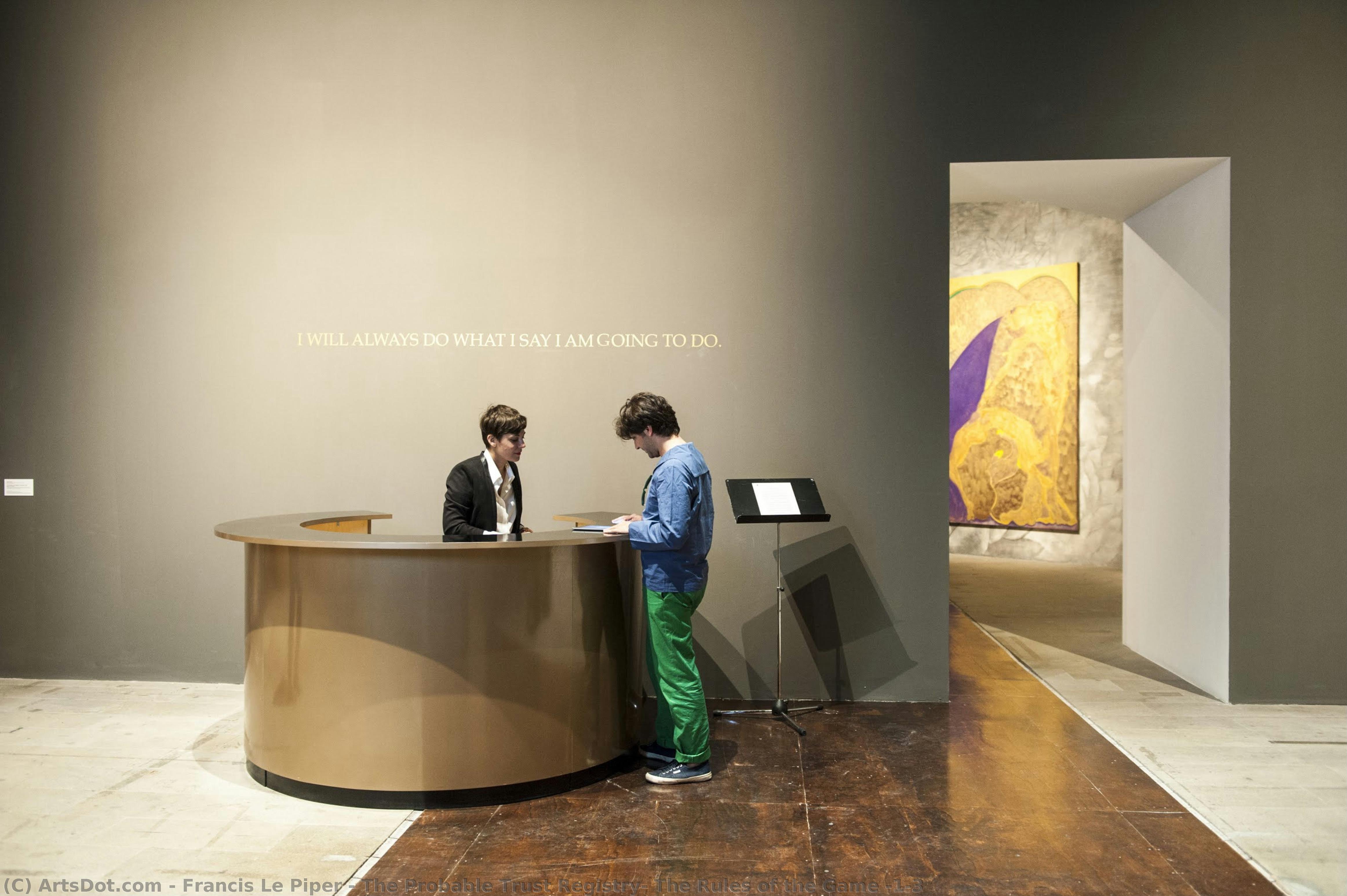
The Probable Trust Registry: The Rules of the Game #1-3


 Read More
Purchase a high-resolution, enhanced digital image, far superior to the online preview.
Each file is meticulously prepared by our in-house specialists using advanced tools and expert manual retouching. We ensure every image has exceptional clarity, precise color accuracy, and fine detail.
The final file is delivered via email within 72 hours, optimized for immediate use in professional, editorial, and print environments. This is the same quality trusted by top-tier design studios, publishers, and galleries.
Digital Image
Download a high-resolution file for personal display, printing, and creative projects. ( Buy Print Buy Hand Made Painting)
Included in Every Digital Image Order
Expert Digital Delivery, Guaranteed
When you choose ArtsDot.com, you're not just getting an image - you're receiving a professionally enhanced digital artwork, crafted with precision and backed by a satisfaction guarantee. Here's everything that comes with your order, automatically:

Fast Email Delivery
Your high-resolution digital image file will be emailed to you within 72 hours of ordering - ready for immediate use.

AI-Enhanced Digital File
Your artwork is professionally optimized using advanced AI tools and manual editing, ensuring maximum detail, clarity, and color accuracy.

Free Lifetime Re-Delivery
Accidentally deleted or lost your file? No worries - we'll resend it to you anytime, free of charge.

No Import Fees - Ever
Enjoy your artwork instantly with zero customs, duties, or delivery fees - digital downloads are always tax-free.

Color Accuracy Guarantee
We ensure your digital image reflects the original colors as closely as possible using professional tools and color management.

60-Day Satisfaction Guarantee
If you're not satisfied with your digital image, we'll revise it or refund 100% within 60 days - no questions asked.

100% Money-Back Guarantee
Not satisfied? Get a full refund within 60 days of receiving your digital file - no questions asked.

Bulk Order Discounts
Buy 3 images, save 10% - Buy 5, save 15% - Buy 10+, save 20%. Great for creative projects, galleries, and agencies.
Collectible Description
A Quiet Encounter in Monochrome
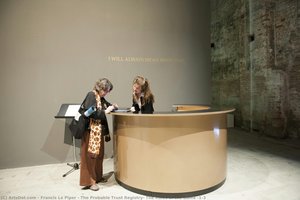
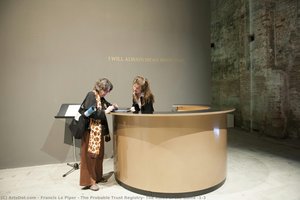
In the evocative monochrome of "The Probable Trust Registry: The Rules of the Game #1-3," we are invited into a space that feels simultaneously intimate and profoundly institutional. This striking black and white photograph captures a moment frozen in time, presenting a scene that oscillates between a private conversation and a formal transaction. At its heart, the composition centers on two figures positioned within an office or workspace: one individual stands poised at a desk, while another sits in quiet contemplation before them. The stark contrast of light and shadow lends a cinematic quality to the encounter, stripping away the distractions of color to focus our attention on the raw geometry of the setting and the silent tension held between the subjects.
The arrangement of the room—the sturdy presence of the desk, the simple chairs, and even the subtle inclusion of a book resting between the participants—suggests a narrative of negotiation or record-keeping. There is a weight to the atmosphere, as if the very air is thick with the gravity of whatever "rules" are being established in this registry. The presence of a television mounted on the wall adds a layer of modern domesticity or surveillance, hinting at a world where private interactions are always shadowed by an external gaze. For the collector, this piece offers more than just a visual; it offers a psychological landscape that invites endless reinterpretation.
The Art of Shadow and Structure
Technically, the work excels in its use of chiaroscuro-inspired photography, utilizing the absence of color to emphasize form, texture, and depth. By stripping the scene of hue, the artist directs the eye toward the structural elements of the composition: the sharp lines of the furniture, the soft gradients of light falling across the desk, and the silhouette of the human figures. This minimalist approach creates a timeless aesthetic that is particularly suited for sophisticated interior design. Whether placed in a contemporary gallery setting or a classic study, the photograph’s monochromatic palette allows it to integrate seamlessly into diverse decor styles, acting as a focal point of quiet intellectualism.
The stylistic choice to present this work through a black and white lens serves to elevate the mundane office environment into something much more symbolic. It transforms a simple workspace into a stage for a larger drama regarding authority, trust, and the social contracts we navigate daily. The lack of color removes the "noise" of reality, leaving behind an essentialist view of human interaction. For those looking to adorn their walls with art that provokes thought and commands respect, this piece provides a masterclass in how simplicity can achieve profound emotional resonance.
A Legacy of Observation
While the photograph captures a specific, staged moment, it carries the spirit of an artist deeply invested in the nuances of social dynamics. The work resonates with the tradition of observational art, where the mundane is scrutinized for its hidden complexities. It invites the viewer to become a silent participant in the room, wondering about the contents of the book, the nature of the conversation, and the invisible "rules" that govern the interaction. This sense of mystery is what makes such a reproduction an enduring treasure for any art lover.
Owning a high-quality reproduction of this piece means bringing a sense of contemplative stillness into one's environment. It is an invitation to pause, to look closer, and to find beauty in the structured shadows of human connection. For interior designers seeking to create spaces of depth and narrative, "The Probable Trust Registry" serves as a sophisticated anchor, bridging the gap between modern conceptualism and the timeless allure of classical photographic composition.
Related Artworks

Artist Biography
A Satirical Eye: The Life and Art of Francis Le Piper
Francis Le Piper, a name perhaps less celebrated than his contemporaries yet possessing a unique charm and historical importance, was an English artist born around 1640. While biographical details remain somewhat scarce, the surviving body of his work paints a vivid picture of a man keenly observant of society’s foibles and remarkably skilled in capturing them with wit and precision. Le Piper flourished during a period of significant political and social upheaval – the Restoration era and beyond – and his art reflects both the exuberance and anxieties of that time. He died in 1695, leaving behind a legacy primarily known through his engravings, which offer invaluable glimpses into everyday life and popular culture of 17th-century England. His work stands as a bridge between earlier traditions of caricature and the more developed satirical art of William Hogarth.From Tavern Scenes to Biblical Narratives
Le Piper’s artistic reputation rests largely on his series of engravings depicting scenes from Samuel Butler's mock-heroic poem, *Hudibras*. These are not mere illustrations; they are lively interpretations brimming with character and detail. He masterfully translated the poem’s satirical energy into visual form, portraying the eccentric knight Hudibras and his companions in a manner that is both humorous and insightful. The tavern scenes, in particular, reveal Le Piper's talent for capturing the bustling atmosphere of London public houses – crowded rooms filled with boisterous patrons, serving wenches, and all manner of questionable characters. Beyond *Hudibras*, Le Piper also produced engravings based on biblical subjects. This juxtaposition—the sacred alongside the profane—is a fascinating aspect of his oeuvre, suggesting a complex worldview that acknowledged both the spiritual and earthly realms. He wasn’t simply a comic artist; he was capable of rendering scenes with genuine piety and dramatic intensity.Technique and Influences
Le Piper's engraving technique is characterized by its clarity of line and meticulous attention to detail. His style, while rooted in the traditions of Renaissance woodcut and etching, demonstrates a distinct English sensibility. He employed cross-hatching effectively to create depth and texture, and his compositions are often dynamic and engaging. Determining Le Piper’s direct influences proves challenging due to limited documentation. However, scholars suggest connections to earlier Dutch and Flemish printmakers known for their genre scenes and caricatures. The influence of contemporary broadside ballads and popular prints is also evident in his work; he clearly understood the tastes of a wide audience and catered to their desire for accessible and entertaining imagery. His ability to synthesize these various influences into a unique artistic voice is a testament to his skill and originality.The Legacy of a Satirist
Francis Le Piper’s impact on the development of English satire cannot be overstated. While he may not have achieved the widespread fame of Hogarth, his work paved the way for the latter's more ambitious and socially critical engravings. Le Piper demonstrated the power of visual imagery to comment on contemporary life, expose hypocrisy, and provoke laughter. His *Hudibras* illustrations, in particular, became immensely popular and were widely circulated throughout England. They helped to solidify Butler’s poem as a cultural touchstone and provided a visual counterpoint to its satirical verses. Furthermore, his tavern scenes offer invaluable insights into the social customs and everyday realities of 17th-century London – details that would likely have been lost without his keen observational skills.Rediscovering Le Piper
For many years, Francis Le Piper remained a relatively obscure figure in art history. However, recent scholarship has begun to shed new light on his life and work, revealing him as a significant artist whose contributions deserve greater recognition.- His engravings are now recognized for their artistic merit and historical importance.
- Collectors and museums are increasingly interested in acquiring examples of his work.
- Le Piper’s satirical eye continues to resonate with contemporary audiences, offering a timeless commentary on human nature and the follies of society.
francis le piper
1640 - 1695
Quick Facts
- Artistic Movement Or Style: British Landscape Painting
- Artists Or Movements Influenced By This Artist: ['Edward Wadsworth']
- Artists Who Influenced This Artist:
- Raymond Coxon
- Ben Nicholson
- Date Of Birth: December 13, 1903
- Date Of Death: June 28, 1992
- Full Name: John Egerton Christmas Piper CH
- Nationality: English
- Notable Artworks:
- Coventry Cathedral Drawings
- Hudibras Drawings
- Welsh Chapels
- Place Of Birth: Epsom, Surrey

