 Preview
 Send
Send Share
Share
 Details

 Download
 Similars
 X-Ray
X-Ray Diaporama
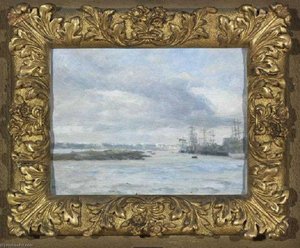
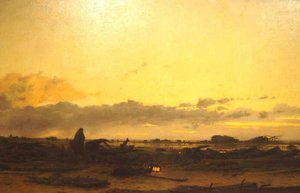
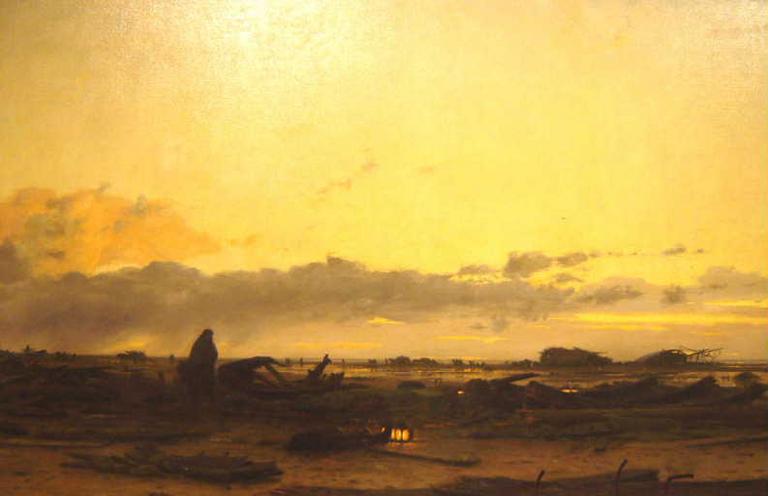
Les débris du trois mâts Majestas
 Read More
Hand Made Oil Reproduction
Hand-painted oil on canvas in your size and frame, made to order by our artists. ( Buy Print Buy Image)




































Pick from our preset sizes that match the artwork's original proportions.

You may enter your own dimensions to fit a specific frame or space. If your selected size does not match the original image's proportions, we will either crop the artwork or extend the painting with additional hand-painted elements. A digital mockup will be sent for your approval before production begins.
Please note that the on-screen preview does not reflect the actual cropping or extension. Only the mockup will accurately show the final composition.
While custom sizes are available, we recommend selecting a dimension from the predefined list to preserve the original proportions.
After order, ArtsDot.com team will email client for instructions and provide a mockup preview
Worldwide Delivery () in 3/4 weeks instead of standard 5 weeks. (16 August). No compromise on quality.

Free Worldwide Express Shipping

High-Quality Linen Canvas

Full Shipping Insurance

Customs Tax Refund Guarantee

True Color Matching Guarantee

60-Day Return Policy (Defects Only)

100% Money-Back Guarantee

Bulk Discount Offer
 Glass option is only available in size under 110 CM

Les débris du trois mâts Majestas
Reproduction Medium
Reproduction Size
-


Total Price
$ 263
Related Artworks
Artist Biography
Francis Tattegrain (1852 - 1915): The Painter of Wissant’s Coastal Soul
Francis Tattegrain (October 11, 1852, Péronne – January 1, 1915, Arras) was a French Naturalist painter who achieved renown for his depictions of the rugged beauty and daily life along the northern coast of France, particularly in Wissant and Authie Bay. His artistic legacy resides not merely in capturing picturesque landscapes but also in embodying the spirit of the École de Berck movement—a collective of artists dedicated to portraying the natural world with uncompromising realism and Impressionistic sensitivity.Early Life & Artistic Formation
Born into a family steeped in legal tradition, Tattegrain’s upbringing instilled in him an appreciation for precision and observation – qualities that would prove invaluable to his artistic pursuits. Encouraged by his elder brother Georges Tattegrain, who was himself a sculptor, he embarked on a formal artistic education at the Académie Julian in Paris in 1877, studying under Jules Lefebvre and Gustave Boulanger. These formative influences shaped his stylistic approach, grounding him in traditional academic principles while simultaneously exposing him to the burgeoning innovations of Impressionism.The École de Berck & Maritime Vision
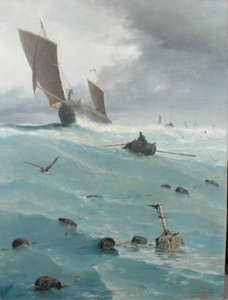
Tattegrain’s artistic breakthrough occurred during his time at Wissant Bay, where he established a studio amidst fellow painters—Henri and Marie Duhem—forming the influential École de Berck. This group prioritized direct observation of nature, employing loose brushstrokes and vibrant color palettes to convey atmospheric conditions and capturing fleeting moments of coastal life with remarkable immediacy. His paintings exemplify this ethos, portraying fishermen hauling nets, sailboats gliding across the waves, and the dramatic interplay between light and shadow on the shoreline—scenes that resonate with a profound connection to the environment.Notable Works & Artistic Style
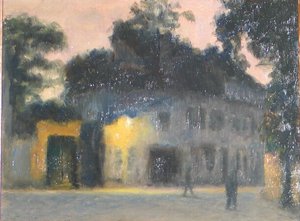
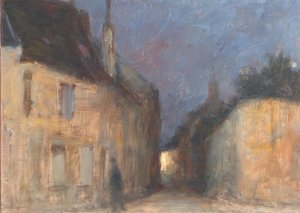
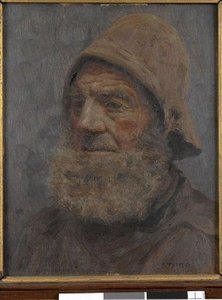
Among Tattegrain’s celebrated canvases are “Place du parvis Notre Dame à Senlis,” which showcases his masterful technique in capturing twilight urbanity with subtle tonal gradations, and “Groslu, Berckois,” an evocative portrait of an elderly man imbued with dignity and melancholy. His style is characterized by meticulous detail combined with Impressionistic brushwork—a harmonious blend that distinguishes him from more rigid academic painters. Tattegrain’s artistic vision prioritized conveying emotion and capturing the essence of his subjects rather than adhering to stylistic conventions.Legacy & Recognition
Francis Tattegrain received numerous commissions from public institutions, including works for the Exposition Universelle (1900), reflecting his standing within the Parisian art world. He was knighted in the Légion d’honneur in 1889—a testament to his contribution to French culture—and his paintings continue to be exhibited and studied today. The Musée d'Opale-Sud – Berck-sur-Mer organized an exhibition dedicated to Tattegrain’s oeuvre in 2007, showcasing the breadth of his artistic output and reaffirming his enduring influence on Impressionistic painting. Marguerite Tattegrain bequeathed more than a hundred paintings and several hundred drawings to the museum—a remarkable gesture honoring her grandfather's legacy.Further Exploration
For deeper insights into Tattegrain’s life and work, consult biographical accounts by Fernand Bertaux and Gaston-Louis and Patrick Wintrebert. Explore his artistic output through publications like “Francis Tattegrain peintre de la mer” and delve into scholarly analyses of his oeuvre. His paintings can be found in museums worldwide—a testament to the enduring power of his vision.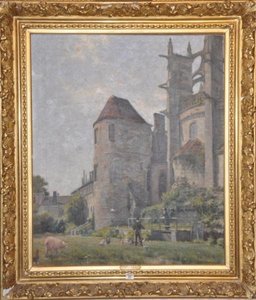
francis tattegrain
1852 - 1915
Quick Facts
- Artistic Movement Or Style: Naturalism
- Artists Or Movements Influenced By This Artist: ['École de Berck']
- Artists Who Influenced This Artist:
- Ludovic-Napoléon Lepic
- Georges Tattegrain
- Date Of Birth: October 11, 1852
- Date Of Death: January 1, 1915
- Full Name: Francis Tattegrain
- Nationality: French
- Notable Artworks:
- Groslu, Berckois
- Place du parvis Notre Dame à Senlis
- Place Of Birth: Péronne, France