

 Preview
 Send
Send Share
Share
 Details

 Download
 Similars
 X-Ray
X-Ray Diaporama
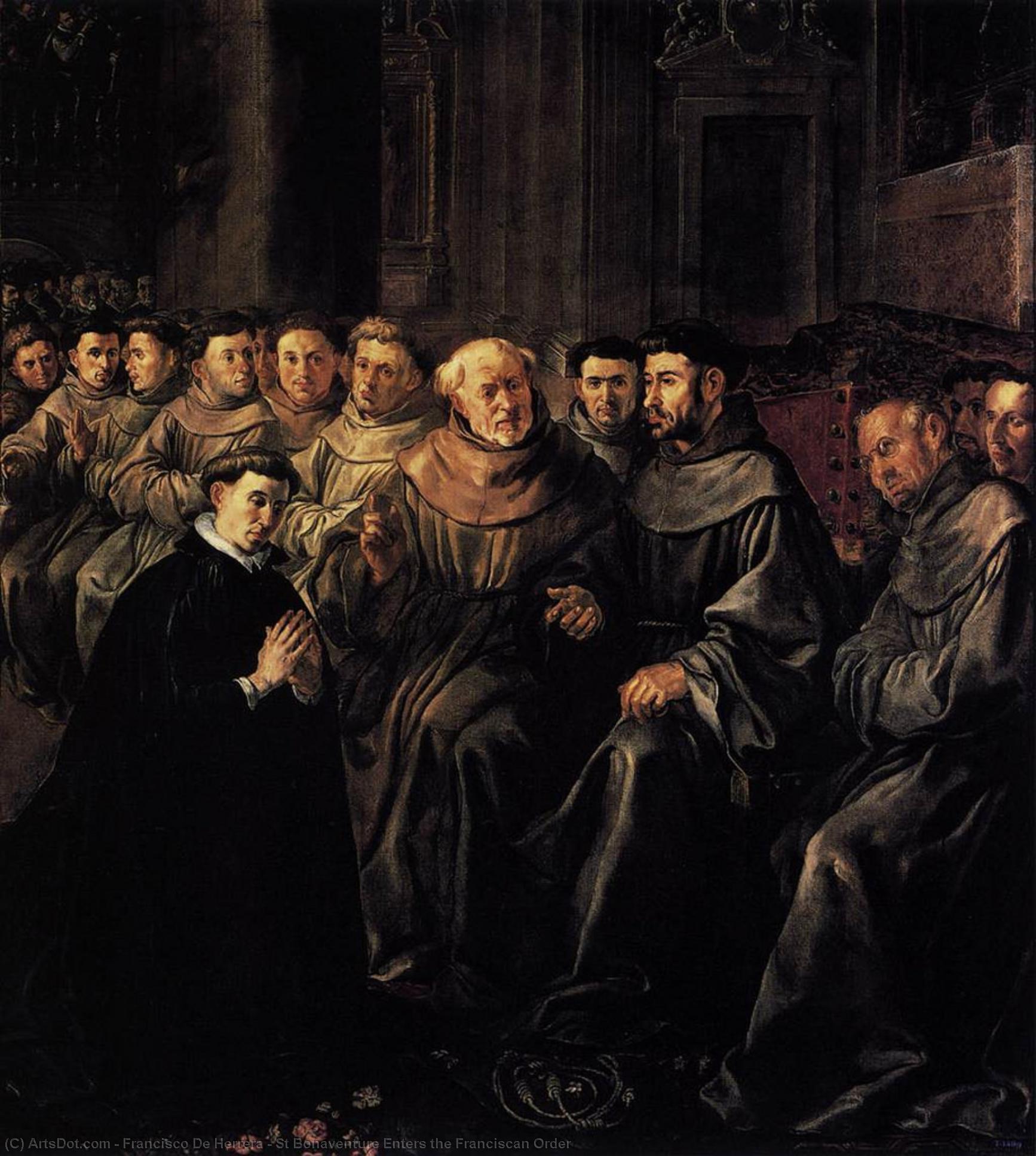
St Bonaventure Enters the Franciscan Order
 Acrylic On Canvas
- WallArt
- Baroque
 1628
1628 231.0 x 215.0 cm
 Museo del Prado
 Read More
Purchase a high-resolution, enhanced digital image, far superior to the online preview.
Each file is meticulously prepared by our in-house specialists using advanced tools and expert manual retouching. We ensure every image has exceptional clarity, precise color accuracy, and fine detail.
The final file is delivered via email within 72 hours, optimized for immediate use in professional, editorial, and print environments. This is the same quality trusted by top-tier design studios, publishers, and galleries.
Digital Image
Download a high-resolution file for personal display, printing, and creative projects. ( Buy Print Buy Hand Made Painting)
Included in Every Digital Image Order
Expert Digital Delivery, Guaranteed
When you choose ArtsDot.com, you're not just getting an image - you're receiving a professionally enhanced digital artwork, crafted with precision and backed by a satisfaction guarantee. Here's everything that comes with your order, automatically:

Fast Email Delivery
Your high-resolution digital image file will be emailed to you within 72 hours of ordering - ready for immediate use.

AI-Enhanced Digital File
Your artwork is professionally optimized using advanced AI tools and manual editing, ensuring maximum detail, clarity, and color accuracy.

Free Lifetime Re-Delivery
Accidentally deleted or lost your file? No worries - we'll resend it to you anytime, free of charge.

No Import Fees - Ever
Enjoy your artwork instantly with zero customs, duties, or delivery fees - digital downloads are always tax-free.

Color Accuracy Guarantee
We ensure your digital image reflects the original colors as closely as possible using professional tools and color management.

60-Day Satisfaction Guarantee
If you're not satisfied with your digital image, we'll revise it or refund 100% within 60 days - no questions asked.

100% Money-Back Guarantee
Not satisfied? Get a full refund within 60 days of receiving your digital file - no questions asked.

Bulk Order Discounts
Buy 3 images, save 10% - Buy 5, save 15% - Buy 10+, save 20%. Great for creative projects, galleries, and agencies.
Collectible Description
A Moment of Spiritual Awakening: Francisco de Herrera’s “St Bonaventure Enters the Franciscan Order”
Francisco de Herrera le Vieux's "St Bonaventure Enters the Franciscan Order," painted in 1628, isn’t merely a depiction of a religious scene; it’s a vibrant tableau of brotherhood, contemplation, and the nascent fervor of the Renaissance spirit. The painting captures a pivotal moment – Bonaventure’s decision to embrace the Franciscan order, an event brimming with symbolic weight and reflecting the era's renewed interest in both classical ideals and Christian faith. Herrera masterfully blends elements of realism with a heightened sense of drama, creating an image that resonates with profound emotional depth.
(Image source: Web Gallery of Art)
The Painter’s Technique and Renaissance Influence
Herrera, a key figure in the Seville school of painting, employed a technique characterized by bold brushstrokes, rich color palettes, and an innovative approach to perspective. He moved away from the prevailing Mannerist style, embracing a more direct and emotionally engaging manner. Notice how he utilizes light and shadow to sculpt the figures, creating a palpable sense of volume and depth within the relatively confined space. The composition is dynamic, with diagonal lines guiding the eye through the scene, drawing us into the heart of the gathering. The influence of Italian Renaissance masters like Raphael and Michelangelo is evident in Herrera’s careful attention to anatomical detail and his ability to convey movement and emotion.
Furthermore, Herrera's use of color—deep reds, blues, and browns—evokes a sense of solemnity and spiritual intensity. The muted tones contrast sharply with the brighter highlights on the faces and robes of the friars, emphasizing their devotion and commitment. The overall effect is one of controlled energy, reflecting the complex interplay between faith and reason that defined the intellectual landscape of the 17th century.
Symbolism and the Franciscan Ideal
Beyond its technical brilliance, “St Bonaventure Enters the Franciscan Order” is rich in symbolic meaning. The scene itself—a group of men gathered around a central figure—represents the core values of the Franciscan order: humility, poverty, and service to others. Bonaventure’s posture – kneeling before a seated elder – signifies his submission to the authority of the order and his willingness to embrace its ideals. The details surrounding him—the simple furnishings, the attentive faces—underscore the importance of community and shared faith.
The inclusion of various types of men – some in robes, others in more secular attire – suggests that the Franciscan order was open to all who sought spiritual enlightenment. Herrera’s depiction subtly challenges conventional notions of religious authority, portraying the path to salvation as accessible to individuals from diverse backgrounds.
A Window into 17th-Century Spain
To understand this painting fully, it's crucial to consider its historical context. Spain in the late 16th and early 17th centuries was a nation grappling with religious upheaval, political instability, and economic decline. The rise of the Reformation had profoundly impacted European society, leading to increased scrutiny of the Catholic Church and a renewed emphasis on personal piety. Herrera’s work reflects this atmosphere of uncertainty and spiritual searching, offering a glimpse into the complex dynamics of faith and culture in Renaissance Spain. It's a testament to the enduring power of religious imagery to capture the hopes, fears, and aspirations of an entire generation.
Related Artworks
Artist Biography
Carel Fabritius: A Master of Illusion and Early Tragedy
Carel Pietersz. Fabritius, a name tragically etched in the annals of art history, remains one of the most compelling figures of the Dutch Golden Age. Born in Middenbeemster, Netherlands, on February 27, 1622, his life was cut short at just 32 years old by the devastating explosion of a gunpowder magazine in Delft, leaving behind a legacy of only thirteen known paintings – a heartbreakingly small number for an artist whose unique vision and technical brilliance were undeniably profound. His work, characterized by startling realism, meticulous detail, and a masterful manipulation of perspective and light, has captivated viewers for centuries, prompting ongoing speculation about the potential greatness he might have achieved had fate been kinder.
Fabritius’s artistic journey began within a family steeped in creative tradition. His father, Pieter Carelsz Fabritius, was himself an amateur painter and schoolteacher, providing young Carel with his initial exposure to the world of art. This familial connection instilled in him a deep appreciation for visual representation, but it was undoubtedly Rembrandt van Rijn who served as his most formative influence. From approximately 1641 until around 1646, Fabritius spent several years working as an assistant in Rembrandt’s studio in Amsterdam, absorbing the master's techniques and developing his own distinctive style. This period of apprenticeship proved crucial, allowing him to hone his skills and experiment with various approaches before establishing his independent voice.
The Delft Period and Revolutionary Techniques
Around 1650, Fabritius relocated to Delft, a city renowned for its burgeoning art scene and skilled artisans. It was here that he began to develop the techniques that would define his artistic identity – most notably, what is now recognized as ‘trompe-l’oeil,’ or ‘fooling the eye.’ This technique involved creating an illusion of three-dimensionality on a two-dimensional surface, often by depicting objects with such meticulous detail and realistic lighting that they appeared to exist in the same space as the viewer. Fabritius's use of broad brushstrokes, combined with careful attention to texture and reflection, produced remarkably convincing effects. Consider *The Goldfinch*, perhaps his most famous work; the seemingly solid wall behind the bird appears to be crumbling, complete with falling plaster – a detail that adds an extraordinary sense of realism and immediacy.
Fabritius’s approach extended beyond mere optical illusion. He frequently incorporated elements of everyday life into his compositions, depicting ordinary objects—a lute, a game of backgammon, a still life of fruit—with remarkable precision and attention to detail. His paintings often featured figures engaged in mundane activities, yet he imbued these scenes with a sense of drama and psychological depth. This ability to transform the commonplace into something captivating is a hallmark of his genius.
Notable Works and Influences
Among Fabritius’s most celebrated works are *The Goldfinch* (1654), *The Sentry* (1654), and *Young Man Singing* (1622). *The Goldfinch*, with its seemingly solid wall and the vibrant plumage of the bird, exemplifies his mastery of trompe-l’oeil. *The Sentry*, a portrait of a young soldier, showcases his ability to capture human emotion and psychological complexity. *Young Man Singing*, painted early in his career, demonstrates his burgeoning talent for depicting figures with a sense of movement and vitality.
Fabritius's work was undoubtedly influenced by Rembrandt’s techniques, particularly his use of light and shadow (chiaroscuro). However, Fabritius developed his own unique style, characterized by a greater emphasis on realism and detail. He also drew inspiration from the works of other Dutch masters, such as Frans Hals and Pieter Lastman, incorporating elements of their styles into his own compositions.
A Tragic Legacy and Enduring Significance
The untimely death of Carel Fabritius in 1654, along with the destruction of much of his work during the Delft explosion, represents one of the greatest tragedies in art history. It is impossible to know for certain what heights he might have reached had he lived longer. Nevertheless, the thirteen paintings that survive offer a tantalizing glimpse into the extraordinary talent of this remarkable artist. His innovative techniques, meticulous attention to detail, and profound understanding of human psychology continue to inspire artists and captivate viewers today. Fabritius’s legacy endures not only through his surviving works but also through the ongoing fascination with his life and art – a testament to the enduring power of a brief but brilliant career cut tragically short.
francisco de herrera
1622 - 1685 , France
Quick Facts
- Artistic Movement Or Style: Delft School, Dutch Golden Age
- Artists Or Movements Influenced By This Artist: ['Rembrandt']
- Artists Who Influenced This Artist: ['Rembrandt van Rijn']
- Date Of Birth: 27 Feb 1622
- Date Of Death: 12 Oct 1654
- Full Name: Carel Pietersz Fabritius
- Nationality: Dutch
- Notable Artworks:
- The Goldfinch
- The Sentry
- Young Lovers
- Place Of Birth: Middenbeemster, Netherlands

