 Preview
 Send
Send Share
Share
 Details

 Download
 Similars
 X-Ray
X-Ray Diaporama
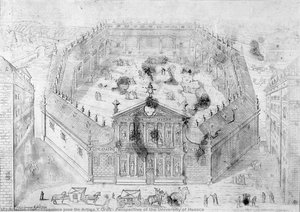
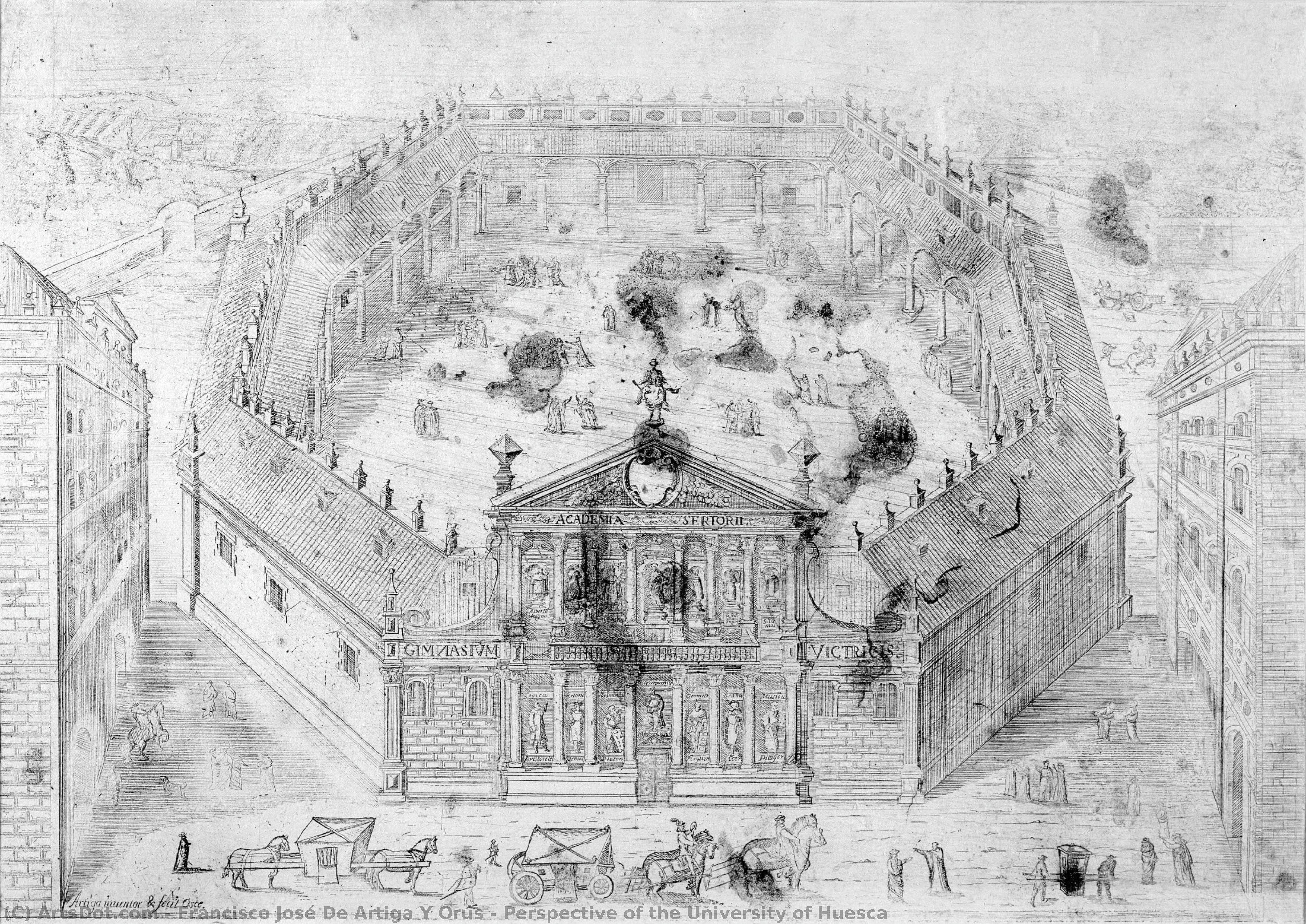
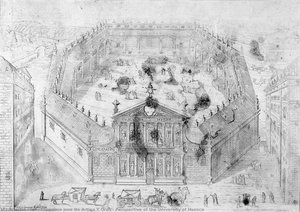
Perspective of the University of Huesca

 Read More
Giclée / Art Print
Museum-quality giclée or canvas print with fast production and flexible finish options. ( Buy Hand Made Painting Buy Image)




































Pick from our preset sizes that match the artwork's original proportions.

You may enter your own dimensions to fit a specific frame or space. If your selected size does not match the original image's proportions, we will either crop the artwork or extend the image with a mirrored or solid-fill edge. A digital mockup will be sent for your approval before production begins.
Please note that the on-screen preview does not reflect the actual cropping or extension. Only the mockup will accurately show the final composition.
While custom sizes are available, we recommend selecting a dimension from the predefined list to preserve the original proportions.
Worldwide Delivery () in 2 weeks instead of standard 4/5 weeks. (2 September)

Free Worldwide Express Shipping

High-Quality Linen Canvas

Full Shipping Insurance

Customs Tax Refund Guarantee

True Color Matching Guarantee

60-Day Return Policy (Defects Only)

100% Money-Back Guarantee

Bulk Discount Offer
 Glass option is only available in size under 110 CM

Perspective of the University of Huesca
Giclée / Art Print
Reproduction Size
-


Total Price
$ 63
Related Artworks






Artist Biography
The Renaissance Polymath: The Life and Legacy of Francisco José de Artiga y Orús
In the vibrant intellectual landscape of late seventeenth-century Spain, few figures embodied the spirit of the humanist scholar as completely as Francisco José de Artiga y Orús. Born in Huesca around 1645, Artiga was far more than a mere practitioner of the arts; he was a true polymath whose curiosity spanned the measurable precision of mathematics and the celestial mysteries of astronomy to the structural grandeur of architecture and the lyrical beauty of literature. To study his life is to witness the convergence of science and soul, a period where the rigorous logic of the burgeoning scientific revolution met the dramatic, emotive depth of the Spanish Baroque.
Artiga’s intellectual journey was deeply rooted in the academic soil of the Universidad de Huesca. It was here that his formidable mind was forged, excelling as a professor of mathematics—a discipline that would forever inform his aesthetic sensibilities. This mathematical foundation provided him with an unparalleled mastery over perspective and proportion, allowing him to approach the canvas and the drafting table with a unique structural clarity. His work was never merely decorative; it was an exercise in spatial truth, where every line and shadow served a greater geometric harmony.
A Tapestry of Disciplines: Painting, Architecture, and Beyond
The artistic output of Artiga was as diverse as his intellect. As a painter, he possessed the rare ability to navigate between the sweeping grandeur of landscapes and the intimate, spiritual intensity of religious subjects. His landscapes often captured the atmospheric essence of the Spanish countryside, utilizing masterful brushstrokes to create a sense of profound depth and light. When turning his gaze toward the divine, his depictions of Sibyls, Annunciation, and the Conception revealed a sensitive touch, infusing classical compositions with the dynamic energy characteristic of the Baroque era.
However, it is perhaps in the realm of stone and structure that Artiga’s most enduring physical legacy resides. His architectural contributions, most notably his ambitious redesign of the façade of the Universidad de Huesca, represent a pivotal moment in regional history. By moving away from the prevailing Gothic traditions toward a more classical, Renaissance-inspired aesthetic, he introduced an innovative spirit to the city's skyline. This project, which featured an octagonal design and a central courtyard with Tuscan columns, served as a precursor to much of the significant architectural evolution that would follow in Spain.
Beyond the visual arts, Artiga was a prolific man of letters and a skilled engraver. His literary contributions were vast, including fifteen books that explored subjects ranging from grammar to the complexities of science. One notable achievement was his Epitome de la Elocuencia Española, a work of rhetorical verse that resonated deeply with the readers of his time. As an engraver, he translated his architectural visions into striking prints, ensuring that his designs could be studied and admired far beyond the borders of Aragon.
Historical Significance and the Spirit of Huesca
The historical significance of Francisco José de Artiga y Orús lies in his role as a bridge between eras. He stood at the crossroads of the Renaissance's humanism and the Baroque's theatricality, synthesizing these movements into a cohesive personal style. His life work serves as a testament to an age where the boundaries between different fields of study were fluid, and where an artist could find equal inspiration in a mathematical equation and a religious icon.
Today, we remember Artiga not just as a creator of beautiful objects, but as a foundational figure in the cultural identity of Huesca. His influence can be felt in the very stones of the university he helped transform and in the enduring legacy of Spanish scholarship. He remains a symbol of the Renaissance spirit—a reminder that true mastery is found when the precision of the mind meets the passion of the heart.
francisco josé de artiga y orús
1645 - 1711 , Spain
Quick Facts
- Artistic Movement Or Style: Renaissance Art Spain
- Artists Or Movements Influenced By This Artist: ['El Greco']
- Artists Who Influenced This Artist: ['Vincencio Juan de Lastanosa']
- Date Of Birth: 1645
- Full Name: Francisco José de Artiga y Orús
- Nationality: Spanish
- Notable Artworks:
- Sibyls
- Conceptions
- Perspective views
- Place Of Birth: Huesca, Spain