

 Preview
 Send
Send Share
Share
 Details

 Download
 Similars
 X-Ray
X-Ray Diaporama
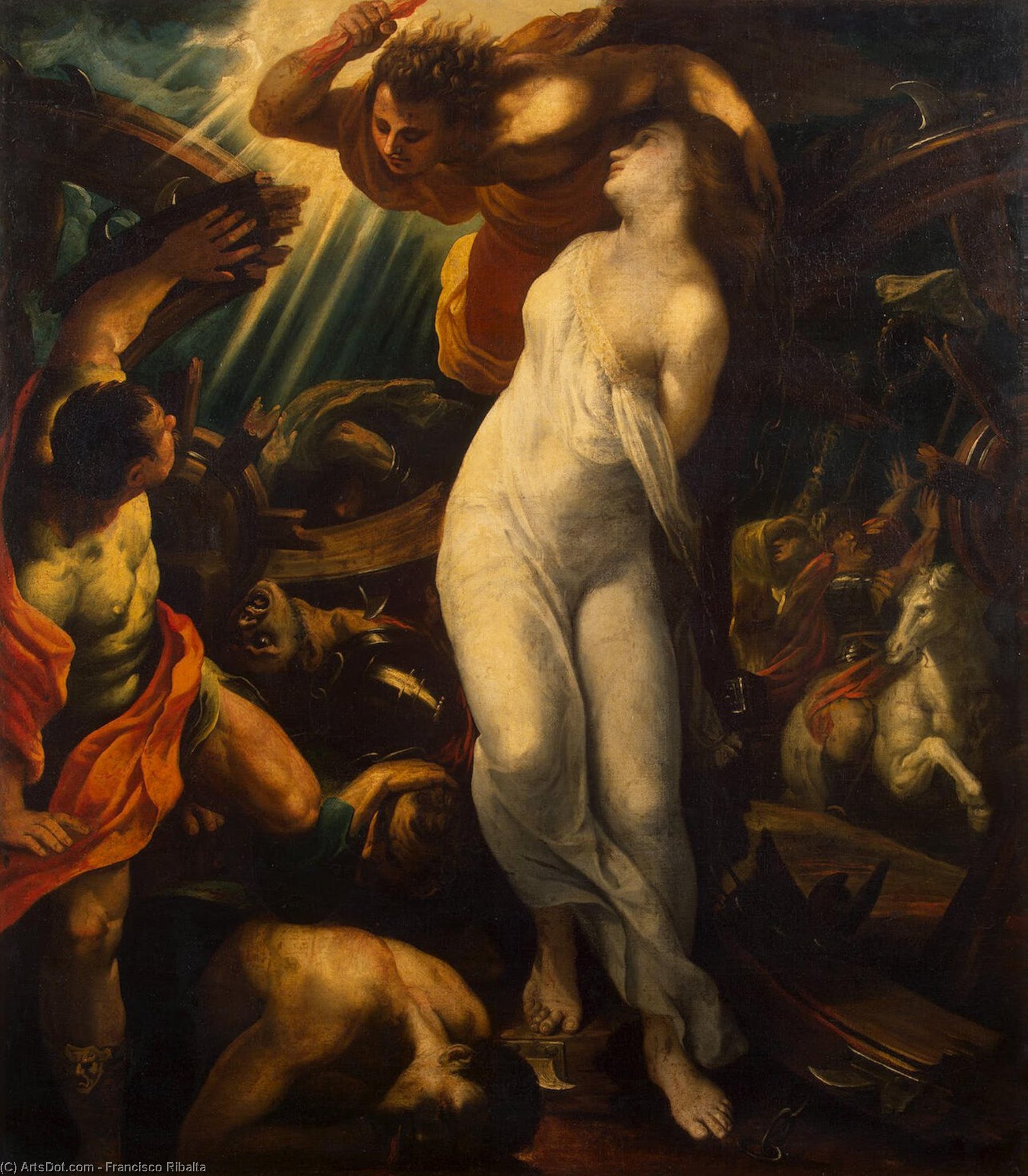
Martyrdom of St Catherine
 Oil On Panel
- Spanish Baroque
 1600
1600 123.0 x 108.0 cm
 Hermitage Museum
 Read More
Purchase a high-resolution, enhanced digital image, far superior to the online preview.
Each file is meticulously prepared by our in-house specialists using advanced tools and expert manual retouching. We ensure every image has exceptional clarity, precise color accuracy, and fine detail.
The final file is delivered via email within 72 hours, optimized for immediate use in professional, editorial, and print environments. This is the same quality trusted by top-tier design studios, publishers, and galleries.
Digital Image
Download a high-resolution file for personal display, printing, and creative projects. ( Buy Print Buy Hand Made Painting)
Included in Every Digital Image Order
Expert Digital Delivery, Guaranteed
When you choose ArtsDot.com, you're not just getting an image - you're receiving a professionally enhanced digital artwork, crafted with precision and backed by a satisfaction guarantee. Here's everything that comes with your order, automatically:

Fast Email Delivery
Your high-resolution digital image file will be emailed to you within 72 hours of ordering - ready for immediate use.

AI-Enhanced Digital File
Your artwork is professionally optimized using advanced AI tools and manual editing, ensuring maximum detail, clarity, and color accuracy.

Free Lifetime Re-Delivery
Accidentally deleted or lost your file? No worries - we'll resend it to you anytime, free of charge.

No Import Fees - Ever
Enjoy your artwork instantly with zero customs, duties, or delivery fees - digital downloads are always tax-free.

Color Accuracy Guarantee
We ensure your digital image reflects the original colors as closely as possible using professional tools and color management.

60-Day Satisfaction Guarantee
If you're not satisfied with your digital image, we'll revise it or refund 100% within 60 days - no questions asked.

100% Money-Back Guarantee
Not satisfied? Get a full refund within 60 days of receiving your digital file - no questions asked.

Bulk Order Discounts
Buy 3 images, save 10% - Buy 5, save 15% - Buy 10+, save 20%. Great for creative projects, galleries, and agencies.
Collectible Description
A Drama of Faith and Light: Unveiling Ribalta’s ‘Martyrdom of St Catherine’
Francisco Ribalta's “Martyrdom of St Catherine,” painted around 1605, is not merely a depiction of religious suffering; it’s a masterclass in Baroque drama, a visceral experience rendered on panel. The painting immediately commands attention with its stark contrasts – the deep shadows enveloping the central figure and her companions, punctuated by shafts of brilliant light that illuminate key moments of anguish and sacrifice. This masterful use of tenebrism, inherited directly from Caravaggio but imbued with Ribalta’s distinctly Spanish sensibility, elevates the scene beyond a simple narrative to a profound meditation on faith, martyrdom, and the enduring power of spiritual conviction.
The composition itself is meticulously structured. Catherine, clad in flowing robes, is positioned centrally, her posture conveying both vulnerability and unwavering resolve. The swordsmen poised to execute her are rendered with unsettling realism – their faces obscured, their movements swift and decisive. Around her, a small group of onlookers—some weeping, others offering silent support—adds layers of complexity to the scene, suggesting the communal weight of witnessing such an act of devotion. Ribalta doesn’t shy away from portraying the brutality of the event; the sword poised to strike is undeniably menacing, yet it's balanced by the serene expression on Catherine’s face, hinting at a deeper acceptance and spiritual fortitude.
The Shadowed Soul of Spanish Baroque
Francisco Ribalta (1565 – 1628) stands as a pivotal figure in the artistic landscape of 17th-century Spain. Born in Lleida, Catalonia, he emerged during a period of intense religious fervor and artistic innovation. While biographical details remain somewhat elusive, his legacy endures through his evocative paintings and undeniable influence on subsequent Baroque artists like Zurbarán, Velázquez, and Murillo. Ribalta’s work is deeply rooted in the Spanish tradition of religious painting, yet he possessed a unique ability to infuse his scenes with emotional depth and dramatic intensity – qualities that firmly establish him as one of the foremost practitioners of tenebrism within Spain.
His early training likely involved exposure to the artistic traditions of Northern Spain, absorbing the humanist ideals prevalent during his time. However, Ribalta’s true genius lay in his adoption and adaptation of Caravaggio's revolutionary technique. He didn’t simply mimic it; he transformed it into a distinctly Spanish style—characterized by its heightened emotionalism, dramatic lighting, and meticulous attention to detail. The “Martyrdom of St Catherine” exemplifies this perfectly, showcasing Ribalta’s ability to harness the power of light and shadow to create a truly unforgettable image.
Symbolism and Spiritual Resonance
Beyond its immediate depiction of martyrdom, the painting is rich in symbolic meaning. Catherine herself represents unwavering faith and sacrifice—a potent symbol for Christians throughout history. The surrounding figures embody various aspects of human response to suffering: grief, compassion, and silent contemplation. The animals present – a horse and a bird – are often interpreted as symbols of innocence and divine protection, adding another layer of depth to the scene.
Furthermore, the painting’s setting—a stark, undefined space—contributes to its overall sense of drama and timelessness. It's not a specific location; it’s a stage for an eternal struggle between good and evil, faith and doubt. Ribalta masterfully uses this ambiguity to invite viewers into the scene, prompting them to contemplate their own relationship with faith and sacrifice.
A Legacy of Dramatic Light: Reproductions and Beyond
Reproductions of “The Martyrdom of St Catherine” offer a remarkable opportunity to experience the power and beauty of Ribalta’s vision. Whether displayed in a grand salon or a smaller study, this painting continues to captivate viewers with its dramatic lighting, emotional intensity, and profound spiritual resonance. ArtsDot offers high-quality reproductions that faithfully capture the nuances of the original—allowing art lovers, collectors, and interior designers alike to bring this masterpiece into their homes and spaces.
Related Artworks
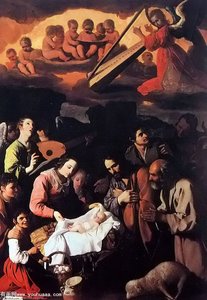
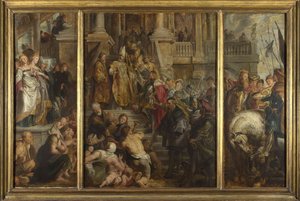
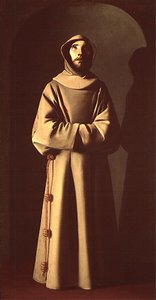
Artist Biography
The Shadowed Soul of Spanish Baroque
Francisco Ribalta (1565 – 1628) stands as a pivotal figure in the artistic landscape of 17th-century Spain, recognized primarily for his mastery of tenebrism—a dramatic technique that prioritized stark contrasts between light and darkness to heighten emotional impact. Born in Lleida, Catalonia, Ribalta’s formative years were steeped in the artistic traditions of Northern Spain. While precise information regarding his formal training remains somewhat elusive, he undoubtedly absorbed the humanist ideals prevalent during his era. He honed his skills under the tutelage of José Luis Fiol Valero, a respected watercolorist who fostered Ribalta’s appreciation for serene landscapes and meticulous observation, a sensibility that would eventually permeate his entire oeuvre.
The essence of Ribalta’s genius lies in his ability to translate spiritual fervor into visual reality. His artistic breakthrough occurred during his period in Madrid, where he embraced the tenebrist style with profound fervor. Unlike many contemporaries who sought to emulate the flamboyant theatricality found in some Italian works, Ribalta prioritized subtlety and psychological depth. His canvases are characterized by pools of impenetrable darkness punctuated by sudden, radiant shafts of light. This deliberate strategy was designed to draw the viewer’s gaze toward key elements within a scene, evoking a visceral response that aligned perfectly with the intense religious devotion of the Spanish Counter-Reformation.
Technique and the Mastery of Light
Ribalta’s approach to illumination was revolutionary for his time. By eschewing opulent grandeur in favor of austere compositions, he created a space for profound spiritual contemplation. His work often features bodegones—still life paintings that possess a quiet, monumental dignity—alongside large-scale religious iconographies. The interplay of light and shadow in his work does more than just define form; it creates a narrative tension that breathes life into the subjects. Through the use of deep shadows, he was able to isolate figures, stripping away unnecessary distractions to focus on the raw, human emotion of saints, martyrs, and everyday objects alike.
The technical evolution of his style can be seen in how he transitioned from the more meticulous, observational qualities learned early in life toward a much more dramatic, chiaroscuro-heavy approach. This development allowed him to capture the textures of fabric, the weathered skin of elderly figures, and the cold stillness of inanimate objects with an almost tactile realism. His ability to manipulate light served as a bridge between the late Renaissance traditions and the burgeoning Baroque movement.
Legacy and Historical Significance
The historical significance of Francisco Ribalta cannot be overstated, as his influence rippled through the generations of Spanish masters that followed him. He acted as a vital precursor to the giants of the Spanish Golden Age. His stylistic innovations provided the foundation for several legendary artists, including:
- Francisco Velázquez: Who would further refine the use of light and atmosphere in the royal courts.
- Bartolomé Esteban Murillo: Who inherited a tradition of emotional depth and soft luminosity.
- Francisco de Zurbarán: Whose monastic, tenebrist compositions owe a profound debt to Ribalta’s austere mastery.
Ultimately, Ribalta remains a master of the shadows, an artist who understood that the most profound truths are often found where the light meets the dark. His legacy endures not just in the museums that house his works, but in the very DNA of Spanish Baroque art, marking him as one of the foremost practitioners of a revolutionary style that changed the course of art history.
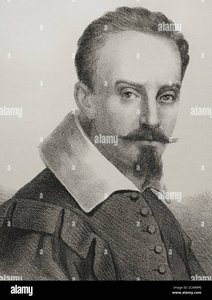
Francisco Ribalta
1565 - 1628 , Spain
Quick Facts
- Artistic Movement Or Style: Tenebrism
- Artists Or Movements Influenced By This Artist:
- Zurbarán
- Velázquez
- Murillo
- Artists Who Influenced This Artist: ['Caravaggio']
- Date Of Birth: 1565 Lleida Spain
- Date Of Death: 1628
- Full Name: Francisco Ribalta
- Nationality: Spanish
- Notable Artworks:
- Christ Embracing St Bernard
- The Deposition
- St Francis Comforted by an Angel
- Place Of Birth: Lleida Spain

