 Preview
 Send
Send Share
Share
 Details

 Download
 Similars
 X-Ray
X-Ray Diaporama
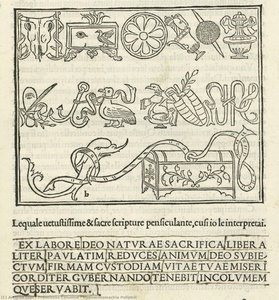
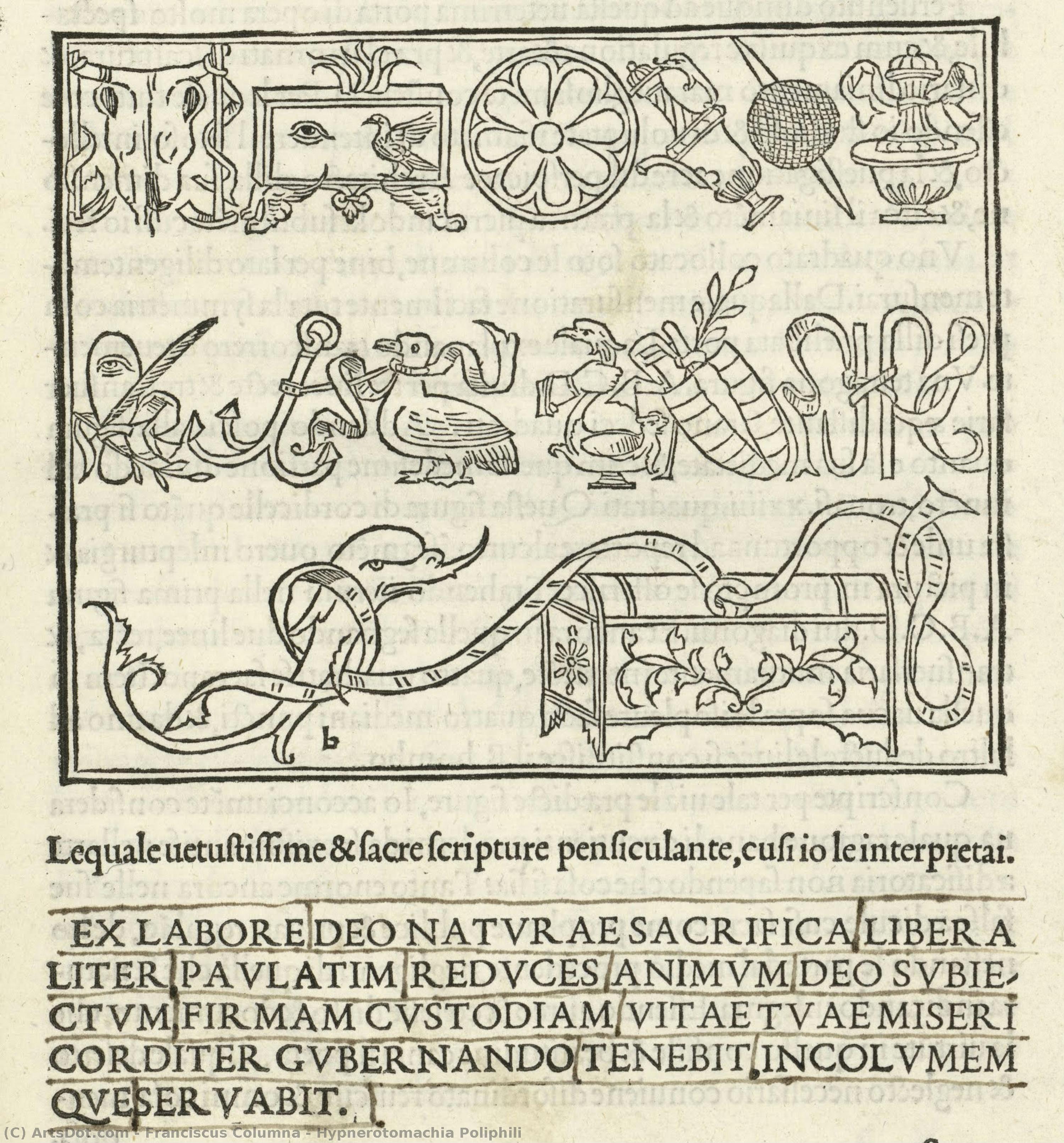
Hypnerotomachia Poliphili

 Read More
Hand Made Oil Reproduction
Hand-painted oil on canvas in your size and frame, made to order by our artists. ( Buy Print Buy Image)




































Pick from our preset sizes that match the artwork's original proportions.

You may enter your own dimensions to fit a specific frame or space. If your selected size does not match the original image's proportions, we will either crop the artwork or extend the painting with additional hand-painted elements. A digital mockup will be sent for your approval before production begins.
Please note that the on-screen preview does not reflect the actual cropping or extension. Only the mockup will accurately show the final composition.
While custom sizes are available, we recommend selecting a dimension from the predefined list to preserve the original proportions.
After order, ArtsDot.com team will email client for instructions and provide a mockup preview
Worldwide Delivery () in 3/4 weeks instead of standard 5 weeks. (22 August). No compromise on quality.

Free Worldwide Express Shipping

High-Quality Linen Canvas

Full Shipping Insurance

Customs Tax Refund Guarantee

True Color Matching Guarantee

60-Day Return Policy (Defects Only)

100% Money-Back Guarantee

Bulk Discount Offer
 Glass option is only available in size under 110 CM

Hypnerotomachia Poliphili
Reproduction Medium
Reproduction Size
-


Total Price
$ 263
Related Artworks









Artist Biography
Jan van Eyck: The Pioneer of Northern Renaissance Vision
The name Jan van Eyck resonates through the annals of art history, not merely as a painter but as an innovator—a true architect of visual perception. Born around 1380 in Maaseik, a small town in present-day Belgium, his life unfolded against the backdrop of burgeoning artistic and political change in the Low Countries. While much about his early years remains shrouded in mystery, what is undeniable is that van Eyck’s impact on the development of Western art was profound, fundamentally altering how artists approached light, texture, and the very act of representation. He wasn't simply a skilled craftsman; he was a revolutionary who laid the groundwork for generations of painters to come.
Van Eyck’s early career is largely pieced together from circumstantial evidence and the accounts of his contemporaries. He began his apprenticeship in Cologne, likely under the tutelage of Stefan Lochner, though this remains unconfirmed. Around 1422, he secured a position as court painter to John III, Duke of Bavaria, serving in The Hague. This period is remarkably obscure, with few surviving works directly attributable to him. However, speculation points to his involvement in decorating the Duke’s palace, and possibly even contributing to the intricate miniatures within the Turin-Milan Hours – a testament to his burgeoning skill and experimental approach to pigment mixing.
His true ascent began when he entered the service of Philip the Good, Duke of Burgundy, in 1429. This marked a turning point, providing him with both patronage and access to a vibrant artistic environment. Bruges, then a major center for trade and art, became his base of operations, where he would spend the remainder of his life. It was during this period that van Eyck’s genius truly blossomed, producing some of the most iconic works in Western art – including the breathtaking Ghent Altarpiece, a monumental achievement showcasing his mastery of oil paint and meticulous detail; the intimate Arnolfini Portrait, a captivating study of marital fidelity and domesticity; and the serene Madonna of Chancellor Rolin. These paintings are not merely representations of religious figures; they’re windows into a world imbued with an almost palpable sense of realism and psychological depth.
The Revolutionary Technique: Oil Paint and Beyond
Van Eyck's most enduring legacy lies in his pioneering use of oil paint. While the exact origins of this technique are debated, it was undoubtedly van Eyck who perfected and popularized its application. Prior to his innovations, artists primarily relied on tempera – a fast-drying medium that limited detail and vibrancy. Oil paint, with its slow drying time, allowed for unprecedented levels of layering, blending, and subtle gradations of color. This enabled him to achieve an astonishing level of realism, capturing the sheen of fabrics, the texture of skin, and the play of light on surfaces with unparalleled accuracy.
However, van Eyck’s innovations extended beyond simply using oil paint. He meticulously observed nature, studying how light interacted with objects and translating these observations onto canvas. His use of *sfumato* – a subtle blurring of edges to create an atmospheric effect – was remarkably advanced for his time. Furthermore, he employed a technique known as *glazing*, applying thin layers of translucent paint over dry underlayers to build up color and depth. This created a luminous quality that seemed to emanate from within the paintings themselves.
It’s important to note that van Eyck wasn't entirely alone in experimenting with oil paint. Artists like Robert Campin had also been exploring its potential, but van Eyck elevated the medium to an art form, demonstrating its extraordinary capabilities and establishing it as a cornerstone of Northern Renaissance painting.
Symbolism and Narrative: A World of Detail
Van Eyck’s paintings are not simply beautiful; they're rich in symbolism and narrative complexity. Each element – from the clothing worn by the figures to the objects depicted – carries a specific meaning, inviting viewers to engage with the artwork on multiple levels. The Arnolfini Portrait, for example, is laden with symbolic gestures: the dog represents fidelity, the discarded cloth symbolizes fertility, and the single candle signifies the presence of God.
The Ghent Altarpiece, even more complex, unfolds in a series of panels that depict scenes from the life of Christ and the Virgin Mary. The intricate details – the meticulously rendered fabrics, the expressions on the faces, the architectural settings – all contribute to a sense of immersive realism. Van Eyck’s ability to capture not just the outward appearance but also the inner lives of his subjects was truly remarkable.
His meticulous attention to detail extended beyond mere representation; it served to elevate the paintings into powerful devotional objects, designed to inspire contemplation and foster a deeper connection with the divine.
Legacy and Influence
Jan van Eyck’s influence on subsequent generations of artists is immeasurable. His innovations in oil painting revolutionized the art world, paving the way for the High Renaissance masters like Leonardo da Vinci and Michelangelo. His meticulous observation of nature, his mastery of detail, and his ability to imbue his paintings with psychological depth set a new standard for realism and artistic expression.
Despite the relative scarcity of surviving works attributed solely to him, van Eyck’s impact is undeniable. He remains one of the most important figures in the history of Western art – a pioneer who transformed the way we see and understand the world through his paintings. His legacy continues to inspire artists today, reminding us of the power of observation, technique, and artistic vision.
franciscus columna
1433 - 1527 , Italy
Quick Facts
- Artistic Movement Or Style: Early Netherlandish painting
- Artists Or Movements Influenced By This Artist:
- Fra Angelico
- Early Renaissance
- Artists Who Influenced This Artist:
- Hugo van der Goes
- Roger van der Weyden
- Date Of Birth: c. 1380-1441
- Date Of Death: 9 July 1441
- Full Name: Jan van Eyck
- Nationality: Flemish
- Notable Artworks:
- Ghent Altarpiece
- Arnolfini Portrait
- Virgin and Child
- The Ghent Altarpiece
- Place Of Birth: Maaseik, Belgium