 Preview
 Send
Send Share
Share
 Details

 Download
 Similars
 X-Ray
X-Ray Diaporama
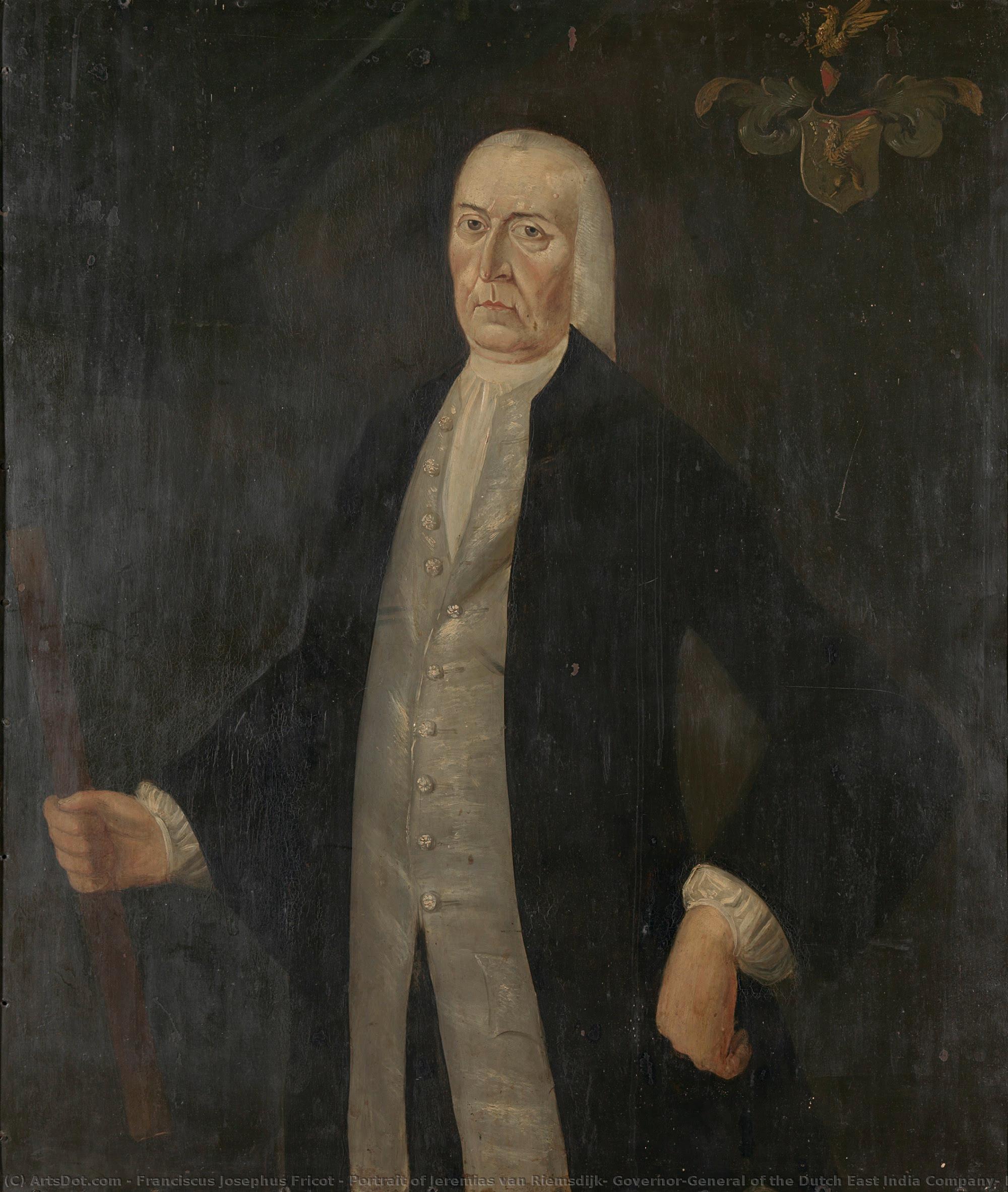
Portrait of Jeremias van Riemsdijk, Governor-General of the Dutch East India Company, Franciscus Josephus Fricot (attributed to), 1775 - 1777
 1777
1777 110.0 x 93.0 cm
 Read More
Purchase a high-resolution, enhanced digital image, far superior to the online preview.
Each file is meticulously prepared by our in-house specialists using advanced tools and expert manual retouching. We ensure every image has exceptional clarity, precise color accuracy, and fine detail.
The final file is delivered via email within 72 hours, optimized for immediate use in professional, editorial, and print environments. This is the same quality trusted by top-tier design studios, publishers, and galleries.
Digital Image
Download a high-resolution file for personal display, printing, and creative projects. ( Buy Print Buy Hand Made Painting)
Included in Every Digital Image Order
Expert Digital Delivery, Guaranteed
When you choose ArtsDot.com, you're not just getting an image - you're receiving a professionally enhanced digital artwork, crafted with precision and backed by a satisfaction guarantee. Here's everything that comes with your order, automatically:

Fast Email Delivery
Your high-resolution digital image file will be emailed to you within 72 hours of ordering - ready for immediate use.

AI-Enhanced Digital File
Your artwork is professionally optimized using advanced AI tools and manual editing, ensuring maximum detail, clarity, and color accuracy.

Free Lifetime Re-Delivery
Accidentally deleted or lost your file? No worries - we'll resend it to you anytime, free of charge.

No Import Fees - Ever
Enjoy your artwork instantly with zero customs, duties, or delivery fees - digital downloads are always tax-free.

Color Accuracy Guarantee
We ensure your digital image reflects the original colors as closely as possible using professional tools and color management.

60-Day Satisfaction Guarantee
If you're not satisfied with your digital image, we'll revise it or refund 100% within 60 days - no questions asked.

100% Money-Back Guarantee
Not satisfied? Get a full refund within 60 days of receiving your digital file - no questions asked.

Bulk Order Discounts
Buy 3 images, save 10% - Buy 5, save 15% - Buy 10+, save 20%. Great for creative projects, galleries, and agencies.
Related Artworks








Artist Biography
The Enigmatic Brush of Franciscus Josephus Fricot
Franciscus Josephus Fricot remains a figure shrouded in artistic mystery, a painter whose work whispers rather than shouts from the canvases. Unlike many artists whose lives are meticulously documented, Fricot’s biography is sparsely populated with concrete details, adding to the allure and intrigue surrounding his creations. What *is* known suggests a life dedicated entirely to the pursuit of capturing fleeting moments of beauty, often found in the quietude of domestic scenes and the subtle play of light across everyday objects. Born in an unspecified location – records are frustratingly incomplete – Fricot appears to have eschewed the bustling art circles of his time, preferring instead a solitary existence focused on honing his unique artistic vision. This deliberate withdrawal from public life has led some critics to speculate about a sensitive nature or perhaps a rejection of the commercial demands placed upon artists during his era. However, it is more likely that Fricot simply prioritized the act of painting itself, viewing recognition as secondary to the profound personal connection he forged with his subjects.A Style Rooted in Observation and Intimacy
Fricot’s artistic style defies easy categorization. While echoes of Dutch Golden Age masters – particularly Vermeer and Pieter de Hooch – can be detected in his meticulous attention to detail and masterful use of light, his work possesses a distinctly modern sensibility. He wasn't interested in grand historical narratives or dramatic allegories; instead, Fricot focused on the seemingly mundane: a woman reading by a window, a child playing with toys, a simple still life arrangement of fruit and flowers. These are not merely depictions of everyday life, however. Through his sensitive brushwork and carefully chosen color palettes, he elevates these scenes to something transcendent, imbuing them with a quiet dignity and emotional resonance. His paintings are characterized by an almost photographic realism, yet they never feel cold or detached. Rather, they convey a deep sense of intimacy, as if the viewer is being granted a privileged glimpse into a private world. The soft, diffused light that bathes his interiors creates a mood of peaceful contemplation, inviting viewers to slow down and appreciate the beauty in the ordinary.Influences and Artistic Development
Pinpointing specific influences on Fricot’s development is challenging due to the limited information available about his early life and training. However, scholars believe he likely studied the works of 17th-century Dutch genre painters firsthand, perhaps through engravings or by traveling to collections in neighboring countries. The influence of Vermeer is particularly evident in his masterful handling of light and shadow, as well as his ability to capture the subtle textures of various materials. Beyond the Dutch masters, it’s possible that Fricot was also inspired by the French *intimistes* – painters like Chardin who focused on domestic scenes and still life. Over time, his style evolved from a more traditional realism towards a softer, more atmospheric approach. He began to experiment with color palettes, incorporating subtle gradations of tone and using light not merely as a means of illumination but as an expressive element in its own right. This development suggests a growing interest in capturing the emotional atmosphere of a scene rather than simply reproducing its visual appearance.Major Themes and Recurring Motifs
Several recurring themes and motifs appear throughout Fricot’s oeuvre, offering insights into his artistic preoccupations. The interior space is central to his work, serving as a microcosm of human experience. Within these interiors, women are frequently depicted engaged in quiet activities – reading, sewing, writing letters – suggesting an interest in the inner lives of women and their roles within domestic society. Children also feature prominently in his paintings, often portrayed with a sense of innocence and vulnerability.- Still life arrangements of flowers, fruit, and everyday objects are another common motif.
- These still lifes are not merely decorative; they serve as meditations on mortality and the ephemeral nature of beauty.
- Light is perhaps the most important theme in Fricot’s work, representing both physical illumination and spiritual enlightenment.