

 Preview
 Send
Send Share
Share
 Details

 Download
 Similars
 X-Ray
X-Ray Diaporama
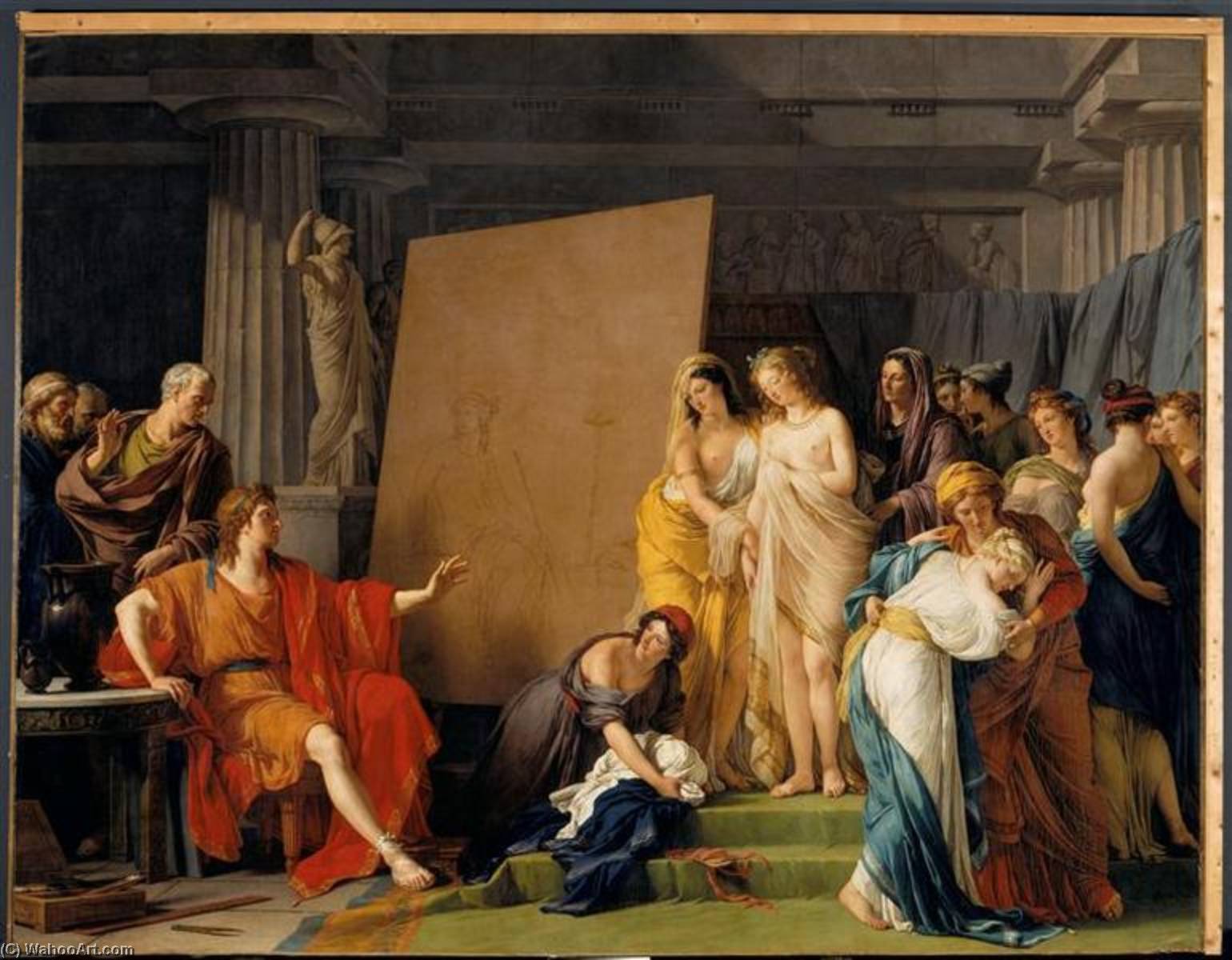
ZEUXIS CHOISISSANT POUR MODELES LES PLUS BELLES FILLES DE CROTONE


 Read More
Purchase a high-resolution, enhanced digital image, far superior to the online preview.
Each file is meticulously prepared by our in-house specialists using advanced tools and expert manual retouching. We ensure every image has exceptional clarity, precise color accuracy, and fine detail.
The final file is delivered via email within 72 hours, optimized for immediate use in professional, editorial, and print environments. This is the same quality trusted by top-tier design studios, publishers, and galleries.
Digital Image
Download a high-resolution file for personal display, printing, and creative projects. ( Buy Print Buy Hand Made Painting)
Included in Every Digital Image Order
Expert Digital Delivery, Guaranteed
When you choose ArtsDot.com, you're not just getting an image - you're receiving a professionally enhanced digital artwork, crafted with precision and backed by a satisfaction guarantee. Here's everything that comes with your order, automatically:

Fast Email Delivery
Your high-resolution digital image file will be emailed to you within 72 hours of ordering - ready for immediate use.

AI-Enhanced Digital File
Your artwork is professionally optimized using advanced AI tools and manual editing, ensuring maximum detail, clarity, and color accuracy.

Free Lifetime Re-Delivery
Accidentally deleted or lost your file? No worries - we'll resend it to you anytime, free of charge.

No Import Fees - Ever
Enjoy your artwork instantly with zero customs, duties, or delivery fees - digital downloads are always tax-free.

Color Accuracy Guarantee
We ensure your digital image reflects the original colors as closely as possible using professional tools and color management.

60-Day Satisfaction Guarantee
If you're not satisfied with your digital image, we'll revise it or refund 100% within 60 days - no questions asked.

100% Money-Back Guarantee
Not satisfied? Get a full refund within 60 days of receiving your digital file - no questions asked.

Bulk Order Discounts
Buy 3 images, save 10% - Buy 5, save 15% - Buy 10+, save 20%. Great for creative projects, galleries, and agencies.
Collectible Description
A Moment of Ideal Beauty: Zeuxis’s Selection in Crotone
François-André Vincent's "Zeuxis Choosing the Most Beautiful Women from Croton as His Models," painted in 1789, is more than just a historical depiction; it’s a profound meditation on beauty, artistic judgment, and the elusive nature of perfection. The canvas captures a pivotal scene from Pliny the Elder’s writings, where the renowned Greek painter Zeuxis, seeking to immortalize Helen of Troy, gathers young women from the city of Crotone – a region steeped in myth and considered the birthplace of beauty itself – to serve as his models. Vincent masterfully transports this ancient narrative into the refined world of Neoclassicism, imbuing it with an emotional resonance that transcends its historical roots.
The composition is meticulously balanced, drawing the eye towards the central figure of Zeuxis, seated in a dignified pose within a richly appointed interior. His gesture – a subtle inclination of his head and a discerning gaze – speaks volumes about his critical eye and the weight of his artistic responsibility. Around him stand several young women, each radiating an individual charm and possessing qualities that might appeal to the artist’s exacting standards. The architectural setting, reminiscent of Roman villas with elegant columns and statues in the background, establishes a sense of timelessness and reinforces the painting's connection to classical ideals. Vincent skillfully employs light and shadow to sculpt the figures, highlighting their forms and creating an atmosphere of quiet contemplation.
Neoclassical Precision and Painterly Detail
Vincent’s artistic approach is firmly rooted in the Neoclassical style that dominated French art during the late 18th century. This movement sought inspiration from the art and philosophy of ancient Greece and Rome, emphasizing clarity, order, and restraint. The painting showcases Vincent's mastery of technique – a hallmark of his training under Joseph-Marie Vien at the École Royale des Élèves Protégés. He demonstrates an exceptional ability to render fabric with delicate folds and textures, capturing the subtle nuances of skin tones and drapery.
The brushwork is remarkably controlled, reflecting Vincent’s commitment to academic precision. Yet, beneath this surface smoothness lies a remarkable sensitivity to color and form. He utilizes a restrained palette dominated by earthy tones – ochres, browns, and muted blues – creating a sense of harmony and stability. The subtle variations in hue and value contribute to the painting's overall depth and realism, while also reinforcing its classical aesthetic.
Symbolism and the Pursuit of Ideal Beauty
Beyond its historical subject matter, "Zeuxis Choosing the Most Beautiful Women from Croton as His Models" is rich in symbolic meaning. The act of selection itself represents a quest for an unattainable ideal – a reflection of humanity’s enduring fascination with beauty and the difficulty of capturing it on canvas. The women themselves embody different aspects of feminine allure, suggesting that beauty is not a singular quality but rather a complex combination of traits.
Furthermore, the painting raises questions about the role of the artist as judge and arbiter of taste. Zeuxis’s decision – to choose only one woman as his model for Helen – highlights the subjective nature of artistic judgment and the inherent limitations of human perception. It's a poignant reminder that beauty is often in the eye of the beholder, and that even the most skilled artist can never fully capture its essence.
A Timeless Masterpiece: Reproduction and Artistic Legacy
Vincent’s “Zeuxis Choosing the Most Beautiful Women from Croton as His Models” remains a captivating work of art, offering viewers a glimpse into the world of classical antiquity and the enduring power of beauty. Reproductions of this masterpiece provide an opportunity to appreciate Vincent's artistic skill and his profound understanding of human nature. Whether displayed in a grand salon or a private residence, this painting continues to inspire admiration for its elegance, grace, and timeless appeal.
Related Artworks

Artist Biography
The Neoclassical Vision of François-André Vincent
In the vibrant and turbulent landscape of late eighteenth-century France, few artists captured the transition from aristocratic elegance to revolutionary solemnity as masterfully as François-André Vincent. Born in Paris in 1746 into a lineage of artistic distinction—his father, François-Elie Vincent, was a renowned miniaturist—Vincent was destined for a life defined by the brush and the canvas. His early training under the esteemed Joseph-Marie Vien provided him with a rigorous foundation in the academic tradition, yet it was his innate ability to bridge the gap between the refined grace of the Rococo and the burgeoning discipline of Neoclassicism that would eventually secure his place in art history.
Vincent’s artistic soul was profoundly shaped by his transformative journey to Rome. Upon winning the prestigious Prix de Rome with his commanding work, Germanicus Calms Sedition, he gained unprecedented access to the timeless treasures of classical antiquity. Living and working within the historic Palazzo Mancini, Vincent immersed himself in the study of Raphael and the sculptural precision of ancient masters. This period was not merely an academic exercise but a spiritual awakening; it allowed him to infuse his compositions with a sense of monumental dignity and a harmonious balance that became his hallmark. While he drew deep inspiration from the classical past, he remained acutely aware of the living world around him, often blending historical grandeur with the subtle nuances of contemporary life.
A Master of Portraiture and Historical Narrative
The breadth of Vincent’s oeuvre is a testament to his versatility as a storyteller. He was equally adept at capturing the intimate psychological depth of an individual as he was at depicting the sweeping chaos of historical conflict. In his portraiture, one finds a remarkable ability to convey character through smooth brushstrokes and delicate tonal gradations. His portraits of contemporaries, including the legendary Jean-Honoré Fragonard, reflect a certain dynamism and elegance that suggest a deep connection to the stylistic fluidity of his era. These works serve as windows into the social fabric of pre-revolutionary France, capturing the poise and presence of the era's most notable figures.
However, it was in the realm of history painting where Vincent truly asserted his command over the Neoclassical idiom. His ability to translate complex historical narratives into visually arresting scenes allowed him to participate in the grandest dialogues of his time. A striking example is found in La Bataille des Pyramides, an impressive oil on canvas that commemorates Napoleon's decisive victory in 1798. In this work, Vincent moves away from static composition, instead utilizing loose brushstrokes and earthy tones to evoke the dust, movement, and atmospheric tension of a battlefield set against the backdrop of ancient Egyptian monuments. This capacity to blend the epic scale of history with an almost visceral sense of atmosphere distinguishes him from his more rigid contemporaries.
Legacy and Historical Significance
Throughout his career, Vincent occupied a unique position within the French art hierarchy. Often viewed as a sophisticated rival to Jacques-Louis David, he offered a stylistic alternative that was perhaps less dogmatic and more attuned to the subtle interplay of light and life. While David pushed toward a starker, more austere Neoclassicism, Vincent maintained a connection to the grace and fluidity inherited from his predecessors, creating a bridge between the old world and the new. His contributions to the institutionalization of art were equally significant, as he stood as a founding figure of the Académie des Beaux-Arts, helping to shape the pedagogical standards for generations of French painters.
The enduring legacy of François-André Vincent lies in his ability to harmonize contradictions: the ancient and the modern, the monumental and the intimate, the disciplined and the expressive. His work remains a vital touchstone for understanding the evolution of French art during one of its most transformative epochs. Through his meticulous technique and profound historical insight, Vincent did more than just record history; he breathed life into it, ensuring that the spirit of the Neoclassical era would continue to resonate long after the revolution had passed.
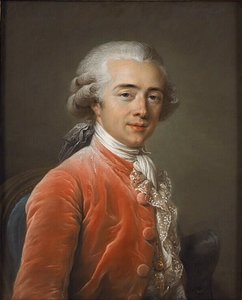
françois andré vincent
1746 - 1816 , France
Quick Facts
- Artistic Movement Or Style: Neoclassical
- Artists Or Movements Influenced By This Artist: ['Jacques-Louis David']
- Artists Who Influenced This Artist:
- Joseph-Marie Vien
- Jean-Honoré Fragonard
- Raphael
- Date Of Birth: December 30, 1746
- Date Of Death: August 4, 1816
- Full Name: François André Vincent
- Nationality: French
- Notable Artworks:
- Henri IV et Sully à Fontainebleau
- Portrait de Pierre Rousseau
- The Ploughing Lesson
- Place Of Birth: Paris, France

