 Preview
 Send
Send Share
Share
 Details

 Download
 Similars
 X-Ray
X-Ray Diaporama
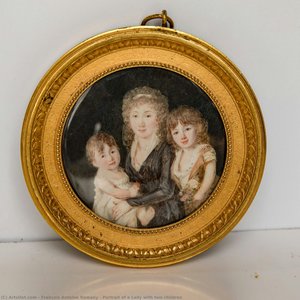
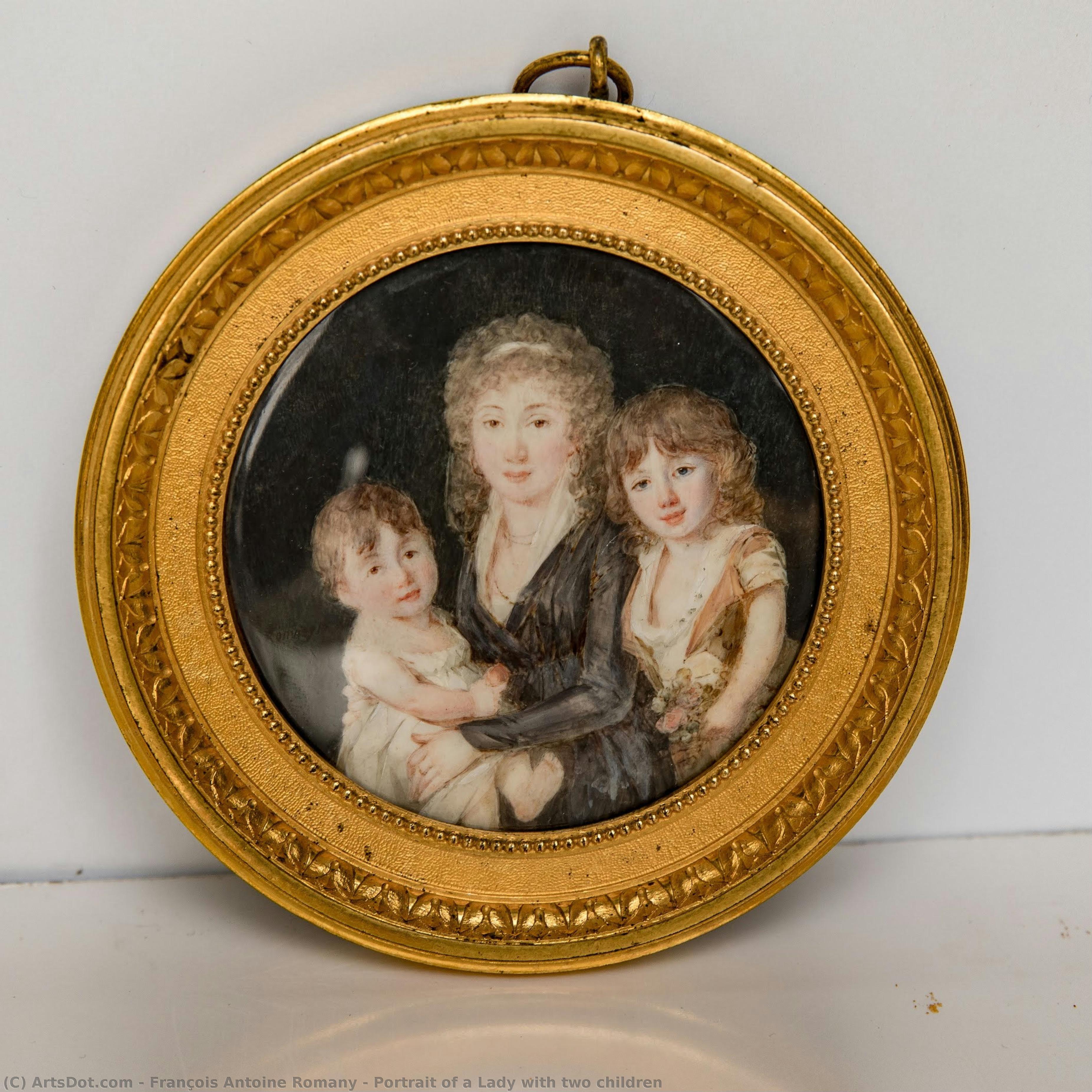
Portrait of a Lady with two children

 Read More
Giclée / Art Print
Museum-quality giclée or canvas print with fast production and flexible finish options. ( Buy Hand Made Painting Buy Image)




































Pick from our preset sizes that match the artwork's original proportions.

You may enter your own dimensions to fit a specific frame or space. If your selected size does not match the original image's proportions, we will either crop the artwork or extend the image with a mirrored or solid-fill edge. A digital mockup will be sent for your approval before production begins.
Please note that the on-screen preview does not reflect the actual cropping or extension. Only the mockup will accurately show the final composition.
While custom sizes are available, we recommend selecting a dimension from the predefined list to preserve the original proportions.
Worldwide Delivery () in 2 weeks instead of standard 4/5 weeks. (1 September)

Free Worldwide Express Shipping

High-Quality Linen Canvas

Full Shipping Insurance

Customs Tax Refund Guarantee

True Color Matching Guarantee

60-Day Return Policy (Defects Only)

100% Money-Back Guarantee

Bulk Discount Offer
 Glass option is only available in size under 110 CM

Portrait of a Lady with two children
Giclée / Art Print
Reproduction Size
-


Total Price
$ 63
Related Artworks









Artist Biography
John Trumbull: The Painter of the Revolution
Born in Lebanon, Connecticut, in 1756, John Trumbull’s life was inextricably linked to the tumultuous events of the American Revolutionary War and its immediate aftermath. His lineage – descended from early Puritan settlers and boasting prominent figures like his father, Jonathan Trumbull, Governor of Connecticut, and brothers Joseph and Jonathan who served as key military and political leaders – provided him with a unique vantage point within the burgeoning nation’s struggle for independence. However, it was not merely family connections that shaped his artistic destiny; a childhood accident resulting in partial blindness profoundly influenced his distinctive painting style, forcing him to develop an extraordinarily acute sense of observation and a bold, direct approach to composition.
Trumbull's early career began with formal training at Harvard College, where he honed his technical skills. Yet, it was his service as a soldier during the war that truly ignited his artistic passion. He wasn’t simply a witness to history; he actively participated in sketching crucial plans of fortifications and troop movements – invaluable intelligence for both American and British forces. This experience instilled within him a deep understanding of military strategy and a keen eye for detail, qualities which would later define his monumental historical paintings. His service at Boston, particularly during the Battle of Bunker Hill, cemented his reputation as a skilled observer and documentarian of the conflict.
The Birth of a National Icon
Trumbull’s most enduring legacy lies in his series of four large-scale paintings depicting pivotal moments in the American Revolution. These works – *The Return of Washington from Cambridge*, *Declaration of Independence*, *Reading of the Declaration of Independence*, and *Death of General Montgomery* – were commissioned by George Washington himself and became, and remain, central to the visual narrative of America’s founding. His depiction of the *Declaration of Independence*, now gracing the reverse of the United States two-dollar bill, is arguably his most recognizable achievement.
These paintings are not mere historical records; they are carefully constructed narratives imbued with patriotic fervor and a sense of national identity. Trumbull masterfully employed dramatic lighting, dynamic compositions, and expressive figures to convey the gravity of these events and inspire a shared commitment to liberty. His use of color was often bold and vibrant, reflecting the energy and urgency of the revolutionary spirit. The influence of Neoclassicism is evident in his meticulous attention to detail, idealized forms, and emphasis on moral virtue – a stylistic choice that aligned with the prevailing artistic trends of the era.
Technique and Style
Trumbull’s painting technique was characterized by its directness and immediacy. He famously worked directly onto the canvas without preliminary sketches, relying instead on his keen observation skills and intuitive understanding of form and composition. This approach resulted in a distinctive “square touch,” a vigorous and confident brushstroke that conveyed both power and dynamism. His ability to capture the essence of his subjects – whether stoic military leaders or impassioned revolutionaries – was remarkable.
Despite his partial blindness, Trumbull’s paintings are remarkably clear and detailed. He compensated for his limited vision by developing an exceptional sense of spatial relationships and a deep understanding of light and shadow. His use of chiaroscuro—the dramatic contrast between light and dark—created a powerful sense of depth and drama, drawing the viewer's eye to key figures and moments within the composition. The influence of artists like Benjamin West is evident in his compositions and handling of light, though Trumbull forged his own unique style.
Legacy and Influence
John Trumbull’s paintings transcended their initial purpose as historical documents; they became enduring symbols of American patriotism and national identity. His work profoundly shaped the visual language of the United States, providing a foundational image for understanding its origins and ideals. He is often referred to as “The Painter of the Revolution” – a title that reflects his pivotal role in documenting and celebrating this transformative period in American history.
Trumbull’s legacy extends beyond his individual paintings. He established a precedent for American artists seeking to engage with grand historical themes, paving the way for future generations of painters who would continue to explore the nation's past and its enduring values. His work remains an important testament to the power of art to shape national narratives and inspire civic pride.
françois antoine romany
1756 - 1839 , France
Quick Facts
- Artistic Movement Or Style: Portraiture
- Artists Or Movements Influenced By This Artist: ['Scottish portraiture']
- Artists Who Influenced This Artist: ['Joshua Reynolds']
- Date Of Birth: 4 March 1756
- Date Of Death: 8 July 1823
- Full Name: Henry Raeburn
- Nationality: Scottish
- Notable Artworks:
- The Scottish Hunter
- Sketches from Pompeii
- Walter Scott
- Place Of Birth: Stockbridge, Scotland