

 Send
Send Share
Share
 Details

 Download
 Similars
 Diaporama
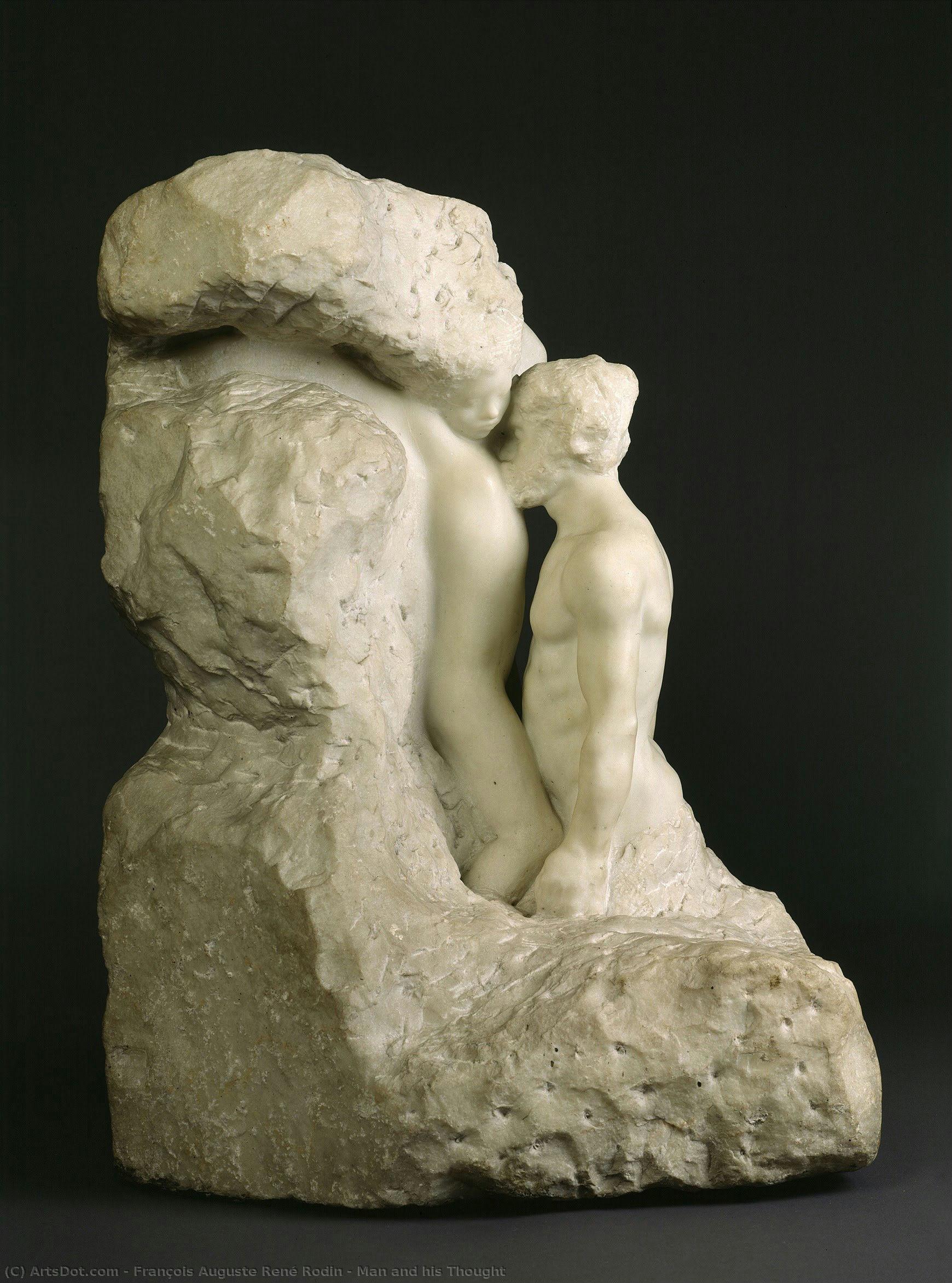
Man and his Thought
 Marble
- Sculpture
- Modern Sculpture
 1900
1900- 19th Century
 46.0 x 77.0 cm
 Alte Nationalgalerie
 Read More
Purchase a high-resolution, enhanced digital image, far superior to the online preview.
Each file is meticulously prepared by our in-house specialists using advanced tools and expert manual retouching. We ensure every image has exceptional clarity, precise color accuracy, and fine detail.
The final file is delivered via email within 72 hours, optimized for immediate use in professional, editorial, and print environments. This is the same quality trusted by top-tier design studios, publishers, and galleries.
Digital Image
Download a high-resolution file for personal display, printing, and creative projects. ( Buy Print Buy Hand Made Painting)
Included in Every Digital Image Order
Expert Digital Delivery, Guaranteed
When you choose ArtsDot.com, you're not just getting an image - you're receiving a professionally enhanced digital artwork, crafted with precision and backed by a satisfaction guarantee. Here's everything that comes with your order, automatically:

Fast Email Delivery
Your high-resolution digital image file will be emailed to you within 72 hours of ordering - ready for immediate use.

AI-Enhanced Digital File
Your artwork is professionally optimized using advanced AI tools and manual editing, ensuring maximum detail, clarity, and color accuracy.

Free Lifetime Re-Delivery
Accidentally deleted or lost your file? No worries - we'll resend it to you anytime, free of charge.

No Import Fees - Ever
Enjoy your artwork instantly with zero customs, duties, or delivery fees - digital downloads are always tax-free.

Color Accuracy Guarantee
We ensure your digital image reflects the original colors as closely as possible using professional tools and color management.

60-Day Satisfaction Guarantee
If you're not satisfied with your digital image, we'll revise it or refund 100% within 60 days - no questions asked.

100% Money-Back Guarantee
Not satisfied? Get a full refund within 60 days of receiving your digital file - no questions asked.

Bulk Order Discounts
Buy 3 images, save 10% - Buy 5, save 15% - Buy 10+, save 20%. Great for creative projects, galleries, and agencies.
Collectible Description
The Weight of Creation: Rodin’s “Man and His Thought”
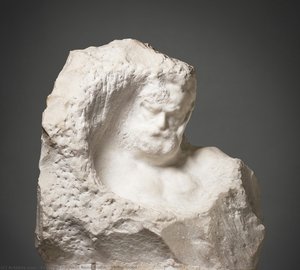
François Auguste Rodin's "Man and His Thought," completed in 1900, is not merely a sculpture; it’s a profound meditation on the very act of artistic creation. This arresting work, housed within the Musée Rodin in Paris, captures a pivotal moment – the genesis of an idea struggling to manifest into physical form. The scene depicts a bearded artist, rendered with remarkable anatomical detail and a palpable sense of intensity, kneeling before his own partially realized marble figure, a young woman emerging from the rough embrace of a colossal rock. It’s a tableau brimming with symbolism, inviting viewers to contemplate the arduous journey from conception to completion, the delicate balance between inspiration and labor, and the inherent incompleteness that often defines artistic endeavor.
Rodin masterfully employs subtractive carving – a technique he honed during his early apprenticeship – to expose the raw potential within the stone. The unfinished surface is deliberately left visible, emphasizing the process of creation itself. Notice how the rock formation isn’t simply a backdrop; it actively participates in the scene, representing the primal material from which all things are born. The fragmented nature of both figures—the artist and his muse—mirrors the transient condition of artistic ideas, perpetually caught between thought and embodiment. This deliberate ambiguity speaks to Rodin's broader exploration of human relationships within his oeuvre – a recurring theme of intertwined antagonism and concurrence, male and female, artist and model, reverence and devotion.
A Dialogue Between Form and Spirit
The composition is strikingly vertical, drawing the eye upwards towards the imposing rock. This height not only emphasizes the scale of the sculpture but also suggests an aspiration—the artist’s reaching for a higher ideal, a striving to imbue his creation with “a soul.” The lighting, as depicted in photographs like the one from Wikimedia Commons, is dramatic and directional, casting strong shadows that accentuate the musculature of both figures and the textured surface of the stone. These shadows aren't merely aesthetic; they represent the challenges inherent in bringing an idea to life – the moments of struggle, doubt, and ultimately, triumph.
Rodin’s choice of marble is crucial. The material itself possesses a cool, almost austere quality that contrasts sharply with the warm-bloodedness he seeks to infuse into his creation. The smooth surfaces of the figures are juxtaposed against the rough, uneven texture of the rock, highlighting the tension between the artist's control and the inherent unpredictability of the creative process. The subtle variations in tone within the marble – hints of grey, ochre, and even a touch of pink – add depth and realism to the sculpture, grounding it in the tangible reality of stone.
Symbolism and Philosophical Depth
“Man and His Thought” resonates deeply with the classical myth of Pygmalion, who sculpted his beloved Galatea from ivory. Rodin’s work echoes this narrative, suggesting that the artist is not simply shaping a form but breathing life into an inanimate object—a process akin to creation itself. The title explicitly references the biblical verse “As a man thinketh in his heart, so is he,” underscoring the profound connection between inner thought and outward expression. The seated posture of the artist, with his head bowed in concentration, conveys a sense of intense introspection and unwavering dedication.
Furthermore, the sculpture can be interpreted as an allegory for the human condition—the constant struggle to reconcile our aspirations with reality, the inherent tension between intellect and emotion, and the persistent awareness of our own limitations. The unfinished state of the figure serves as a poignant reminder that all creative endeavors are ultimately incomplete, reflecting the ongoing process of self-discovery and artistic evolution. The work invites us to contemplate not just the finished product but also the tireless effort, the doubts, and the unwavering belief required to bring an idea into being.
A Reproduction for Your Space
ArtsDot offers meticulously hand-painted reproductions of “Man and His Thought” that capture the essence of Rodin’s masterpiece. Each reproduction is created with the same attention to detail, texture, and lighting as the original sculpture, ensuring a faithful representation of this iconic work. Available in sizes ranging from 46 x 77 cm to larger formats, our reproductions are ideal for collectors, art enthusiasts, and interior designers seeking to infuse their spaces with a touch of artistic inspiration. Bring home a piece of Rodin’s profound vision—a testament to the power of thought, creation, and the enduring beauty of human endeavor.
Related Artworks
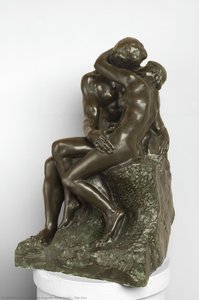
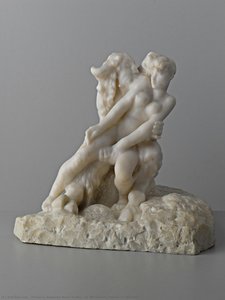
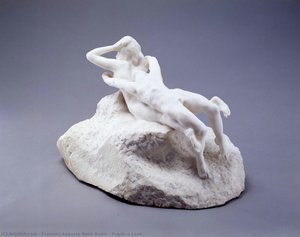
Artist Biography
The Sculptor of Souls: A Life Forged in Clay
François Auguste René Rodin, a name synonymous with modern sculpture, emerged from 19th-century France as a revolutionary force. Born in Paris on November 12, 1840, to modest beginnings, young Rodin’s path wasn't immediately destined for artistic greatness. He initially struggled to gain acceptance into the prestigious École des Beaux-Arts, facing rejection three times before ultimately finding his footing through practical training as a decorative stonemason. This early experience, however, proved invaluable, honing his technical skills and fostering an intimate understanding of form and material. It was a period of quiet apprenticeship, a necessary prelude to the seismic shifts he would later introduce into the world of sculpture. The seeds of his future innovation were sown not in academic halls but in the tangible reality of stone and clay. A profound personal loss – the death of his sister Marie – deeply affected him, leading to a brief contemplation of religious life before fully committing himself to art. This emotional depth would become a defining characteristic of his work, imbuing it with a raw, human quality rarely seen before.
Breaking with Tradition: A New Language in Stone
Rodin’s artistic journey was marked by a deliberate departure from the prevailing academic standards of his time. While trained in classical techniques, he rejected the idealized forms and narrative rigidity that dominated sculpture. He sought instead to capture the fleeting nuances of human emotion, the weight of thought, and the complexities of the inner life. His early works, such as *The Age of Bronze* (1877), initially sparked controversy for their realism and lack of mythological or allegorical subject matter. Critics found his figures too naturalistic, too devoid of the polished perfection expected of sculpture. However, Rodin persevered, driven by an unwavering belief in his artistic vision. He began to explore fragmented forms, rough surfaces, and dynamic compositions that conveyed a sense of movement and psychological intensity. This innovative approach challenged conventional notions of beauty and paved the way for a new era in sculptural expression. His ability to model complex, turbulent surfaces in clay was unparalleled, allowing him to capture the play of light and shadow with remarkable sensitivity.
Iconic Forms: The Thinker, The Kiss, and Beyond
Rodin’s legacy is cemented by a series of iconic sculptures that continue to resonate with audiences worldwide. *The Thinker* (1880-1882), originally conceived as part of *The Gates of Hell*, became an emblem of philosophical contemplation, its powerful form embodying the weight of human thought and existential questioning. *The Kiss* (1886-1898), a celebration of passionate love, is renowned for its sensual beauty and emotional intimacy. And *The Burghers of Calais* (1884-1895), a monumental tribute to courage and sacrifice, stands as a testament to Rodin’s ability to convey profound human drama through sculptural form. These works weren't merely representations of physical bodies; they were explorations of the human condition, imbued with psychological depth and emotional resonance. He didn’t shy away from portraying imperfection or suffering, recognizing that these qualities are integral to the human experience. His sculptures often featured unfinished surfaces, deliberately leaving traces of the artist’s hand as a testament to the creative process itself.
A Lasting Influence: Rodin's Place in Art History
By the turn of the 20th century, Rodin had achieved international acclaim, becoming arguably the most celebrated sculptor of his time. His work profoundly influenced generations of artists, inspiring them to break free from traditional constraints and explore new avenues of artistic expression. He is widely considered a pivotal figure in the transition from 19th-century realism to modern sculpture. His emphasis on emotional intensity, psychological depth, and innovative use of form laid the groundwork for movements such as Expressionism and Cubism. Today, Rodin’s sculptures can be found in museums and collections around the globe, most notably at the Musée Rodin in Paris, a dedicated space showcasing his life's work. His influence extends beyond sculpture, impacting painting, literature, and even film.
Exploring Further: Museums & Key Works
- Musée Rodin, Paris: A must-visit destination for anyone interested in experiencing the full breadth of Rodin’s artistic vision.
- National Gallery of Art, Washington D.C.: Houses a significant collection of Rodin's works, offering insights into his creative process.
- Cantor Arts Center at Stanford University: Features notable pieces like the bust of Albert-Ernest Carrier-Belleuse.
- Key Sculptures to Explore:
- *The Thinker* – A universal symbol of contemplation and intellect.
- *The Kiss* – An iconic representation of love and passion.
- *The Burghers of Calais* – A powerful depiction of sacrifice and courage.
- *Saint John the Baptist* - Demonstrates Rodin's ability to convey intense emotion through form.
- Small head of Jean de Fiennes with hand- An intimate study in portraiture, showcasing his mastery of detail.
Rodin’s legacy is not merely one of artistic innovation; it's a testament to the power of art to connect us to our shared humanity. He dared to explore the depths of human emotion and experience, leaving behind a body of work that continues to inspire, challenge, and move audiences today. His sculptures are not simply objects to be admired; they are windows into the soul, inviting us to contemplate the complexities of life, love, loss, and everything in between.
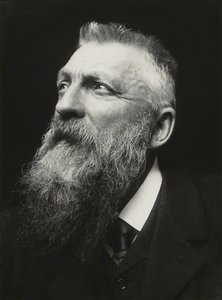
Auguste Rodin
1840 - 1917 , France
Quick Facts
- Artistic Movement Or Style: Modern Sculpture
- Artists Or Movements Influenced By This Artist: Modern sculpture
- Date Of Birth: November 12, 1840
- Date Of Death: November 17, 1917
- Full Name: François Auguste René Rodin
- Nationality: French
- Notable Artworks:
- The Thinker
- The Kiss
- Burghers of Calais
- Place Of Birth: Paris, France

