

 Send
Send Share
Share
 Details

 Download
 Similars
 Diaporama
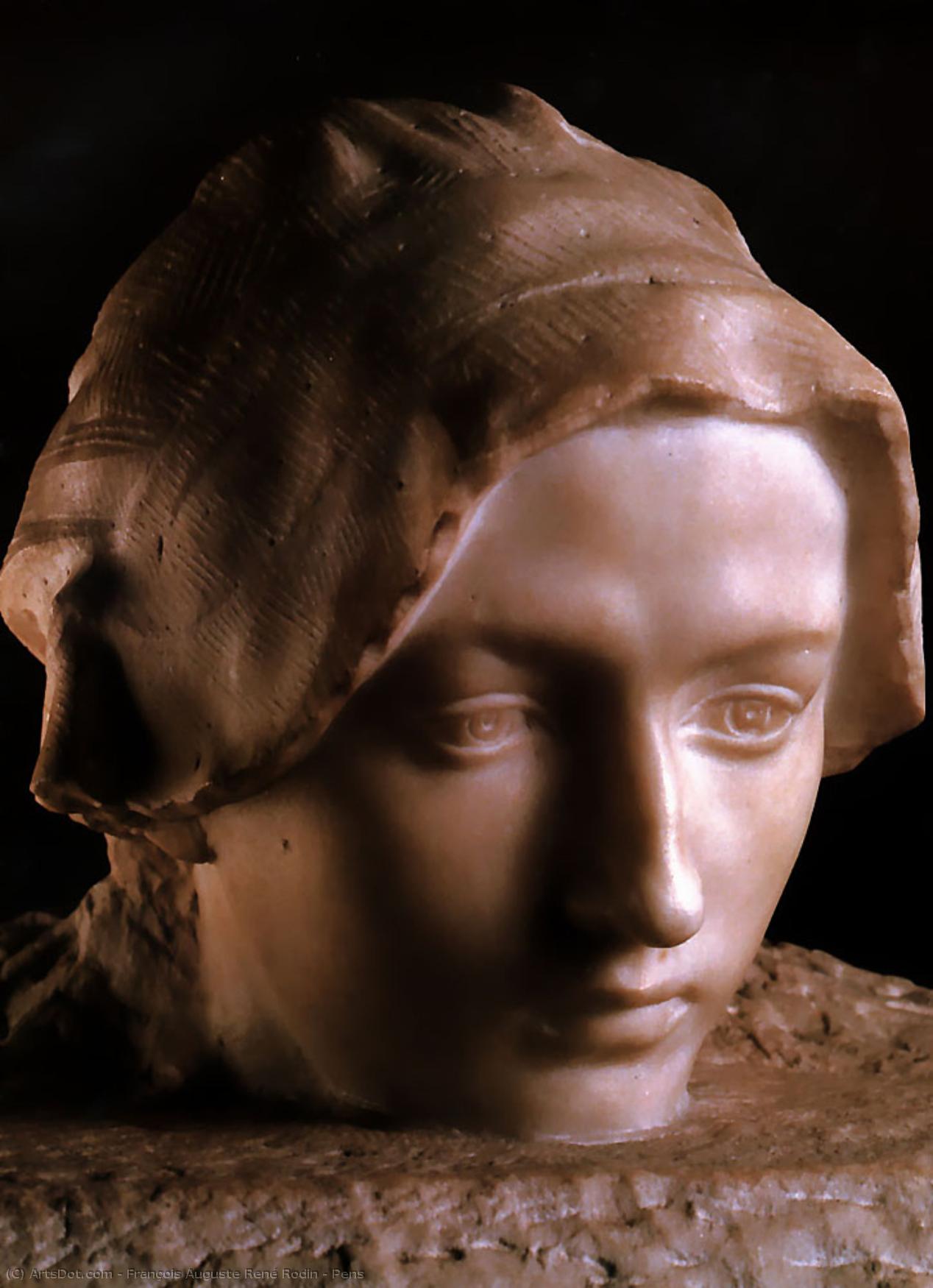
Pens


 Read More
Purchase a high-resolution, enhanced digital image, far superior to the online preview.
Each file is meticulously prepared by our in-house specialists using advanced tools and expert manual retouching. We ensure every image has exceptional clarity, precise color accuracy, and fine detail.
The final file is delivered via email within 72 hours, optimized for immediate use in professional, editorial, and print environments. This is the same quality trusted by top-tier design studios, publishers, and galleries.
Digital Image
Download a high-resolution file for personal display, printing, and creative projects. ( Buy Print Buy Hand Made Painting)
Included in Every Digital Image Order
Expert Digital Delivery, Guaranteed
When you choose ArtsDot.com, you're not just getting an image - you're receiving a professionally enhanced digital artwork, crafted with precision and backed by a satisfaction guarantee. Here's everything that comes with your order, automatically:

Fast Email Delivery
Your high-resolution digital image file will be emailed to you within 72 hours of ordering - ready for immediate use.

AI-Enhanced Digital File
Your artwork is professionally optimized using advanced AI tools and manual editing, ensuring maximum detail, clarity, and color accuracy.

Free Lifetime Re-Delivery
Accidentally deleted or lost your file? No worries - we'll resend it to you anytime, free of charge.

No Import Fees - Ever
Enjoy your artwork instantly with zero customs, duties, or delivery fees - digital downloads are always tax-free.

Color Accuracy Guarantee
We ensure your digital image reflects the original colors as closely as possible using professional tools and color management.

60-Day Satisfaction Guarantee
If you're not satisfied with your digital image, we'll revise it or refund 100% within 60 days - no questions asked.

100% Money-Back Guarantee
Not satisfied? Get a full refund within 60 days of receiving your digital file - no questions asked.

Bulk Order Discounts
Buy 3 images, save 10% - Buy 5, save 15% - Buy 10+, save 20%. Great for creative projects, galleries, and agencies.
Collectible Description
The Poignant Echoes of Reflection: Rodin’s “Pens”
Auguste Rodin's "Pens," created in 1895, is not merely a sculpture; it’s a profound meditation on introspection and the quiet dignity of human experience. This remarkable work, rendered in bronze – a medium that perfectly captures both texture and emotional depth – depicts a woman’s head and shoulders emerging from a rough, almost primal base. The image presented to us isn't a portrait intended for immediate recognition, but rather an invitation to contemplate a deeper narrative woven into the very fabric of the piece. Rodin masterfully employs Impressionistic techniques, prioritizing the tactile qualities of the material and the play of light and shadow over precise detail, mirroring his fascination with capturing the essence of form and feeling.
The composition itself is subtly arresting. The woman’s head, tilted slightly to the right, draws the viewer in, while the textured base – reminiscent of weathered stone or perhaps even a nascent root system – suggests an emergence from something darker, hinting at a journey inward. Rodin's skillful use of light creates a dramatic interplay across the sculpture’s surface; shadows dance along the folds of her headscarf and accentuate the contours of her face, lending it a palpable sense of volume and realism. The muted palette – dominated by earthy browns, beiges, and tans – contributes to the overall atmosphere of serenity and quiet contemplation. This deliberate restraint allows the emotional weight of the piece to resonate more powerfully.
A Study in Texture and Materiality
Rodin’s genius lies not just in his ability to capture likeness but in his masterful manipulation of texture. The smooth, almost porcelain-like skin of the woman's face contrasts dramatically with the coarse, uneven surface of the base, creating a compelling visual dialogue between vulnerability and resilience. The headscarf, rendered with intricate folds and wrinkles, adds another layer of complexity, suggesting both age and a certain weariness – perhaps reflecting the burdens carried within. The bronze itself is treated with remarkable sensitivity; Rodin’s technique allows us to perceive not only the form but also the very process of creation, the subtle marks left by his tools.
The choice of bronze as the medium is crucial to understanding “Pens.” Bronze possesses an inherent ability to capture detail and texture, lending itself perfectly to Rodin's exploration of surface. It’s a material that speaks of permanence and strength, yet can also be molded with incredible delicacy. The studio lighting used in the photograph – likely intended for exhibition – further enhances these qualities, highlighting the sculpture’s three-dimensionality and inviting us to examine its every nuance.
Symbolism and Emotional Resonance
"Pens," as the title suggests, invites interpretation beyond a simple portrait. It speaks to the act of thinking, of reflection, of grappling with inner complexities. The woman's downward gaze – a characteristic feature of Rodin’s work – immediately conveys a sense of introspection, suggesting she is lost in thought or perhaps burdened by some unspoken sorrow. This isn’t a joyous celebration of beauty; rather, it’s an honest portrayal of the human condition—a recognition of our vulnerabilities and the quiet struggles that shape us.
Considering Rodin's broader artistic context – particularly his exploration of themes like grief, memory, and the complexities of human relationships – “Pens” can be seen as a microcosm of these larger concerns. It’s a work that demands engagement, inviting viewers to project their own experiences and emotions onto its enigmatic subject. The sculpture’s enduring appeal lies in its ability to evoke a powerful sense of empathy and understanding, reminding us of the shared human experience of contemplation and resilience.
Bringing “Pens” into Your Space
ArtsDot offers meticulously crafted hand-painted reproductions of Rodin's "Pens," allowing you to bring this iconic work into your home or office. Our artists replicate the sculpture’s nuanced textures, subtle lighting, and emotional depth with unparalleled precision. Whether you are an art enthusiast, a collector seeking to expand your collection, or simply someone drawn to Rodin’s profound vision, our reproductions provide a beautiful and authentic representation of this timeless masterpiece. Explore our range of sizes and canvas options to find the perfect way to honor the legacy of Auguste Rodin.
Related Artworks
Artist Biography
The Sculptor of Souls: A Life Forged in Clay
François Auguste René Rodin, a name synonymous with modern sculpture, emerged from 19th-century France as a revolutionary force. Born in Paris on November 12, 1840, to modest beginnings, young Rodin’s path wasn't immediately destined for artistic greatness. He initially struggled to gain acceptance into the prestigious École des Beaux-Arts, facing rejection three times before ultimately finding his footing through practical training as a decorative stonemason. This early experience, however, proved invaluable, honing his technical skills and fostering an intimate understanding of form and material. It was a period of quiet apprenticeship, a necessary prelude to the seismic shifts he would later introduce into the world of sculpture. The seeds of his future innovation were sown not in academic halls but in the tangible reality of stone and clay. A profound personal loss – the death of his sister Marie – deeply affected him, leading to a brief contemplation of religious life before fully committing himself to art. This emotional depth would become a defining characteristic of his work, imbuing it with a raw, human quality rarely seen before.
Breaking with Tradition: A New Language in Stone
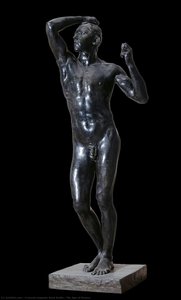
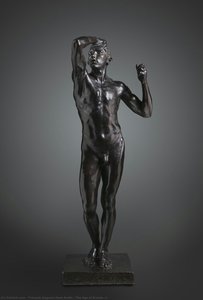
Rodin’s artistic journey was marked by a deliberate departure from the prevailing academic standards of his time. While trained in classical techniques, he rejected the idealized forms and narrative rigidity that dominated sculpture. He sought instead to capture the fleeting nuances of human emotion, the weight of thought, and the complexities of the inner life. His early works, such as *The Age of Bronze* (1877), initially sparked controversy for their realism and lack of mythological or allegorical subject matter. Critics found his figures too naturalistic, too devoid of the polished perfection expected of sculpture. However, Rodin persevered, driven by an unwavering belief in his artistic vision. He began to explore fragmented forms, rough surfaces, and dynamic compositions that conveyed a sense of movement and psychological intensity. This innovative approach challenged conventional notions of beauty and paved the way for a new era in sculptural expression. His ability to model complex, turbulent surfaces in clay was unparalleled, allowing him to capture the play of light and shadow with remarkable sensitivity.
Iconic Forms: The Thinker, The Kiss, and Beyond
Rodin’s legacy is cemented by a series of iconic sculptures that continue to resonate with audiences worldwide. *The Thinker* (1880-1882), originally conceived as part of *The Gates of Hell*, became an emblem of philosophical contemplation, its powerful form embodying the weight of human thought and existential questioning. *The Kiss* (1886-1898), a celebration of passionate love, is renowned for its sensual beauty and emotional intimacy. And *The Burghers of Calais* (1884-1895), a monumental tribute to courage and sacrifice, stands as a testament to Rodin’s ability to convey profound human drama through sculptural form. These works weren't merely representations of physical bodies; they were explorations of the human condition, imbued with psychological depth and emotional resonance. He didn’t shy away from portraying imperfection or suffering, recognizing that these qualities are integral to the human experience. His sculptures often featured unfinished surfaces, deliberately leaving traces of the artist’s hand as a testament to the creative process itself.
A Lasting Influence: Rodin's Place in Art History
By the turn of the 20th century, Rodin had achieved international acclaim, becoming arguably the most celebrated sculptor of his time. His work profoundly influenced generations of artists, inspiring them to break free from traditional constraints and explore new avenues of artistic expression. He is widely considered a pivotal figure in the transition from 19th-century realism to modern sculpture. His emphasis on emotional intensity, psychological depth, and innovative use of form laid the groundwork for movements such as Expressionism and Cubism. Today, Rodin’s sculptures can be found in museums and collections around the globe, most notably at the Musée Rodin in Paris, a dedicated space showcasing his life's work. His influence extends beyond sculpture, impacting painting, literature, and even film.
Exploring Further: Museums & Key Works
- Musée Rodin, Paris: A must-visit destination for anyone interested in experiencing the full breadth of Rodin’s artistic vision.
- National Gallery of Art, Washington D.C.: Houses a significant collection of Rodin's works, offering insights into his creative process.
- Cantor Arts Center at Stanford University: Features notable pieces like the bust of Albert-Ernest Carrier-Belleuse.
- Key Sculptures to Explore:
- *The Thinker* – A universal symbol of contemplation and intellect.
- *The Kiss* – An iconic representation of love and passion.
- *The Burghers of Calais* – A powerful depiction of sacrifice and courage.
- *Saint John the Baptist* - Demonstrates Rodin's ability to convey intense emotion through form.
- Small head of Jean de Fiennes with hand- An intimate study in portraiture, showcasing his mastery of detail.
Rodin’s legacy is not merely one of artistic innovation; it's a testament to the power of art to connect us to our shared humanity. He dared to explore the depths of human emotion and experience, leaving behind a body of work that continues to inspire, challenge, and move audiences today. His sculptures are not simply objects to be admired; they are windows into the soul, inviting us to contemplate the complexities of life, love, loss, and everything in between.
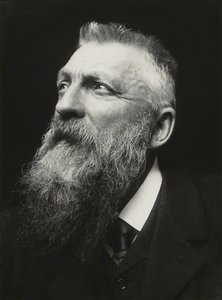
Auguste Rodin
1840 - 1917 , France
Quick Facts
- Artistic Movement Or Style: Modern Sculpture
- Artists Or Movements Influenced By This Artist: Modern sculpture
- Date Of Birth: November 12, 1840
- Date Of Death: November 17, 1917
- Full Name: François Auguste René Rodin
- Nationality: French
- Notable Artworks:
- The Thinker
- The Kiss
- Burghers of Calais
- Place Of Birth: Paris, France

