 Preview
 Send
Send Share
Share
 Details

 Download
 Similars
 X-Ray
X-Ray Diaporama
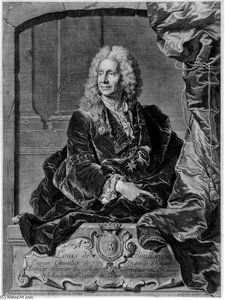
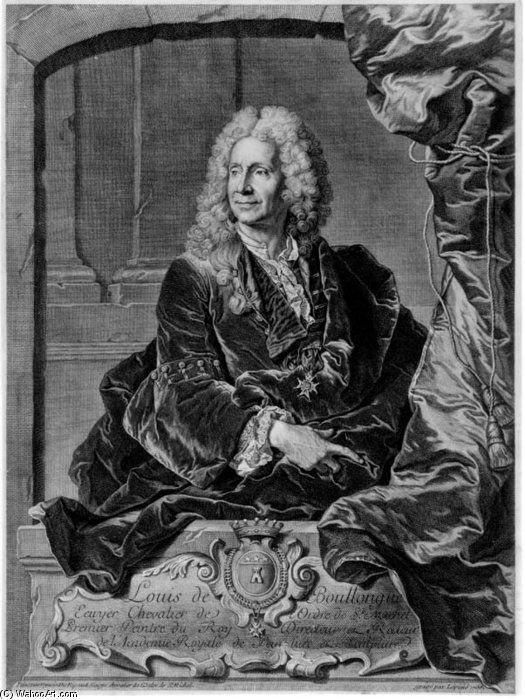
Portrait Of Louis De Boullogne
 Read More
Hand Made Oil Reproduction
Hand-painted oil on canvas in your size and frame, made to order by our artists. ( Buy Print Buy Image)




































Pick from our preset sizes that match the artwork's original proportions.

You may enter your own dimensions to fit a specific frame or space. If your selected size does not match the original image's proportions, we will either crop the artwork or extend the painting with additional hand-painted elements. A digital mockup will be sent for your approval before production begins.
Please note that the on-screen preview does not reflect the actual cropping or extension. Only the mockup will accurately show the final composition.
While custom sizes are available, we recommend selecting a dimension from the predefined list to preserve the original proportions.
After order, ArtsDot.com team will email client for instructions and provide a mockup preview
Worldwide Delivery () in 3/4 weeks instead of standard 5 weeks. (26 August). No compromise on quality.

Free Worldwide Express Shipping

High-Quality Linen Canvas

Full Shipping Insurance

Customs Tax Refund Guarantee

True Color Matching Guarantee

60-Day Return Policy (Defects Only)

100% Money-Back Guarantee

Bulk Discount Offer
 Glass option is only available in size under 110 CM

Portrait Of Louis De Boullogne
Reproduction Medium
Reproduction Size
-


Total Price
$ 263
Related Artworks




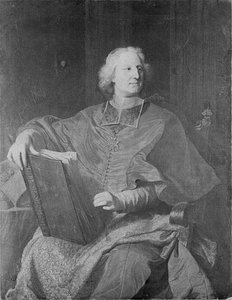

Artist Biography
François Bernard Lépicié: A Quiet Master of Eighteenth Century French Painting
François Bernard Lépicié (6 October 1698 – 17 January 1755) stands as a testament to the understated elegance of 18th-century French art. Often overshadowed by his contemporaries, particularly Chardin and Greuze, Lépicié nonetheless cultivated a distinctive style characterized by meticulous observation and subtle emotional resonance—a legacy that continues to fascinate scholars and collectors alike. Born in Paris, he was the son of Nicolas Lépicié, a renowned engraver who instilled in him an early appreciation for visual representation and artistic craftsmanship. This familial influence would prove pivotal in shaping Lépicié’s own artistic trajectory.- Early Life & Training: Lépicié's formative years were spent honing his engraving skills under the tutelage of his father, mastering techniques that would later inform his painting practice.
- Marriage & Family: He married Renée-Élisabeth Marlié, who herself was a talented engraver—a union that fostered an environment conducive to artistic collaboration and intellectual discourse. Together they had a son, Nicolas Bernard Lépicié, who would follow in his father’s footsteps as a painter.
- Career Highlights: Lépicié achieved considerable renown during his lifetime, securing commissions for portraits and genre scenes that captured the nuances of Parisian life. His works were particularly admired for their realism and psychological depth.
A Painter's Vision: Style & Technique
Lépicié’s artistic style—often described as “quiet” or “refined”—was distinguished by a commitment to naturalism tempered with an expressive sensitivity. Unlike the flamboyant theatricality favored by some of his peers, Lépicié prioritized capturing fleeting moments and conveying subtle emotions through carefully rendered details. He meticulously studied anatomy and drapery, employing techniques honed during his engraving career to achieve unparalleled accuracy in portraying human figures and fabrics. His palette was restrained, favoring muted tones that allowed for nuanced gradations of color—a stylistic choice that aligns closely with the aesthetic principles championed by Chardin, whom Lépicié regarded as a personal idol.- Influences: Lépicié’s artistic sensibilities were profoundly shaped by Caravaggio and Rembrandt, whose dramatic chiaroscuro—the interplay of light and shadow—served as an inspiration for his own compositions. He also absorbed the humanist ideals prevalent during the Enlightenment, reflecting a belief in reason and observation as pathways to understanding human experience.
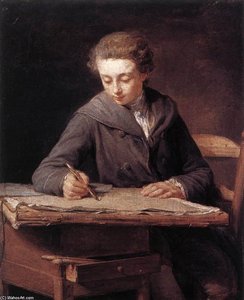
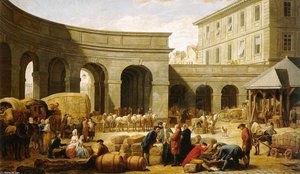
- Notable Paintings: Among Lépicié’s most celebrated works are ‘The Courtyard of The Customs House,’ depicting a serene domestic scene with remarkable precision; ‘Portrait Of Louis De Boullogne,’ capturing the dignified countenance of a noble gentleman; and ‘Nicolas Bernard Lépicié,’ portraying his son in an intimate portrait that exemplifies his artistic prowess.
Legacy & Recognition
Despite his relative obscurity during his lifetime, François Bernard Lépicié’s paintings have gained considerable acclaim in recent decades. Museums across Europe—including the Musée National des Beaux-Arts du Québec and The Metropolitan Museum of Art—have showcased his oeuvre, ensuring that his artistic achievements endure for future generations. His meticulous observation and understated emotional expression continue to resonate with viewers today, cementing his place as a significant figure within the broader context of 18th-century French art history. He died in Paris in 1755, leaving behind a body of work that embodies the quiet beauty and intellectual rigor characteristic of his era.Further Exploration
For more information about François Bernard Lépicié’s life and artistic legacy, consult scholarly publications such as Philippe Le Bas's *Dictionnaire encyclopédique de la France* (1843) and Louis-Gabriel Michaud’s *Biographie universelle des hommes illustres*.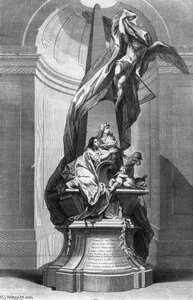
françois bernard lépicié
1735 - 1784
Quick Facts
- Artistic Movement Or Style: Rococo
- Artists Or Movements Influenced By This Artist: ['Nicolas Bernard Lépicié']
- Artists Who Influenced This Artist:
- Jean-Baptiste Chardin
- François Boucher
- Date Of Birth: October 6, 1698
- Date Of Death: January 17, 1755
- Full Name: François Bernard Lépicié
- Nationality: French
- Notable Artworks:
- The Courtyard Of The Customs House
- Portrait Of Louis De Boullogne
- Place Of Birth: Paris, France