 Preview
 Send
Send Share
Share
 Details

 Download
 Similars
 X-Ray
X-Ray Diaporama
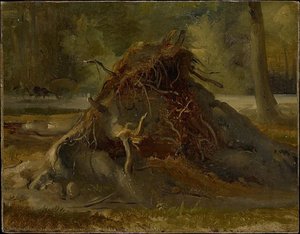
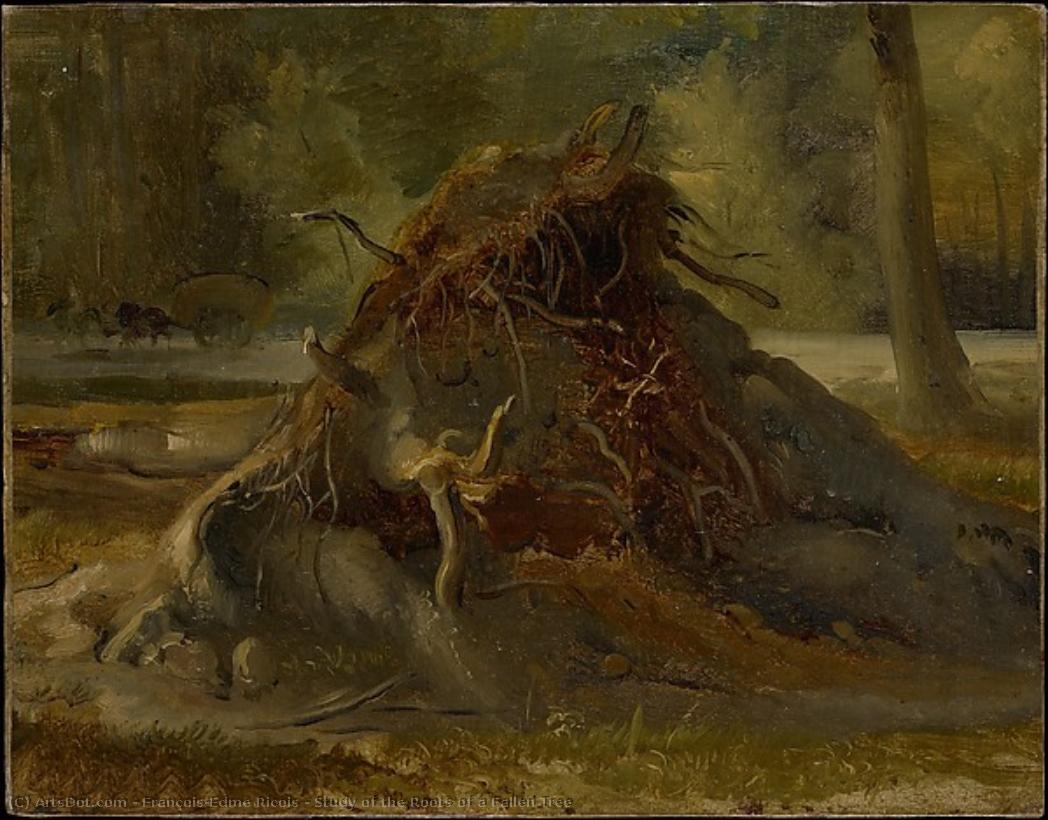
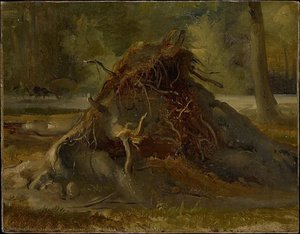
Study of the Roots of a Fallen Tree
 1820
1820 19.0 x 24.0 cm
 Read More
Giclée / Art Print
Museum-quality giclée or canvas print with fast production and flexible finish options. ( Buy Hand Made Painting Buy Image)




































Pick from our preset sizes that match the artwork's original proportions.

You may enter your own dimensions to fit a specific frame or space. If your selected size does not match the original image's proportions, we will either crop the artwork or extend the image with a mirrored or solid-fill edge. A digital mockup will be sent for your approval before production begins.
Please note that the on-screen preview does not reflect the actual cropping or extension. Only the mockup will accurately show the final composition.
While custom sizes are available, we recommend selecting a dimension from the predefined list to preserve the original proportions.
Worldwide Delivery () in 2 weeks instead of standard 4/5 weeks. (29 August)

Free Worldwide Express Shipping

High-Quality Linen Canvas

Full Shipping Insurance

Customs Tax Refund Guarantee

True Color Matching Guarantee

60-Day Return Policy (Defects Only)

100% Money-Back Guarantee

Bulk Discount Offer
 Glass option is only available in size under 110 CM

Study of the Roots of a Fallen Tree
Giclée / Art Print
Reproduction Size
-


Total Price
$ 63
Related Artworks








Artist Biography
A Legacy of Precision: The Life and Art of François-Edme Ricois
The story of François-Edme Ricois is one of profound dedication, a life lived through the meticulous observation of the world around him. Born in 1795 in the quiet French town of Courtalain, Ricois was destined for a life entwined with the brush and canvas. He was born into an artistic lineage, the son of the painter Jacques Edme RicoIS, which provided him with an early immersion in the nuances of light and form. Yet, his path to mastery was not without its detours; as a young boy, he briefly served as a clerk in a notary's office. It was during those long hours of copying legal documents that his true passion revealed itself—not in the dry text of the law, but in the small, unauthorized flourishes of flowers and figures he drew in the margins of his ledgers. This innate drive to illustrate eventually led him away from the bureaucracy of law and toward the prestigious ateliers of Paris.
Ricois’s formal education was shaped by some of the most significant masters of the nineteenth century. He sought guidance from Jean-Victor Bertin, a titan of Neoclassicism, as well as the expressive Anne-Louis Girodet and Constant Bourgeois. From these mentors, he inherited a rigorous technical foundation, blending the structured principles of Neoclassicism with an appreciation for the dramatic potential found in Mannerist traditions. His training allowed him to navigate the shifting tides of French art history, moving between the disciplined clarity required for official portraiture and the atmospheric sensitivity essential for landscape painting. This versatility became the cornerstone of a career that would span over six decades of continuous exhibition at the prestigious Salon de peinture et de sculpture.
The Mastery of Detail and the Napoleonic Era
As his reputation grew, Ricois found himself positioned within the heart of French social and political significance. His ability to capture the precise likenesses of the imperial family earned him a place as one of Napoleon’s respected artists. In these portraits, Ricois did not merely record a face; he captured the very essence of status and character. He utilized techniques reminiscent of Caravaggio and Rubens, employing dramatic lighting to create depth and a palpable sense of realism. His brushwork avoided the loose, impressionistic tendencies of later eras, opting instead for an unwavering fidelity to texture—the heavy weight of velvet, the subtle sheen of silk, and the intricate details of lace were rendered with such breathtaking accuracy that they seemed almost tactile.
Beyond the gilded halls of imperial portraiture, Ricois’s soul found expression in the natural world. He possessed a remarkable ability to translate the grandeur of the French and Swiss landscapes onto canvas. His works often featured:
- Atmospheric Perspective: A sophisticated use of light and haze to create an immense sense of distance and scale.
- Topographical Accuracy: Detailed views of châteaux and countryside that served as both art and historical record.
- Botanical Precision: An intimate focus on the organic textures of nature, seen in works such as his studies of fallen trees.
An Enduring Artistic Impression
The career of François-Edme Ricois was characterized by an extraordinary longevity and consistency. Between 1819 and 1880, he exhibited at the Salon no fewer than twenty-seven times, a testament to his enduring relevance in a rapidly changing art market. While his portraits solidified his historical importance within the Napoleonic era, his landscapes allowed him to explore the romantic beauty of the European terrain. His life, which concluded in 1881 in Mareil-Marly, left behind a body of work that serves as a bridge between the rigid traditions of the past and the burgeoning realism of the nineteenth century.
Today, the works of Ricois are cherished not only for their historical value but for the sheer technical virtuosity they demand of the viewer. Whether examining a grand vista of a French castle or a delicate study on paper, one encounters the same unwavering commitment to truth in detail. He remains a master of the subtle nuance, an artist who understood that the greatest stories are often told through the smallest, most carefully rendered details.
françois-edme ricois
1795 - 1881 , France
Quick Facts
- Artistic Movement Or Style: Mannerist painting
- Date Of Birth: 1795
- Full Name: François-Edme Ricois
- Nationality: French
- Notable Artworks: ['Study of the Roots of a Fallen Tree']
- Place Of Birth: Courtallain, France