 Preview
 Send
Send Share
Share
 Details

 Download
 Similars
 X-Ray
X-Ray Diaporama
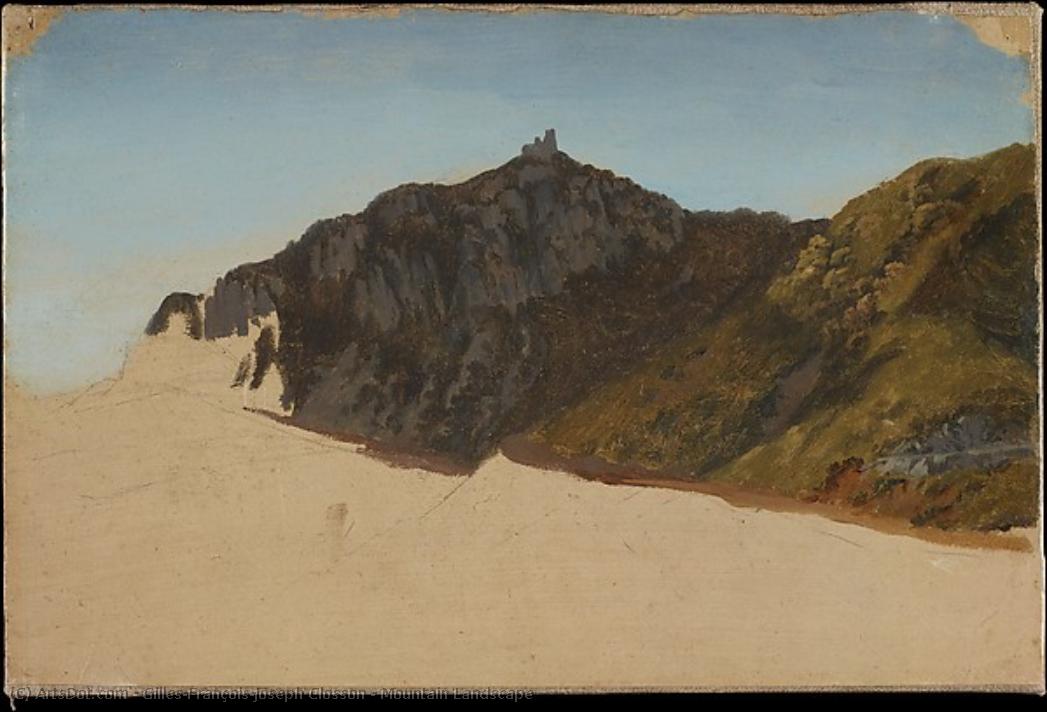
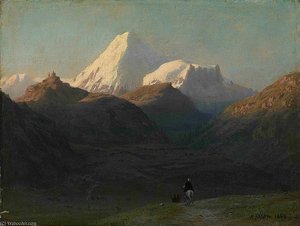
Mountain Landscape
 Romanticism
 19.0 x 29.0 cm
 Read More
Giclée / Art Print
Museum-quality giclée or canvas print with fast production and flexible finish options. ( Buy Hand Made Painting Buy Image)




































Pick from our preset sizes that match the artwork's original proportions.

You may enter your own dimensions to fit a specific frame or space. If your selected size does not match the original image's proportions, we will either crop the artwork or extend the image with a mirrored or solid-fill edge. A digital mockup will be sent for your approval before production begins.
Please note that the on-screen preview does not reflect the actual cropping or extension. Only the mockup will accurately show the final composition.
While custom sizes are available, we recommend selecting a dimension from the predefined list to preserve the original proportions.
Worldwide Delivery () in 2 weeks instead of standard 4/5 weeks. (28 August)

Free Worldwide Express Shipping

High-Quality Linen Canvas

Full Shipping Insurance

Customs Tax Refund Guarantee

True Color Matching Guarantee

60-Day Return Policy (Defects Only)

100% Money-Back Guarantee

Bulk Discount Offer
 Glass option is only available in size under 110 CM

Mountain Landscape
Giclée / Art Print
Reproduction Size
-


Total Price
$ 63
Related Artworks
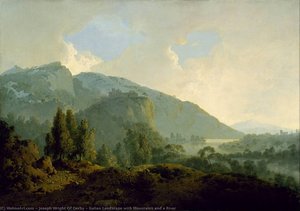
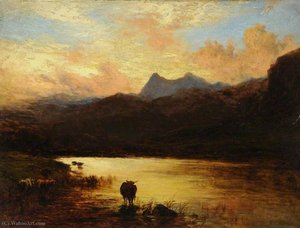
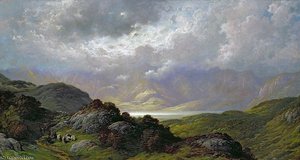
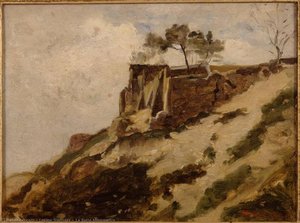
Artist Biography
Early Life and Parisian Training
François Gilles Joseph Closson, born in Liège, Belgium, in 1796, emerged as a pivotal figure in the development of Belgian landscape painting during the 19th century. His artistic journey began within the rich cultural tapestry of his native city, but truly blossomed under the tutelage of Antoine-Jean Gros in Paris from 1817 to 1824. This period proved formative, exposing Closson to the prevailing currents of French Romanticism and Neoclassicism. While Gros was renowned for his grand historical scenes – a legacy of Napoleonic fervor – he also instilled in his students a keen observation of nature and a dedication to meticulous draftsmanship. Closson absorbed these lessons, but would ultimately forge his own path, moving away from the dramatic narratives favored by his teacher towards a more intimate and atmospheric portrayal of the natural world. The influence of Gros is visible in Closson’s early works, particularly in the careful rendering of detail and a certain monumentality of form; however, even then, a distinct sensibility – a quiet reverence for the Belgian countryside – began to emerge.The Ardennes as Muse: A Distinctive Style
Upon his return to Belgium, Closson dedicated himself almost exclusively to depicting the landscapes surrounding Liège, and especially those of the Ardennes region. This commitment was not merely a matter of geographical proximity; it represented a conscious artistic choice – a desire to capture the unique character and beauty of his homeland. He became known for his detailed and atmospheric depictions of forests, rivers, and rolling hills, imbued with a sense of tranquility and poetic melancholy. Unlike many of his contemporaries who sought dramatic effects or idealized visions, Closson’s paintings are characterized by their realism and subtlety. He masterfully captured the play of light and shadow, the nuances of color, and the delicate textures of nature. His palette, though restrained, was remarkably effective in conveying the mood and atmosphere of each scene. Closson wasn't interested in grand vistas; he focused on the intimate details that revealed the soul of the landscape. He often included small figures within his compositions – peasants working in the fields or travelers along a country road – not as focal points, but as elements that enhanced the sense of scale and provided a human connection to the natural world.Influences and Artistic Development
While Gros laid the foundation for Closson’s technical skill, other artists also played a role in his artistic development. The Barbizon school, with its emphasis on plein air painting and direct observation of nature, exerted a growing influence on his work during the 1830s and 40s. Although he never fully embraced the Barbizonians’ rugged realism or their social commentary, Closson shared their commitment to capturing the essence of the countryside. He also admired the Dutch landscape masters of the 17th century – artists like Jacob van Ruisdael and Aert van der Neer – whose subtle use of light and atmospheric perspective resonated with his own artistic sensibilities. Closson’s style evolved over time, becoming increasingly refined and nuanced. His early works tend to be more formally structured and academically precise, while his later paintings exhibit a greater freedom of brushwork and a more expressive use of color. He skillfully blended elements of Romanticism, Realism, and Dutch landscape traditions to create a distinctive artistic voice that was uniquely his own.Legacy and Historical Significance
François Gilles Joseph Closson died in 1842, leaving behind a substantial body of work that cemented his reputation as one of the most significant Belgian landscape painters of the 19th century. His paintings were highly sought after by collectors during his lifetime, and continue to be admired today for their beauty, realism, and poetic sensibility. He played a crucial role in establishing a national identity within Belgian art, shifting away from historical and religious subjects towards a celebration of the country’s natural heritage.- His detailed depictions of the Ardennes region helped to foster a sense of pride in Belgium's unique landscape.
- Closson’s influence can be seen in the work of later Belgian landscape painters, who followed his lead in capturing the beauty and tranquility of the countryside.
- He bridged the gap between the academic traditions of the early 19th century and the more modern sensibilities of the Barbizon school.
françois gilles joseph closson
1796 - 1842 , Belgium
Quick Facts
- Artistic Movement Or Style: Landscape painting
- Artists Who Influenced This Artist: ['Antoine-Jean Gros']
- Date Of Birth: 1796
- Date Of Death: 1842
- Full Name: François Gilles Joseph Closson
- Nationality: Belgian
- Place Of Birth: Liège, Belgium
Related Articles
Impressionist Landscapes: 10 Masterpieces for Your Home | ArtsDot
Journey through 10 iconic Impressionist landscapes by Monet, Renoir & Degas. Explore the history, techniques & emotions behind these masterpieces. Find museum-quality reproductions for your home at ArtsDot.com – where art comes to life! Discover all masterpieces on ArtsDot.com
Beyond the Horizon: A Curated Guide to Integrating Post-Impressionist Landscapes into Modern Interiors
Transform your home with the emotive power of Post-Impressionist landscapes. Discover expert tips on selecting hand-painted oil reproductions to create a soulful, vibrant interior that reflects your unique style and connection to nature.

Impressionistic Landscapes: 10 Masterpieces That Changed Art & Decor
Journey into the heart of Impressionism! Explore 10 masterpieces by Monet, Renoir & Degas that revolutionized landscape art. Discover their stories, techniques & find museum-quality reproductions to elevate your home decor on ArtsDot.com.
Evoking Nature's Sublime: A Comprehensive Exploration of 19th-Century Landscape Painting
Explore the captivating world of 19th-century landscape painting! Discover renowned artists like Friedrich & Monet, key movements, and find the perfect artwork to bring nature's serenity into your home. Expert insights at ArtsDot.

Romantic Landscapes: 10 Masterpieces for Your Home | ArtsDot
Journey through 10 Romantic landscape masterpieces by Friedrich, Turner & Cole. Explore emotional art, sublime nature scenes & iconic 19th-century paintings. Find museum-quality reproductions for your home at ArtsDot.com – discover the full collection online!