

 Send
Send Share
Share
 Details

 Download
 Similars
 Diaporama
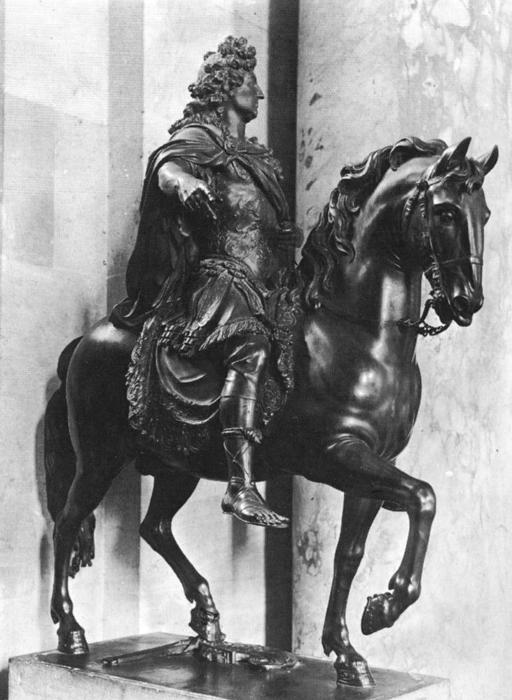
Equestrian Statue of Louis XIV


 Read More
Purchase a high-resolution, enhanced digital image, far superior to the online preview.
Each file is meticulously prepared by our in-house specialists using advanced tools and expert manual retouching. We ensure every image has exceptional clarity, precise color accuracy, and fine detail.
The final file is delivered via email within 72 hours, optimized for immediate use in professional, editorial, and print environments. This is the same quality trusted by top-tier design studios, publishers, and galleries.
Digital Image
Download a high-resolution file for personal display, printing, and creative projects. ( Buy Print Buy Hand Made Painting)
Included in Every Digital Image Order
Expert Digital Delivery, Guaranteed
When you choose ArtsDot.com, you're not just getting an image - you're receiving a professionally enhanced digital artwork, crafted with precision and backed by a satisfaction guarantee. Here's everything that comes with your order, automatically:

Fast Email Delivery
Your high-resolution digital image file will be emailed to you within 72 hours of ordering - ready for immediate use.

AI-Enhanced Digital File
Your artwork is professionally optimized using advanced AI tools and manual editing, ensuring maximum detail, clarity, and color accuracy.

Free Lifetime Re-Delivery
Accidentally deleted or lost your file? No worries - we'll resend it to you anytime, free of charge.

No Import Fees - Ever
Enjoy your artwork instantly with zero customs, duties, or delivery fees - digital downloads are always tax-free.

Color Accuracy Guarantee
We ensure your digital image reflects the original colors as closely as possible using professional tools and color management.

60-Day Satisfaction Guarantee
If you're not satisfied with your digital image, we'll revise it or refund 100% within 60 days - no questions asked.

100% Money-Back Guarantee
Not satisfied? Get a full refund within 60 days of receiving your digital file - no questions asked.

Bulk Order Discounts
Buy 3 images, save 10% - Buy 5, save 15% - Buy 10+, save 20%. Great for creative projects, galleries, and agencies.
Collectible Description
The Apex of Royal Power: An Encounter with Louis XIV
To stand before an equestrian monument such as this is to confront the very embodiment of absolute monarchy. This depiction of Louis XIV, astride his magnificent steed, transcends mere sculpture; it is a carefully orchestrated tableau vivant capturing the zenith of French royal ambition during the Baroque era. The sheer scale and dynamism inherent in the composition immediately command reverence. One cannot help but feel the weight of history pressing down, witnessing not just a man on a horse, but an ideology—the divine right to rule rendered in enduring stone or bronze.
Baroque Grandeur and Sculptural Mastery
The style is unmistakably Baroque, characterized by its dramatic energy, emotional intensity, and overwhelming sense of movement. The artist, François Girardon, a master whose hand shaped the very splendor of Versailles, understood how to translate raw power into polished form. Observe the musculature of the horse; it is not static but poised in an eternal moment of controlled action. This fluidity contrasts beautifully with the king’s upright, almost immutable posture. The drapery of Louis XIV's garments flows with a theatrical grace, caught by an unseen wind that seems to ripple through the centuries. Girardon utilized these sweeping lines and powerful diagonals—the sweep of the horse's neck, the curve of the king's mantle—to guide the viewer’s eye in a continuous narrative arc of authority.
Symbolism Woven into Stone
Every element here speaks volumes. Louis XIV himself was the Sun King, and this statue serves as his ultimate visual metaphor: radiant, central, and all-encompassing. The horse, historically associated with military might and nobility, anchors this symbolism in earthly power. Yet, it is the king’s bearing—the confident gaze, the regal accoutrements—that elevates the piece beyond mere portraiture into the realm of mythic leadership. It speaks to themes of dominion, unwavering will, and the glorious weight of statecraft. For the modern collector or designer, this piece offers an unparalleled conduit to understanding historical narratives of supreme authority.
A Study in Texture and Light
Even viewing a reproduction captures the technical brilliance evident in the original medium. The interplay between textures is mesmerizing: the presumed smoothness of highly polished metal against the implied roughness of the background, or the intricate detailing of the king's wig juxtaposed with the taut skin of the steed. The lighting, even as captured in monochrome photography, suggests a masterful handling of shadow and highlight. These subtle gradations—the deep blacks pooling in the recesses versus the bright grays catching the highest points—give the sculpture an almost living dimensionality. It is this technical virtuosity that makes such works timeless focal points for any grand interior space.
Related Artworks
Artist Biography
François Girardon: Sculptor of Royal Grandeur
François Girardon (1628 – 1715) stands as a pivotal figure in French Baroque and Neoclassical sculpture, embodying the artistic spirit of his era and leaving an indelible mark on Versailles’s architectural splendor. Born in Troyes, France, he began his artistic journey under the tutelage of Baudesson, a joiner and woodcarver who instilled in him foundational skills—a craftsmanship that would inform his later monumental endeavors. His early exposure to the Château de Liebault, where chancellor Séguier championed his talent, foreshadowed a trajectory toward Parisian artistic circles and the mentorship of François Anguier, establishing him firmly within the influential milieu of the time.- Early Training & Influence: Baudesson’s workshop provided Girardon with invaluable experience in woodworking and carving techniques—skills he would later utilize to create breathtaking sculptures that captured the grandeur of royal patronage.
- Rome & Artistic Transformation: Encouraged by Séguier, Girardon traveled to Rome in 1652, immersing himself in the artistic fervor of the Baroque period. This formative experience profoundly impacted his stylistic sensibilities, exposing him to Mannerist influences and fostering a fascination with dramatic composition.
- Collaboration with Le Brun: Upon returning to France, Girardon entered into an uneasy alliance with Charles Le Brun, the court painter—a partnership marked by both creative synergy and professional rivalry. Le Brun’s designs dictated much of Girardon's output, resulting in sculptures that skillfully conveyed Le Brun’s distinctive aesthetic—characterized by monumental scale and expressive dynamism.
Versailles & The Patronage of Louis XIV
Girardon ascended to prominence during Louis XIV’s reign, becoming the foremost sculptor tasked with embellishing Versailles – a project that cemented his reputation as the architect of royal magnificence. His commissions included colossal figures for the Baths d'Apollon and numerous decorative sculptures adorning the château’s interiors—works that exemplify the Baroque ideal of grandeur and theatrical spectacle. Notably, Louis XIV personally bestowed upon him a substantial sum of money in recognition of his contribution to the baths project – a testament to the king’s admiration for Girardon’s artistic prowess.- The Baths d'Apollon: Girardon’s sculptures for the Baths d'Apollon are considered masterpieces of Baroque sculpture, showcasing Le Brun’s influence and capturing the essence of mythological narrative with breathtaking realism.
- Architectural Sculpture: Girardon’s sculptural interventions transformed Versailles into a veritable temple of art, elevating its architectural spaces with monumental figures that conveyed power, majesty, and divine inspiration.
Technical Mastery & Stylistic Evolution
Girardon's artistic technique was characterized by meticulous attention to detail and an unparalleled command of marble carving—skills honed through years of dedicated practice. He skillfully employed classical proportions and sculptural conventions while simultaneously embracing Baroque dynamism, resulting in sculptures that possessed both elegance and expressive force. His work reflects a gradual stylistic shift from Mannerist tendencies toward the more restrained aesthetic of Neoclassicism, demonstrating his adaptability to evolving artistic tastes.- Classical Proportion: Girardon adhered rigorously to classical proportions—a hallmark of Neoclassical sculpture—reflecting an intellectual engagement with ancient Greek and Roman ideals.
- Marble Carving Technique: His mastery of marble carving was unparalleled, allowing him to achieve astonishing levels of realism and textural nuance in his monumental sculptures.
Legacy & Recognition
François Girardon’s contribution to French art history is undeniable—he served as Académie royale de peinture et de sculpture professor, adjoint à recteur, and chancelier – positions that underscored his influence within the artistic establishment. The crowning achievement of his career was the creation of Louis XIV's equestrian statue in Paris—a monumental undertaking that symbolized royal authority and commemorated the king’s reign with enduring grandeur. Despite its subsequent dismantling during the French Revolution, the statue’s bronze cast remains a symbol of Girardon’s legacy and artistic genius. He died peacefully in Paris in 1715, leaving behind an unparalleled body of work that continues to inspire admiration for its beauty, craftsmanship, and embodiment of the spirit of his time.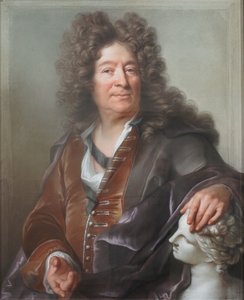
françois girardon
1628 - 1715 , France
Quick Facts
- Artistic Movement Or Style: Neoclassical Sculpture
- Artists Or Movements Influenced By This Artist: ['Charles Le Brun']
- Artists Who Influenced This Artist: ['François Anguier']
- Date Of Birth: 1628
- Date Of Death: 1715
- Full Name: François Girardon
- Nationality: French
- Notable Artworks:
- Monument of Richelieu (13)
- Allegorical Figure
- Monument of Richelieu (10)
- Place Of Birth: Troyes, France

