

 Preview
 Send
Send Share
Share
 Details

 Download
 Similars
 X-Ray
X-Ray Diaporama
 Stats
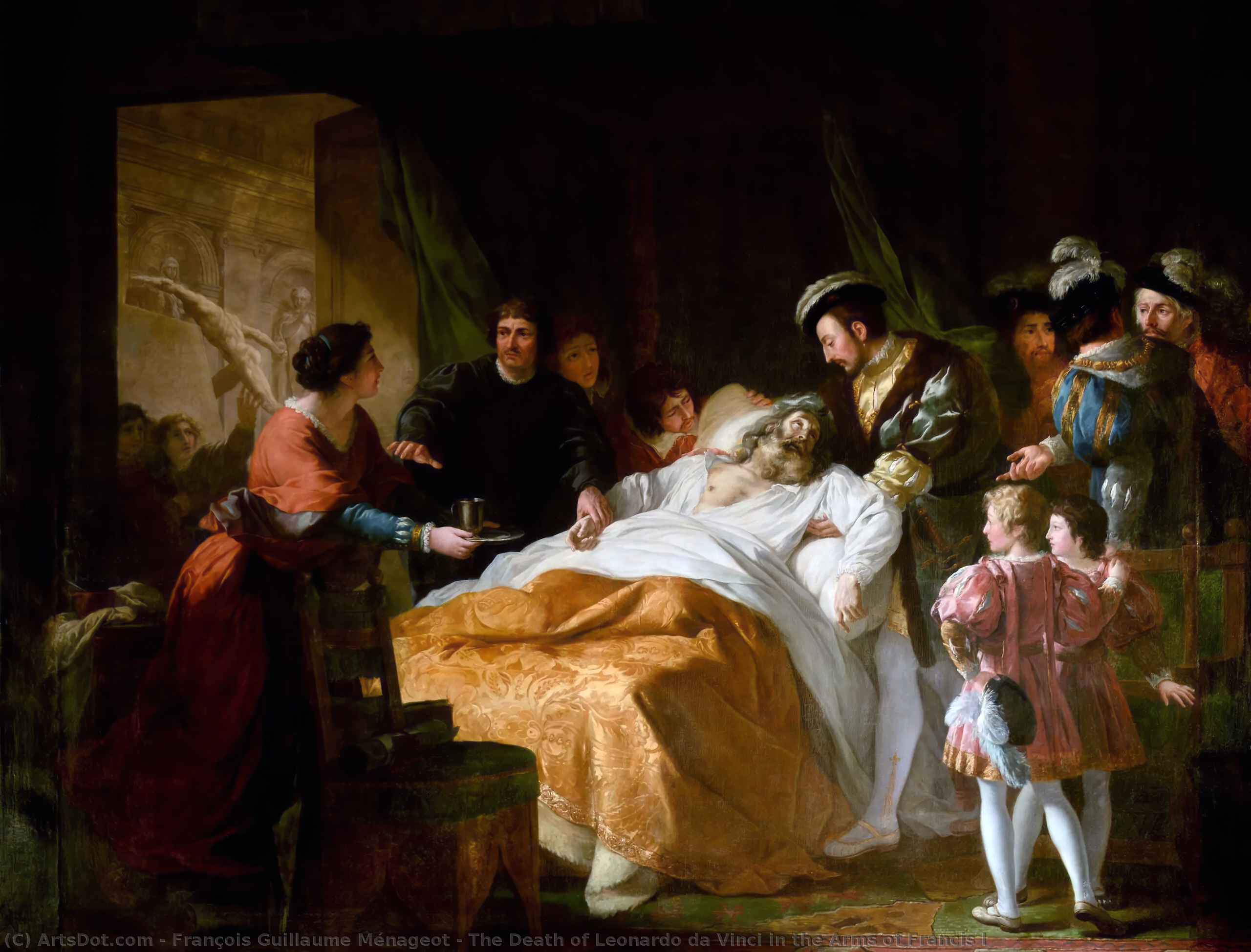
StatsThe Death of Leonardo da Vinci in the Arms of Francis I
 Baroque
 1781
1781 278.0 x 357.0 cm
 Musée de l'Hôtel de Ville
 Read More
Purchase a high-resolution, enhanced digital image, far superior to the online preview.
Each file is meticulously prepared by our in-house specialists using advanced tools and expert manual retouching. We ensure every image has exceptional clarity, precise color accuracy, and fine detail.
The final file is delivered via email within 72 hours, optimized for immediate use in professional, editorial, and print environments. This is the same quality trusted by top-tier design studios, publishers, and galleries.
Digital Image
Download a high-resolution file for personal display, printing, and creative projects. ( Switch to Print Buy Hand Made Painting)
Included in Every Digital Image Order
Expert Digital Delivery, Guaranteed
When you choose ArtsDot.com, you're not just getting an image - you're receiving a professionally enhanced digital artwork, crafted with precision and backed by a satisfaction guarantee. Here's everything that comes with your order, automatically:

Fast Email Delivery
Your high-resolution digital image file will be emailed to you within 72 hours of ordering - ready for immediate use.

AI-Enhanced Digital File
Your artwork is professionally optimized using advanced AI tools and manual editing, ensuring maximum detail, clarity, and color accuracy.

Free Lifetime Re-Delivery
Accidentally deleted or lost your file? No worries - we'll resend it to you anytime, free of charge.

No Import Fees - Ever
Enjoy your artwork instantly with zero customs, duties, or delivery fees - digital downloads are always tax-free.

Color Accuracy Guarantee
We ensure your digital image reflects the original colors as closely as possible using professional tools and color management.

100-Day Satisfaction Guarantee
If you're not satisfied with your digital image, we'll revise it or refund 100% within 100 days - no questions asked.

100% Money-Back Guarantee
Not satisfied? Get a full refund within 100 days of receiving your digital file - no questions asked.

Bulk Order Discounts
Buy 3 images, save 10% - Buy 5, save 15% - Buy 10+, save 20%. Great for creative projects, galleries, and agencies.
Historical Context
The painting depicts the final moments of Leonardo da Vinci's life as he lies in the arms of Francis I, King of France. This scene is set against a backdrop of Renaissance humanism and artistic innovation. The work was commissioned by Louis XVI to serve as a model for a tapestry depicting the history of France at the Gobelins Manufactory.Artistic Significance
Ménageot's painting showcases his skill in capturing the emotional depth of the scene. The central focus is on the tender embrace between Leonardo and Francis, while the surrounding figures convey a sense of mourning and reverence. This work exemplifies the Neoclassical style, characterized by its emphasis on classical ideals and historical subjects.Key Elements
- Composition: The painting features a large group of people gathered around Leonardo's bed, creating a sense of intimacy and solemnity. - Color Palette: Muted tones dominate the scene, with an emphasis on earthy colors that evoke a sense of somberness. - Lighting: Soft, diffused light illuminates the figures, highlighting their expressions and interactions.Relevance in Art History
This painting is significant not only for its depiction of a pivotal moment in art history but also for its reflection of the artistic trends of the late 18th century. Ménageot's work was influenced by his time in Vien's studio, where he was exposed to the teachings of Jacques-Louis David.Conclusion
The Death of Leonardo da Vinci in the Arms of Francis I is a powerful representation of the intersection of art and history. It stands as a testament to Ménageot's skill and the enduring legacy of Renaissance ideals. For those interested in exploring more works by François Guillaume Ménageot, The Death of Leonardo da Vinci in the Arms of Francis I and Envy Plucking the Wings of Fame are available for viewing on ArtsDot. For a deeper understanding of Ménageot's contributions to Neoclassicism, refer to François Guillaume Ménageot on Wikipedia.Related Artworks

Artist Biography
The Grandeur of Neoclassicism: The Life and Legacy of François Guillaume Ménageot
François Guillaume Ménageot (1744–1816) stands as a monumental figure in the transition of European art, a painter whose brush captured the profound shift from the airy elegance of the Rococo to the stern, dramatic gravity of Neoclassicism. Born in London to Augustin Ménage or, as history remembers him, the son of an influential art dealer and advisor to the great Denis Diderot, François was destined for a life steeped in intellectual and aesthetic discourse. This early exposure to the leading minds of the Enlightenment provided the fertile soil from which his artistic vision would grow, blending a deep respect for classical antiquity with the technical rigor required by the French academic tradition. His formative years were shaped by a lineage of masters that defined the era's stylistic evolution. Initially training under Jean-Baptiste Deshays and Joseph Marie Vien, Ménageot first absorbed the nuanced play of light and color characteristic of their work. However, it was his apprenticeship with the legendary François Boucher that left an indelible mark on his early compositions. From Boucher, he inherited a mastery of warmth and fluid movement, yet Ménageot possessed a unique ambition to move beyond mere decorative beauty toward something more substantial and historically significant.A Triumph in Rome and the Pursuit of Academic Excellence
The trajectory of Ménageot’s career was irrevocly altered by his extraordinary success in the competitive arena of the French Academy. In 1766, he achieved the prestigious Grand Prix de Rome with his visceral and striking work, Tomyris Plunging the Head of Cyrus into a Bowl of Blood. This painting was more than a technical triumph; it was a declaration of intent, signaling his ability to handle intense, dramatic narratives with a sense of monumental scale. This victory granted him a transformative residency at the French Academy in Rome from 1769 to 1774, a period that allowed him to immerse himself directly in the classical ruins and Renaissance masterpieces that would become the bedrock of his style. During his Roman years, Ménageot’s work began to shed the lighter, more whimsical elements of his early training, replaced by a burgeoning interest in the structural clarity and emotional weight of the ancient world. His time in Italy solidified his reputation as a history painter capable of conveying complex human struggles through grand, architectural compositions. Upon his return to Paris, he was met with immediate acclaim, securing agréement from the Académie Royale and establishing himself as a vital voice in the Salon exhibitions that defined the cultural zeitopgraphy of late 18th-century France.Mastery of Narrative: Religious and Historical Vision
Ménageot’s oeuvre is characterized by its profound ability to breathe life into historical and religious chronicles. He possessed a rare talent for capturing the precise moment of highest tension—the breath held before a tragedy or the solemnity of a sacred event. His works often feature a sophisticated use of chiaroscuro, where deep shadows and piercing highlights serve to direct the viewer's eye toward the emotional core of the scene. Some of his most enduring contributions to the art world include:- The Death of Leonardo da Vinci in the Arms of Francis I: A poignant exploration of historical intimacy and the passing of a genius, rendered with profound dignity.
- The Martyrdom of St Sebastian: A powerful display of religious devotion and physical suffering, utilizing dramatic lighting to evoke a sense of spiritual transcendence.
- The Farewells of Polyxena to Hecuba: A masterpiece of narrative tension that showcases his ability to weave complex classical tragedy into a single, breathtaking canvas.
- Allegorical painting of the birth of Louis Joseph: A monumental work rich in symbolism, demonstrating his skill in blending political history with allegorical grandeur.

françois guillaume ménageot
1744 - 1816 , United Kingdom
Quick Facts
- Artistic Movement Or Style: Neoclassicism
- Artists Or Movements Influenced By This Artist: ['David']
- Artists Who Influenced This Artist: ['François Boucher']
- Date Of Birth: London, United Kingdom (1744)
- Date Of Death: 1816
- Full Name: François Guillaume Ménageot
- Nationality: French
- Notable Artworks:
- The Death of Leonardo da Vinci in the Arms of Francis I
- The Martyrdom of St Sebastian
- Allegorical painting of the birth of Louis Joseph
- Place Of Birth: London